

🌿 Traces of Creation – Discoveries from Nature
🦋 Series 2: Transformation and Order – What Insects Teach Us
🧬 Episode 7 – Why Insects Remain Insects
🧩 Identity Within Boundaries
🌐 Introduction: Change Everywhere – But Not Without Limits
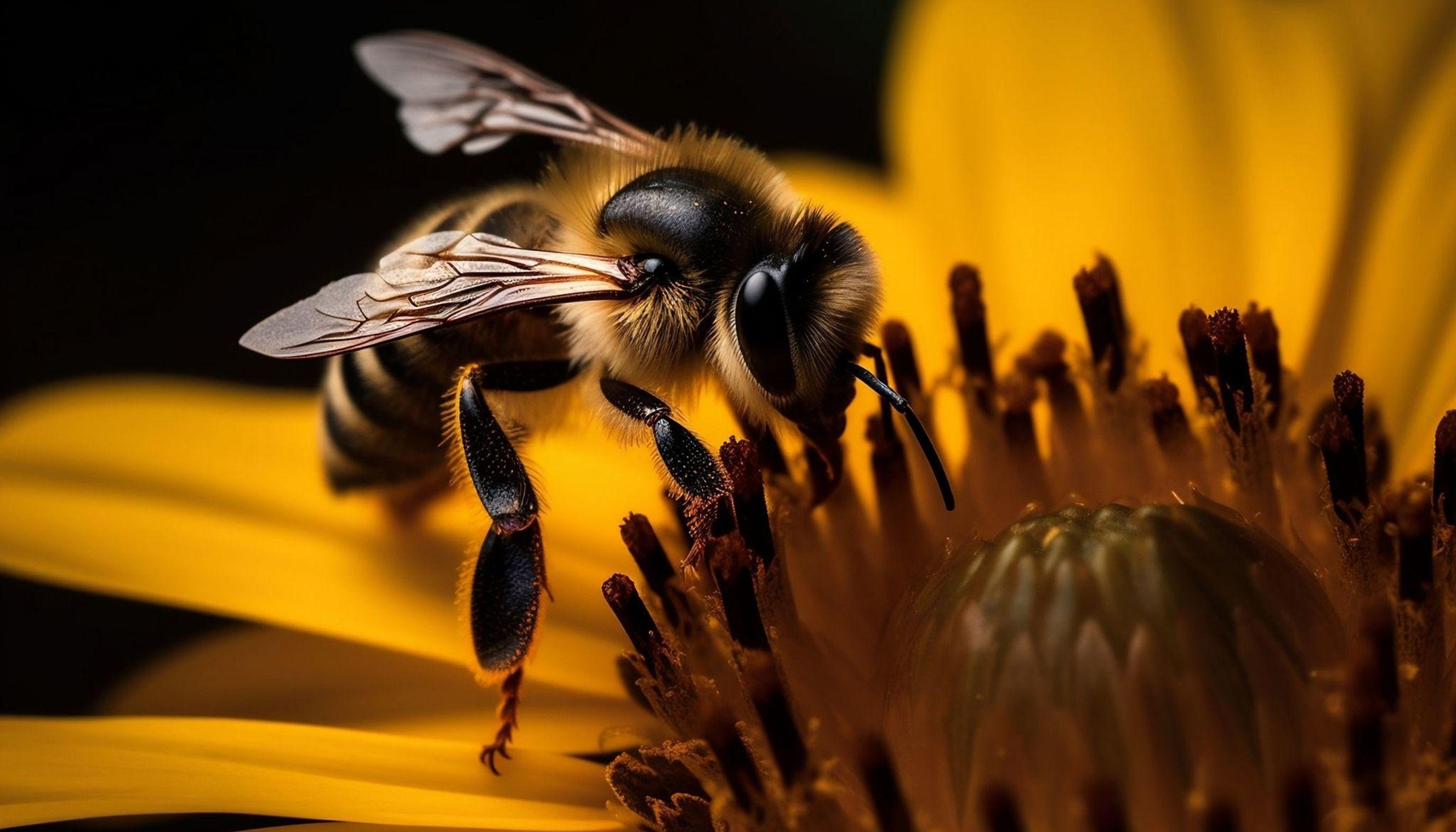
Insects can be found almost everywhere.
In deserts and forests, in swamps and cities, in high mountains and in the deep sea.
They differ in size, color, lifestyle, and behavior more than almost any other group of animals.
And yet one astonishing fact remains true:
As diverse as insects are,
they remain insects.
An ant does not become a spider.
A fly does not become a beetle.
A butterfly remains a butterfly.
Why is that?
🌍 1. Enormous Diversity Within Clear Boundaries
The insect world is extremely diverse:
🔹 millions of described species
🔹 countless forms of mouthparts
🔹 very different life cycles
🔹 an enormous range of sizes and colors
And yet all insects share fundamental characteristics:
🔹 six legs
🔹 a three-part body (head, thorax, abdomen)
🔹 an exoskeleton
🔹 a characteristic nervous system
This combination defines what an insect is.
The diversity exists within this framework,
not beyond it.
🔄 2. Adaptation Is Real – But Directed
Insects adapt to their environment:
🔹 mouthparts change according to food sources
🔹 coloration adapts to the habitat
🔹 behavior responds to temperature, humidity, and light
These adaptations are real and measurable.
They explain why insects are so successful.
But adaptation means:
🔹 fine-tuning
not:
🔹 fundamental reconstruction
A beetle may develop different colors,
but it will not become a butterfly.
A fly may colonize new habitats,
but it does not lose its basic structure.
⚙️ 3. Why Fundamental Changes Would Be Problematic
The characteristics of an insect are closely interconnected.
The exoskeleton, musculature, respiration, nervous system, and sensory organs
form a coordinated whole.
A deep change in one part
would require adjustments in many others —
at the same time.
An insect cannot:
🔹 lose its exoskeleton
🔹 and still function
It cannot:
🔹 change the number of its legs
🔹 without losing movement and coordination
The systems leave no room for randomness.
🚫 4. Why Intermediate Forms Would Have No Advantage
As we saw in earlier episodes,
many insect features function only as a complete system:
🔹 wings
🔹 metamorphosis
🔹 sensory perception
🔹 division of labor
A “partially transformed” insect
would not gain a new function,
but would lose existing ones.
Such intermediate states would not be an advantage,
but a risk.
This explains why we observe variation —
but not limitless transformation.
🧱 5. Stability as the Foundation of Success
The great success of insects is not based on randomness,
but on stability.
Because their basic structure is reliable,
they can adapt
without losing their identity.
Here, stability does not mean stagnation,
but rather the foundation for flexibility.
📏 6. A Rational View of Biological Boundaries
Every functioning system has boundaries.
A key may vary,
but it must fit the lock.
A tool may be improved,
but it remains a tool.
Boundaries define
what is reasonably possible.
In biology as well, boundaries
are not a sign of weakness,
but of function.
🧠 7. Why the Idea of Limitless Change Seems Attractive
The idea of unlimited change
matches human ideas of progress.
But nature shows a different principle:
Not everything that can change
should also change.
Order preserves identity,
while still allowing diversity.
✝️ 8. The Christian Perspective: Order with Diversity
The Christian perspective speaks of created order.
This means:
🔹 diversity is intentional
🔹 boundaries are meaningful
🔹 stability protects life
Insects remain insects,
not because development would be impossible,
but because order sustains identity.
Not as proof,
but as an interpretation
of what we observe.
💡 9. What This Consistency Teaches Us
The fact that insects remain insects teaches us:
🔹 diversity needs boundaries
🔹 stability enables adaptation
🔹 identity is not an obstacle, but protection
Perhaps this observation also reminds us
that not every boundary must be overcome
in order to live meaningfully.
🌌 Final Thought
The world of insects is rich, colorful, and dynamic.
But it is not chaotic.
Change takes place
without losing essence.
Insects remain insects —
and precisely in this,
an order is revealed
that sustains.
Whoever takes this consistency seriously
discovers here as well
traces of Creation.
