
📘 Lesson 1 – Some Principles of Prophecy
1.7 Questions – What Prophecy Does to Our Faith
🟦 Introduction – More Than Just Interpretation
We live in a time overflowing with information—but often lacking orientation. Especially in the field of prophecy, countless voices compete with interpretations, predictions, and end-time timelines. Some spark curiosity, others cause fear, and some may sound convincing, yet upon closer examination, prove speculative or unbiblical.
In this noise, we need a reliable compass. This lesson invites us to pause and ask two key questions:
What can prophecy mean for our personal faith—today, in the 21st century?
And how can we learn to distinguish true prophetic insight from human speculation?
📖 Bible Study – Two Honest Questions, Two Spiritual Paths
❓ Question 1:
In what way can studying prophecy greatly increase your faith? Some prophecies were written thousands of years ago and speak of events that would take place centuries or even millennia later. Which of these prophecies have helped you trust not just in the Bible, but more importantly, in the God who inspired it? How does Daniel 2, for example, give us strong and logical reasons to believe not only that God exists, but that He knows the future?
📌 Answer:
Studying prophecy is like peering behind the curtain of history—and into the heart of God. It shows us that we are part of a greater plan unfolding over centuries and millennia. Take Daniel 2, for example: a simple statue describes entire empires—Babylon, Medo-Persia, Greece, Rome, and finally the divided kingdoms of Europe. Every detail—gold, silver, bronze, iron, clay—is intentional and divine.
These prophecies weren’t just relevant in the past; they still speak powerfully today. When we see how precisely historical events unfolded according to God’s word, our trust grows:
📖 If God knows the course of nations, He surely knows my path.
📖 If He sees the span of centuries, He sees tomorrow—and today.
Prophecy builds faith because it proves: the Bible is not a fantasy. It’s a compass, and it always points toward Christ—even in the storm.
❓ Question 2:
How can we best protect ourselves from the many wild and speculative interpretations of prophecy—some of which even arise within our own church? Why is it so important to live out the counsel to “test everything; hold fast what is good” (1 Thess. 5:21)?
📌 Answer:
In a world where “breaking news” is constant and often chaotic, it’s tempting to be drawn to dramatic interpretations of current events. But when it comes to prophecy, excitement doesn’t equal truth.
That’s why Paul’s advice is crucial:
📖 “Test everything; hold fast what is good.”
Every prophetic claim must be weighed against the Bible—not just with a single verse, but with the whole testimony of Scripture.
A few practical ways to stay grounded:
-
Compare Scripture with Scripture.
-
Avoid teachings rooted in fear or sensationalism.
-
Ask: Does this interpretation lead me closer to Jesus—or distract from Him?
Even within the church, not every loud or impressive voice is right. Real prophecy produces peace, not panic. It strengthens faith, not fear. And it always leads to Christ—not conspiracy theories.
✨ Spiritual Principles – How God Makes Prophecy Accessible
-
Faith grows through understanding, not confusion.
-
True prophecy is Christ-centered, not speculation-based.
-
The Holy Spirit leads patiently and clearly, not through hype or manipulation.
-
Humility matters more than knowledge. Truth isn’t a trophy, it’s a calling.
🧭 Practical Application – Living Prophecy
-
Read the Bible as a student, not a skeptic.
-
Ask: “What is God really saying?” not “What fits my worldview?”
-
Trust what’s clear; be patient with what’s hidden.
-
Speak about prophecy in love—not with arrogance or fear-mongering.
-
Let prophecy inspire you to hope, not frighten you. Jesus is coming soon.
✅ Conclusion – Prophecy Is Invitation, Not Confusion
God gave us prophecy not to overwhelm us, but to offer hope.
It’s not encrypted code—it’s a love letter in pictures.
And every symbol, every vision points to one person:
👉 Jesus—the Redeemer, the Judge, the Coming King.
💬 Thought of the Day
The Bible is not a book of darkness—it is a lamp to our path. Those who read it with open hearts will be led in light.
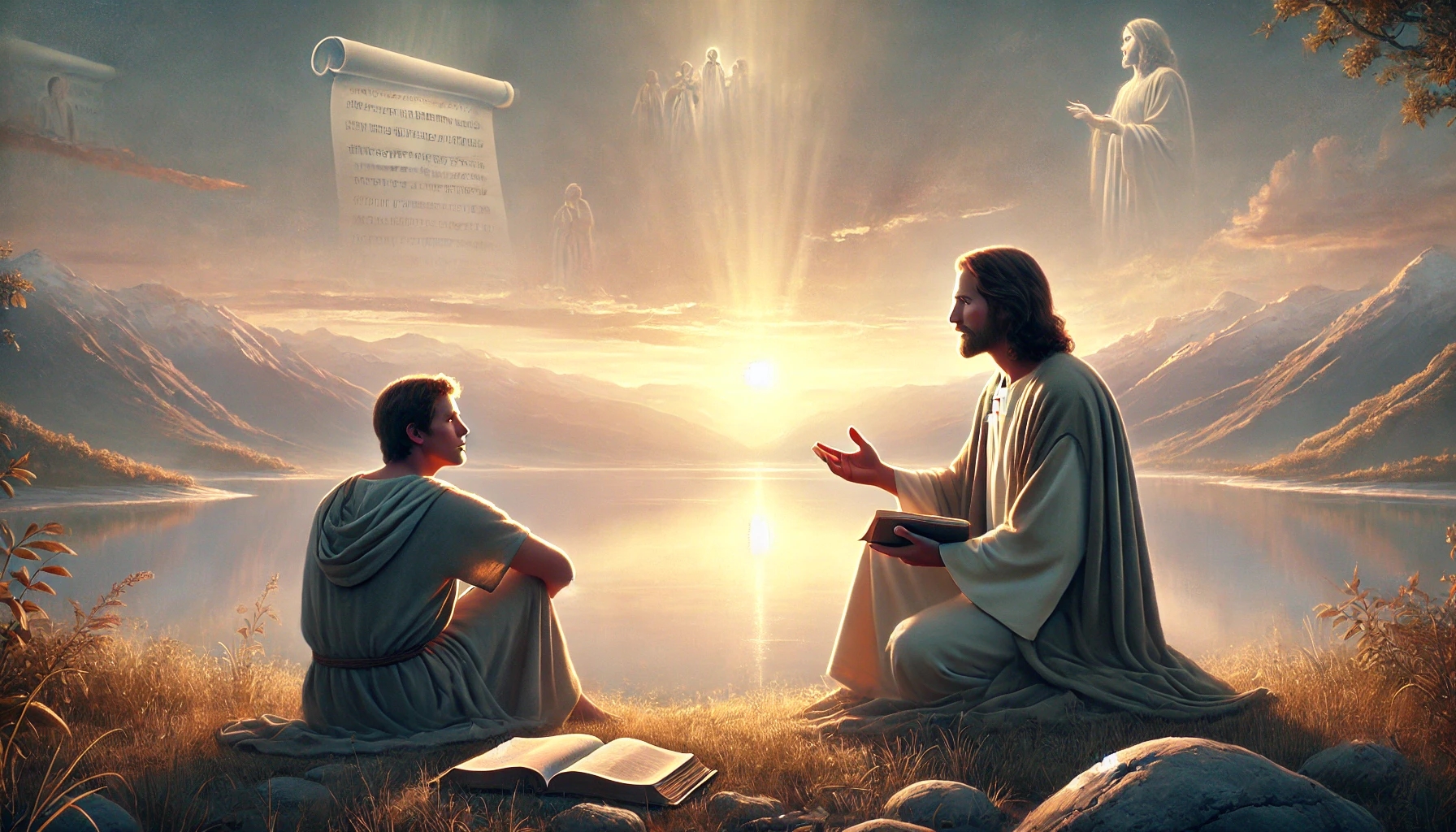
✍️ Illustration – A Windowlight Conversation
Leipzig. A rainy Thursday.
Lina, 31, sat on the windowsill with a hot cup of tea. Beside her: an open notebook, a well-worn Bible—and one question in her heart:
“Can I even understand prophecy?”
Her colleague Daniel, a thoughtful man with a love for history, stood in the doorway.
“Daniel again?” he asked with a smile.
She nodded. “Yes. I read yesterday that Daniel was told to seal his vision. That it would only be understood at the end.”
He stepped closer. “Do you think we’re living at the end?”
Lina shrugged. “All I know is that things are starting to make sense. Prophecies that once seemed confusing now point in a clear direction.”
Daniel looked at the Bible. “So, what’s the point of all this prophecy? Doom? Fear?”
She turned to Revelation 1:1.
“No. Jesus. It says: ‘The revelation of Jesus Christ.’ It’s all about Him.”
He paused. “So, it’s not about decoding everything…”
“…it’s about seeing Him,” she said softly.
Rain tapped the glass. Silence settled.
Then Daniel said quietly,
“Maybe I should read too. Not TikTok theology… real reading.”
Lina handed him her spare Bible.
“Start anywhere. Maybe Daniel 2. Or Revelation 1.”
He took it.
“I’ll start where you said: with Jesus.”
📖 “The revelation of Jesus Christ…” (Revelation 1:1)