🌱LIVING FAITH | 11.Living in the Land | 11.3 Haunted by the past | 🗺️ LESSONS OF FAITH FROM JOSHUA

🗺️ LESSONS OF FAITH FROM JOSHUA
⛪ Lesson 11 : Living in the Land
📘 11.3 Haunted by the past
✨ Carrying history – Lessons from earlier failures
🟦 Introduction
Often, painful experiences from the past shape us so deeply that they cloud our judgment in the present. What once happened still echoes when we face new challenges. This lesson, based on Joshua 22 and the calling of the priest Phinehas, shows how the people of Israel nearly fall into conflict—not because of current facts, but because of memories of earlier disasters.
God wants to teach us to take the past seriously, but not to be trapped by it. His grace has the power not only to forgive sins, but also to heal the fears that arise from old wounds.
…………………………….. 🗺️ ……………………………..
📖 Bible Study
📖 Text: Joshua 22:13–15 and Numbers 25
🗓️ Theme: The past as a warning—but not as a final judge
────────────────────────
📜 1. Background: One people, one altar, one crisis
After the successful entry into the Promised Land, the two and a half eastern tribes (Reuben, Gad, and the half-tribe of Manasseh) settled on their side of the Jordan. Before doing so, however, they built a large altar—which caused shock and suspicion among the western tribes.
Why? Because they assumed it was a second place of worship, independent of the sanctuary appointed by God.
The reaction was intense. The remaining tribes prepared for war, seeing a dangerous apostasy from the faith.
────────────────────────
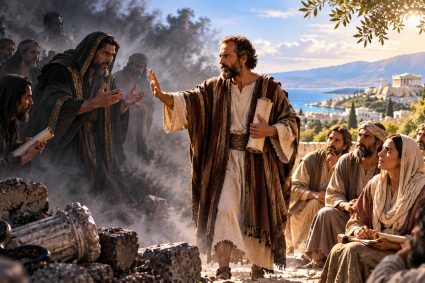
📖 2. Text Observation: Joshua 22:13–15 – Phinehas is sent
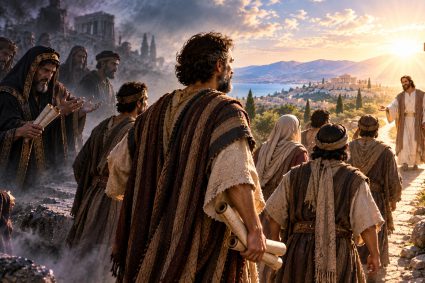
“Then the Israelites sent Phinehas son of Eleazar the priest to the land of Gilead—to Reuben, Gad, and the half-tribe of Manasseh.” (v. 13)
The choice falls on Phinehas. He is not sent by chance.
────────────────────────
🔥 3. Why Phinehas? Looking back to Numbers 25
📖 In Numbers 25, Israel sins with the daughters of Moab—idolatry and sexual immorality. God’s anger burns.
The result: a plague breaks out.
Phinehas acts.
He recognizes the seriousness of the rebellion and intervenes decisively, boldly, and without compromise.
“Phinehas stood up and pierced both of them… and the plague was stopped.” (Numbers 25:7–8)
Through his action, God’s justice is restored.
Since then, Phinehas has stood as a symbol of zeal for the Lord, purity, and moral clarity.
➡️ In Joshua 22, he is therefore sent to test the spirits—is another apostasy underway?
────────────────────────
🧠 4. Analysis: The power of the past
The construction of the altar immediately triggers suspicion.
Not because there is evidence, but because memories of past sins are still deeply embedded in the collective consciousness.
The fear is:
-
Will this end like Baal Peor?
-
Will God bring His wrath on the whole people if we do not intervene now?
-
Must we again suffer shame and pain because of the sins of a few?
In verse 17, the delegation explicitly reminds the eastern tribes of Baal Peor:
“Was not the sin of Peor enough for us, from which we have not cleansed ourselves even to this day?” (v. 17)
💡 This shows us:
The past is not forgotten. It shapes perception—often more strongly than the present. Judgment is formed not by facts, but by memories.
────────────────────────
🕊️ 5. Theological Reflection: Between vigilance and prejudice
✅ What was right?
-
Their concern was spiritually motivated.
-
Their response was not violence, but dialogue—with spiritual leadership.
-
They sought unity and purity, not power.
❗ What was dangerous?
-
Hastiness: the western tribes were already ready for war.
-
Assumption about the altar—without asking, without knowing.
-
The danger of generalizing past failures and misjudging present situations.
➡️ Balance is crucial:
Not blind trust—but not blind condemnation either.
God calls His people to discernment that is not rooted only in the past, but open to the work of His grace in the present.
────────────────────────
📌 6. Spiritual lessons from the text
-
Experience is not a substitute for revelation.
The past helps us understand—but must not dominate the present. -
Healthy spiritual leadership is essential.
Phinehas was not perfect, but credible—marked by clarity and reverence for God. -
Unity grows through communication, not confrontation.
The delegation was courageous, yet open to explanation. -
Past sin can heal—if we learn from it.
Israel learned vigilance, but the key was dialogue, not weapons.
────────────────────────
🛠️ 7. Practical application for today
How do we live this out in the 21st century?
-
In the church: When new ideas or people appear—do we discern spiritually, or react out of fear of repeating past mistakes?
-
In the family: Do we lock children or spouses into old patterns, or allow room for change?
-
In ourselves: Do we allow God’s grace to use our past not as a prison, but as a teacher?
────────────────────────
💬 Reflection questions (for groups or personal time)
-
Which “old burdens” still influence your judgments today?
-
Where do you struggle to give people a new chance?
-
How can you balance grace and spiritual vigilance?
-
Can you recall situations where you judged too quickly—and later regretted it?
────────────────────────
🔚 Summary
📖 Joshua 22:13–15 shows us:
-
The past can be a help—or a hindrance.
-
God wants us to be wise, watchful, and open to His grace.
-
Phinehas stands for spiritual integrity—but also for healing through clarification.
The message is clear:
“Let us remember—but not live in fear. Let us examine—but do so in love and humility.”
…………………………….. 🗺️ ……………………………..
🗣️ Answers to the questions
➤ Question 1: Why did the Israelites choose Phinehas as leader of the delegation in Joshua 22:13–15?
✅ Answer:
-
Phinehas had proven himself at Baal Peor (Numbers 25) as a defender of God’s holiness.
-
He showed courage when others remained silent.
-
His past made him an ideal authority figure to uncover or prevent apostasy.
-
His presence signaled: This is a serious spiritual matter.
The Israelites did not want to risk God’s anger again as at Baal Peor. Phinehas embodied both the memory of that painful lesson and the hope of timely intervention.
────────────────────────
➤ Question 2: How can God’s grace prevent past tragedies from shaping how we treat people today?
✅ Answer:
-
God’s grace heals and transforms, freeing us from fear, bitterness, and excessive caution.
-
Living in grace helps us see people not as repeat offenders, but as a new creation.
-
Grace enables us to distinguish between past and present—not everything that looks similar is the same.
-
We are neither careless nor prejudiced.
➡️ God’s grace acts like a spiritual filter system—helping us remain watchful but not hardened, clear but not harsh.
…………………………….. 🗺️ ……………………………..
✨ Spiritual Principles
-
🧠 Past mistakes may teach us—but must not paralyze us.
-
🕊️ Grace protects us from prejudice—even as we remain vigilant.
-
🧎 Spiritual authority grows from proven faithfulness, not titles alone.
-
💬 Conversations shaped by truth and love prevent division.
-
🤝 Unity requires courage to face difficult conversations—in the right spirit.
…………………………….. 🗺️ ……………………………..
🛠️ Everyday Application
➡️ How do we deal with our “past”—as individuals and as a church?
-
🔁 Do we repeat patterns of fear, mistrust, and withdrawal?
-
⚖️ Or do we allow God’s grace to lead us into healing and renewed relationships?
➡️ Do you use old wounds as a warning siren—or as walls no one can cross?
➡️ Would you act like Phinehas today—decisive, yet open to reconciliation and clarity?
…………………………….. 🗺️ ……………………………..
🧩 Conclusion
The past matters—it teaches us.
But it must not remain our judge.
God calls us to handle memories responsibly, while allowing grace to do its work. The near-crisis of Joshua 22 shows that through listening, spiritually guided dialogue, and trust in God’s leadership, unity can be preserved.
…………………………….. 🗺️ ……………………………..
💭 Thought of the Day
“Memory without grace leads to fear. Memory with grace leads to wisdom.”
…………………………….. 🗺️ ……………………………..
✍️ Illustration
Shadows from the Archive
Daring to trust—even after being burned once
────────────────────────
Chapter 1 – The anonymous note
In a church in Germany’s Ruhr region, people were nervous. A new volunteer, Sarah, had been serving in the children’s ministry for six weeks—engaged, friendly, well-liked. Then a letter arrived. Anonymous.
“This woman is not who she claims to be. Check her past.”
Panic spread among the church leadership. What if it were true? What if they had trusted a wolf in sheep’s clothing?
✦ ─────────────── ✦ ─────────────── ✦
Chapter 2 – The case of Baal Peor
Pastor Rainer remembered an incident from five years earlier. A youth leader had been exposed for emotionally manipulating children.
They had reacted too late—out of naïveté. It had been a shock.
Now no one wanted to be “too late” again.
“We must act,” said one elder. “Ask questions. Clarify. Immediately.”
✦ ─────────────── ✦ ─────────────── ✦
Chapter 3 – The delegation
A meeting was arranged. Rainer invited Sarah to talk. It was open and honest—no confrontation, but a conversation among brothers and sisters.
Sarah was not surprised.
She explained that years earlier she had been part of a church she left after internal tensions. There were rumors, yes—but nothing substantiated. Nothing that could not have been clarified.
✦ ─────────────── ✦ ─────────────── ✦
Chapter 4 – The sandal
The leadership listened. It was a delicate moment—like when Boaz received the sandal.
Now they had to decide: Do we close the door prematurely, or listen to the Spirit of God?
After much prayer and consultation, it became clear:
Sarah bore no guilt. She was simply one of many who had suffered from rumors.
✦ ─────────────── ✦ ─────────────── ✦
Chapter 5 – A new beginning
The following Sabbath, Pastor Rainer shared the story in his sermon—without names.
He spoke of Phinehas, of the past, of grace and truth.
And he said: “It is not unbiblical to be vigilant. But it is unchristian to judge without grace.”
Sarah stayed. Today she is a pillar of the church.
And when people ask why trust was possible, many answer:
“Because we learned to listen not only to voices—but to the Holy Spirit.”
…………………………….. 🗺️ ……………………………..
🔚 Final thoughts
This story reminds us:
Vigilance is good—but grace is divine.
Not everything that reminds us of the past is a new disaster.
Sometimes it is a test of our hearts: Do we react in fear—or act in love and truth?
The past can warn. But only grace can heal.

More Stories