🌱 GROWING IN A RELATIONSHIP WITH GOD
🌄 Lesson 3 : Pride Versus Humility
📘 3.3 Moses, Humble Servant
When true greatness means renunciation
📖 1. Introduction – An unusual decision
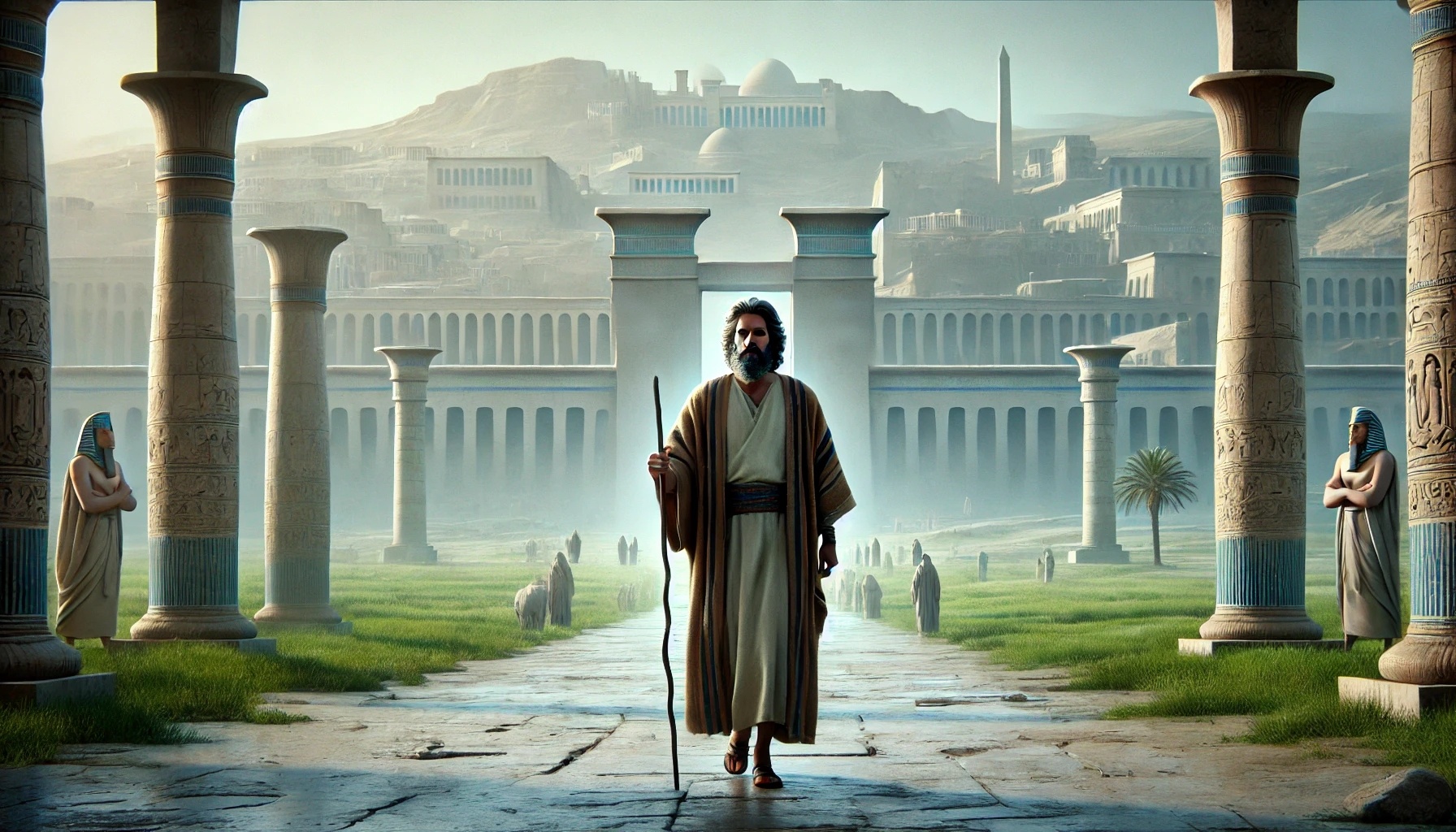
Imagine you had the opportunity to live a life full of success, influence, and security. That is exactly what was available to Moses. He grew up in the Egyptian palace, received an excellent education, and had access to power and wealth.
Yet Moses made a decision that is difficult to understand from a human perspective. He deliberately gave up all of that and chose a path marked by uncertainty, suffering, and challenges.
The question is not only why Moses acted this way, but also what it reveals about his inner attitude.
📜 2. Biblical foundation – A decision with an eternal perspective
Hebrews 11:24–26 gives us insight into Moses’ motivation. He refused to be called the son of Pharaoh’s daughter and deliberately chose to suffer with the people of God rather than enjoy the temporary pleasures of sin.
This decision shows that Moses had a clear perspective. He did not evaluate his life based on what was immediately visible or pleasant, but in the light of eternity. Wealth, power, and recognition lost their importance for him because he had something greater in view.
🌍 3. Connection to today
Even today, we face similar decisions, though in different forms. We live in a world that highly values success, security, and recognition. We are often told that a fulfilled life consists of achieving and possessing as much as possible.
But the story of Moses challenges this way of thinking. It shows that true greatness is not found in taking advantage of everything possible, but in consciously choosing what truly matters. Sometimes this means giving up things that appear attractive from the outside.
💡 4. Central message of the lesson
The central message is that humility is not only shown in words, but in decisions. Moses had every reason to be proud and follow his own path. Instead, he deliberately submitted his life to God’s plan.
In this context, humility does not mean weakness, but clarity. It is shown in a person’s willingness to set aside personal advantages in order to follow God’s will.
✝️ 5. Theological focus
The life of Moses makes it clear that humility is not an inborn trait, but a process that God shapes in a person’s life. Although Moses grew up in a privileged environment and had great abilities, he had to learn not to place himself at the center.
His early action in Exodus 2:12 shows that he initially acted in his own strength. He tried to solve a situation by himself and had to face the consequences. This experience shook his self-confidence and led to a long period of preparation.
The 40 years in the wilderness were decisive. There Moses learned that leadership does not arise from personal strength, but from dependence on God. This time was not a setback, but a necessary phase in which pride was broken down and trust was built up.
Theologically, an important principle is revealed here: God does not use people because of their natural strength, but despite their weakness. Only when a person recognizes their dependence on God do they become an instrument in His hands.
That Moses is ultimately called the most humble man (Numbers 12:3) is no coincidence. It is the result of a journey in which God shaped his character. Humility here is not self-deprecation, but a clear orientation toward God.
📖 6. Explanation of Bible texts
Hebrews 11:24–26 describes Moses’ conscious decision. The text emphasizes that he actively chose not to be identified as the son of Pharaoh’s daughter. This means that he did not simply lose something, but willingly gave it up.
The phrase “pleasures of sin” shows that life in Egypt was attractive. It was not something obviously evil, but something pleasant in the short term, yet without lasting value.
In contrast stands the decision to suffer with the people of God. This shows that Moses was willing to accept disadvantages because he had a deeper conviction. The text highlights that he looked toward the future reward. His decision was therefore not irrational, but guided by a clear hope.
- Numbers 12:3 describes Moses as exceptionally humble. This statement gains even more meaning when one knows his life story. It shows that humility does not contradict great responsibility. On the contrary, it was precisely because of his humility that God was able to use him in such a decisive role.
🔧 7. Application in daily life
The story of Moses challenges us to examine our own priorities. It is about honestly asking what determines our lives: short-term advantages or long-term values.
This can practically mean making decisions not only based on convenience or success, but on what matters to God. It also means being willing to give something up if it distances us from Him.
Humility is often revealed in small decisions that may not appear spectacular from the outside, but reflect a clear inner direction.
❓ 8. Reflection question
If someone looked at my life, would they recognize that I am guided by God’s standards—or rather by what this world considers success?
🌟 9. Final thought
Moses could have lived an impressive life in the palace. But he chose a different path because he understood what truly matters.
His life shows that true greatness does not lie in having everything, but in setting the right priorities—even if that means giving up apparent advantages.