



🌱 GROWING IN A RELATIONSHIP WITH GOD
📖 Lesson 4: The Role of the Bible
📘 4.2 Scripture, the Authority
God’s Word Stands Above Our Thinking
📖 1. Introduction – A Decisive Question
How do you relate to the Bible?
Do you read it to be affirmed — or are you willing to be corrected?
There is often a danger that we read God’s Word in a way that fits us. We choose verses we like and avoid those that challenge us. But it is precisely here that it becomes clear whether we truly recognize the authority of the Bible.
📜 2. The Biblical Foundation – What Is the Bible For?
In 2 Timothy 3:15–17, the function of the Bible is clearly described. It teaches, convicts, corrects, and trains in righteousness.
This means: the Bible is not only comforting, but also confronting.
God speaks through His Word, but not in a way that we can control or determine. His thoughts are higher than ours (Isaiah 55:9), therefore the Bible cannot be subordinated to our standards.
👉 We stand under the Word — not above it.
🌍 3. Connection to Today
In today’s culture, it has become normal to make ourselves the standard. Everyone has “their truth,” their opinion, and their perspective.
This attitude can also influence our Bible study. We read selectively, interpret according to feelings, or only seek confirmation.
The problem is: the Bible loses its authority and becomes a tool that we use as needed.
But that contradicts its true purpose.
💡 4. Central Message of the Lesson
The central message is:
👉 The Bible is not meant to serve us — we are called to submit to it.
This means we must be willing to accept even uncomfortable truths. God does not speak only where it is easy, but especially where change is necessary.
✝️ 5. Theological Focus
At the center of this lesson is the question of authority: Who determines truth and direction in human life?
The Bible claims to be the Word of God. This means that its authority does not depend on human acceptance. It is not true because we accept it — rather, we are called to accept it because it is true.
A central problem of humanity is the tendency to absolutize its own reason. The mind becomes the standard, and everything is judged according to whether it seems “logical,” “understandable,” or “pleasant.”
The Bible challenges this way of thinking. It does not demand that we switch off our minds, but that we submit them. In Matthew 22:37 it becomes clear that we are to love God also with our thinking — but in harmony with His truth.
Theologically, this means: human reason is a tool, but not the ultimate authority. It is limited, prone to error, and influenced by sin.
When a person begins to judge the Bible instead of allowing themselves to be judged by it, they reverse the order. They place themselves above the Word of God.
This leads to a subtle but profound shift: a person remains religious, may even read the Bible — but ultimately decides for themselves what is valid and what is not.
👉 True submission to God’s Word means being willing to be transformed — even when it contradicts our own thinking.
📖 6. Explanation of Biblical Texts
- 2 Timothy 3:15–17 shows four central functions of the Bible. It teaches by conveying truth. It convicts by exposing wrong paths. It corrects by bringing a person back to the right path. And it trains in righteousness by shaping life over time.
These four aspects show that the Bible actively intervenes in life. It is not neutral or passive.
Isaiah 55:9 makes it clear that God’s thoughts are higher than ours. This means we cannot expect to understand everything immediately or fully grasp it with our minds.
Matthew 22:37 completes this picture. God wants us to use our minds — but not independently from Him. Thinking and faith belong together, but under God’s guidance.
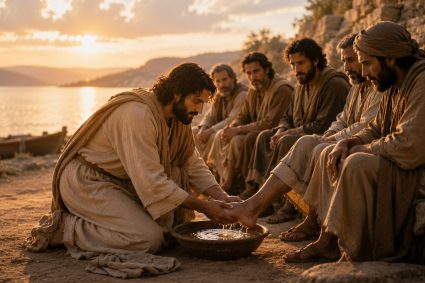
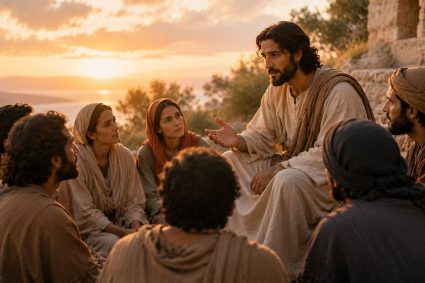
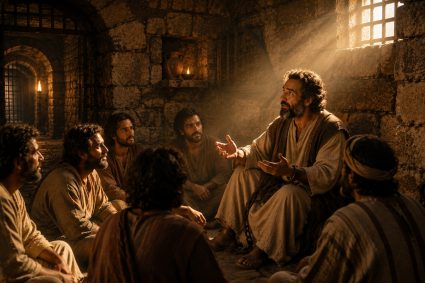
The many conversations of God with people in the Bible show that He seeks relationship. He speaks, explains, guides, and corrects. But it always remains clear: He is the one who speaks — not the human who decides.
👉 In summary:
The Bible has authority because it comes from God — and it works where a person is willing to submit to it.
🔧 7. Application in Daily Life
This lesson challenges us to examine our own Bible study.
Do I read the Bible with openness and willingness to learn — or do I only seek confirmation?
In practice, this may mean:
- consciously reading difficult passages as well
- not judging too quickly
- asking God for understanding
- being willing to question my own views
❓ 8. Reflection Question
Am I willing to let God’s Word correct my own convictions — or do I place myself above it internally?
🌟 9. Final Thought
The Bible is not a tool in our hands.
It is the voice of God in our lives.
The decisive question is not whether we understand or control it —
but whether we are willing to be transformed by it.