

🌱 GROWING IN A RELATIONSHIP WITH GOD
📚 Lesson 5: How to Study the Bible
📘 5.4 A Double Blessing
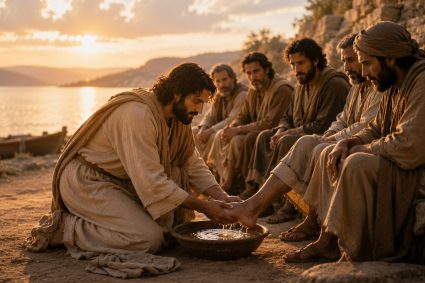
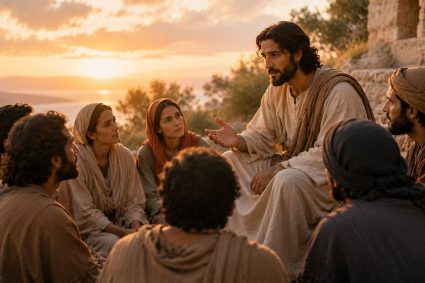
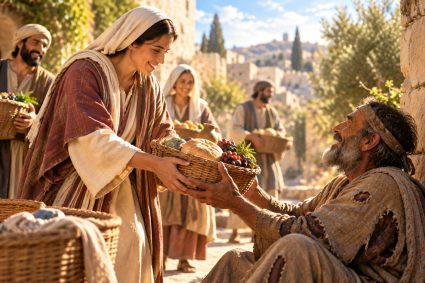
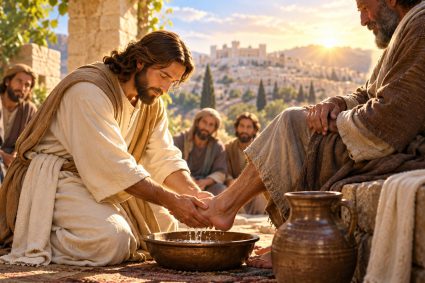
God’s Word grows when we share it
📖 1. Introduction – A practical observation
What happens when you explain to someone what you have learned?
Often you notice: you suddenly understand it better yourself. Thoughts become clearer, connections become more obvious.
This shows: learning does not end with reading — it deepens when we share it.
📜 2. Biblical foundation – Learning and sharing
The Bible shows that knowledge is not meant only for the individual. God’s Word is not only to be received, but also to be shared.
Isaiah 50:4 describes that God gives a “tongue of the learned” to strengthen others.
👉 Whoever learns from God becomes a blessing to others.
🌍 3. Connection to today
Today, faith is often seen as something very personal — something to keep to oneself.
But in doing so, an important part is lost.
If we do not talk about what we learn:
- it remains superficial
- it is forgotten more quickly
- it loses its impact
Thinking together and sharing bring new perspectives and strengthen faith.
💡 4. Central message of the lesson
👉 God’s Word brings a “double blessing”: it transforms us — and through us, others as well.
Sharing is not an addition, but part of growth.
✝️ 5. Theological focus
At the heart of this lesson is the principle that spiritual growth does not happen in isolation, but in connection with others.
The Bible shows that knowledge always has a direction: from God to people — and from people to others. Whoever receives God’s Word is not only changed, but also becomes an instrument.
Isaiah 50:4 makes it clear that God intentionally uses people to strengthen others. This means that spiritual knowledge is not only personal, but also serving. It always has an outward effect.
An important point is that sharing deepens one’s own understanding. When we explain, we organize our thoughts, recognize connections, and test whether we truly understand. In this way, knowledge is strengthened.
The diversity of methods also plays a role. God can speak through different ways — reading, listening, reflecting, sharing. This variety prevents routine and keeps the relationship alive.
Another theological aspect is responsibility. Whoever recognizes truth also bears responsibility for it. Not in the sense of pressure, but in the sense of calling: what God gives should not remain hidden.
👉 Theologically decisive:
Spiritual growth becomes complete when the received Word turns into a lived and shared life.
📖 6. Bible texts explained
Isaiah 50:4 shows that God not only gives knowledge, but also the ability to share it. The “tongue of the learned” represents wisdom in speaking — at the right time, for the right person.
John 17:3 connects knowledge with life. Knowing God is not just information, but relationship. This relationship impacts others.
Philippians 3:14 presents the image of a race. Spiritual life is a process, not a one-time event. Consistency is essential.
The various study methods (verse, chapter, topic, etc.) show that God’s Word is deep and multifaceted. It can be understood from different perspectives without contradicting itself.
Sharing with others completes this picture:
- it broadens perspective
- it corrects possible misunderstandings
- it strengthens application in daily life
👉 In summary:
God’s Word is most powerful when it is not only understood, but also shared.
🔧 7. Application in daily life
This lesson becomes practical through simple steps:
- talk regularly about what you have learned
- exchange ideas with others (friends, group)
- try different methods
- intentionally ask: “Who is this important for today?”
- use opportunities to encourage others
❓ 8. Reflection question
Do I keep what I learn from God to myself — or am I willing to share it with others?
🌟 9. Final thought
God’s Word is not only for you.
It is meant to work through you.
Because:
👉 What you share becomes more deeply rooted within you.