
8 min 1 yr

🟦 Introduction – Nations on God’s Stage

Early in Scripture they step into the light: the nations. Names like Babel, Egypt, Assyria, Nineveh, Israelβ€”they appear as characters on a vast stage. And each of these peoples tells more than just their political story. In their origin, their rise, their fallβ€”there lies a deeper message. For they all stand in the shadow of a greater drama: the great conflict between good and evil.

From Nimrod to Nebuchadnezzar, from Abraham to Zionβ€”God shows us through the history of the nations how He works: by calling, by warning, by judgment, but always also by grace.

God did not work only with a small peopleβ€”but through all the nations. Even the pagan powers, though they set themselves against Him, were used as instruments in His plan. And while humans built kingdoms, God called His people to be differentβ€”not like the others, but a light to the others.

This lesson leads us through the roots of rebellion (Nimrod), the call to separation (Abraham), the temptation to conform (Israel’s desire for a king), the danger of political Christianityβ€”all the way to the question: What does it mean today to be a β€œlight to the nations”?

For the stage has not changed. The nations remain. The choices remain.
And God’s callβ€”β€œCome out from among them, my people”—rings louder than ever.
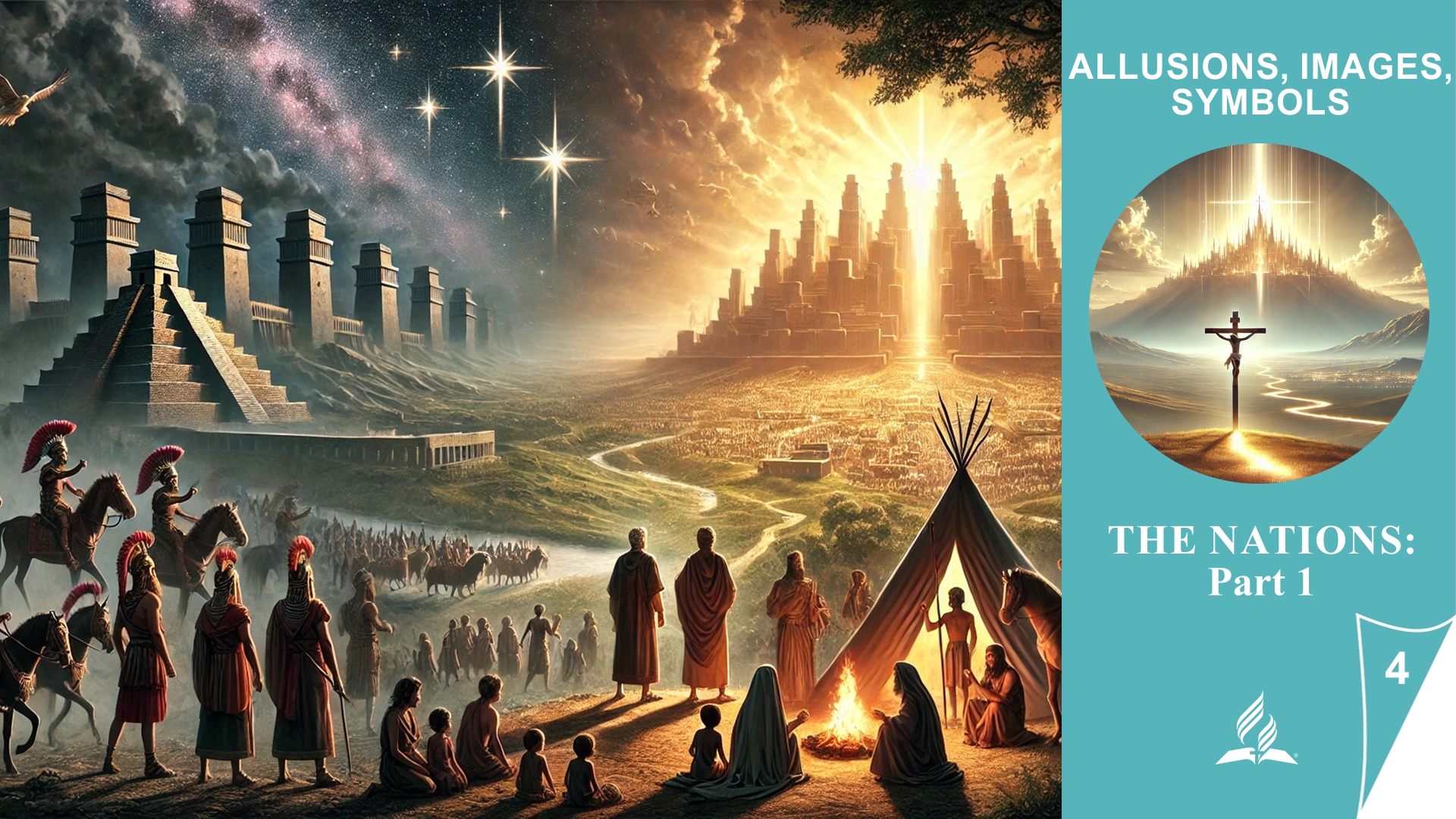
πŸ“˜ Lesson 4 – The Nations, Part 1

4.1 Nimrod and Nineveh

Nimrod and the Roots of Rebellion: From Eden to Nineveh


🟦 Introduction – When People Exalt Themselves

Human history doesn’t begin only with creation but also with tragedy: the Fall. What was once perfectβ€”the relationship between God and humanityβ€”was shattered by rebellion. Yet instead of learning humility from that breach, the Bible shows how quickly people set out to build their own paths, raise their own cities, and seek their own security. One of those early cities was Nineveh, and one of the first great β€œcity-builders” was Nimrod.

Nimrod in Scripture doesn’t stand for noble civilization but for conscious turning away from God. He embodies an early form of pride: β€œWe will build our kingdomβ€”without God.” Yet his story teaches that human greatness can never replace divine blessing.


πŸ“– Bible Study – When Cities Become Symbols of Rebellion

Question 1: Read Genesis 10:1–12. What can we learn from the mention of Nimrod and the cities of Babylon and Nineveh?

  • Genesis 10 calls Nimrod a β€œmighty hunter before the Lord.” At first glance this sounds impressive, but the Hebrew phrase β€œbefore the Lord” here carries a confrontational undertoneβ€”like one standing against God.

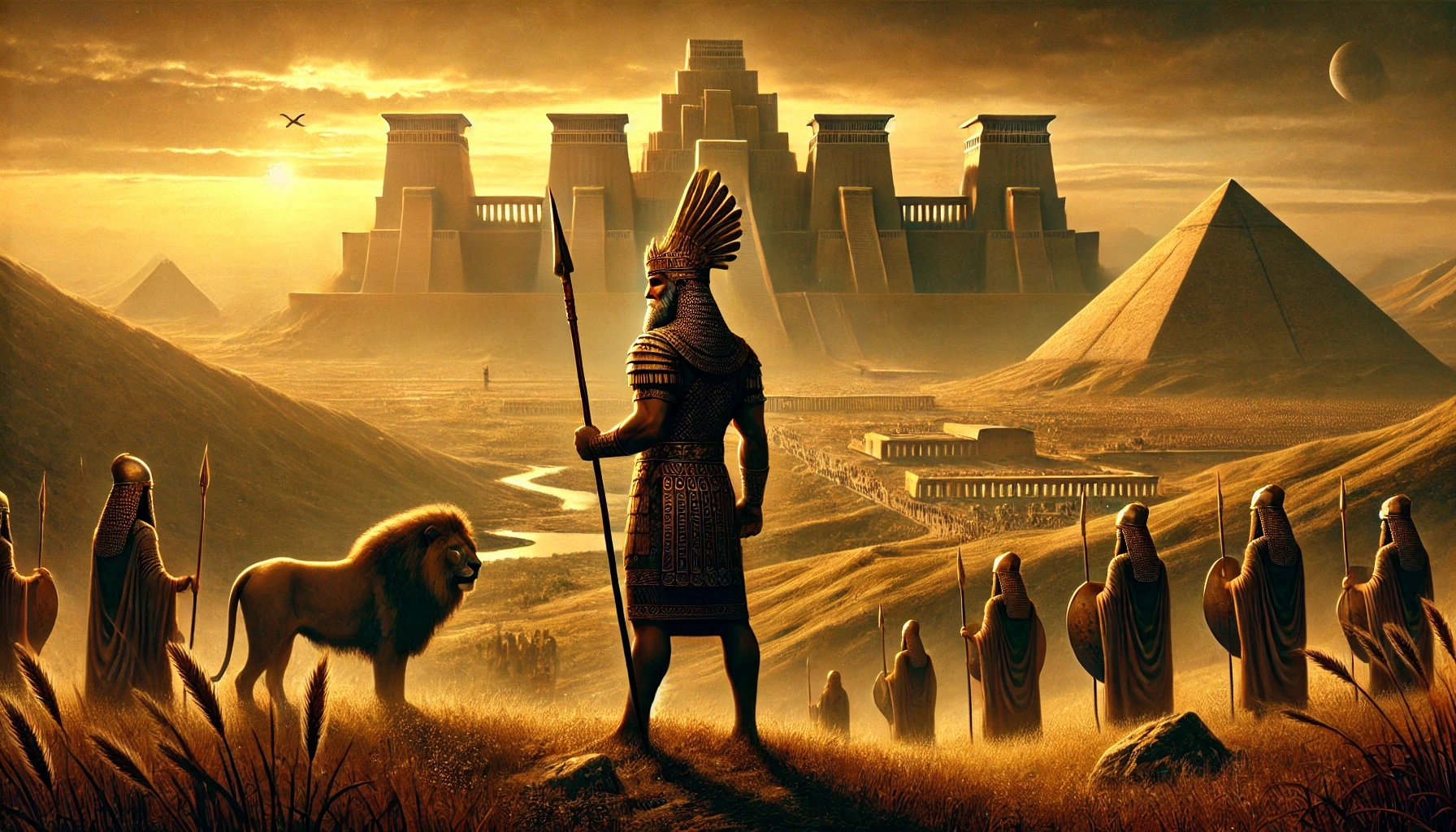
  • He founded Babel, Nineveh, and Asshurβ€”cities later cast as God’s opponents. Babylon symbolizes pride; Nineveh, brutal rule (see Nahum 3). These cities represent not only political power but spiritual rebellion. Even in Genesis, the stage is set for the prophetic conflict of the Old Testament.

Question 2: Why is rebellion against God more subtle than we think?

  • Rebellion doesn’t always roar in open hostility. It often begins by offering alternatives to God’s ways: a bit of pragmatism here, a dash of self-will there. Instead of bringing sacrifices at Eden’s gate, people build walled cities and towers bearing their own names (see Genesis 11).

  • Today, too, people rebel not necessarily with clenched fists toward heaven but through indifference, self-fulfillment without the Creator, and theologies that dethrone God and crown humanity instead.


✨ Spiritual Principles – The Nature of True Submission

  • True greatness arises not from self-assertion but from humility.

  • God is not against cities or progressβ€”but He opposes pride that replaces Him.

  • Rebellion is not always a loud revolt; often it’s a quiet withdrawal from God’s authority.

  • Every city of rebellion has a spiritual alternative: the new Jerusalem, ruled not by Nimrod but by the Lamb.


🧭 Application Today – Choosing Between Babylon and Eden

  • Examine your motives: Why are you doing what you do? Is it for God’s glory or for your own name?

  • Pay attention to small choices: the path to Nineveh begins with a single step away from Eden.

  • Ask with every β€œmodern solution”: Is this a Nimrod idea or a revelation from God?

  • Learn to build spirituallyβ€” not cities with walls, but lives with open doors for God’s presence.

  • Beware of religious self-confidence: pride can even disguise itself as piety.


βœ… Conclusion – Rebellion Ends, Grace Remains

Nimrod’s story is not just an ancient episode. It lives on in any heart that makes itself the center. Yet the Bible’s hope is stronger than Babel’s pride: in the end there is not a tower but a cross. Babylon does not triumphβ€”but the heavenly Jerusalem.

God calls us not simply out of rebellion but beckons us homeβ€”to what Eden once was, and what it will be again.


πŸ’¬ Thought of the Day

The great question is never simply what you buildβ€”but for whom you build.


✍️ Illustration – The Man with the Grand Name

Frankfurt, Germanyβ€”2025

Leon, 39, knew only one direction: up. As CEO of a rising tech firm, he had everything: a luxury flat in Westend, a gleaming Tesla in his garage, invitations to elite conferences, and a column in a business magazine. He believed he answered to no oneβ€”at least, he thought so.

His company was famed for its aggressive vision of β€œdigital cities”—fully algorithm-driven lifestyles, smart infrastructures, virtual identities. Pure progressβ€”like a modern Babel powered by AI.

β€œWe’re building the future,” Leon proclaimed on every stage. β€œPeople don’t need old myths; they need vision.” He wore black turtlenecks, drank double espressos, read Nietzsche, and dismissed the Bible as β€œa fairy tale for the insecure.”

Then came his collapse. Not financialβ€”emotional.

His father died suddenly of a stroke while Leon was en route to a livestream interview in Dubai. He missed the funeral. In an instant, the skyscraper he’d builtβ€”not of steel, but of reputation and influenceβ€”felt like a house of cards.

After weeks of isolation, he began wandering the city at night. No destination. No GPS. Only silence.

One evening he noticed light in an old church near Sachsenhausen. He slipped inside and sat in the back. Up front, a man read Scripture instead of preaching. The text: Genesis 10:8–12β€”Nimrod, city-builders, hunters before the LORD, builders of Babel and Nineveh.

Leon shivered. Why did that name strike him like a mirror? Why did it feel like an accusation?

The reader continued with Psalm 127:1:

β€œUnless the LORD builds the house, those who build it labor in vain.”

Leon left the churchβ€”but the words stayed with him.

In the following weeks, he began to read the Bible slowly and hesitantly: Genesis, then Psalms, then the Gospels. Time and again he encountered the man who trusted in himself and fell.

One rainy evening in a cafΓ©, he met his old friend Tobias, now a pastor. They’d once prayed together; now Tobias simply listened.

β€œI think,” Leon confessed, β€œI’ve been building Babylon.”

Tobias offered no rebuke, only a quiet question: β€œWhat now?”
Leon sighed. β€œI have no idea how to tear it down.”
Tobias smiled gently: β€œThen start with one verseβ€”and one prayer. That’s all you need.”

Visited 104 times, 1 visit(s) today