📖 1. Introduction – A decisive question
What does your picture of God actually look like?
Is He strict or loving to you? Near or distant? Interested in your life—or rather detached?
We often do not even realize that our image of God does not really come from the Bible, but is shaped by experiences, upbringing, or the opinions of others.
But this is exactly where the key lies:
How we see God determines how we live with Him.
If our picture of Him is distorted, then our relationship with Him will also be distorted.
📜 2. The biblical foundation – God’s revelation
The Bible is not simply a book full of stories—it is God’s revelation.
From Genesis to Revelation, it shows us a clear, continuous picture:
There is a God who acts, speaks, loves, and leads.
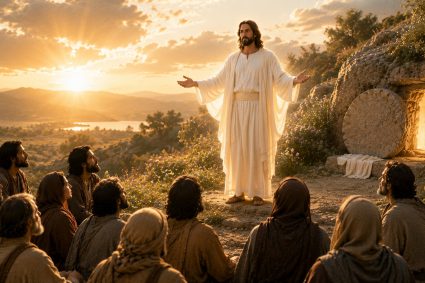
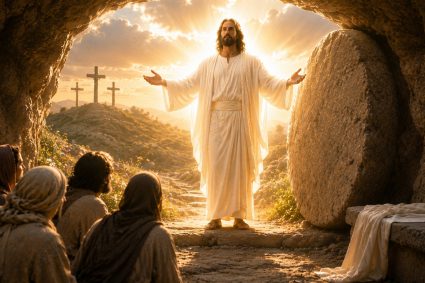
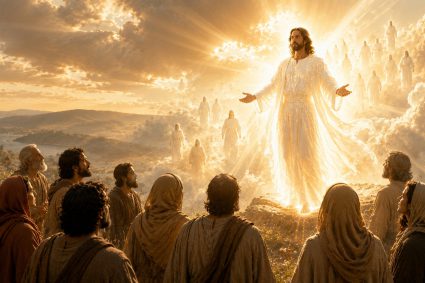
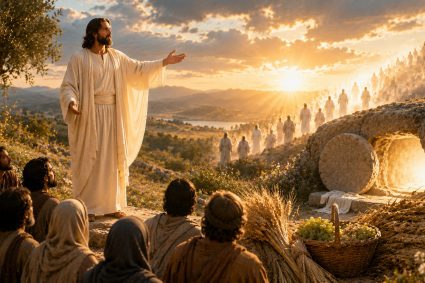
He has not remained hidden, but has made Himself visible—especially in Jesus Christ.
In the Bible we discover many facets of His nature:
His power, His wisdom, His justice, His patience, and His grace.
👉 God wants to be known—not guessed at.
🌍 3. Connection to our time today
Even today, many people live with a false or unclear picture of God.
Some see Him as a strict judge who only looks for faults.
Others as an impersonal force.
Still others no longer believe in Him at all.
But even among Christians, the picture can be blurred:
We believe in God—but do we really know Him?
The danger is great:
A false picture leads to distance, insecurity, or indifference.
💡 4. Central message of the lesson
The most important message is:
👉 God can be known—and He wants to be known.
He has not hidden Himself, but has deliberately revealed Himself.
A clear picture of God is not a side issue—it is the foundation for faith, trust, and relationship.
The better we understand who God truly is,
the more we will love Him and trust Him.
✝️ 5. Theological focus
At the center of this lesson is one of the most fundamental truths of faith:
👉 It is not first about human beings—but about God Himself.
The great conflict the Bible speaks about is not a struggle for power, but a struggle for truth:
Who is God really?
This conflict began already in heaven when Lucifer sowed doubt about God’s character. He did not question God’s existence, but His goodness. This is exactly where the core of temptation still lies today:
Not “Does God exist?”—but “Can He really be trusted?”
In Genesis 3 we see this strategy very clearly:
Satan presents God as someone who is holding something back, who does not want the best for humanity.
👉 This is theologically decisive:
Sin does not begin with a wrong action, but with a false picture of God.
When trust is destroyed, disobedience almost automatically follows.
God’s answer to this distortion is not force or power, but revelation.
He shows Himself:
- in creation (His power)
- in the history of Israel (His faithfulness)
- and perfectly in Jesus Christ (His character)
That is why Jesus is not only Savior, but also the revealer of God.
👉 Whoever sees Jesus sees the Father.
That means:
Theology is not first of all theory—but relationship.
A right picture of God leads to:
- trust instead of fear
- love instead of distance
- devotion instead of compulsion
A false picture of God, on the other hand, leads to:
- insecurity
- religious pressure
- or indifference
That is why this question is so decisive:
👉 How do I really see God?
Because:
It is not our knowledge about God that changes us—
but our trust in His character.
📖 6. Bible texts explained
Genesis 1 shows God as Creator—powerful and sovereign.
Isaiah 46:9–10 makes it clear:
God knows the beginning and the end—nothing escapes His control.
Romans 2:4 shows His patience and goodness—
God leads through love, not through force.
John 11:25 reveals His power over death—
He is not only Creator, but also Savior.
In Genesis 3:1–5 we see the turning point:
The serpent sows doubt.
👉 “God is holding something back from you.”
👉 “You cannot trust Him.”
That was the origin of all false pictures of God.
👉 In summary:
The Bible shows who God truly is—
but human beings constantly stand in the tension between truth and deception.
🔧 7. Application in daily life
This lesson presents us with a personal challenge:
Where does my picture of God really come from?
Practical steps could be:
consciously comparing my picture of God with the Bible
intentionally reading Bible passages about God’s nature
looking to Jesus in order to understand God better
recognizing and letting go of false ideas
The point is not just to believe in God—
but to know Him rightly.
❓ 8. Reflection question
Is my picture of God really biblical—
or has it been shaped by experiences, fears, or opinions?
Do I trust God as He truly is—
or as I imagine Him to be?
🌟 9. Closing thought
The greatest battle is not taking place somewhere “out there”—
but in our understanding of God.
Because:
👉 A false picture separates us from Him
👉 A clear picture draws us to Him
God does not hide Himself.
He reveals Himself—
so that we may know Him,
trust Him,
and live with Him.