⛪ Lesson 2: The Burning Bush
📘 2.7 Questions
✨ Recognizing God’s Call, Trusting Him, and Holding to His Truth – Lessons from the Life of Moses
………………………………………………………………….
🟦 Introduction
In the midst of the hectic 21st century—with career plans, family obligations, and social pressure—many people ask: What is my purpose in life? And even more urgently: How do I recognize what God has called me to do—and how can I possibly fulfill it if I feel inadequate, weak, or unworthy?
The story of Moses, as told in the Bible, offers surprisingly timeless answers to these questions. Before Moses became a great leader and prophet, he spent decades in the solitude of the wilderness. There he was no speaker, no hero—but a shepherd, a father, and a student of God. It was precisely in those quiet years that God prepared him for his greatest task.
In this reflection—interwoven with a touching modern-day story—we dive deep into the questions:
-
What can we learn from Moses’ time in the wilderness about our own responsibilities in life?
-
How does his initial insecurity teach us to trust in God’s calling and guidance?
-
And why is it so crucial to hold to the authority of the book of Genesis—especially in a time when biblical truth is increasingly questioned?
These thoughts are not just theological considerations—they concern our hearts, our everyday lives, our faith. Let this story, the spiritual principles, and the practical applications encourage you to listen anew for God’s call—perhaps exactly where you least expect it.
………………………………………………………………….
📖 Answers to the Questions
📌 Question 1: During the quiet years he spent in the wilderness, Moses did what God had called him to do: He was a family man, tended sheep, and—under God’s inspiration—wrote two biblical books before being called to lead God’s people. What does Moses’ experience teach us about our responsibilities in life?
Moses’ years in the wilderness may seem unimpressive at first glance. He wasn’t a king, not a speaker, not a leader. Instead, he lived far from palaces, tended the flocks of his father-in-law, and cared for his family. Yet it was precisely during this simple, quiet phase of life that God prepared him for the greatest mission of his life.
This time was not a “waiting for the real thing” but exactly what Moses was called to at that moment. He lived faithfully in his role as husband, father, and shepherd—tasks often overlooked or seen as secondary. Yet it was in these very duties that God shaped his character, humbled him, and equipped him spiritually. Moses wasn’t inactive—he was in “God’s school.”
He also likely wrote the books of Genesis and Exodus during this time, under divine inspiration. These laid the foundation for Israel’s spiritual understanding—and ours today. Who would have thought that two of the most significant books in human history would be written in the middle of nowhere, far from royal courts and crowds?
✨ Spiritual Principles
Daily responsibilities—in family, work, church—are not less spiritual than major “callings.” God sees the faithful heart, not the stage.
🧩 Practical Application
You may be a parent, employee, or student. But what you do today with dedication could be the foundation for something greater. Moses wrote two biblical books in the desert—not in Egypt or the Promised Land.
📌 Question 2: Moses’ excuses were actually quite reasonable, weren’t they? Why would the people believe me? Who am I anyway? I can’t speak well. What should this story teach us about learning to trust that God can equip us for what He calls us to do?
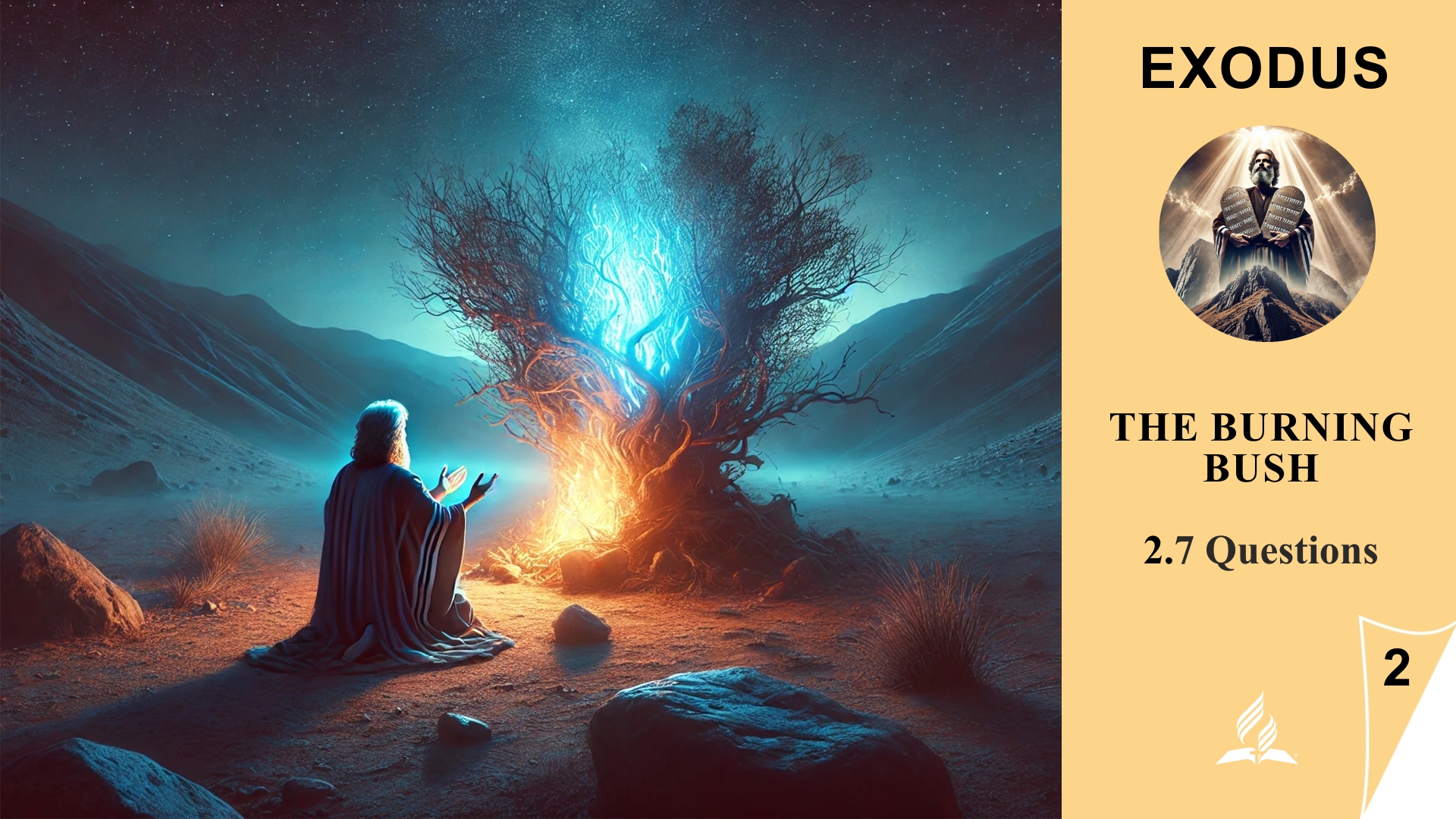
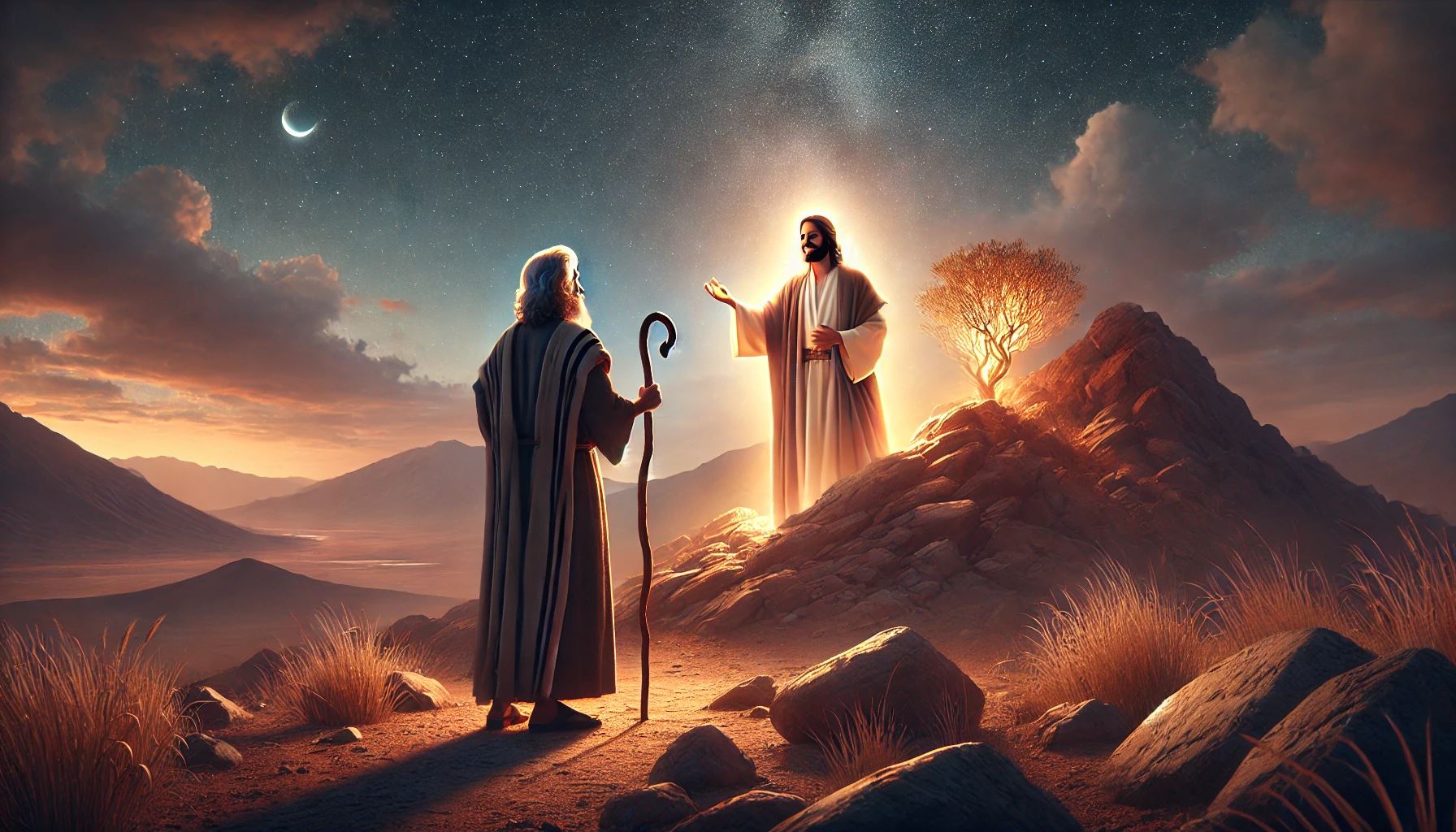
When Moses stood before the burning bush, God Himself spoke to him. The mission was clear: “Lead My people out of Egypt.” But instead of moving immediately, Moses responded with a series of excuses—understandable ones:
-
“Who am I to go to Pharaoh?”
-
“What if they don’t believe me?”
-
“I’m not a good speaker.”
-
“Please, send someone else!”
These doubts are deeply human. Moses saw himself—his inadequacy, his past, his limitations. He didn’t see what God saw in him. And that is one of the deepest lessons of this story: God doesn’t call the qualified—He qualifies the called.
God’s response to Moses wasn’t rebuke, but reassurance: “I will be with you.” He even gave him help (Aaron) and signs and wonders. But the true assurance was God’s presence itself.
✨ Spiritual Principles
God doesn’t call the able—He enables those He calls.
🧩 Practical Application
Maybe you also have excuses. You think you’re too shy, too inexperienced, too flawed. But God doesn’t look at what you (still) can’t do—He looks at what you’re willing to do in His hands. Faith means stepping out—even while trembling—onto the water.
📌 Question 3: Talk more deeply about the statement in the Sunday lesson that Moses wrote the book of Genesis and how crucial this work is for understanding salvation history and God’s plan of redemption. Why must we resist every attempt (and there are many) to weaken the authority of this book—especially through denying the historicity of its first eleven chapters?
The book of Genesis isn’t just the beginning of the Bible—it’s the foundation upon which the entire structure of salvation history is built. The belief that Moses wrote this book under divine inspiration is not just theologically important, but historically critical. In the New Testament, both Jesus and the apostles confirm Moses’ authorship and refer to the events not as metaphor but as historical fact.
Genesis tells us who we are, where we come from, why the world suffers, and how God’s plan of redemption began. Without this book, there would be no explanation for sin, no need for a Savior, and no red thread connecting Scripture as a whole.
Especially the first eleven chapters—Creation, the Fall, Cain and Abel, the Flood, Tower of Babel—are under heavy attack today. Many try to reduce them to myth or symbolism to make them more “scientifically compatible” or culturally acceptable. But if we abandon these chapters, we punch a hole in the foundation of the gospel itself.
✨ Spiritual Principles
The truth of Scripture is not a side issue. If the beginning of the story crumbles, the ending loses its power.
🧩 Practical Application
It is our task to defend the authority of Scripture—in conversation, in teaching, and in our own thinking. Especially in a world that relativizes everything. The book of Genesis is not a fairytale—it’s humanity’s record, written under God’s guidance through Moses.
………………………………………………………………….
✅ Conclusion
The story of Moses is not just an ancient account—it reflects our own journey. God doesn’t use us despite our weaknesses but through them. He calls us not just in grand moments but especially in the quiet years of preparation. And He gives us His truth as a firm foundation that does not waver.
………………………………………………………………….
💭 Thought of the Day
“When God leads you into the wilderness, it’s not the end—but often the beginning of your greatest impact.”
………………………………………………………………….
✍️ Illustration– “In the beginning was…?”
Elias Sommer was a rising young theologian in his mid-30s, popular among students and colleagues. He taught at a prestigious theological faculty in Germany. With his sharp lectures on biblical hermeneutics, cultural context, and symbolic readings of the Old Testament, he was a celebrated speaker at conferences and in theological magazines. He was known for “rethinking old stories.”
Especially the book of Genesis—he liked to frame it as “literary.” In lectures he would say things like:
“Whether Adam and Eve actually lived is not the point—the deeper message is that humanity is fallible.”
The students nodded, took notes.
“The Flood was probably a historical natural disaster with mythical embellishments. But that doesn’t make the text any less meaningful.”
Applause followed.
For Elias, the Bible was inspiring, but not always historical. For him, faith was more emotion than foundation.
The Student Who Asked
One day after a lecture, a quiet young student approached him. Tobias. He was in his early 20s, newly converted, full of questions—and full of hope.
“Professor Sommer, may I be honest?”
“Of course,” Elias replied kindly.
“I only became a Christian a few months ago. It was Genesis 3 that struck me—the story of the Fall. I saw my life in it: how I ran from God, how I hid. But if it never really happened… why did Jesus die?”
Elias wanted to answer. He had answers—well-formed, nuanced, intellectual. But suddenly they felt empty.
Tobias looked at him directly.
“I gave up my old life because I believed God had a real story with us. But if it’s all just images… what am I building my new life on?”
The Journey Home
That evening, Elias didn’t go home. He drove—hours—until he reached the small village where he’d grown up. He parked outside his parents’ old house. It was quiet. He sat on the wooden bench beneath the apple tree, where he used to sit with his father.
His father had been a farmer—not a theologian, not an academic. But deeply faithful. Elias remembered their talks about the Bible—how his father quoted Genesis by heart and said, “If the beginning isn’t true, you can’t trust the rest.”
Elias had once dismissed that as simplistic. But today, after Tobias’ question, it rang like truth.
The Battle Within
Over the next few weeks, Elias couldn’t sleep. He began reading Genesis again—not through the lens of modern criticism, but with an open heart. He asked questions he had long avoided:
-
If the Fall wasn’t historical—what exactly did Jesus redeem me from?
-
If death didn’t come through sin—why did Christ have to die?
-
If creation wasn’t God’s direct act—who gives humans dignity at all?
The more he read, the more he understood: Genesis wasn’t meant as metaphor. It was foundation. Not poetic myth—but God’s revelation about the origin of everything—light, life, humanity, sin… and hope.
The Turnaround
Months later, Elias stood before his students again. But this time was different. No PowerPoint, no modern theologian quotes. Just him—with a Bible in hand.
“I have to confess something,” he began. “I’ve treated the book of Genesis wrongly. I dissected it, reduced it to make it easier to understand. But I forgot: it’s not my job to make God’s Word understandable—but to believe it.”
The room was silent.
“The Fall isn’t just an idea—it’s reality. And that’s why the cross isn’t just a symbol—but victory. God didn’t create us in images, but in His image. And He doesn’t want to save us metaphorically—but truly.”
Some students wept. Tobias was there. He smiled.
Conclusion of the Story
Elias lost many of his academic honors. Some colleagues turned away. But he gained something greater: clarity about God’s Word. He began publicly defending Genesis, wrote books, gave lectures—not to shine, but to protect the truth.
Final Thought
Genesis isn’t just a nice beginning. It’s the foundation. If you undermine it, the whole structure of faith shakes. But if you build on it—you will stand.
Like Elias. Like Tobias.
Like you—if you take God at His Word.