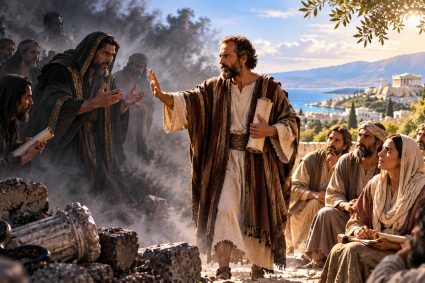
🌱LIVING FAITH | 1.Persecuted but Not Forsaken | 1.3 Paul in Philippi | ✉️ CHRIST IN PHILIPPIANS AND COLOSSIANS
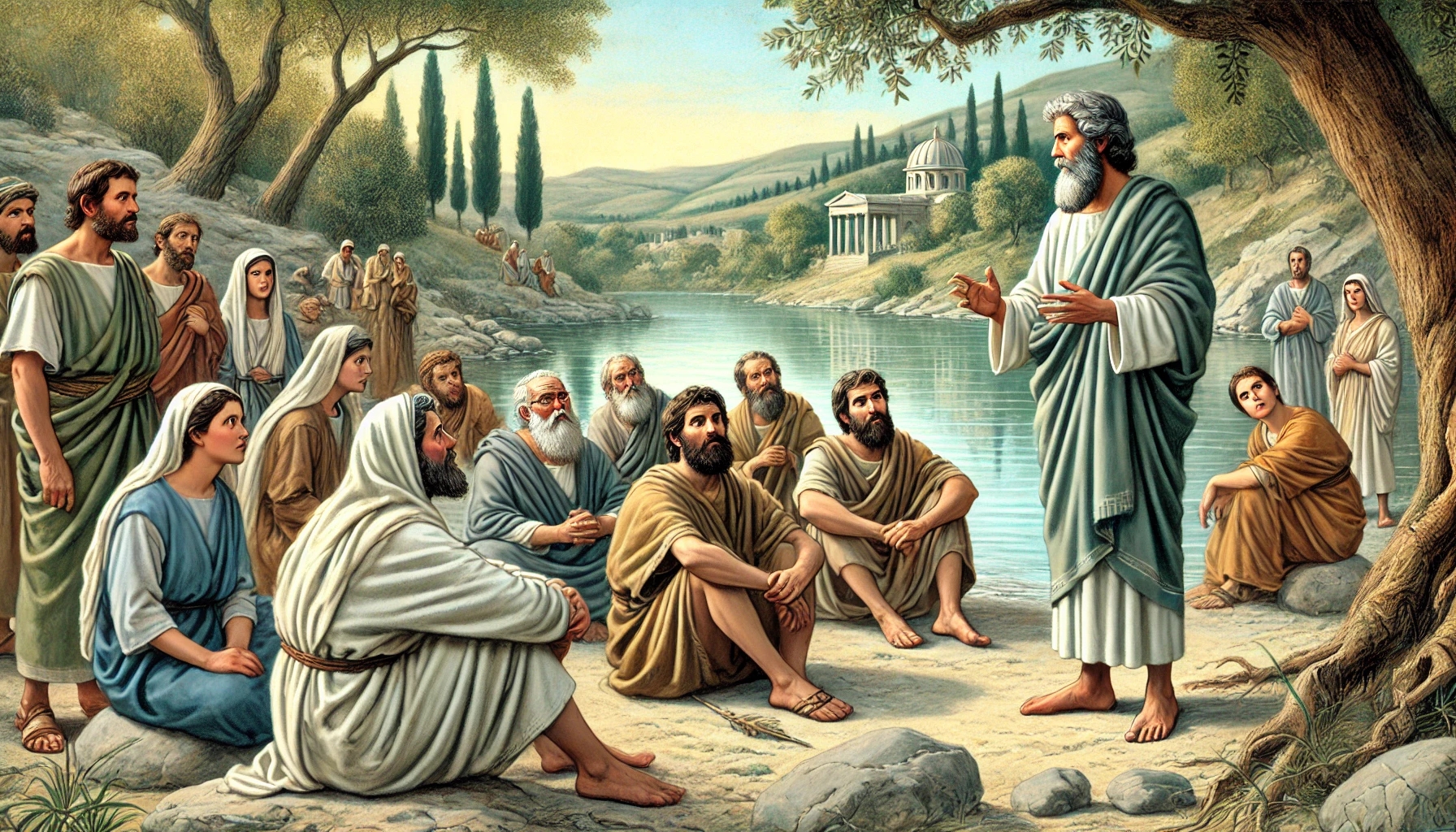
⛪ Lesson 1: Persecuted but Not Forsaken
📘 1.3 Paul in Philippi
✨ A Strategic City, a Suffering Servant
🟦 Introduction
Sometimes the Holy Spirit closes doors that seem logical to us—only to open a far greater, divinely guided door. This was the case with Paul: he wanted to continue preaching in Asia Minor, but God led him across the sea—to Philippi, in Europe.
There he encountered open hearts, open opposition, and open prison doors. This lesson shows: God leads—even when the path seems uncertain. And often, persecution becomes the key to great revival.
………………..✉️………………..
📖 Bible Study
🔹 Acts 16:6–40 – The Beginnings in Philippi
Section-by-section analysis:
📌 1. The Call to Macedonia (verses 6–10)
“…but the Spirit did not allow them.”
“In a vision Paul saw a man… saying, ‘Come over and help us!’”
➡️ Paul wanted to continue to Asia, but the Holy Spirit redirected him.
This shows: God guides not only through open doors, but also through closed ones.
Lesson: When God stops us, it is to send us anew.
📌 2. Philippi – A Strategic Mission Point (verse 12)
“The leading city of that district of Macedonia”
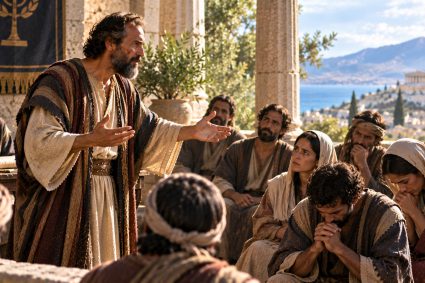
Philippi was Roman, educated, prosperous, and located on the Via Egnatia—a major trade route.
Whoever heard the gospel here could spread it far and wide.
Lesson: Mission often begins at the center of culture.
📌 3. Lydia – The First Christian in Europe (verses 13–15)
“The Lord opened her heart…”
Lydia was a dealer in purple cloth—wealthy, influential, and business-minded. Her conversion shows:
-
The gospel reached women and entrepreneurs.
-
She became the first host of a church in Europe.
Lesson: God uses people with open hearts—not perfect lives.
📌 4. Imprisonment—and the Miracle (verses 16–34)
-
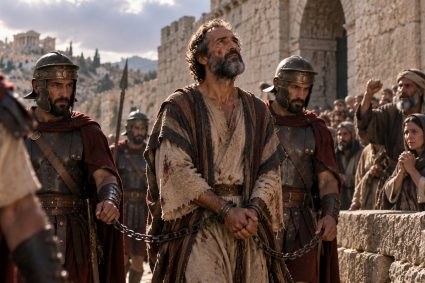
Paul and Silas are beaten and imprisoned.
-
At midnight they praise God—and an earthquake opens the cells.
-
The jailer is about to take his own life—but Paul cries out, “Do not harm yourself!”
-
Result: the conversion of an entire household.
Lesson: God uses suffering to reach the unreachable.
🔍 Connection with Acts 9:16
“For I will show him how much he must suffer for My name.”
➡️ Jesus’ words about Paul reveal: suffering was not an accident, but part of Paul’s calling.
The same applies to us:
Some suffering is not punishment, but mission.
We should not try to avoid all suffering—but seek God’s purpose within it.
………………..✉️………………..
🗣️ Answers to the Questions
Question 1: How does Acts 9:16 help us understand Paul’s trials—and our own?
📌 Answer:
Acts 9:16 makes it clear that suffering was part of Paul’s calling, not a side effect. Jesus Himself announced it—it was part of Paul’s witness.
In Philippi, Paul experienced:
-
Physical suffering (beating, imprisonment),
-
Spiritual fruit (Lydia, the jailer),
-
Divine intervention (earthquake, conversion, joy).
From this we learn:
-
Not all suffering is negative—it can be part of a divine strategy.
-
Our trials often have a supernatural purpose we recognize only later.
In God’s plan, no pain is wasted.
………………..✉️………………..
💎 Spiritual Principles
-
God sometimes leads through closed doors.
-
Mission often happens where we expect resistance.
-
True conversions are often the result of faithful witness in suffering.
-
Suffering can become the stage for God’s intervention.
-
Those who trust God can sing—even in prison.
………………..✉️………………..
🛠️ Application in Daily Life
-
When you experience detours: don’t ask only “Why?” but also “Where to, Lord?”
-
When you face rejection: remain faithful—your witness can open hearts.
-
When doors close: trust that God is leading—perhaps to a greater purpose.
-
When you suffer: look to Jesus and Paul—their suffering was never meaningless.
-
Find your “Philippi”: Where does God want to use you—even if it is challenging?
………………..✉️………………..
✅ Conclusion
Paul wanted to go to Asia—but God led him to Europe.
He ended up in prison—but revival and conversion began there.
God’s ways are not always comfortable, but always purposeful.
Those who walk with the Holy Spirit may experience persecution—but also fruit that remains for eternity.
………………..✉️………………..
💭 Thought of the Day
“God does not open every door—but He always leads us through the right one.”
………………..✉️………………..
✍️ Illustration
“The Call from the North”
A call that changed everything – the story of a modern calling
🟩 Part 1: The Call in the Night
Samuel Dietrich was not a typical missionary. He was a software developer—quiet, married, with two children. Living in Freiburg, Germany, he was an active member of the Adventist church, but not a “preacher.” Still, he always sensed that God had more in store for him.
One night, he had an intense dream.
He saw a group of teenagers in a cold city park in Toronto.
Their faces were empty, their eyes tired. One turned toward him and said:
“Come over—to Canada—and help us.”
He woke up drenched in sweat.
His wife Anna asked, “What’s wrong?”
He whispered, “I think… God is calling me.”
🟩 Part 2: The Departure
Three weeks later, through acquaintances, they received an invitation to help with a youth and media project of the Toronto-West Adventist Church. Coincidence? Samuel said, “I believe this is the door.”
He took six months of unpaid leave. The family sold their car, downsized their household, and booked a one-way ticket to Toronto.
Like Paul, he set sail—not from Troas across the Aegean, but from Frankfurt across the Atlantic—into an unknown calling.
🟩 Part 3: Encounter with No-Man’s-Land
Toronto was cold—not just in climate, but spiritually frozen.
The youth were disillusioned with religion, trapped in social media, depression, and emptiness.
Samuel didn’t begin with Bible studies, but with listening. With games. Cooking. And questions like:
“What do you think—what does God think about you?”
A girl named Ava answered, “I think if He exists, He’s disappointed in me.”
Samuel replied quietly, “I don’t believe that. And I’m willing to show you.”
🟩 Part 4: The Conflict
After a public workshop on identity and sexual ethics, opposition arose.
A student film with a Christian message was labeled online as “religious manipulation.”
Parents complained. The school ended the cooperation.
Like in Philippi, tension grew—because truth disrupts.
A representative of the Regional Education Authority appeared:
“You do not have a religious teaching mandate. Please end your activities in school-related spaces.”
Samuel bowed slightly and said, “When doors close, God finds another way.”
🟩 Part 5: The Gathering by the River
Without a building or funding, Samuel began house gatherings.
First in his apartment. Then in the park—outdoors, like Paul by the river with Lydia.
A small group met every Sunday morning in High Park. They read the Gospel of John, shared testimonies, and prayed.
Ava brought her boyfriend. Then a young man with a Muslim background came.
A student asked, “Can we be baptized even though we don’t have a building?”
Samuel answered:
“The church is not a place—it is a movement.
The first baptism was outdoors too—why not the next one?”
🟩 Part 6: The Night in Jail
After an unregistered gathering with over 40 youths, the situation escalated.
Police were called for noise disturbance and an “illegal religious assembly.”
Samuel was briefly detained.
In the cell, he prayed aloud.
He sang softly but firmly: “I will love You, my strength.”
A police officer, Officer Thompson, later asked:
“Why don’t you seem angry or ashamed?”
Samuel replied calmly, “Because I wasn’t arrested—I was reassigned.”
And just like in Philippi, a night in jail led to the conversion of an officer.
🟩 Part 7: The Harvest
After his release, Samuel became known throughout Ontario. Some media criticized him; others invited him.
His online messages were shared thousands of times. Youth called him “the pastor from the park.”
A movement emerged: “Open Rivers”—an informal youth initiative for spiritual identity, dialogue, music, and prayer.
Supported by Adventist churches, but open to all.
Ava was baptized. Officer Thompson started a Bible group with colleagues.
A young man wrote:
“I wanted to end my life. Then I saw your video. Now I’m praying for the first time.”
🟩 Part 8: Return to Europe
After two years, Samuel returned to Germany with his family—not as a “hero,” but as a witness.
Like Paul, he did not leave Philippi out of fear, but because the mission was fulfilled.
In Freiburg, he founded an initiative for intercultural home groups. Yet part of his heart remained in Canada.
“Maybe,” he once said, “the call to Macedonia never really ended. It just comes back—with a different name.”
………………..✉️………………..
📌 Final Thoughts on the Story
Like Paul, Samuel was called through a divine vision—not to a comfortable place, but into a situation marked by suffering, resistance, and fruit.
-
Like Lydia, Ava was converted through quiet faithfulness.
-
Like the jailer, an officer was touched by Samuel’s attitude.
-
Like in Philippi, a small prayer group became a movement.
❗ When God calls, go—even if it leads across a sea, through resistance, and through chains. For He goes with you.

More Stories