

🌅 Back to the Source of Life
Sabbath reflections for silence, renewal, and encountering God
🌿 Beatitudes
💧 2.Blessed are those who mourn
“Blessed are those who mourn, for they shall be comforted.”
Matthew 5:4
🕊️ A story – the look in the night
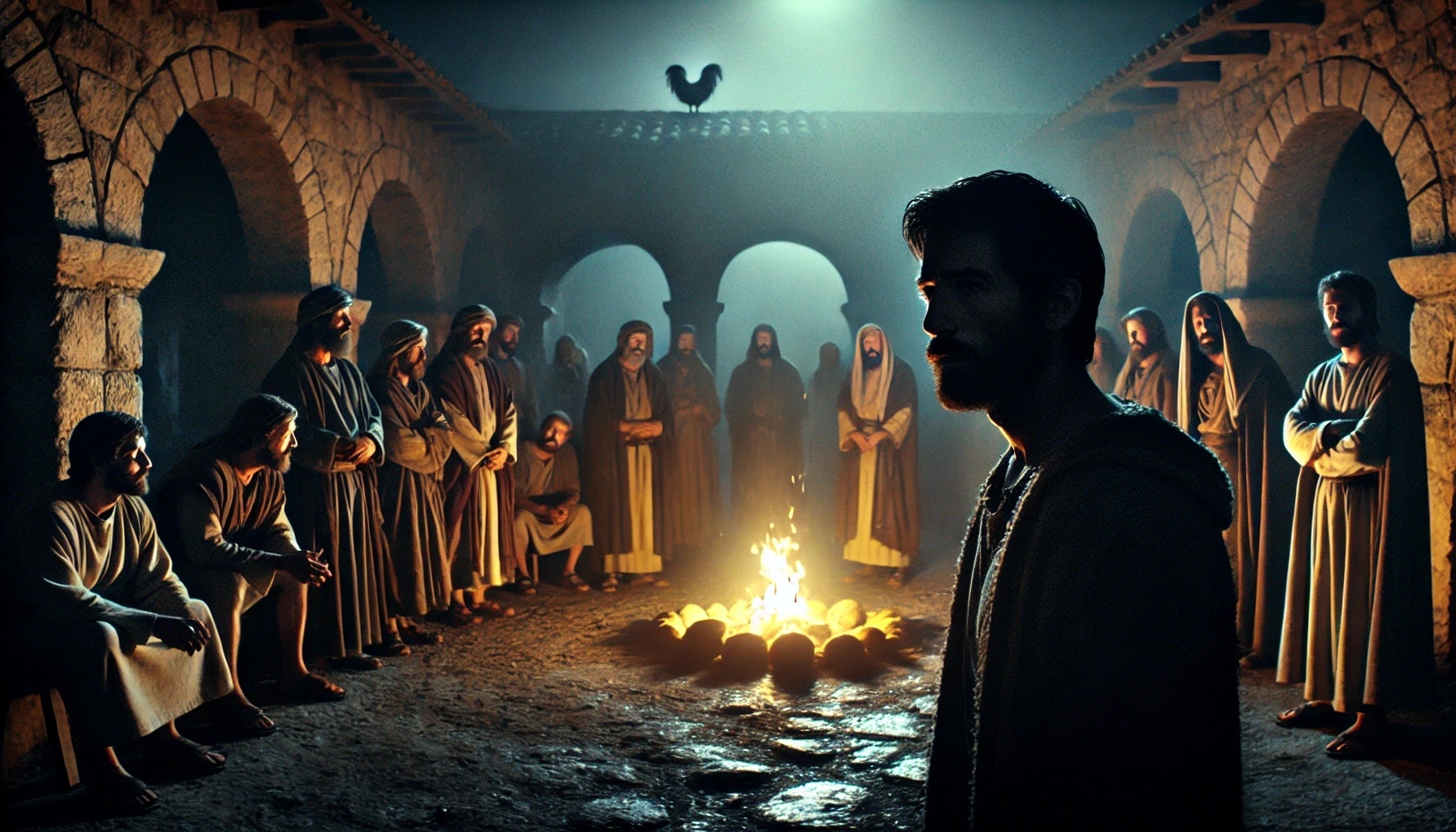
In the courtyard, a small fire was burning that gave little warmth, but enough light to make the faces of the people visible. The night was cold, but Peter the Apostle hardly noticed. Too much had happened in the past hours. Events had unfolded rapidly, and nothing was as it had been earlier that evening.
Not long before, he had been standing at the side of Jesus Christ. He had listened, responded, felt secure. Now he stood at the edge, among strangers, uncertain and inwardly tense. He wanted to know what was happening, yet at the same time not draw attention to himself. It was a state between closeness and distance, between courage and fear.
Suddenly, the silence was broken. Someone looked at him more closely and said, “You were with him too.” Peter reacted immediately, almost instinctively. He denied it and claimed not to know Jesus. It was not a considered answer, but a quick reaction out of fear.
Shortly afterward, he was addressed a second time, and again he avoided the truth. The third time, the situation became even more direct. The questions were more specific, the pressure more noticeable. And once again, Peter chose against the truth. With each of these moments, he distanced himself not only from the people around him, but also inwardly from the One to whom he truly wanted to belong.
At that very moment, the rooster crowed.
It was not a loud event, not a dramatic break—and yet this moment changed everything. Peter remembered the words Jesus had spoken earlier. And then something happened that deeply shook him: Jesus turned and looked at him.
It was not a look of accusation. No harsh judgment, no public exposure. It was a look filled with truth—but also with pain and a deep, unchanging love. In that one moment, Peter understood everything. He recognized not only what he had said, but also what it meant.
Everything he had previously relied on—his determination, his strength, his self-confidence—collapsed. He could no longer justify himself or explain anything. The reality of his actions stood clearly before him.
Scripture describes it simply, yet powerfully: “And Peter went out and wept bitterly” (Luke 22:62).
🌿 When the heart truly recognizes
At this point, the words of Jesus begin to take on a deeper meaning: “Blessed are those who mourn.” This is not about general sadness or a reaction to difficult circumstances. It is about an inner state that arises when a person recognizes themselves in the light of God.
Peter did not weep because he had been exposed. He wept because he realized what he had done and whom he had hurt. This kind of pain is not superficial, but deep. It does not only concern individual actions, but the heart itself.
Ellen G. White describes this experience very clearly:
“The sorrow of which Christ speaks is a sincere grief over sin. When a person stands in the light of God’s presence, they recognize the depth of their own failure. They see not only their actions, but the condition of their heart, and this realization leads to genuine repentance.”
(Thoughts from the Mount of Blessing, Chapter 2)
“Whoever looks to Christ, especially in the light of His sacrifice, begins to understand what sin truly means. They recognize that it has separated them from God. This realization moves the heart and leads a person to long for forgiveness and restoration.”
(Thoughts from the Mount of Blessing, Chapter 2)
🔥 The difference from superficial repentance
It is important to distinguish between true and superficial sorrow. Many people know regret, but not every form of sadness leads to change. One may be sorry for the consequences of a mistake, for lost opportunities, or for personal consequences, without anything truly changing within.
The sorrow Jesus speaks of goes deeper. It is not only focused on what has happened, but on the relationship with God.
Ellen G. White writes:
“There is a sorrow that focuses only on the consequences of sin. But true repentance recognizes sin itself as the problem. It sees that a person has turned away from God and leads them to turn back to Him with all their heart.”
(Thoughts from the Mount of Blessing, Chapter 2)
“This sorrow is not marked by despair, but by hope. For it does not lead a person away from God, but precisely toward Him.”
(Thoughts from the Mount of Blessing, Chapter 2)
🌙 The promise: comfort
Jesus does not leave this beatitude in sorrow, but connects it with a clear promise: “…for they shall be comforted.” This means that the experience of pain and repentance is not the end, but a transition.
For Peter, it did not end in that night either. Jesus’ look was not a final judgment, but the beginning of a path of restoration. From this experience later grew a faith that was no longer based on self-confidence, but on true dependence.
Ellen G. White describes this comfort:
“Christ does not reject the repentant person. He comes near, lifts them up, and gives them the assurance of forgiveness. In His presence, the soul finds peace, even if it was previously filled with guilt and pain.”
(Thoughts from the Mount of Blessing, Chapter 2)
“It is not God’s will that a person remain in lasting discouragement. The Savior is near to the one who mourns, and His heart is open to every sorrow. In Him, the soul finds rest and new hope.”
(Thoughts from the Mount of Blessing, Chapter 2)
🌾 The Sabbath as a place of healing
The Sabbath offers a special space for this experience. In the silence of this day, things can surface that are often suppressed in everyday life. Memories, insights, or inner tensions suddenly become noticeable.
The goal is not to intensify the pain, but to bring it before God. Where honesty becomes possible, healing also begins.
🤲 Invitation
Take time this Sabbath not only to think, but also to feel. Do not try to suppress what is uncomfortable right away. If God shows you something, stay with it for a moment and bring it into His presence.
✨ Prayer
Lord, You see my heart better than I do. You know my decisions, my paths, and also the things I would rather not face. I ask You to give me true understanding—not just superficial regret, but a deep and honest turning back.
Show me where I have moved away from You and help me return to You. And in everything that hurts, I ask for Your comfort, which calms my heart and gives me new hope.
Amen.