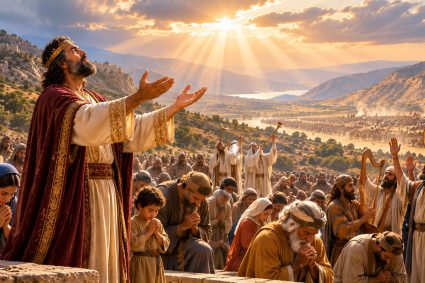
Chapter 21 shows a strong contrast to the time of Hezekiah. After years of renewal, King Manasseh leads Judah in a completely different direction. The chapter describes not only personal wrong decisions but a comprehensive change in the social and spiritual climate. It makes clear how strongly the decisions of leaders can influence an entire nation.
⋯⋯⋯⋯⋯⋯⋯⋯⋯⋯◆⋯⋯⋯⋯⋯⋯⋯⋯⋯⋯
🧵 Commentary
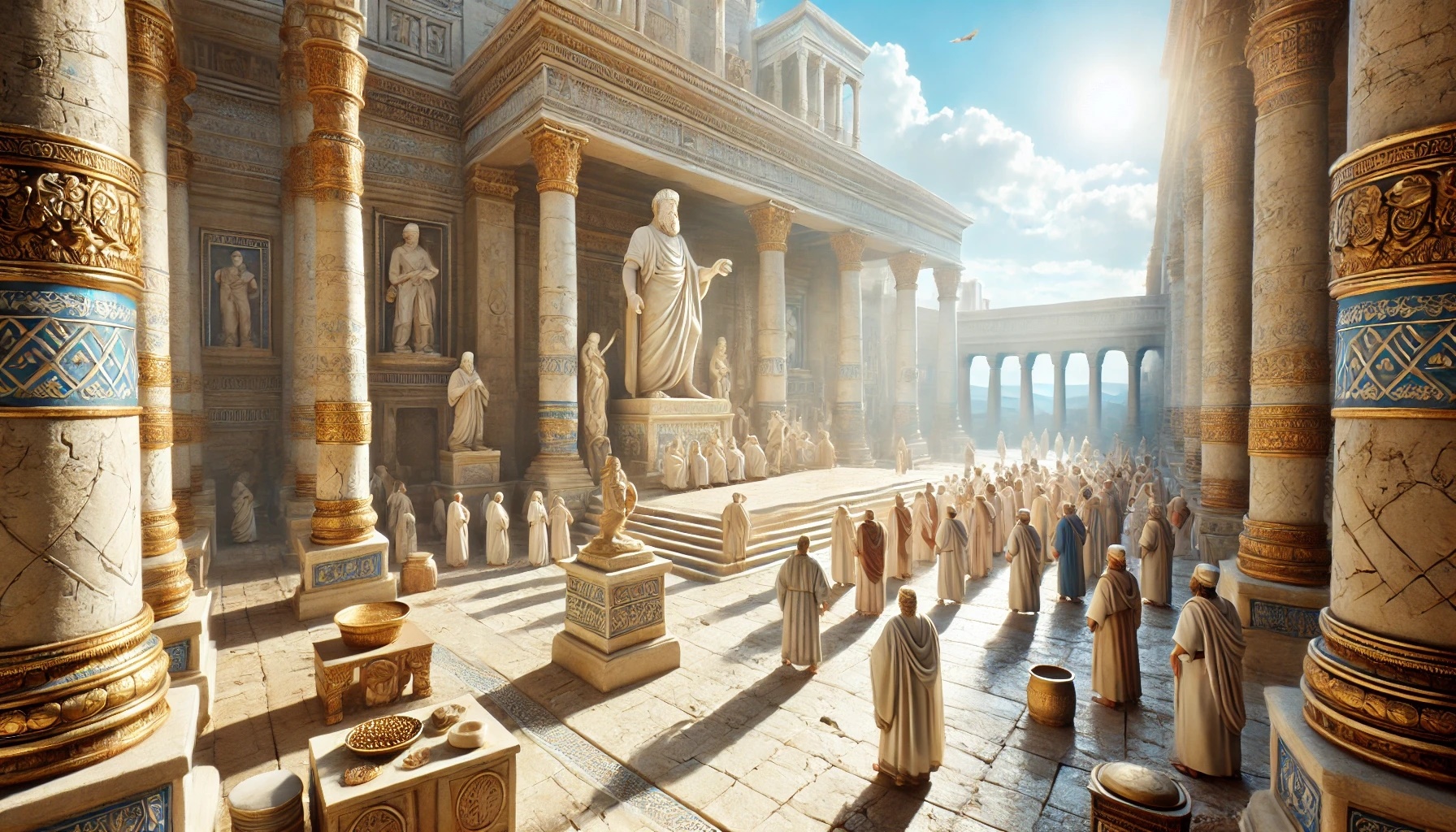
Manasseh becomes king at a young age and reigns for an unusually long time. But instead of continuing the reforms of his father Hezekiah, he deliberately returns to practices that had previously been removed. High places are rebuilt, foreign altars are erected, and even in the temple itself signs of foreign worship appear. Places that once served as meeting points with God lose their original purpose.
The narrative describes this development in serious terms. Manasseh not only goes his own way but actively leads the people to adopt practices considered destructive. The atmosphere of the land changes—morally and spiritually. Violence increases, innocent blood is shed, and Judah’s inner orientation begins to collapse.
Prophets speak warnings: because Judah deliberately turns away from the chosen path, severe consequences will follow. The images used are striking—Jerusalem will be cleansed like a vessel that is washed and turned upside down. The announcement shows that long-term developments do not remain without consequences.
After Manasseh’s death, his son Amon takes the throne. But he also continues the wrong ways. His reign is short; a conspiracy ends his life after only two years. This time, the people respond differently: the conspirators are punished, and the young Josiah is made king.
At the end of the chapter, a sense of heaviness remains. The seeds of the past years have left deep marks, even though with Josiah a new chapter already begins to emerge.
⋯⋯⋯⋯⋯⋯⋯⋯⋯⋯◆⋯⋯⋯⋯⋯⋯⋯⋯⋯⋯
🧺 Summary
2 Kings 21 describes the long reign of Manasseh, who leads Judah into deep idolatry and moral decline. Prophetic warnings announce coming consequences. His son Amon briefly follows him before being murdered, and Josiah becomes king.
⋯⋯⋯⋯⋯⋯⋯⋯⋯⋯◆⋯⋯⋯⋯⋯⋯⋯⋯⋯⋯
🔦 Message for us today
The chapter reminds us how strongly decisions over time can have an impact. Good developments are not automatically permanent—they must be preserved. At the same time, the story shows that wrong paths have not only personal but also collective consequences.
It invites us to take responsibility for the influence we have on others—in family, community, or society.
⋯⋯⋯⋯⋯⋯⋯⋯⋯⋯◆⋯⋯⋯⋯⋯⋯⋯⋯⋯⋯
📝 Reflection
Which decisions or habits might have more long-term influence than I realize?
And how can I actively contribute to preserving a good direction?
════════ ✶ ✶ ════════
📆 March 15 – 17, 2026
📚 BELIEVE HIS PROPHETS
📖 Weekly Reading from the Spirit of Prophecy
📘 Ellen White | Patriarchs and Prophets
🔥 Chapter 68 : David at Ziklag
✨ From deepest pain to restoration – God’s guidance in David’s hardest trial
🌐 Read online here
📘 Blog 2: ⚔️ The Recovery
When God’s guidance brings new victory out of despair
📍 Introduction
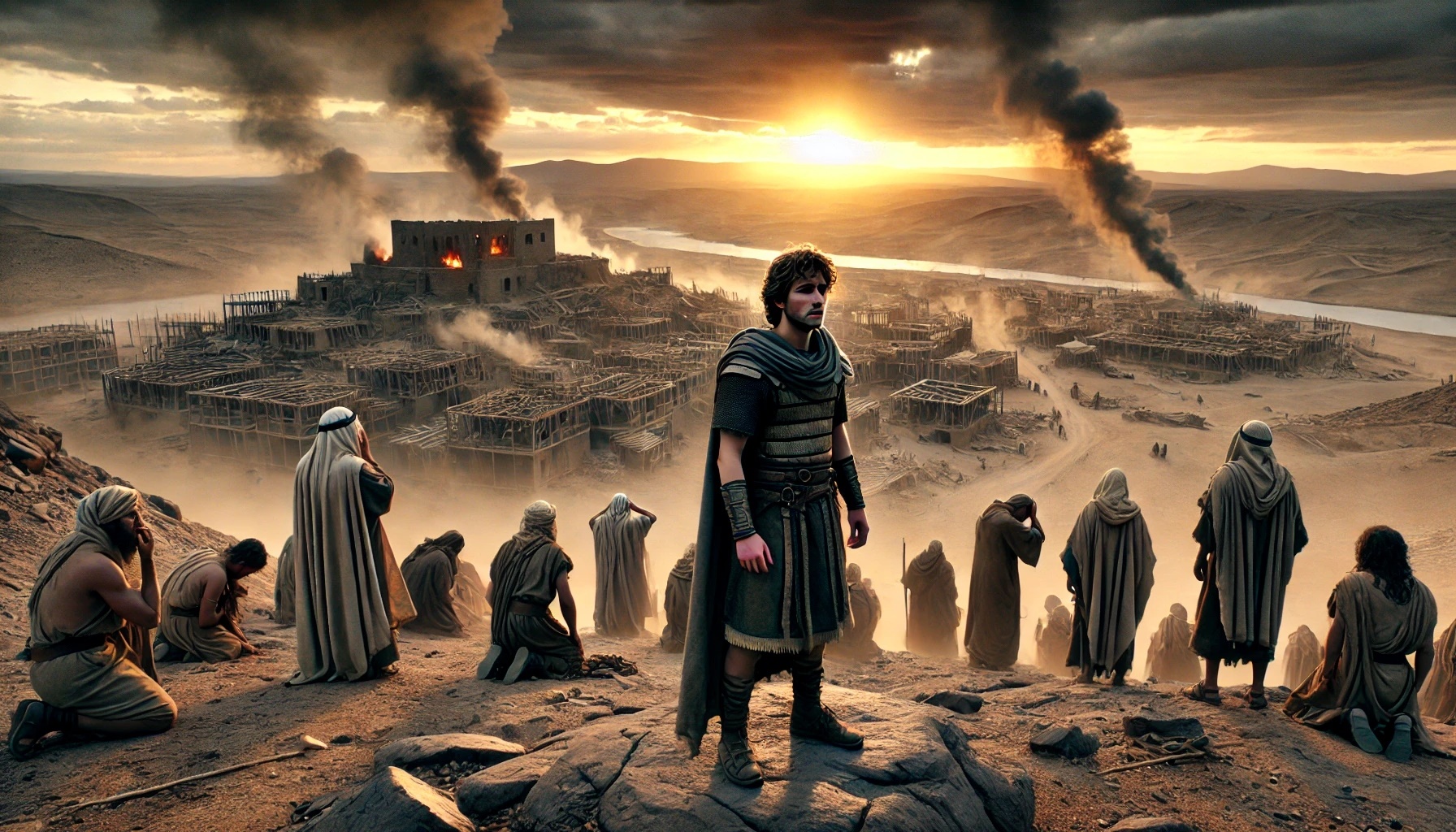
After David received God’s instruction, he began the pursuit of the Amalekites. The situation was difficult, but God’s promise gave the men courage. This episode vividly shows how God’s guidance can bring rescue and restoration even from seemingly hopeless situations.
⋯⋯⋯⋯⋯⋯⋯⋯⋯⋯◆⋯⋯⋯⋯⋯⋯⋯⋯⋯⋯
🧵 Commentary
David and his men immediately set out to pursue the Amalekites. The march was exhausting and urgent. When they reached the brook Besor, two hundred men were so exhausted that they had to stay behind. Only four hundred continued the pursuit.
Along the way, they found an Egyptian slave who had been left behind by his Amalekite master. He was sick and near death. David had him cared for and gave him food and water. Grateful, the man agreed to lead the Israelites to the Amalekite camp.
When they reached the camp, they saw a surprising scene. The Amalekites were celebrating wildly. They felt secure and were rejoicing over their plunder.
But at that very moment, David attacked.
The battle lasted from evening until the next day. In the end, the enemy was defeated. Only a few escaped.
The remarkable thing was: everything was recovered.
The families, the children, the possessions—nothing was missing.
This victory was more than a military success. It was proof that God had fulfilled His promise.
On the way back, however, another test arose. Some of the fighting men did not want to give any share of the plunder to the two hundred who had stayed behind. But David firmly opposed this.
He explained:
The victory had been a gift from God. Therefore, those who stayed with the supplies should also receive their share.
This decision revealed David’s character: justice, generosity, and wisdom.
⋯⋯⋯⋯⋯⋯⋯⋯⋯⋯◆⋯⋯⋯⋯⋯⋯⋯⋯⋯⋯
🧺 Summary
David pursues the Amalekites, defeats them, and recovers everything. Afterwards, he ensures a fair distribution of the plunder and acknowledges the victory as a gift from God.
⋯⋯⋯⋯⋯⋯⋯⋯⋯⋯◆⋯⋯⋯⋯⋯⋯⋯⋯⋯⋯
🔦 Message for us today
God can restore what was lost. Sometimes He leads us through difficult paths to show us that victory ultimately comes from Him.
⋯⋯⋯⋯⋯⋯⋯⋯⋯⋯◆⋯⋯⋯⋯⋯⋯⋯⋯⋯⋯
📝 Reflection
Am I ready to acknowledge God’s help—even when success has been achieved through hard work?