
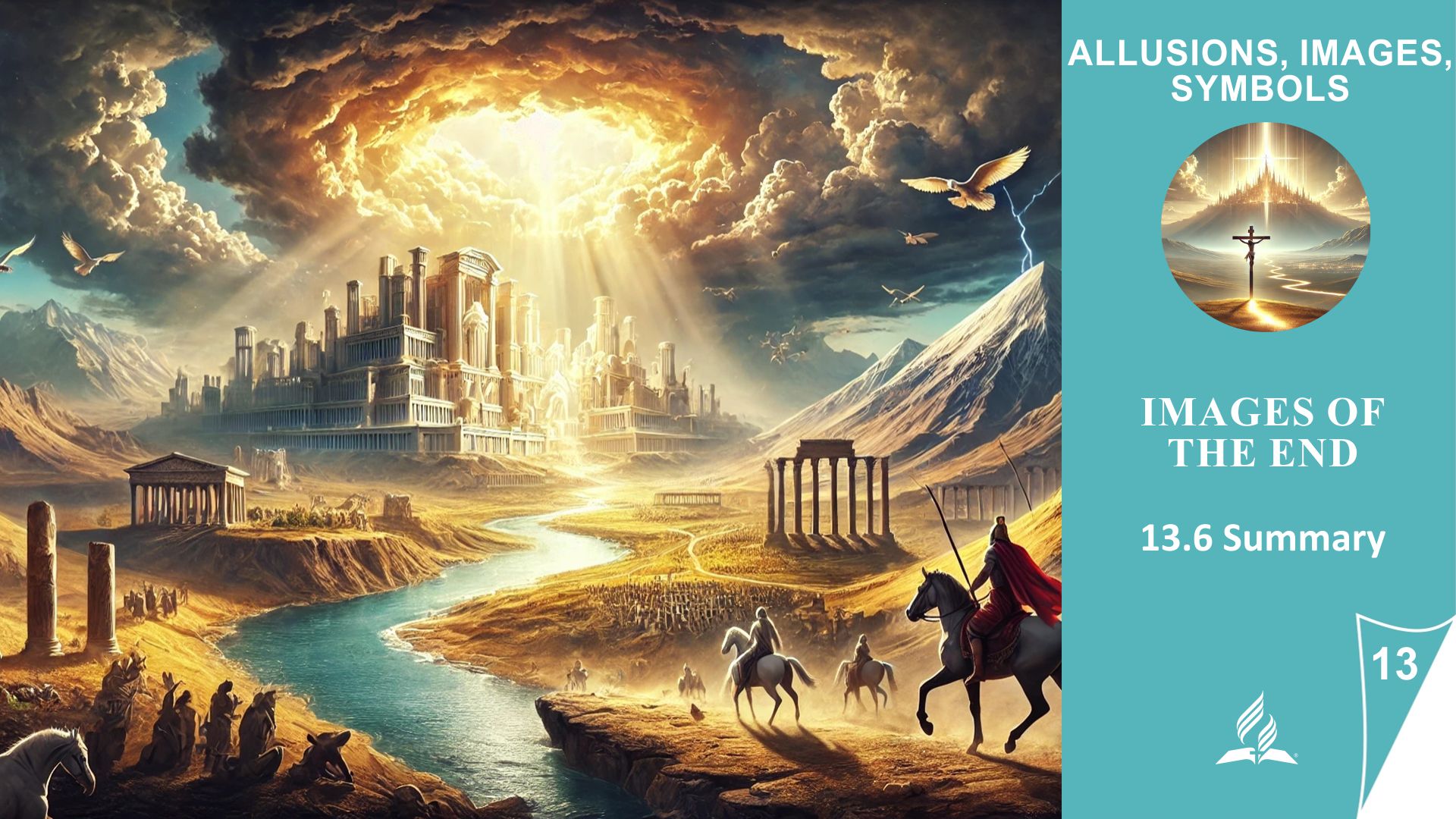


⛪ Lesson 13: IMAGES OF THE END
📘 13.6 Summary
✨ Warning, Grace, and Hope – Lessons from the Past for the End Time
………………………………………………………………….
🟦 Introduction
Lesson thirteen presents a powerful blend of biblical stories that go far beyond their historical contexts. Whether it’s a reluctant prophet, a pagan king surrounded by splendor and decay, or the symbolic drying up of a great river — all of it reflects God’s guidance, judgment, and plan of salvation. These “images of the end” are more than prophetic shadows – they are mirrors of our time, warning voices, and helping hands.
………………………………………………………………….
📖 Bible Study
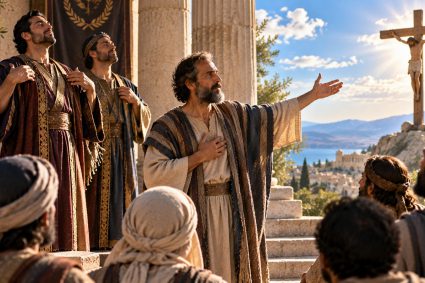
13.1 The Reluctant Prophet
Jonah was called to proclaim judgment, but his heart wasn’t ready. He fled – yet God did not let him go. In his story, we see a God who not only wants to save cities but also the hearts of His own messengers.
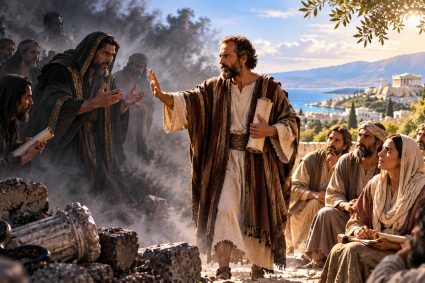
13.2 A Work of Repentance
Nineveh’s reaction was astonishing: king and people bowed in repentance. This scene reveals that repentance opens the door to grace – even for the “lost”.
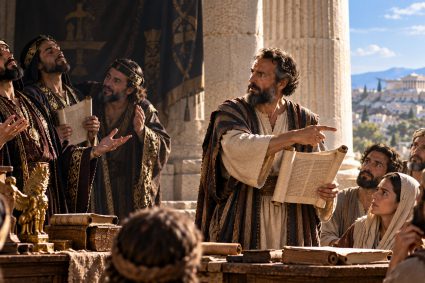
13.3 Belshazzar’s Feast
A feast full of arrogance ends in judgment. Belshazzar drinks from the sacred vessels – a symbol of contempt for what is holy. God’s hand writes the end on the wall. Judgment does not come unexpectedly – it is deserved and just.
13.4 The Euphrates Dries Up
In prophetic imagery, the drying up of the Euphrates represents the collapse of human systems. When supposed security fades, it becomes clear who we can truly trust.
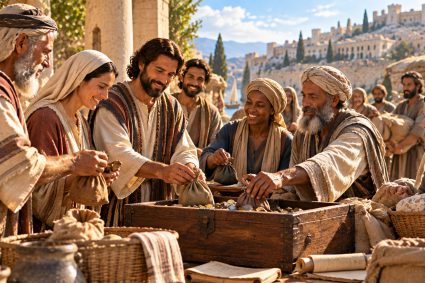
13.5 Cyrus, the Anointed One
God calls a pagan king “My anointed.” Cyrus opens the way for Israel’s liberation – a picture of Jesus, who breaks open the gates of slavery and ushers in a new era.
………………………………………………………………….
📖 Answers to the Questions
-
God works with and through the unwilling. His plans are not hindered by our weakness.
-
Genuine repentance moves God’s heart. Grace is near when repentance is sincere.
-
Pride comes before the fall. Those who exalt themselves above the holy will be humbled.
-
Earthly kingdoms pass – God’s Kingdom remains. Trust in human power is fleeting.
-
God can use anyone – even the unexpected. He is not limited by our boundaries.
………………………………………………………………….
✨ Spiritual Principles
This week challenges us to examine our own hearts:
-
Are we fleeing from God’s calling, like Jonah?
-
Are we willing to repent – or do we resist correction like Belshazzar?
-
Do we build our lives on fleeting security or on God’s eternal Kingdom?
-
Do we recognize God’s work even through “worldly” people and circumstances?
………………………………………………………………….
🧩 Practical Application – What does this mean for my life?
1. Be honest with your “inner Jonah”
There are moments when God calls us – to repentance, service, or responsibility – and we run the other way. Ask yourself: What am I currently avoiding in my life? Maybe it’s an uncomfortable calling, a painful truth, or a healing process you’re resisting. Jonah reminds us: God does not give up on you. He pursues you – not to punish you, but to bring you back to life.
➡️ Daily step: Write a letter to God in which you honestly name what you’re running from internally.
2. Make repentance a lifestyle, not a rare exception
Nineveh repented – and God’s judgment was withheld. Repentance is not a one-time event but a posture: I’m ready to turn around when God reveals my missteps. In an age of self-justification, humility is revolutionary.
➡️ Daily step: Consciously ask someone for forgiveness – even if your fault seems small. Practice humility.
3. Pay attention to the “writing on the wall” in your life
Like Belshazzar, many live in the bustle of success, celebration, and self-confidence – until God intervenes. It’s wise to heed warnings before it’s too late. Sometimes God speaks quietly – through restlessness, a Bible verse, a person. Sometimes it’s unmistakable.
➡️ Daily step: Pause today and ask: What might God be trying to show me? Is there a warning I’ve been ignoring?
4. Don’t trust in “great rivers” – but in living water
The Euphrates was once a symbol of strength and safety – but it dries up. Many build their lives on wealth, reputation, or systems. But these sources fail. Only Jesus offers water that never runs dry.
➡️ Daily step: Evaluate your sources: What nourishes your hope, identity, and security? Consciously replace a “dry source” with something spiritually life-giving (e.g., swap social media time for daily Bible reading).
5. Believe that God still sends “Cyrus-people” today
God sometimes uses the unexpected – people outside your church, culture, or comfort zone – to open doors. Be open to what you can’t control. Sometimes help comes through “strangers”; sometimes you are that Cyrus for someone else.
➡️ Daily step: Ask yourself: Where could God use me to bring freedom to others? Maybe through a conversation, an invitation, or a prayer.
………………………………………………………………….
✅ Conclusion
This lesson is a mosaic of divine interventions in history. It shows: God works in the big and small, through believers and non-believers, through judgment and grace. In the end, there is not chaos – but redemption. These stories call us not to be spectators but participants in God’s plan – with open hearts and alert spirits.
………………………………………………………………….
💭 Thought of the Day
God’s judgment is real – but His grace is closer.
Whoever approaches Him in humility will not be destroyed, but renewed.
………………………………………………………………….
✍️ Illustration – “The River That Dried Up”
A modern parable based on Exodus, Daniel, and Isaiah – set in Berlin, 21st century
Chapter 1 – The Call
It was mid-winter in Berlin. The streets glistened wet, fog drifted between buildings like a veil, hiding not only what people didn’t want to see but what they couldn’t.
On the seventh floor of a glass office tower in the city center sat Jonas Matthäus, 42, communications strategist for a global consulting firm. He was the man for complex crises. “Image problems? Give them to Jonas.” Success rate: 96%. Reputation: spotless. Faith? Somewhere dusty in the closet, next to his confirmation shirt and his grandmother’s Luther Bible.
That evening, as he left the office alone and walked down Friedrichstraße, an old man stopped him. Gray coat, crystal-clear eyes, voice like iron:
“Jonas Matthäus. God gave you a message, but you’re running away.”
Jonas laughed — but it caught in his throat. How did this stranger know his name?
“What are you talking about? Who are you?”
“Someone who must remember. And you — someone who must not forget.”
Jonas walked away. He didn’t think much about it — until that night, when he dreamt of water. A mighty river that dried up. And from the dry riverbed rose a golden city — but its foundations were rotten.
Chapter 2 – The Invitation
Two weeks later, an invitation landed on his desk. An international conference in Babylonia — a luxury hotel near the ruins of the ancient city in Iraq. Topic: “The Future of Global Order.”
The event’s name?
“The Great Feast – The Final Vision.”
He laughed. Fitting. And yet — something inside him hesitated. The dream returned, night after night.
The event was as expected: caviar, tech, politics, and people mocking God. Speakers from around the world presented solutions for a new world order.
Jonas was speaker #7. His topic: “Truth Is What Works.” Thunderous applause. Champagne flowed. The night felt eternal.
But then — at midnight — the power failed. Seconds later, one light flickered on: a projector cast a sentence onto the marble wall:
“Mene, Mene, Tekel, U-Parsin.”
Some laughed nervously. Others took photos. Jonas froze.
Chapter 3 – The Turning Point
The next morning, the conference room was empty. No speakers, no guests. Jonas wandered the hallways. In a remote corridor, he saw a girl — maybe eight years old, dusty clothes, barefoot, a goat herder’s child. She said nothing. Just looked at him — and handed him a wrinkled paper.
It read:
“You have been weighed and found wanting. But My arm is still extended.”
Suddenly Jonas felt it all: his arrogance, emptiness, inner fraud. Like Belshazzar, he had drunk from sacred vessels — not of gold, but of grace.
He left it all behind. The ticket. The hotel. The prestige. He walked — for hours — to the old city wall. There he fell to his knees.
He didn’t scream. He simply wept. For the first time in decades.
Chapter 4 – The New Stream
Back in Berlin, Jonas quit his job. No one understood. “Burnout,” they said. “Crisis.” “Ridiculous.” But he remained calm.
He started speaking in schools. About truth. About responsibility. About the invisible streams shaping our minds — and how they run dry.
He wrote a book:
“The Euphrates Is Almost Dry.”
And when someone once asked,
“Why did you give it all up?” he answered:
“Because I realized it’s better to be poor with God than rich without truth.”
Epilogue – The Anointed One
Five years later, Jonas visited a refugee camp in Greece. There he met a man named Kiros — a Kurdish Christian translating Bibles into Arabic and spreading hope.
“Kiros – like Cyrus,” Jonas said.
The man laughed.
“I’m no king. But I open gates for truth.”
And Jonas understood: God still uses “foreigners” to free His people. And sometimes, when the Euphrates dries up, true life begins.
💭 Final Thought:
Sometimes God leads us through judgment into grace. And sometimes, it takes the silence of a river for heaven’s voice to be heard.