🌱LIVING FAITH | Lesson 5 : Shining Like Lights in the Night | 5.4 Proven Character | ✉️ CHRIST IN PHILIPPIANS AND COLOSSIANS

✉️ CHRIST IN PHILIPPIANS AND COLOSSIANS
⛪ Lesson 5 : Shining Like Lights in the Night
📘 5.4 Proven Character
✨ Authenticity Under Pressure – Character That Endures
🟦 Introduction
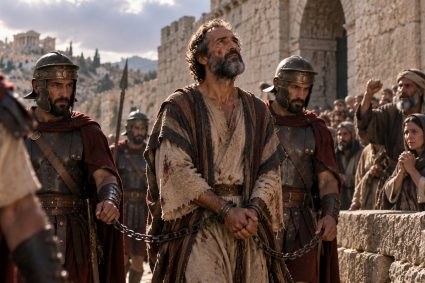
In a world focused on outward success, abilities, and self-promotion, Paul reminds us in Philippians 2:19–23 of a far more important measure: proven character. He presents Timothy to us—not as a theologically brilliant speaker or strategic leader, but as a faithful, tested, and serving person whose character has matured through trials.
This lesson asks: What makes a person spiritually trustworthy? And: How does genuine Christian character show itself under pressure? The answers are not spectacular—but they are decisive.
………………..✉️………………..
📜 Bible Study
📌 Philippians 2:19–23: A Coworker Like No Other
Paul speaks about Timothy with extraordinary warmth and appreciation. He describes him as:
-
“like-minded” (Greek isopsychos — “of one soul with me”)
-
someone who is “genuinely concerned for you”
-
not focused on his own interests, but on what belongs to Christ
-
proven — tested through many shared experiences
The picture is clear: Timothy was more than a coworker—he was a trusted companion in faith, someone who had the same heart as Paul and who put the good of others above his own.
In a time when many workers “seek their own” (v.21), Timothy is a shining counterexample. His faithfulness, gentleness, and willingness to sacrifice made him indispensable to Paul.
📌 1 Corinthians 4:17: “…who will remind you of my ways in Christ”
Here Paul emphasizes that Timothy does not merely know theology—he embodies life in Christ. He knows Paul’s way of living because he was part of it. That makes him a credible teacher and role model.
📌 2 Timothy 1:5: “…your sincere faith”
Paul reminds Timothy of his roots—his mother Eunice and grandmother Lois. The faith they lived out is real—not formal, not fake. And Timothy carries forward this authentic, honest faith.
Character begins not in public, but in secret: at home, in how we treat our family, in difficult moments.
📌 Romans 5:4: “Perseverance produces proven character; and proven character, hope”
Proven character does not come from theory, but from testing. Character matures when we stand firm under pressure—and hope grows as we experience that God is faithful.
📌 2 Corinthians 2:9 & 9:13: Tested Character
Here we see: the church recognizes a person’s authenticity by their actions, especially in obedience and generosity. Whoever stays faithful in everyday life shows proven character.
………………..✉️………………..
🗣️ Answers to the Questions
📌 Question 1: Why does Paul speak so positively about Timothy? What else does he say in 1 Cor 4:17 and 2 Tim 1:5?
Paul highlights Timothy because among many shallow or self-seeking coworkers, he is a genuine example of service.
-
He is not only competent, but tested in character.
-
He does not think of himself, but of others and of Christ.
-
He is spiritually minded—shown in his care for the Philippians.
-
He has a genuine spiritual heritage, shaped by the sincere faith of his mother and grandmother.
-
He is able to teach the way of Christ, not only through words, but through life.
Paul stresses all of this because Timothy is not simply an “assistant,” but a living example of the gospel’s power in everyday life.
📌 Question 2: Have you endured provocations and offenses gently lately? How could they help you grow spiritually?
This question goes to the heart. Every Christian experiences trials—but not everyone allows them to shape them.
-
Maybe I responded to irritation with resentment, withdrawal, or defiance.
-
Maybe I defended myself instead of remaining calm in Christ.
-
Maybe instead of forgiveness I sought distance.
What would have been different if I had responded like Timothy—patient, humble, gentle?
According to Ellen White, these situations are especially God’s school for character. If we go through them in the Spirit of Christ, virtues grow in us that transform us into His image (cf. 2 Cor 3:18).
………………..✉️………………..
💎 Spiritual Principles
-
Character is more important than charisma.
-
Proven character comes through testing—not comfort.
-
Gentleness is not weakness, but spiritual maturity.
-
Faith is not only believed—it is lived.
-
A proven person is a gift to the church.
………………..✉️………………..
🛠️ Everyday Application
-
Train patience intentionally: Take everyday irritations as opportunities to practice.
-
Do not evaluate people by talent, but by faithfulness.
-
Look for spiritual mentors who show character—not just knowledge.
-
Forgive faster—not because of others, but because of Christ.
-
Begin your day with this prayer: “Lord, shape my character through everything You allow today.”
………………..✉️………………..
✅ Conclusion
Proven character does not grow overnight. It grows in storms, in silence, in obedience, in endurance. People like Timothy show us: serving Christ begins with the heart—with inner faithfulness, love for people, and clarity about what truly matters.
And God? He sees. And He uses proven people to bless His church.
………………..✉️………………..
💭 Thought of the Day
“God does not use the loudest—but the proven.”
………………..✉️………………..
✍️ Illustration – Faithful in the Shadow: When No One Is Watching
The story of Miriam, an unnoticed winner
Part 1 – Between Everyday Life and Devotion
Miriam was 41. She lived in a small town in southern Germany, was married, a mother of two teenagers, worked part-time as a medical assistant, and led the children’s Sabbath School in her church. From the outside, everything was… ordinary.
No dramatic past. No mission project. No YouTube channel. No hero story.
But what no one saw: her life was a constant inner battle. A quiet but intense struggle for character—for gentleness, for patience, for faithfulness.
Part 2 – The Storm Doesn’t Begin Outside
The pandemic had left its marks. Her husband Thomas had, during that time, drifted away from God inside. His comments became mocking, his patience short.
“You and your church all the time. They can’t get anything done anyway.”
Miriam had heard it before. But that Monday evening—she had just come home from work, was tired, and had still been crafting something for the next Sabbath—it hit especially hard.
“Maybe I’m just not godly enough for you, huh?”
She could have snapped back. With reason. With words that hit the target.
But she stayed silent.
She took her craft supplies, went into the bedroom, knelt down—and cried. Not because she was weak, but because she knew: This is where my character is being formed.
Part 3 – Christ’s School
In the months that followed, it did not get easier. The church leadership was overwhelmed, Sabbath School lessons often happened with half the preparation, her teenage son tested boundaries, her best friend at church was disappointed because Miriam had no time for hour-long phone calls.
“You’re so busy, Miriam… I don’t know if you’re really listening anymore.”
It hurt. Again.
But again Miriam did not respond impulsively. She chose another path:
-
Silence instead of having to be right.
-
Prayer instead of complaint.
-
Serving instead of withdrawing.
She read Philippians 2 every morning—especially these words:
“For I have no one else so like-minded… for he has proven himself.”
And she asked herself: What is my faith worth if it is strong only in calm, and not in the storm?
Part 4 – Light in Unexpected Places
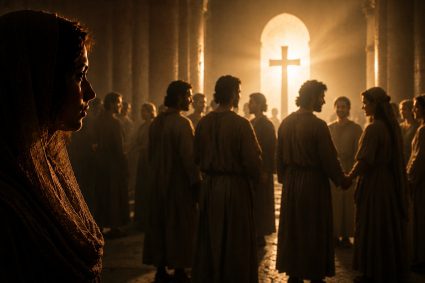
It was a Tuesday morning at eight. Miriam sat in the treatment room at the clinic. A new patient, Nadia, came in—veiled, nervous, pregnant. Miriam greeted her kindly, as always.
When Miriam returned later, the woman was still in the waiting area—with tears in her eyes.
“May I… stay a moment? I… I just wanted a place where no one screams…”
Miriam nodded. Brought a glass of water. And simply said:
“You are welcome.”
No big sermon. No tract. Just gentleness. Kindness. Calm.
Two weeks later Nadia came again—this time with questions.
“Why are you… so calm? Why do you look at me as if I’m… valuable?”
Miriam said softly:
“Because every day I am loved by Someone who sees me. Jesus.”
Part 5 – The Day No One Came
Half a year later Miriam’s father died. She organized the funeral almost alone. In the church, hardly anyone reacted. Not out of malice—just everyday life, schedules, distractions.
The day after the funeral she went to work as usual. In the evening she again prepared children’s Sabbath School. On Sabbath she was there on time, even though she had barely slept.
A deacon said briefly:
“Thanks for doing this again.”
And walked on.
No one asked about her. No one saw the tears she cried in the car before getting out.
But even that Sabbath she told the children:
“Do you know what Jesus said on the cross? ‘Father, forgive them.’ When we forgive even when it’s hard—then we are like Jesus.”
She said it—and she meant it.
Part 6 – What Counts in Heaven
Ten years later. The church had changed. New families had come. Miriam was still there—quieter, grayer, with wrinkled patience. Many children she had taught were now adults—some active in mission, others quietly faithful.
On the last Sabbath of the year, a young woman came to the front—one of her former students.
“I want to share a testimony. If I love Jesus today, it’s because I saw Him through Sister Miriam. Not because she was loud. But because she… never stopped loving us. Even when we were annoying.”
The church applauded. Miriam cried.
………………..✉️………………..
📌 Final Thoughts on the Story
Proven character shows itself not in big moments, but in small, faithful steps. Miriam had no stage—but she had steadiness. No visions—but responsibility. No applause—but endurance.
You become proven not because others say so, but because God sees it—and works in secret.
“Because you know that the testing of your faith produces perseverance.”
(James 1:3)
Maybe no one sees you. Maybe no one praises you.
But if you endure in love, serve in silence, remain in patience—then you are proven to God.
And that is all that counts.

More Stories