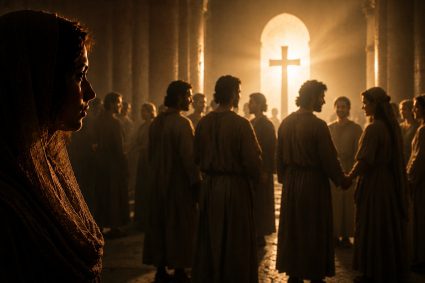
Prayer is not only an act of asking, but an expression of spiritual maturity, deep connection with Christ, and genuine love for the church. In this lesson, we look at Paul’s thanksgiving and intercessory prayers—not as formal words, but as lived theology. Whether in prison, far away, or in the midst of challenges, Paul lives what he believes: that the Gospel has the power to transform hearts, even when circumstances seem unfavorable.
………………..✉️……………….
📖 Bible Study
🤝 2.1 Fellowship in the Gospel
Paul’s relationship with the Philippians shows that true spiritual fellowship is more than communication—it is participation in the Gospel (koinonia). This spiritual closeness was shaped by prayer, sacrifice, and shared suffering. Even in prison, Paul was full of joy because he knew: God’s good work continues—also through others.
🕊️ 2.2 Paul’s Prayer Requests
The prayer in Philippians 1:9–11 is a model of spiritual maturity: Paul does not ask for outward help, but for inner growth—love, discernment, purity, and righteousness. These requests show that true prayer happens within the horizon of God’s purposes.
👀 2.3 Spiritual Discernment
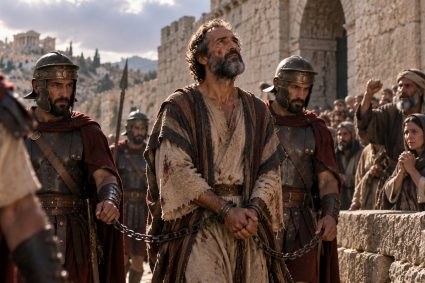
Paul does not interpret his chains as failure, but as opportunity. Through his imprisonment, the Gospel spreads even more—his chains became a pulpit. This is applied spiritual thinking: placing God’s possibilities above human limitations.
🌱 2.4 Fruits of the Gospel
Faith, love, and hope—three fruits Paul recognizes among the Colossians. These virtues do not arise from human effort, but from the power of the Gospel. The Word works—it produces life, growth, and hope.
🧎 2.5 The Power of Prayer
Paul prays for knowledge of God’s will, spiritual insight, a life that honors God, bears fruit, and is carried by gratitude. This prayer teaches us: true prayers seek God’s glory, not just our solutions.
………………..✉️……………….
💎 Spiritual Principles
-
True fellowship grows through shared mission and prayer.
-
Spiritual prayer focuses on God’s goals, not on comfort.
-
God’s power is not bound to freedom—His ways are higher.
-
The Gospel bears fruit—wherever it is received.
-
God’s will is recognized through His Word, by the Spirit, and through prayer.
………………..✉️……………….
🛠️ Everyday Application
-
This week, pray not only for circumstances—but for character and insight.
-
Ask yourself: Where can I be a blessing despite limitations?
-
Read a short passage from Paul’s prayers daily—and pray them for others.
-
Examine: Where is the Gospel already at work in your life? What fruit is growing?
………………..✉️……………….
✅ Conclusion
God’s work does not depend on outward conditions. He works through chains, through letters, through prayers. Paul shows us how spiritual maturity thinks, feels, and prays. His gratitude, discernment, and intercession teach us to trust more deeply, think more broadly, and love more strongly—in the light of the Gospel.
………………..✉️……………….
💭 Thought of the Day
“God does not always change your situation—but He transforms you in your situation.”
………………..✉️……………….
✍️ Illustration
“When Prayers Take Root”
A story about gratitude, intercession, and hidden fruit
Part I – The winter that froze everything
Winter came early to Northern Ontario.
Not only with snow—but with silence.
The small Adventist church of Clearwater Bay lay at the edge of a frozen lake. In summer, tourists came—canoeists, anglers, hikers. In winter, only the howling wind between the pines and the creaking floorboards of the old chapel remained.
Jonathan Miller closed the heavy wooden door behind him and paused for a moment.
His breath formed small clouds in the cold air.
Twelve chairs.
Seven of them empty.
He had been church leader for five years. They used to have Sabbath School in two groups. Now one circle was enough. The young people had moved away. Two families had left the church—“too tired,” “too many conflicts,” “too little hope.”
Jonathan sat down in the front pew and buried his head in his hands.
“Lord… what am I supposed to thank You for?”
It wasn’t a rebellious thought.
Just a tired one.
Part II – Small prayers
Jonathan prayed a lot.
But lately his prayers always sounded the same:
“Bless the finances.”
“Give growth.”
“Send people.”
“Make it easier.”
He didn’t call them that—but they were small prayers.
Not wrong.
But narrow.
That Sabbath, Naomi Chen was there. Mid-fifties, a nurse, quiet, attentive. After the service, she lingered.
“Jonathan,” she said hesitantly, “may I show you something?”
She handed him her Bible.
A bookmark was placed in Philippians 1.
“I thank my God every time I remember you…”
Jonathan read.
Slowly.
Naomi said softly,
“I noticed… Paul doesn’t thank God for relief. He thanks Him for people. For fellowship. For what God is doing in them.”
Jonathan nodded.
But inside he thought:
At least Paul had churches.
Part III – A different prayer
Nothing special happened the following week.
No miracle.
No sign.
But Jonathan began to pray differently.
No longer:
“Lord, change the situation.”
But:
“Lord, complete Your work in us.”
He prayed Colossians 1:9–12 out loud—alone in the cold church hall.
He prayed for:
-
knowledge of God’s will
-
spiritual wisdom
-
a life worthy of God
-
fruit, not success
Sometimes it felt pointless.
But he kept praying.
Part IV – The invisible roots
Spring came late.
But it came.
At first, hardly visible.
Naomi began praying for each person by name after the service.
An older brother, Samuel, bitter for years, began singing again.
A young woman, Elena, who never spoke, suddenly shared about her faith at work.
Jonathan noticed something strange:
The church was not getting bigger.
But deeper.
Conversations became more honest.
Conflicts quieter.
Gratitude more frequent.
He remembered Paul:
“… filled with the fruit of righteousness.”
Fruit grows underground before it is seen.
Part V – Chains in the North
In summer the news came:
A young man from the church, Lucas, had been injured while working at a remote mining project. Paralyzed.
The church was shaken.
Jonathan sat beside Lucas’s hospital bed, not knowing what to say.
Lucas whispered,
“I’m afraid.”
Jonathan didn’t answer with explanations.
He prayed.
Not:
“Heal him.”
But:
“Lord, do not let Your work stop.”
Weeks later, Lucas began asking the nursing staff questions.
He asked for a Bible.
He prayed out loud for other patients.
Jonathan understood:
The chains had become a pulpit again.
Part VI – The day of thanksgiving
One year later.
Thanksgiving.
The church was still small.
But it was awake.
Jonathan stood at the front and said:
“Today we are not thankful for numbers.
We are thankful for what God has begun—and what He will complete.”
Naomi wept quietly.
Samuel raised his hands.
Lucas joined via video.
Jonathan prayed:
“Lord, we have learned:
You do not work loudly, but faithfully.
Not quickly, but deeply.
Not by our standards, but according to Your heart.”
Part VII – Looking back
Later Jonathan wrote in his journal:
“I wanted growth.
God gave roots.
I wanted answers.
God gave prayer.
I wanted freedom.
God showed me that even chains can bear fruit.”
He opened the Bible again.
Once more, Philippians 1.
“He who began a good work in you
will carry it on to completion.”
………………..✉️……………….
📌 Final Thoughts on the Story
This story reminds us:
-
God’s work often grows invisibly before it becomes visible.
-
Prayer changes hearts first, then circumstances.
-
Gratitude is not a result—it is an act of faith.
-
True spiritual maturity does not ask,
“Why is this hard?”
but rather,
“What does God want to grow here?”