
⛪ Lesson 12: Precursors
📘 12.4 Early Church Persecution
✨ Persecution as Reality – and Faithfulness Despite Danger
…………………………………………………………………
🟦 Introduction
The early persecution of Christians is more than a dark chapter in church history—it is a prophetic mirror for believers in the end times. The biblical accounts in the book of Acts reveal not only how intense the conflict between light and darkness already raged during the first decades of the church, but they also offer hope and guidance for future trials. Lesson 12.4 highlights how the experiences of James, Peter, and the praying community reveal the tension between faith, suffering, and divine guidance—and what that means for us.
………………………………………………………………….
📖 Bible Study
📖 Acts 12:1–17 – Analysis and Meaning
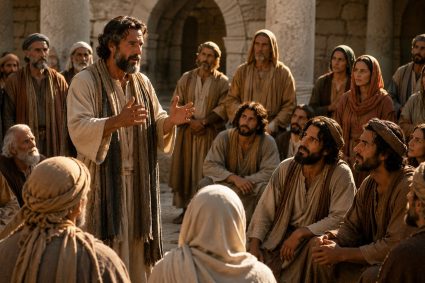
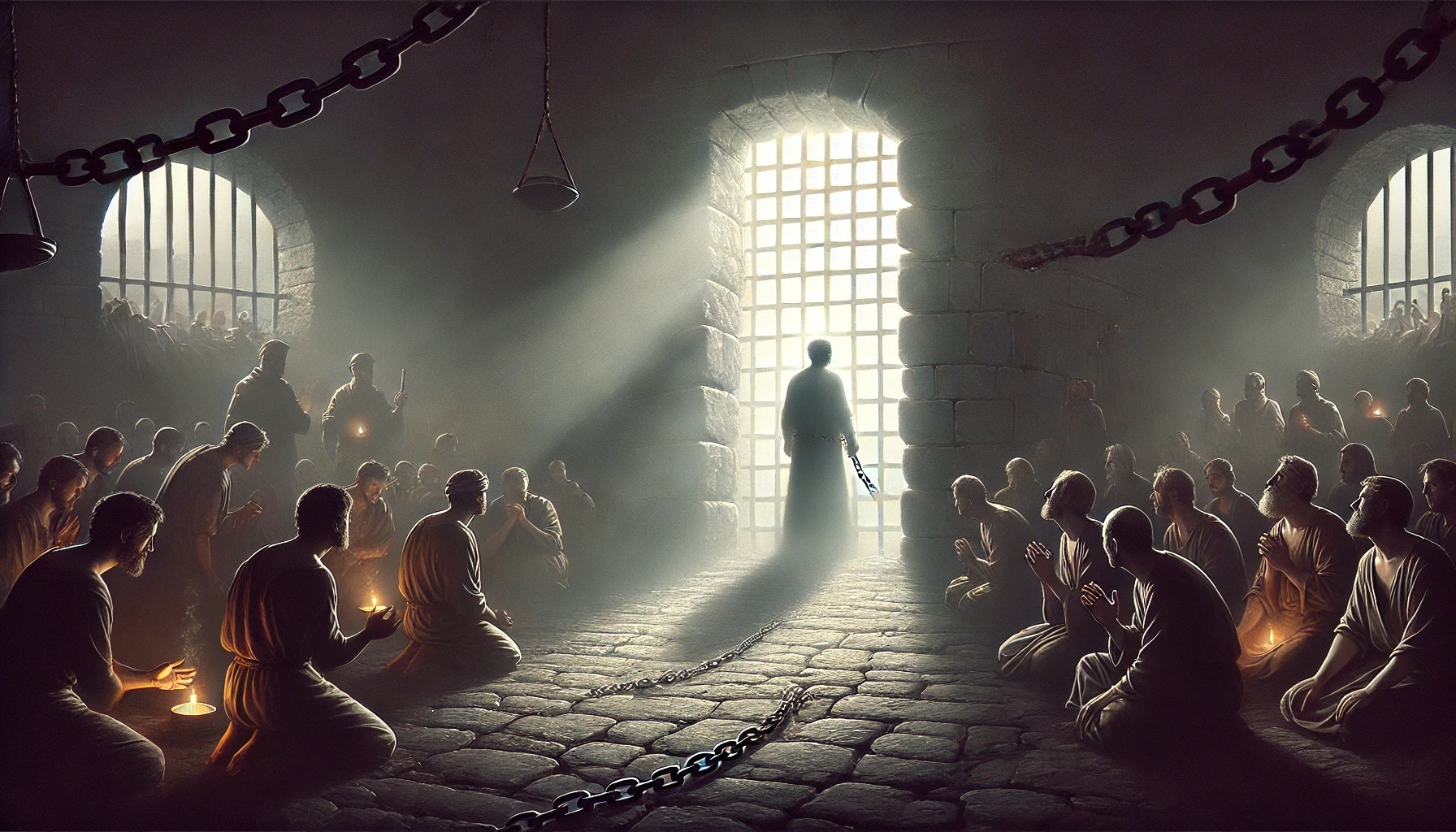
In this section of Acts, we witness the dramatic confrontation between human violence and divine power. Herod, driven by political motives and the desire to please the religious elite, attacks the young Christian church. James, a close friend of Jesus, is beheaded—a blow that leaves deep marks on the young church. Next in line is Peter, the leader of the Jerusalem church. While he is imprisoned, surrounded by guards and chained, the church prays for him.
The tension is palpable: Will God intervene again, or will Peter follow James into martyrdom? In this seemingly hopeless situation, the unexpected occurs: An angel appears, light fills the cell, and Peter is freed—so quietly and sovereignly that even the believers struggle to believe what has happened.
🟢 Biblical Observations:
-
Verses 1–2: The execution of James marks the beginning of state-authorized persecution. This kind of repression is portrayed as a recurring pattern in the prophetic texts of Revelation.
-
Verses 3–5: Peter is arrested—but the contrast to political power lies in the church’s prayer.
-
Verses 6–11: The angel’s deliverance shows God acting beyond human control. No chain or guard can stop God’s will.
-
Verses 12–17: The church’s reaction shows both their earnestness in prayer and their struggle to believe in a miracle.
………………………………………………………………….
📖 Answers to the Questions
📌 Question 1: What elements in this story might foreshadow events of the last days?
This story contains several prophetic elements:
-
Persecution through political/religious alliance: As prophesied in Revelation 13, there will be a time when religious and political powers unite to persecute believers. Herod’s alliance with the Jewish leaders is a model of this.
-
Martyrdom and miracles: Some, like James, will die for their faith. Others, like Peter, will experience divine intervention. In the end times, there will be a mix of suffering and miracles—according to God’s sovereign will.
-
The power of prayer: The church prays fervently—a reminder of the importance of spiritual preparation and united intercession during times of crisis.
-
Testing of faith: The church prays, but struggles to believe the miracle when it happens. This shows that even faithful believers can find it hard to recognize God’s intervention. This will also be a challenge in the last days.
📌 Question 2: What does this tell us about not letting even the threat of death stop us from following the Lord?
Jesus’ words to Peter (John 21:18–19) are clear: Your path will lead to the cross—but still, “Follow Me!” This is not only a personal calling but a spiritual principle:
-
Following Christ has no conditions: Jesus’ invitation applies not just in good times, but also in suffering and uncertainty.
-
Faithfulness is more important than safety: For Peter, following meant walking a path whose end he knew—but it was the only path worth taking.
-
God is not absent in suffering: Acts 12 shows that God’s presence is most tangible in the darkest hour.
These lessons speak directly to the end times, when God’s people will again face decisions that test their faith. Following Jesus costs something—but it’s always worth it.
………………………………………………………………….
✨ Spiritual Principles
-
God is sovereign—even in persecution: Acts 12 shows that God has everything under control—even when His children are imprisoned, persecuted, or killed. James dies, but Peter is saved. God’s plan is greater than our understanding.
-
Prayer moves the world: The church prayed earnestly for Peter—and God acted. Even if they didn’t expect such a direct answer, the story proves that intercession makes a difference.
-
Discipleship isn’t a promise of safety, but of meaning: Jesus tells Peter how he will die—and still invites him to follow. The value of life is not found in avoiding suffering, but in remaining faithful to Christ.
-
Miracles are real, but not predictable: God intervenes supernaturally, but not always as we want or expect. Our job is not to control how, but to trust.
………………………………………………………………….
🧩 Application for Daily Life
-
Trust in suffering: When you’re under pressure—through illness, workplace stress, or social rejection because of your faith—remember: God has not forgotten you. He may intervene like He did for Peter—or remain silent like with James. In both cases, He is faithful.
-
Pray—even if you doubt: The church prayed, yet was surprised by the miracle. Prayer doesn’t require perfect hope—just a heart that wrestles with God. Start praying—even with your unbelief.
-
Stay courageous in truth: If your faith becomes inconvenient—on ethical issues, at work, or in friendships—stand firm. It is better to lose with integrity than to win through compromise.
………………………………………………………………….
✅ Conclusion
The story in Acts 12 is a powerful mirror of what is and what is to come. The early Christians lived in constant tension between hope and persecution, between miracles and martyrdom. We too face challenges today. Revelation shows that persecution will return—on a global scale. But God’s call remains the same: “Follow Me.” Not because the way is easy—but because it is the only path that leads to life.
………………………………………………………………….
💭 Thought of the Day
Not all are kept from the fire—but none walk through it without Christ.
………………………………………………………………….
✍️ Illustration – “Apartment 314”
Outside, the rain fell quietly, streetlamp light reflecting in the puddles. Lena stood before the old door with the faded brass number: 314. The apartment was plain, just like the man who lived there—Pastor Beni, 72 years old, a widower known for his simple preaching and silent courage.
Everything had changed in recent months. A new law, passed under the banner of social unity, had outlawed certain religious gatherings. Christians who continued to preach publicly on the Sabbath now faced fines—and later, imprisonment. Many went silent. Others conformed. Not Beni.
“I cannot stop speaking of what I have seen and heard,” he said calmly at their last meeting. Lena had been impressed—and afraid. Their congregation had shrunk. Fear was always present.
Now she stood at his door, holding a thermos of tea and fresh bread. It was Friday night. Sabbath. She knocked three times, as always. No answer. Again. Nothing.
The door opened a crack. A pale face, wrinkled brow, and alert eyes met hers. “Lena? Quickly, come in.”
Inside, it was warm. Two candles burned, an old Bible lay on the table. Beni looked tired. “They were here. This morning. Officials. They’re looking for a reason to arrest me. I don’t have much time left. But… I’m not afraid.”
Lena sat down, steam rising from the tea between them. “But what if they take you?”
Beni smiled faintly. “Then I’ll go. Like James. Or like Peter… only this time, I may not walk out through an open door.”
He opened the Bible—Acts 12. Read aloud. They prayed. Long. In silence.
The next morning, the apartment was empty. On the table lay a note:
“Dear Lena,
Follow Him. Even if the path leads through prison doors.
Trust—not in freedom, but in the Deliverer.
Your brother in Christ,
Beni.”
What happened to Beni was never fully known. But Lena grew stronger. The small congregation grew—not in number, but in courage. For they had learned one thing:
Faithfulness doesn’t begin in death—but in the decision not to be silent today.
“Follow Me.” (John 21:19)