📅 8 January 2026
📚 BELIEVE HIS PROPHETS
📖 Daily Bible Reading
🕊️ 1 Samuel 31 – The last day of the king: Saul’s end on Mount Gilboa
✨ A life between calling, rebellion, and a bitter outcome
🌐 Read online here
📍 Introduction
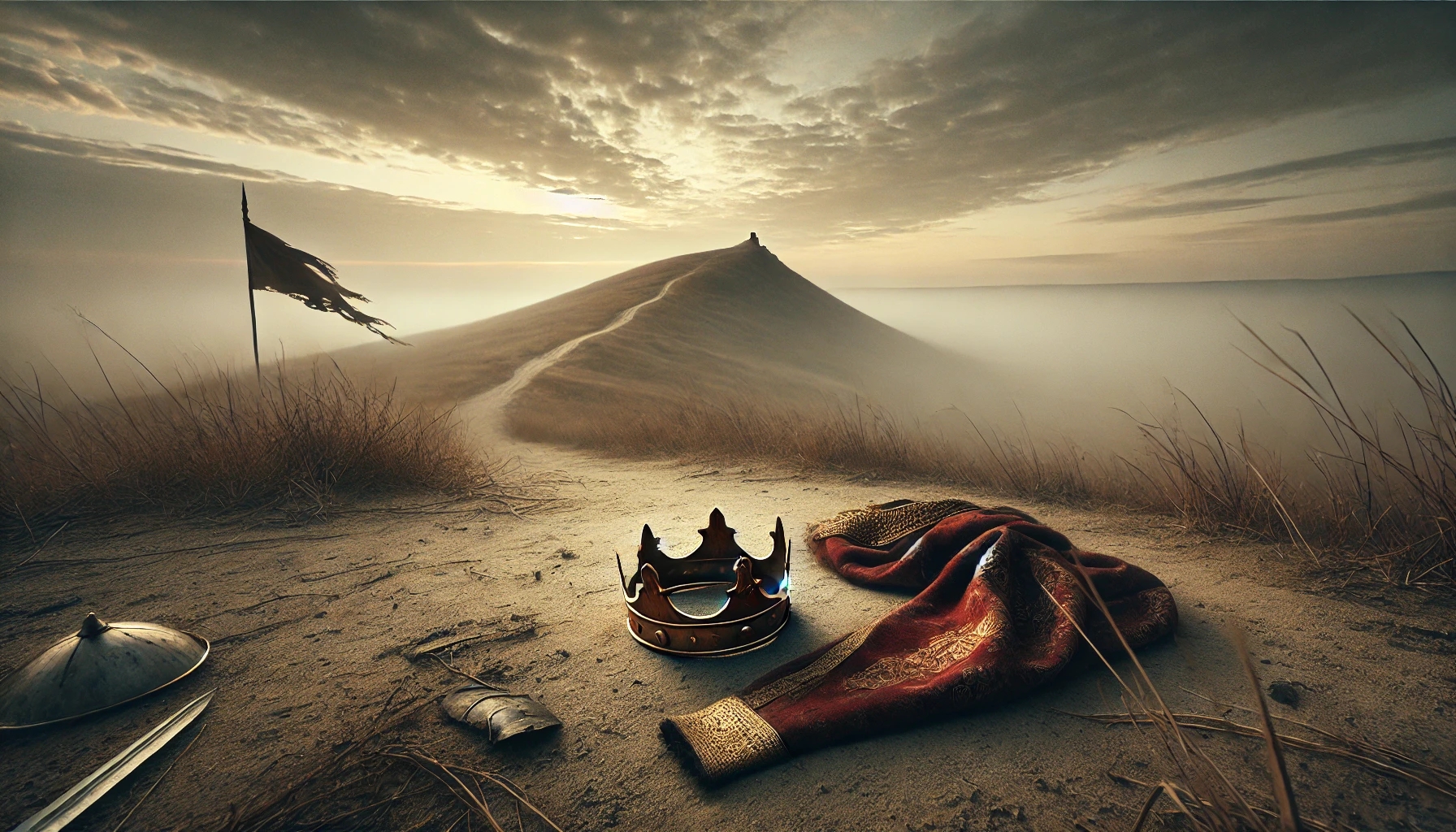
The final chapter of 1 Samuel takes us to a dark place—Mount Gilboa, where Saul, Israel’s first king, falls together with his sons. A tragic end that does not come suddenly, but matures over many years of spiritual decline and disobedience. This scene is not merely a historical battle report; it is a warning monument to the destructive consequences of pride, self-will, and spiritual isolation. At the same time, it casts a quiet, reverent light on true loyalty and on the last honorable gestures—even in death.
⋯⋯⋯⋯⋯⋯⋯⋯⋯⋯◆⋯⋯⋯⋯⋯⋯⋯⋯⋯⋯
🧵 Commentary
A hot, dusty day begins on Mount Gilboa. The Philistines, Israel’s ancient enemies, press relentlessly against Saul’s weakened troops. For a long time now, the people have been fighting not only external enemies but also inner decay. And in the midst of this collapse, the king falls—the one once chosen by God Himself to lead Israel.
Saul, once anointed with oil, honored by God’s voice and accompanied by his prophet, now stands on the battlefield without spiritual guidance. Samuel is dead. David, God’s anointed, is far away. And Saul stands at the end of a long road marked by fear, jealousy, and disobedience.
The Philistines pierce him with arrows. Wounded but still alive, Saul sees the inevitable approaching. Yet instead of humbly breathing his last, he fears disgrace more than the judgment of God. His final request is not prayer, not repentance—but a call for suicide. When his armor-bearer refuses, Saul takes the sword himself and falls upon it.
Soon after, his loyal armor-bearer follows him in death. And with them die three of his sons—including Jonathan, one of the noblest men in the Bible. A black day for Israel.
The Philistines seem to triumph. They desecrate Saul’s body, cut off his head, hang it on the city wall, and celebrate their god Dagon. Yet even in this hour of disgrace, a light shines: the men of Jabesh-gilead—whom Saul once rescued (1 Samuel 11)—show final loyalty. They risk their lives to recover his body, burn it honorably, and bury his bones under a tree. A last dignity for a fallen king.
⋯⋯⋯⋯⋯⋯⋯⋯⋯⋯◆⋯⋯⋯⋯⋯⋯⋯⋯⋯⋯
🧺 Summary
-
Saul dies by his own hand after a devastating defeat by the Philistines.
-
His sons, including Jonathan, die with him.
-
The Philistines dishonor his body, proclaim their victory, and praise their idols.
-
Brave men from Jabesh show loyalty and bury Saul and his sons with honor.
-
A chapter of tragedy that reveals Israel’s search for a king after God’s heart.
⋯⋯⋯⋯⋯⋯⋯⋯⋯⋯◆⋯⋯⋯⋯⋯⋯⋯⋯⋯⋯
🔦 Message for Us Today
A life that once began with God’s calling can end tragically through persistent disobedience. Saul stands as a warning to anyone who neglects spiritual responsibility. His story shows: gifting does not replace a relationship with God. Success without obedience leads astray. When we quench the Spirit of God and ignore His voice, we eventually stand—like Saul—alone in a dark battle.
Yet there is also hope: God does not reject hastily. Saul’s path was long; his opportunities were many. Jonathan shows that even in the house of a fallen king, faithfulness is possible. And the men of Jabesh remind us that true honor is shown not by titles, but by deeds—even at the grave of one who failed.
⋯⋯⋯⋯⋯⋯⋯⋯⋯⋯◆⋯⋯⋯⋯⋯⋯⋯⋯⋯⋯
📝 Reflection
“Where do I stand today: in obedience, or on my own chosen path?”
The death of Saul is not only an ending—it is an invitation to self-examination. Do I live by God’s strength, or do I fight alone? Have I silenced spiritual voices in my life? Am I like Saul—or like Jonathan?
🕊️ May this text teach us how precious it is to remain faithful to God’s calling—until the very end.
══════════ ✶ ✶ ══════════
📆 8–10 January 2026
📚 BELIEVE HIS PROPHETS
📖 Weekly Reading from the Spirit of Prophecy
📘 Ellen G. White | Patriarchs and Prophets
🔥 Chapter 55: The Child Samuel
✨ A child for God—how faithfulness in small things leads to greatness
🌐 Read online here
📘 Blog 1
🙏 Prayer in the Depths – Hannah’s Faithful Trust
When pain becomes intercession and hope is born
📍 Introduction
Sometimes prayer is the only thing left—when every hope has dried up and pain pierces the heart. In such an hour, Hannah entered the tabernacle. Her silent intercession was not only answered—it changed her life, Israel’s history, and left an eternal example of faith.
⋯⋯⋯⋯⋯⋯⋯⋯⋯⋯◆⋯⋯⋯⋯⋯⋯⋯⋯⋯⋯
🧵 Commentary
Hannah lived in the shadows—not only of the social stigma of barrenness, but also under the contempt of Peninnah, her husband’s other wife. She bore the torment quietly, without bitterness or anger. But when the pain became unbearable, she fled into God’s presence—not with loud cries, but with a soft, trembling prayer. In a time when faith had grown dull and drunkenness appeared even in holy places, she prayed with a sincerity the high priest scarcely recognized.
The moment at the entrance to the tabernacle was holy. Hannah, weeping yet full of faith, made a vow to God: if He would give her a child, she would dedicate him entirely to Him. Eli, who at first thought she was drunk, recognized his mistake and blessed her.
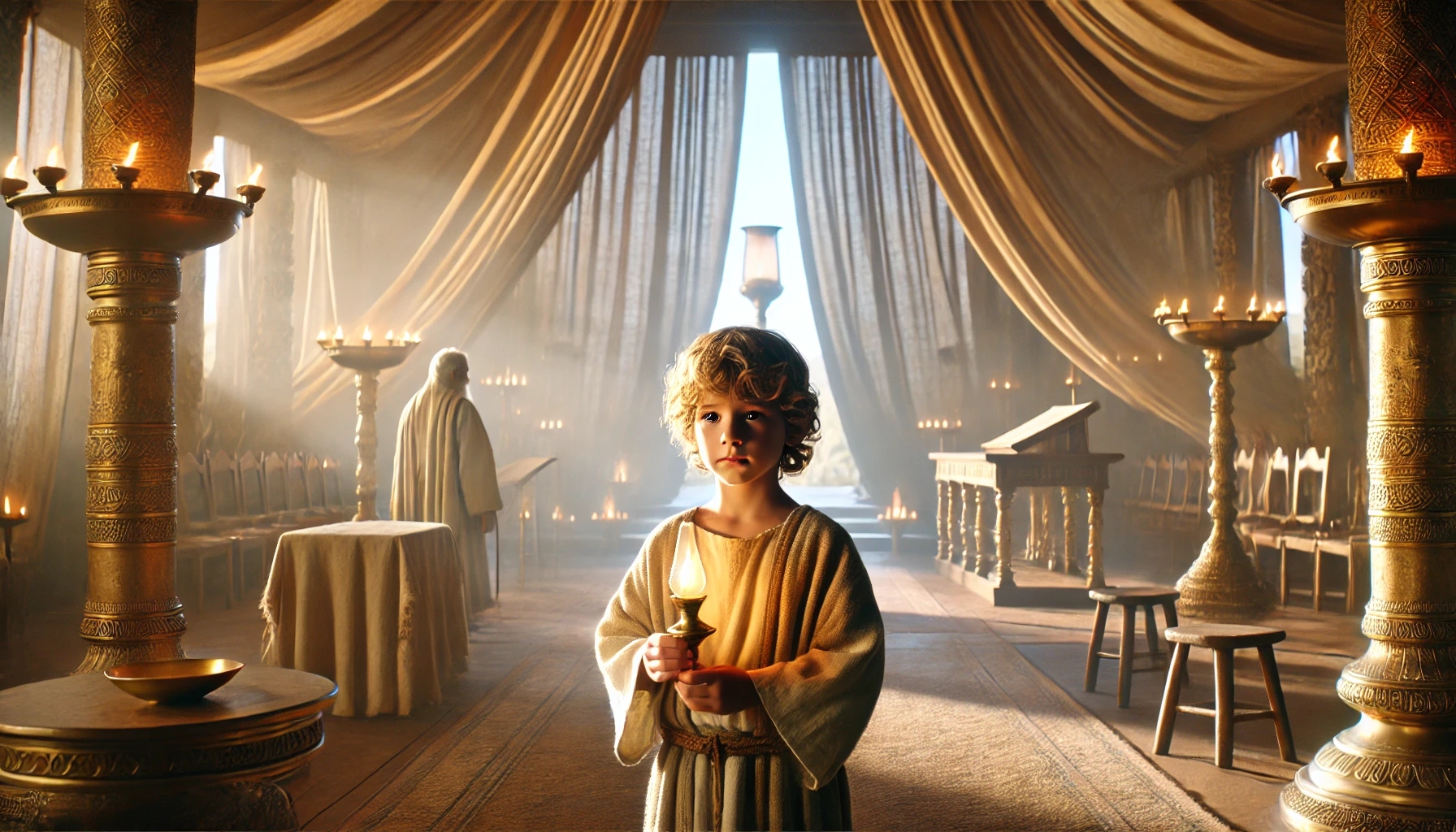
This one encounter—this prayer from the depths of her heart—brought forth new life: Samuel, “asked of God.” And Hannah’s heart overflowed with praise when, years later, she brought her little son—her whole joy—back to the sanctuary. A sacrifice of love—voluntary and full of trust.
⋯⋯⋯⋯⋯⋯⋯⋯⋯⋯◆⋯⋯⋯⋯⋯⋯⋯⋯⋯⋯
🧺 Summary
-
Hannah, a faithful woman, suffers from barrenness and mockery.
-
In prayer, she dedicates her future child to God.
-
Her request is answered—Samuel is born.
-
She keeps her vow and brings Samuel to serve in the sanctuary.
⋯⋯⋯⋯⋯⋯⋯⋯⋯⋯◆⋯⋯⋯⋯⋯⋯⋯⋯⋯⋯
🔦 Message for Us Today
True faith is shown not in success, but in surrender. Hannah’s story reminds us that even a silent prayer can move mountains—when it comes from a sincere, trusting heart. She let go of what she loved most because she knew: God is faithful.
⋯⋯⋯⋯⋯⋯⋯⋯⋯⋯◆⋯⋯⋯⋯⋯⋯⋯⋯⋯⋯
📝 Reflection
What are you holding onto that you should actually dedicate to God?
What would your life look like if you placed it entirely in His hands—just as Hannah did?