


🌱 GROWING IN A RELATIONSHIP WITH GOD
📚 Lesson 5: How to Study the Bible
📘 5.6 Summary
God’s Word as the path to a living relationship
📖 1. Introduction – The true purpose
Why do we study the Bible at all?
Not primarily to gather knowledge, but to know God.
👉 “The purpose of Bible study is to know God… for this is eternal life” (John 17:3).
Bible study is therefore relationship — not just information.
📜 2. Biblical foundation – Relationship grows through encounter
Revelation 3:20 presents a powerful image: Jesus stands at the door and knocks.
He seeks fellowship, but the human being must open.
This means:
👉 Relationship with God is not a force, but an invitation.
And this invitation becomes especially tangible through His Word.
🌍 3. Connection to today
Many treat the Bible like an ordinary book — they read it occasionally or only superficially.
Others try to adapt it to their own opinions.
But that is exactly the problem:
we place ourselves above the Word instead of allowing it to shape us.
💡 4. Central message of the lesson
👉 The Bible is not meant to confirm our thoughts — but to shape them.
Whoever studies it properly will not only know more, but will be transformed.
✝️ 5. Theological focus
At the center of this lesson is the understanding of the Bible as the living Word of God and as the foundation of a growing relationship with Him.
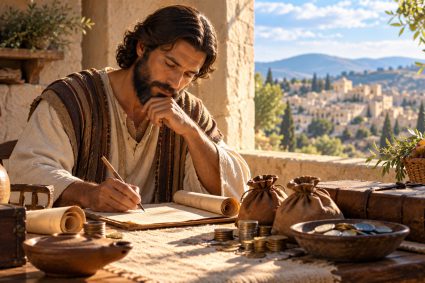
Bible study is not a one-time act, but an ongoing process. The image of a miner illustrates this: just as someone digs for valuable treasures, a person should search in God’s Word. Truth is not always on the surface — it must be discovered.
The quote emphasizes:
👉 There is always more to discover, no matter how much we already know.
Theologically, this means that knowledge is never complete. Human beings remain learners. Even spiritual growth does not remove the need to continue searching.
Another key point is the attitude toward Scripture. There are two possibilities:
- We adapt the Bible to our thoughts
- or we adapt our thinking to the Bible
Only the second path leads to true understanding.
When people absolutize their own ideas, a distorted interpretation arises. The Bible is no longer seen as authority, but as something to be controlled.
👉 Theologically decisive:
True understanding arises only where a person submits to the Word of God and is willing to be corrected.
📖 6. Explained Bible texts and quotes
John 5:39 shows that Scripture points to Christ. Bible study without this perspective remains incomplete.
John 17:3 defines eternal life as relationship — not knowledge. This changes the entire approach to study.
Revelation 3:20 describes the invitation to fellowship. God does not force Himself, but seeks a voluntary relationship.
The quote from “Counsels to Writers and Editors” makes it clear:
- Bible study must be thorough and continuous
- superficial reading is not enough
- spiritual growth requires active seeking
Another quote warns against adapting the Bible to personal opinions. Many read it through the lens of their own ideas and therefore fail to recognize the true message.
This shows:
👉 The greatest obstacle in Bible study is often not the text — but our attitude.
👉 In summary:
The Bible is a source of truth, but it unfolds its power only where it is taken seriously, examined, and applied.
🔧 7. Application in daily life
This lesson becomes practical through clear decisions:
- Make Bible study a priority
- invest time regularly and intentionally
- be open to correction
- not just read, but seek to understand
- apply what you learn in life
❓ 8. Reflection question
Do I truly seek God in the Bible — or only confirmation for my own thoughts?
🌟 9. Final thought
The Bible is more than a book.
It is the place where God meets us.
But this encounter does not happen automatically —
it happens where we seek, listen, and are willing to be changed.
For:
👉 Whoever truly seeks God will also find Him.