
Lesson 6.Through the Red Sea | 6.1 Go, and Worship the Lord | 🌊 EXODUS | LIVING FAITH
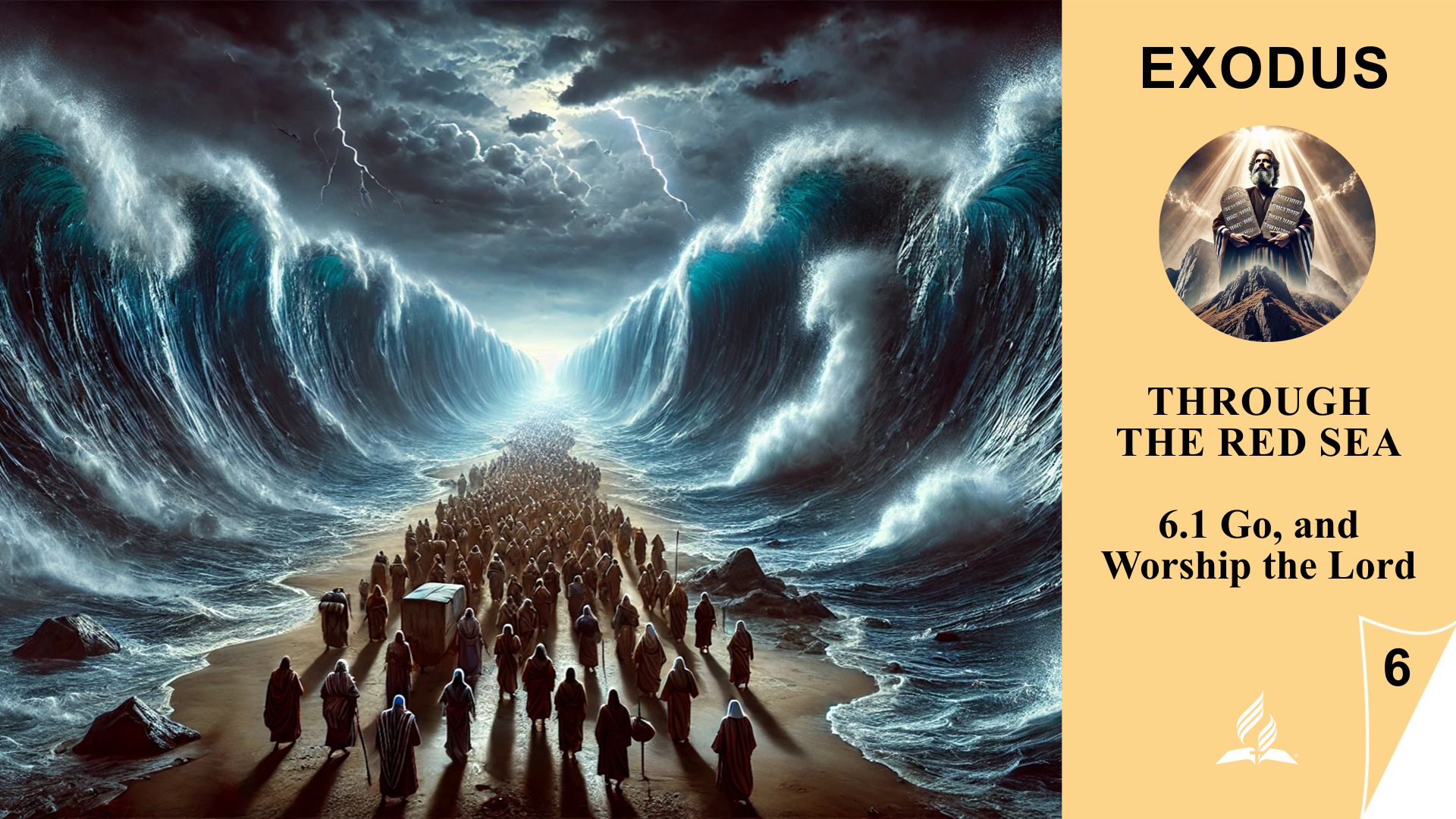
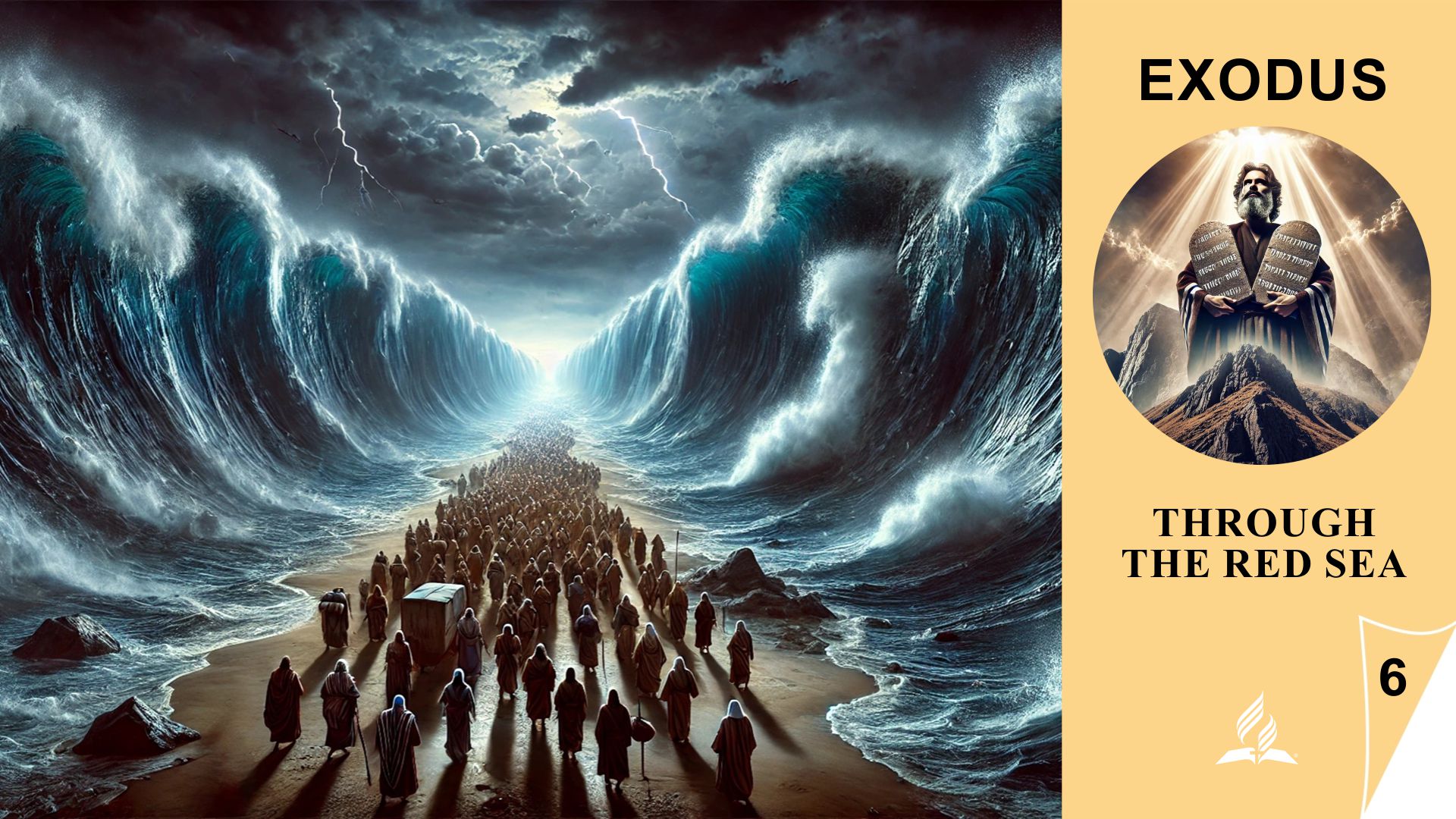
🟦 Introduction
The story of Israel’s exodus from Egypt reaches its dramatic climax in this lesson. God not only leads His people out of slavery but also reveals His power over nature, nations, and human hearts. The crossing of the Red Sea becomes a symbol of faith in times of crisis—and of God’s faithfulness despite human doubt. At the same time, we see how God prepares His people: through commands, consecration, and worship. These events challenge us today to move forward in faith, even when the path is uncertain. For the God who saved then is still mighty to act today.

🌊 THE SECOND BOOK OF MOSES
⛪ Lesson 6: Through the Red Sea
📘 6.1 Go, and Worship the Lord
✨ When Insight Is Not Repentance
🟦 Introduction
In this lesson, we stand on the threshold of one of the greatest events in salvation history: the exodus of Israel from Egypt. But before the sea parts, something crucial happens: God sends His final judgment upon Egypt. Pharaoh, who for years resisted God, is now shaken. The key question becomes: How does genuine transformation happen, and how do we respond to God’s voice? We learn: there is a difference between outward surrender and inward repentance.
…………………………….. 🌊 ……………………………..
📖 Bible Study – Exodus 12:31–36 – “The Night of Deliverance”
🔍 1. Historical Background: The Escalation of Divine Judgment
The book of Exodus is the book of redemption. In the previous chapters, we see God unfolding His plan to free Israel from slavery in Egypt. The ten plagues that God sends through Moses are not merely punishments, but signs—judgment and revelation. Each plague targets the gods of Egypt (cf. Ex 12:12). The final plague, the death of the firstborn, is the ultimate judgment—a direct assault on the heart of the Egyptian religious system and Pharaoh’s pride.
Until this point, Pharaoh continually hardened his heart. Now he breaks down—not in repentance, but because judgment has overwhelmed him. God’s power can no longer be denied.
📜 2. Verse-by-Verse Interpretation (Exodus 12:31–36)
V. 31: “He summoned Moses and Aaron during the night.”
→ This shows Pharaoh was in panic. Normally, he would have followed protocol and preserved royal dignity. But now, none of that matters. The catastrophe has shaken him to the core.
V. 31b: “Up! Leave my people!”
→ The deliverance comes suddenly. No more hesitation. Pharaoh begs them to leave—a sharp contrast to his previous resistance.
V. 31c: “Serve the LORD as you have requested!”
→ Interestingly, Pharaoh now grants the full freedom he previously limited (“only the men”, “without livestock”, etc.). There are no more conditions—God’s power has broken him.
V. 32: “And bless me also.”
→ This statement is deep and tragic. Pharaoh, who considered himself divine, now acknowledges the power of the living God. But his request is not the result of genuine repentance—it’s a desperate plea for relief. He seeks God’s favor without recognizing God’s rule.
V. 33: “We will all die!”
→ The Egyptian people are also gripped by fear. They recognize God’s hand, but not His grace. It is fear, not reverence.
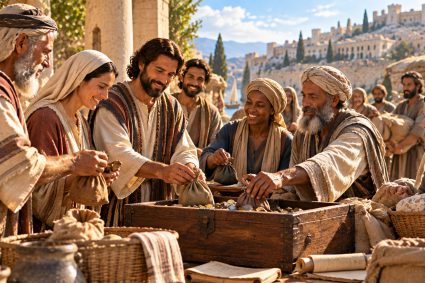
V. 35–36: “The Israelites asked… for silver and gold jewelry…”
→ God had already promised in Exodus 3:22 that they would not leave empty-handed. This is now fulfilled. It is not theft—it is just compensation for 400 years of slavery (cf. Gen 15:13–14). The Egyptians give up their riches simply to be rid of them. God provides for His people.
🧠 3. Theological Lessons
A. True vs. False Repentance
Pharaoh is a classic example of someone who acknowledges God but refuses to submit to Him. He recognizes God’s power—but not God’s authority. His repentance is emotional, not moral. The Bible says in 2 Corinthians 7:10 that godly sorrow leads to repentance, while worldly sorrow leads to death:
“Godly sorrow brings repentance that leads to salvation and leaves no regret, but worldly sorrow brings death.”
(2 Corinthians 7:10)
B. God’s Blessing Is Tied to His Lordship
Pharaoh wanted God’s blessing—without repentance. But God does not bless rebellion. Blessing flows from relationship, not from fear or manipulation.
C. God’s Provision Amid Judgment
While Egypt is being judged, God is blessing His people. The Israelites do not escape in secret—they are publicly released and richly supplied. God not only brings them out—He equips them for what lies ahead.
🛠️ 4. Application to Our Lives
1. How do you respond to God’s voice?
Are you like Pharaoh—impressed, but unchanged? Or do you let God reshape your heart?
2. Examine your repentance:
Do you regret your sin because of the consequences—or because you realize how deeply it hurt God?
3. See God’s provision:
Do you believe God will not only lead you out but also equip you for the journey ahead?
4. The call to repentance is now:
Pharaoh had many chances to repent—but refused. Don’t let your heart grow hard when God speaks (cf. Hebrews 3:15).
………………………………………………………………….
📖 Answers to the Questions
❓ Question 1: What unusual request did Pharaoh make, and why did he do it even after giving everyone permission to leave?
Pharaoh’s unusual request appears in Exodus 12:32: “And bless me also.” This statement is remarkable—especially in light of Egypt’s worldview. Pharaoh was considered a god-king, the earthly incarnation of Horus. He was not only a political leader but a divine figure. That such a man would ask the God of the Hebrews for a blessing is a dramatic turning point.
What drove him to this? It wasn’t repentance or insight—but panic, fear, and devastation in the face of God’s final judgment: the death of every firstborn, even in Pharaoh’s own household. This final plague struck the heart of Egyptian identity—the future ruler, the firstborn son. It shattered the continuity of the divine monarchy. It was both symbolic and literal—a final blow to Pharaoh’s pride and to Egypt’s gods.
Pharaoh had long resisted God’s will. He hardened his heart repeatedly, despite escalating plagues. Sometimes the text says God hardened it—indicating that Pharaoh’s chosen path was confirmed by divine judgment. But now, in the night of calamity, he collapses. His authority, gods, and control lie in ruins. He finally acknowledges that the God of Israel is mightier than any earthly or spiritual power.
But what’s missing is genuine repentance. His plea for blessing is superficial. He wants relief, not relationship. It’s like someone rescued from a fire who goes right back to playing with matches—unchanged.
Pharaoh’s words echo other biblical examples of false or shallow repentance:
-
Cain, who lamented his punishment—not his sin (Genesis 4:13)
-
Saul, who wanted to look good before the people (1 Samuel 15:30)
-
Judas, who felt remorse but did not turn to God (Matthew 27:3–5)
Pharaoh saw God’s hand—but not His heart. He wanted a blessing without surrendering to the One who gives it.
❓ Question 2: How often have we regretted actions only because of their consequences and not because they were wrong? Why is that not true repentance? How can we learn to grieve even the sins we seem to “get away” with?
This question cuts to the heart of true repentance and real spiritual transformation. Many people—including Christians—have said, “I regret what I did.” But often what lies behind that is:
“I regret getting caught. I regret the pain. I regret the loss.”
But is that biblical repentance?
🔎 The Difference: False vs. True Repentance
Scripture clearly distinguishes two kinds of sorrow:
“Godly sorrow brings repentance that leads to salvation and leaves no regret, but worldly sorrow brings death.”
(2 Corinthians 7:10)
-
Worldly sorrow = Sorrow over the results. You feel bad because you were exposed, punished, or shamed—but your heart remains the same.
-
Godly sorrow = Brokenness over the sin itself. You are grieved not just by what it cost you—but by what it did to God, others, and your own soul.
📌 Why is regret over consequences not real repentance?
Because it’s self-centered. It asks:
-
How can I escape this?
-
How can I fix the damage?
-
How can I save face?
True repentance asks:
-
What have I done?
-
Whom have I hurt?
-
How have I offended God?
This kind of repentance leads to real change—because it is driven not by pain, but by truth.
🛠️ How can we learn to truly repent—even for hidden or “consequence-free” sins?
-
Spend time in God’s light
The more we see God’s holiness, the more we recognize the seriousness of even “small” sins (Isaiah 6:1–5). -
Pray for a tender heart
Ask God to reveal your sin—not to crush you, but to heal you (Psalm 139:23–24). -
Look at the cross
There we see the cost of our sin—not just for us, but for Jesus. Even if we “got away with it,” someone paid the price. -
Practice daily repentance
Repentance is not a one-time act—it is a lifestyle. Not out of fear—but out of love.
🧠 A Real-Life Example:
Imagine a child lies to their parents to avoid punishment. The lie is never discovered—but the child feels uneasy. If they only confess once they’re caught, it’s outward compliance without inward change. But if they go to their parents and say, “I lied. It was wrong. I’m sorry—even though you didn’t know,” that is true repentance. It comes from within, not from outside pressure.
That is what God desires from us.
………………………………………………………………….
✨ Spiritual Principles
-
God does not bless rebellion.
-
A desire for blessing is not a substitute for surrender.
-
True faith expresses itself in surrender—not pressure.
-
Emotion is not the same as repentance.
-
God sees the oppressed and acts in justice—even if it takes time.
-
Recognize God in both grace and judgment.
………………………………………………………………….
🛠️ Practical Life Application
-
Self-examination: Are there areas in your life where you fear consequences but do not hate the sin itself?
-
Relational repentance: True apology says, “I’m sorry I hurt you,” not just “I’m sorry you’re upset.”
-
Forgiveness and justice: Just as God led Israel out of slavery, He wants to free us from internal bondage. But we must trust Him—even when the path leads through a “sea.”
………………………………………………………………….
✅ Conclusion
Pharaoh acknowledged God’s power—but not His character. He wanted relief—but not relationship. His request for blessing was external. We too often stand at that crossroads: Do we ask God to change our situation—or to change us?
True repentance leads to freedom—like Israel’s exodus. Everything else keeps us bound—like Pharaoh.
………………………………………………………………….
💭 Thought of the Day
“True repentance is not sorrow over the consequences, but brokenness over the sin.”
………………………………………………………………….
✍️ Illustration – “The Night Everything Fell Apart”
An American Story of Pride, Collapse, and Grace
Chapter 1: The Golden Tower
New York City, 2024.
On the 82nd floor of a glass skyscraper overlooking the Hudson River sat Raymond Steele, CEO of the multi-billion dollar real estate empire “Steele Holdings.” He was known as brilliant, ruthless, and proud. He hadn’t just bought buildings—he had bought and flipped entire neighborhoods, often with zero regard for the people who lived there.
Raymond believed in only three things: success, control, and himself.
“God? Religion?” he once said in an interview. “That’s for the weak.”
He had it all—power, women, a mansion in the Hamptons, a private jet. And no one dared question him.
✦ ─────────────── ✦ ─────────────── ✦
Chapter 2: The Lawsuit
One Thursday morning, the headlines broke: a group of former tenants filed a class-action lawsuit against Steele Holdings—for illegal evictions, forged permits, and deliberate neglect of safety codes.
Six months earlier, a Brooklyn building had exploded due to a gas leak. Two people died, one of them a child. The investigation led back to Raymond’s company.
He only laughed: “That’s what lawyers are for. As always.”
But this time was different. The media caught fire. Evidence surfaced. Former allies jumped ship. And then came the anonymous whistleblower—his own brother-in-law, a quiet civil engineer who could no longer stomach the truth.
✦ ─────────────── ✦ ─────────────── ✦
Chapter 3: The Storm
What had taken years to build crumbled in days:
– The stock plummeted.
– Federal authorities froze his assets.
– The board forced his resignation.
– A federal investigation for criminal negligence was launched.
For the first time in his life, Raymond Steele had no control.
He sat alone in his penthouse. No calls. No visitors. The silence was deafening.
That night, as rain pelted the windows, he did something he had never done:
He googled “church near me.”
✦ ─────────────── ✦ ─────────────── ✦
Chapter 4: “Pray for Me.”
Two days later, Raymond walked into a small African-American church in Harlem. The pastor, a calm older man named Rev. Elijah Daniels, greeted him warmly—but without awe.
After the service, Raymond said, “I don’t know why I came. But… you believe in God. Can you—maybe—pray for me? Maybe… it helps.”
Rev. Daniels looked at him calmly. “Do you want prayer—or do you just want the storm to stop?”
Raymond blinked. “I… I just want it to go away.”
The pastor nodded. “Pharaoh wanted that too—when death swept through the land. He asked Moses for a blessing—but his heart remained hard.”
Raymond flinched. “I’m not a killer.”
“Maybe not with a weapon. But with decisions.”
Silence.
“I won’t pray for you—until you’re ready to speak to God yourself.”
✦ ─────────────── ✦ ─────────────── ✦
Chapter 5: The Breaking
Raymond left. Two weeks later, he came back. Then again.
Eventually, he stayed—anonymously in the back pew, every Sunday.
He listened about grace. About the cross. About guilt—and hope.
Slowly, his armor cracked. He began to volunteer for community service. Cleaned homeless shelters. Donated anonymously to victims of his company. He even walked into the police station—on his own.
One day, a boy from the church asked him:
“Are you the man from TV—the one who did a lot of bad stuff?”
Raymond paused. Then said, “Yes. But I want to start doing what’s right—today.”
✦ ─────────────── ✦ ─────────────── ✦
Chapter 6: The Exodus
The trials moved forward. Raymond lost everything—his house, his money, his name.
But his heart was free.
One day, he stood again in Rev. Daniels’s office.
“Now you can pray for me,” he said. “Not so I’ll be blessed—but because now I know who the Blesser is.”
The pastor smiled.
“Then this is your exodus from Egypt, my son. And this time, you don’t leave with gold—but with God.”
💬 Moral of the Story
Pharaoh asked for blessing without trusting God. Raymond did the same—at first. But then he allowed God to break and heal his heart. True repentance doesn’t lead to destruction—it leads through the sea of grace into a new life.

More Stories