Divine Love: More Than a Feeling – A Selfless Devotion
🟦 Introduction – Love Beyond Emotion
In a world where love is often confused with romantic passion, fleeting feelings, or self-fulfillment, the question remains: What does true love mean—from God’s perspective? Pop culture tells us that love should “make me feel good.” But God’s love has a different center—not the self, but the other.
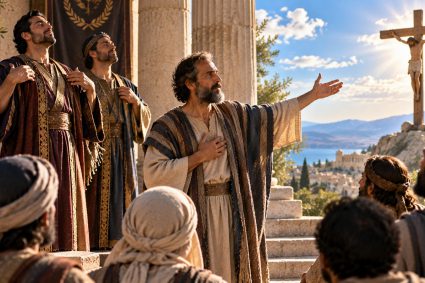
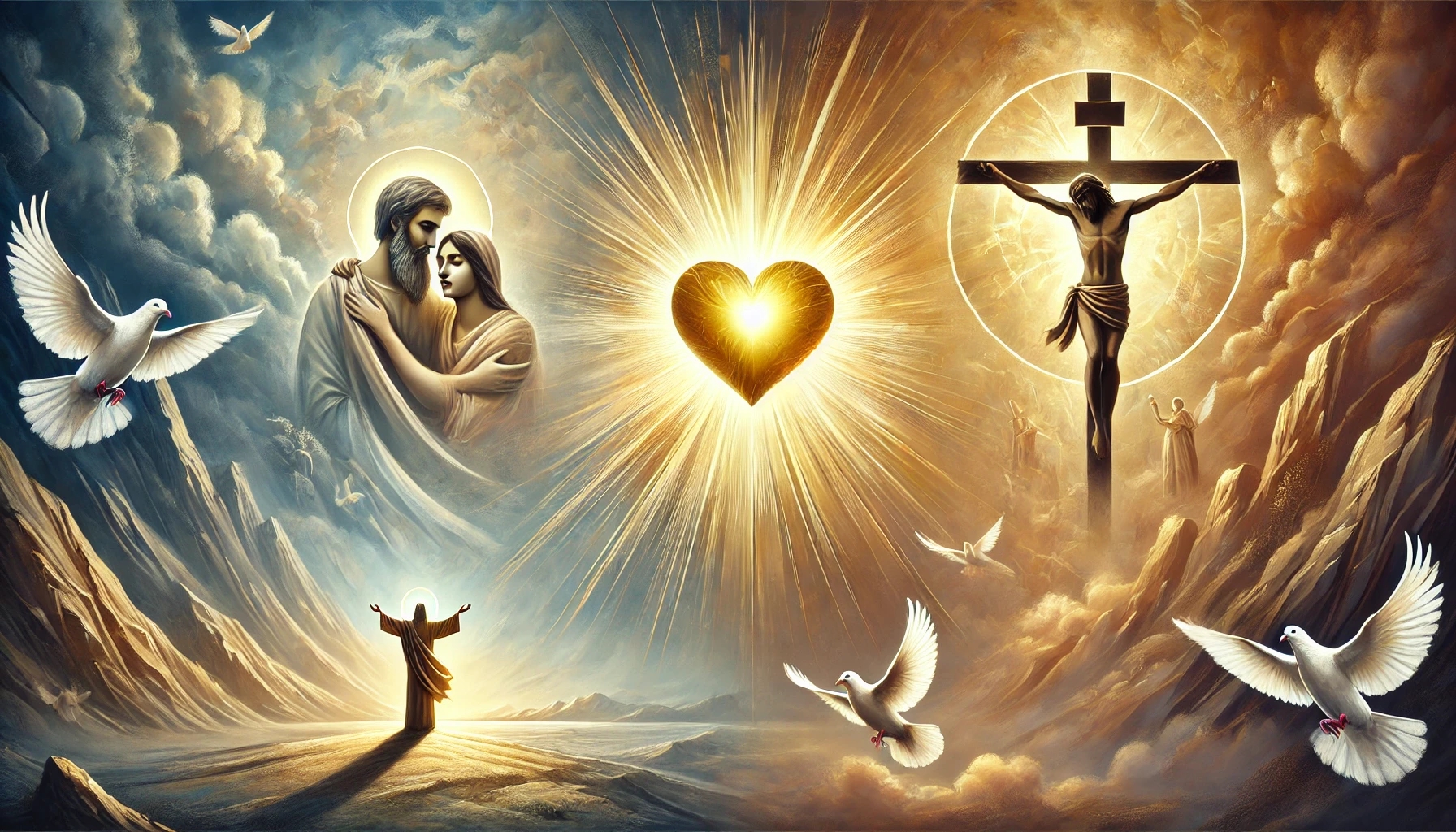
Nowhere is this truth more clearly shown than in the story of Abraham and Isaac—and even more deeply in the echo of that story: at the cross of Golgotha.
📖 Bible Study – The First Mention of Love: A Sacrifice
Genesis 22:2: “Take your son, your only son, whom you love… and offer him…” Hebrews 11:19: Abraham “reasoned that God could even raise the dead…” John 3:16: “For God so loved the world that He gave His only begotten Son…”
The first mention of “love” in the Bible is not between a man and a woman, not in a friendship, but between a father and his son—in a moment of pain, trust, and surrender.
This love is not possessive, but willing to give—even the most precious thing. Abraham’s willingness reflects God’s heart: a Father who gives His Son—out of love for a world that doesn’t deserve it.
And this pattern continues through the New Testament: In all four Gospels, love is first mentioned in the context of the relationship between God the Father and Jesus the Son.
💡 Love begins with God. And it reveals itself in sacrifice.
✨ Spiritual Principles – Love That Gives Itself Away
True love is selfless. It doesn’t ask, “What do I get?” but, “What can I give?”
Divine love is trusting—even when it doesn’t understand. Abraham didn’t understand God’s plan, but he trusted His character.
Love is more than a feeling—it’s a decision, an attitude, a commitment.
At the center is Christ: “He first loved us” (1 John 4:19).
🧭 Everyday Application – Loving the Way God Loves
📌 Learn to see your relationships through God’s eyes. Who are you called to love—even when it costs you something?
📌 Trust God when He calls you to let go of something. Maybe it’s a desire, a plan, or a sense of security—just like Abraham.
📌 Show love through actions, not just words. Love that costs nothing is often convenient—but not always real.
📌 Reflect Jesus’ love in your surroundings. Forgiveness, patience, practical help—these are channels through which divine love flows.
✅ Conclusion – Love Is More Than a Feeling
The Bible opens with a powerful image: A father, a son—and a sacrifice. It foreshadows what will later take place at Golgotha. And it is a call: Let yourself be shaped by this love.
Not the kind of love that seeks itself, but the kind that gives itself away. Because only this love has the power to transform lives—in prophecy, in daily life, and for eternity.
💬 Thought of the Day
God doesn’t love us because we are lovable—but because He is love. Our calling is not to earn this love, but to pass it on.
✍️ Illustration – The Midnight Message
Hamburg. December. Frost on the windows. Lina, 29, a nurse, comes home from the night shift. In her bag: a worn New Testament.
At home, she checks her emails as usual. A new message: “Dad in hospital. Stroke. Stable but critical.”
Her heart sinks. Thoughts race: We just had a fight. I never told him I love him…
She remembers the story she read with a patient the day before—Abraham and Isaac. How someone was willing to give up what they loved most. How God gave His Son—even for her father.
She picks up her phone and calls. It goes to voicemail.
“Dad, I don’t know how long you’ll be able to hear this… but I love you. And God does too. I just wanted you to know.”
When she hangs up, the tears flow. Not from fear. But from hope.
Now she knows: True love doesn’t wait. It gives. It speaks. It lives.