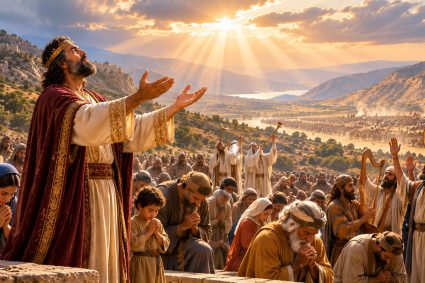
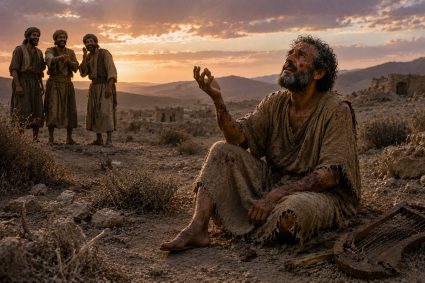
In chapter 15 we see how a son steals the hearts of the people—and a king loses everything that once gave him outward security. Yet in his darkest hour, David’s true strength is revealed: not in the throne, but in trusting God.
⋯⋯⋯⋯⋯⋯⋯⋯⋯⋯◆⋯⋯⋯⋯⋯⋯⋯⋯⋯⋯
🧵 Commentary
Absalom is back in Jerusalem—handsome, charismatic, clever, and full of ambition. He builds a royal image: chariots, horses, bodyguards. But more important is his strategy. Every morning he stands at the city gate, where people come seeking justice. He listens to them, flatters them, makes them feel understood—and whispers: “No one listens to you at the king’s court.”
So the betrayal begins not with weapons, but with words. Absalom steals the hearts of Israel. He promises justice—but seeks power.
Then comes the religious cover. Absalom asks David for permission to fulfill a vow in Hebron. David, unsuspecting, lets him go. But in Hebron Absalom has it proclaimed: “Absalom is king!” The rebellion begins. Even Ahithophel, David’s wisest adviser, defects to him.
The news hits David like a blow: “The hearts of the people of Israel are with Absalom.”
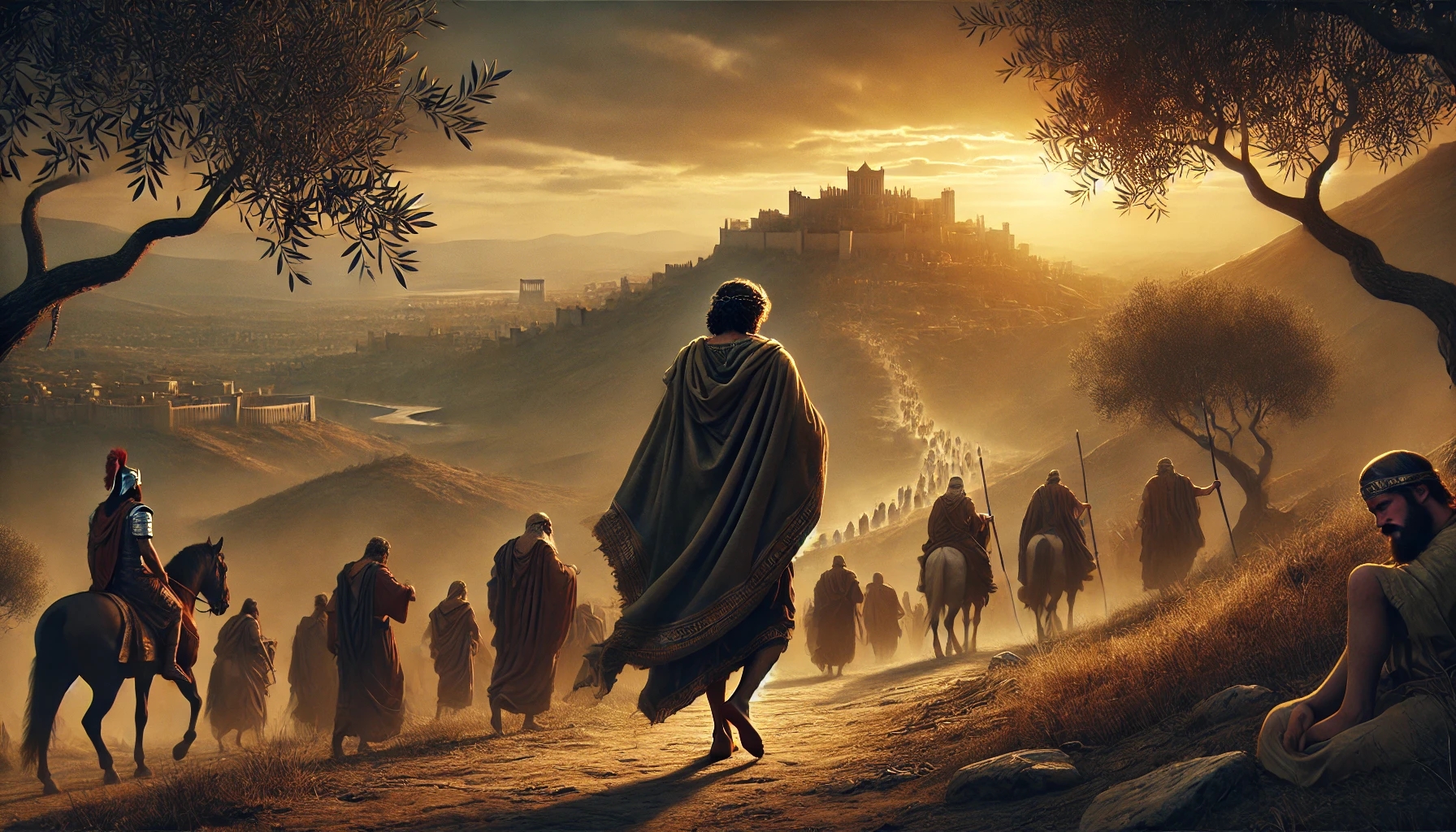
David knows that Jerusalem would drown in blood if he stayed. So he flees—not out of cowardice, but to protect the people.
As he goes, foreigners, warriors, servants, and even children follow him. One of them is Ittai from Gath, a foreigner. David tries to send him back. But Ittai answers with deep loyalty:
“Where my lord the king is—whether for life or for death—there I will be.”
When the priests bring the Ark of the Covenant, David does something remarkable:
he sends it back.
He does not use God as a talisman.
He says: “If I find favor in the Lord’s eyes, He will bring me back. If not—let His will be done.”
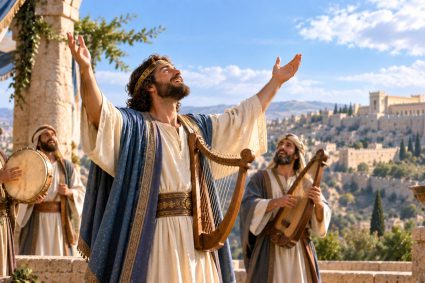
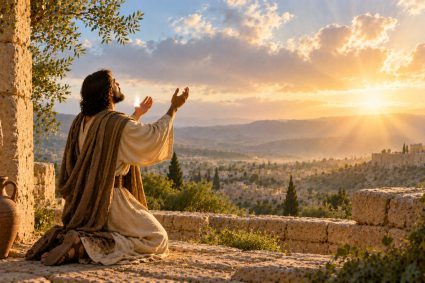
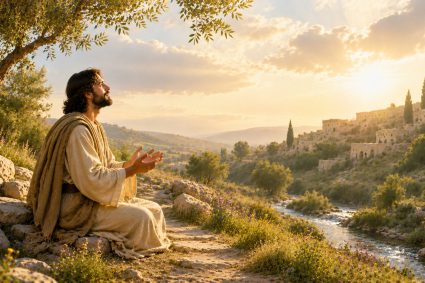
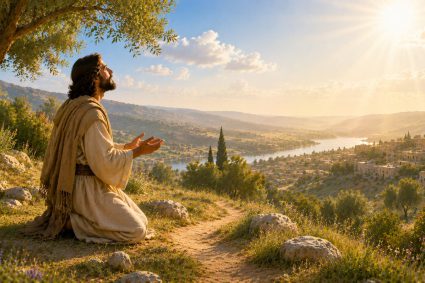
Barefoot, weeping, with his head covered, David climbs the Mount of Olives. A broken king—but a humble man.
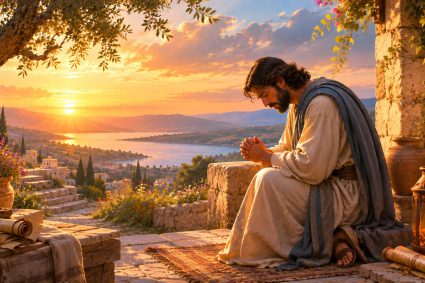
When he hears that Ahithophel, his closest counselor, has betrayed him, David prays only:
“Lord, turn his counsel into foolishness.”
And God answers—by sending Hushai, a friend who pretends to serve Absalom in order to undermine the betrayal from within.
The war begins—but not with swords. It begins with hearts, loyalty, and trust.
⋯⋯⋯⋯⋯⋯⋯⋯⋯⋯◆⋯⋯⋯⋯⋯⋯⋯⋯⋯⋯
🧺 Summary
Through deception, Absalom wins over the people and proclaims himself king. David flees to spare Jerusalem. In distress, he entrusts himself to God—not to power, not to symbols, but to the will of the Lord.
⋯⋯⋯⋯⋯⋯⋯⋯⋯⋯◆⋯⋯⋯⋯⋯⋯⋯⋯⋯⋯
🔦 Message for us today
You can win hearts—and still lose God.
You can lose everything—and still keep God.
True security is not in control, but in trust:
“Lord, do with me whatever pleases You.”
⋯⋯⋯⋯⋯⋯⋯⋯⋯⋯◆⋯⋯⋯⋯⋯⋯⋯⋯⋯⋯
📝 Reflection
• Where do I seek security—position, recognition, or God?
• Do I, like David, have the courage to let go of what matters to me and leave the verdict to God?
• Whom do I follow—charisma or truth?
══════════ ✶ ✶ ══════════
📆 January 18 – 24, 2026
📚 BELIEVE HIS PROPHETS
📖 Weekly Reading from the Spirit of Prophecy
📘 Ellen G. White | Patriarchs and Prophets
🔥 Chapter 58 : The Schools of the Prophets
✨ Divine education for heart, mind, and character—training with an eternal purpose
🌐 Read online here
📘 Blog 6 – Nature as a Teacher – God’s handwriting in creation
Learning through seeing – how God’s world teaches faith
📍 Introduction
Alongside the Bible, nature was the second great textbook. Whoever looks closely discovers God’s handwriting in every blade of grass.
⋯⋯⋯⋯⋯⋯⋯⋯⋯⋯◆⋯⋯⋯⋯⋯⋯⋯⋯⋯⋯
🧵 Commentary
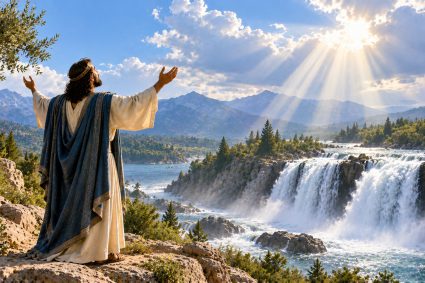
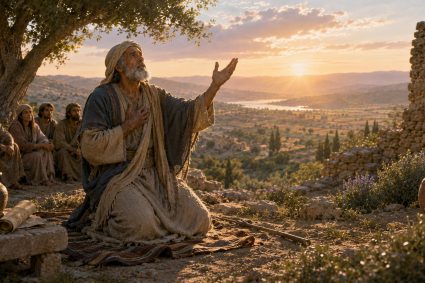
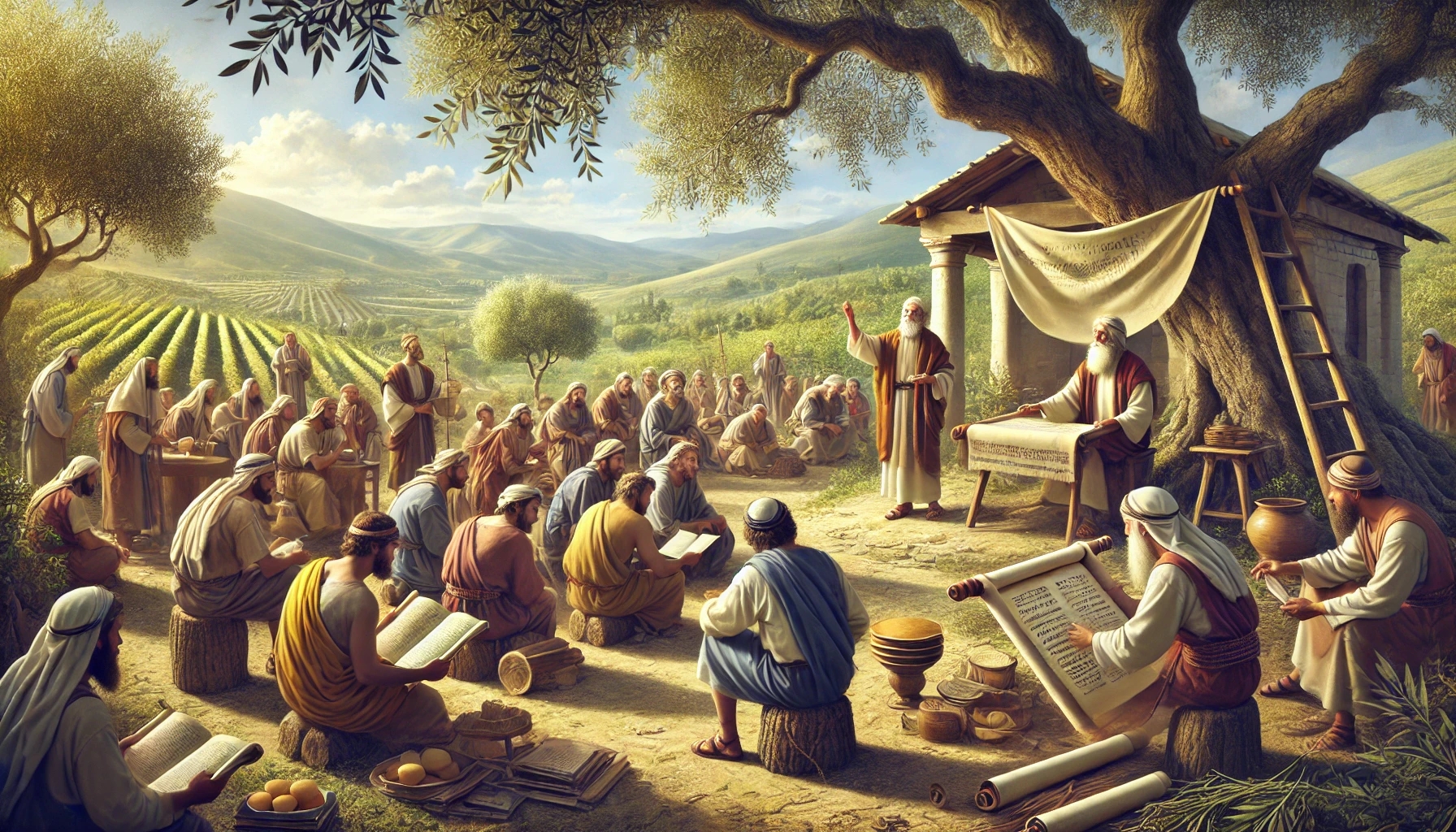
The schools of the prophets taught people to recognize God in nature. The Creator had left His signature here as well. Jesus Himself used nature—trees, birds, light, soil—to teach the deepest spiritual truths. The students learned to see the invisible in the visible, the eternal in the everyday.
This understanding shaped a reverent, grateful heart—a heart that does not consume, but worships.
⋯⋯⋯⋯⋯⋯⋯⋯⋯⋯◆⋯⋯⋯⋯⋯⋯⋯⋯⋯⋯
🧺 Summary
Nature was a classroom for God’s work—visible, alive, and instructive.
⋯⋯⋯⋯⋯⋯⋯⋯⋯⋯◆⋯⋯⋯⋯⋯⋯⋯⋯⋯⋯
🔦 Message for us today
Whoever sees and honors God’s creation becomes quiet, thankful, and receptive to His word.
⋯⋯⋯⋯⋯⋯⋯⋯⋯⋯◆⋯⋯⋯⋯⋯⋯⋯⋯⋯⋯
📝 Reflection
When was the last time I heard God’s voice in the wind, in a flower, or under the starry sky?