🌱LIVING FAITH | 11.Living in the Land | 11.5 Conflict resolution | 🗺️ LESSONS OF FAITH FROM JOSHUA
🗺️ LESSONS OF FAITH FROM JOSHUA
⛪ Lesson 11 : Living in the Land
📘 11.5 Conflict resolution
✨ Peace through conversation – Unity through understanding
🟦 Introduction
Conflicts are unavoidable—even among God’s people. But how we deal with them determines whether relationships break apart or grow stronger. Joshua 22 shows one of the most dramatic near-crises within Israel: a misunderstanding brings the nation to the brink of civil war.
Yet the chapter also powerfully demonstrates how wise conflict resolution, listening hearts, and spiritual maturity can preserve unity.
What almost destroyed Israel becomes, through wise communication, a testimony of grace and peace. This chapter is God’s textbook on conflict—for churches, families, teams, and personal relationships today.
…………………………….. 🗺️ ……………………………..
📖 Bible Study
🔍 1. Historical background
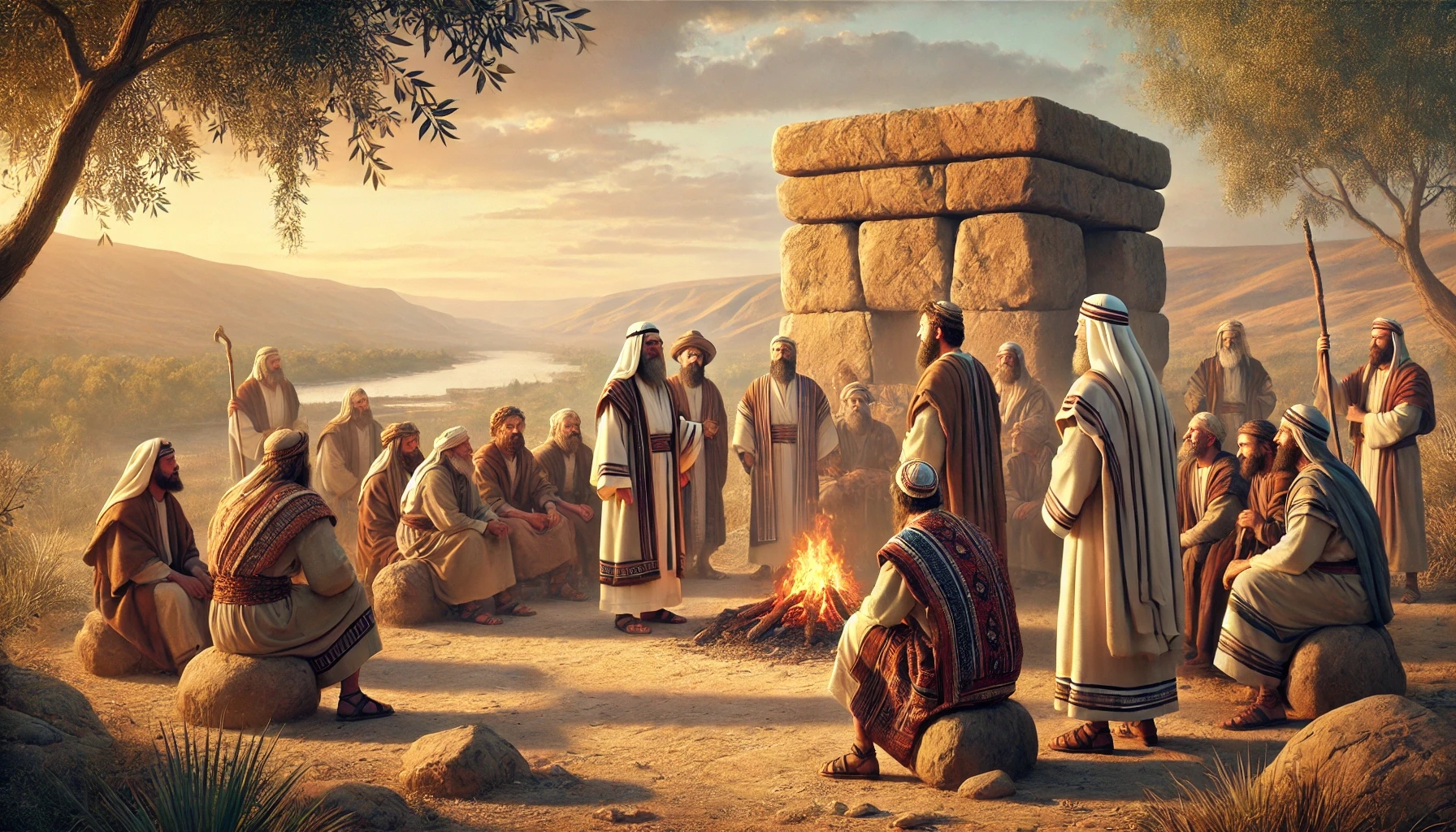
Israel is now in the land. The tribes have received their inheritance. The two and a half eastern tribes return to Transjordan, where they build a massive altar by the Jordan—outwardly identical to the altar of sacrifice.
The western tribes see this as rebellion against God. Their thoughts immediately go to Baal Peor, to Achan’s sin, to God’s wrath.
👉 Without asking, without conversation, they interpret the action—and prepare for war.
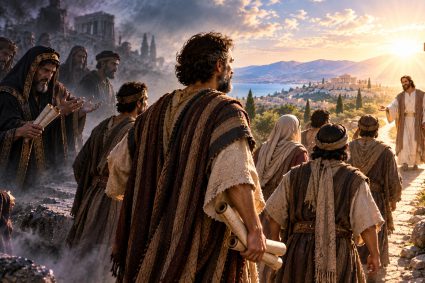
Yet first they send a delegation led by Phinehas. The delegation listens to the response of the eastern tribes, and in verses 30–34 we witness one of the most beautiful scenes of spiritual reconciliation in the Old Testament.
────────────────────────
🔍 2. Analysis of reconciliation (Joshua 22:30–34)
✦ A. Listening leads to truth (v. 30)
Phinehas and the leaders truly listened to the words of the eastern tribes.
They did not react to outward appearances but took time to understand inner motives.
In biblical terms, listening always means:
wanting to understand, giving space, not rushing to conclusions.
That changes everything.
✦ B. Humble acknowledgment of error
The western tribes immediately recognize:
“Now we know that the LORD is among us.”
Not: “We were right.”
But: “We are glad you corrected us.”
That is spiritual greatness.
They rejoice over discovering their own misunderstanding because peace matters more to them than pride.
✦ C. Unity is based on truth—not silence
Unity here does not mean:
“We ignore the problem.”
It means:
– We talk about it.
– We seek God’s way.
– We remain open to correction.
Unity is always the product of holy conversations, not human attempts at harmony.
✦ D. The altar becomes a sign of unity (v. 34)
The altar is finally named:
“Ed – Witness”
→ A testimony that the LORD is God.
The place where civil war could have begun becomes a spiritual memorial of God’s unity.
God transforms places of conflict into monuments of reconciliation.
✦ E. Parallels with Psalm 133, John 17, and 1 Peter 3
📌 Psalm 133 – “How good and pleasant it is when brothers live together in unity.”
Unity is a blessing God gives—but people must preserve it.
📌 John 17:20–23 – Jesus prays for unity as a witness to the world.
Disunity makes God seem unbelievable to others.
📌 1 Peter 3:8–9 – One mind, compassion, mercy, no retaliation.
This perfectly reflects the behavior of the eastern tribes.
────────────────────────
🔍 3. Principles of conflict resolution from the text
-
🗣️ Talk about problems—do not silence them.
-
👂 Listen first—act later.
-
⚖️ Do not judge too quickly.
-
🧠 Understand motivation, not just visible action.
-
🤝 Be willing to sacrifice something to make peace possible.
-
🕊️ Respond to accusations with gentleness, not harsh retaliation.
-
🎉 Rejoice when peace is restored—even if you were mistaken.
-
🔥 True unity is built on truth—not on compromise with sin.
…………………………….. 🗺️ ……………………………..
🗣️ Answers to the questions
❓ Question 1: What does Joshua 22:30–34 teach us about conflict resolution and unity?
-
True unity begins with genuine listening.
Phinehas and the leaders let the tribes speak. They allow themselves to be corrected. Many conflicts exist only because no one is willing to listen. -
Unity requires humility—especially when we are wrong.
They celebrate truth, not their own opinion. They do not insist on being right. -
Misunderstandings are often more dangerous than real sins.
A war was imminent—based solely on a false assumption. -
Relationships can only be saved through conversation.
There is no shortcut: unity without communication is an illusion. -
Willingness to sacrifice strengthens community.
The western tribes were even willing to give up land to preserve spiritual unity. -
A gentle answer can prevent war.
The eastern tribes could have reacted defensively—but they did not. -
Unity never stands above truth.
If the eastern tribes had truly fallen away, correction would have been necessary.
First discernment—then reconciliation.
────────────────────────
❓ Question 2: How do you deal with false accusations? (Psalm 37)
-
I remain calm and trust God (Ps 37:3–7).
Truth does not need haste. -
I explain my motives clearly—without aggression.
Transparency builds trust. -
I pray before I respond.
God aligns my heart and protects me from pride. -
I leave final vindication to God (Ps 37:6).
God brings truth to light—not me. -
I guard my heart against bitterness.
Bitterness only creates new conflicts. -
I remain open to the possibility that I myself misunderstood something.
…………………………….. 🗺️ ……………………………..
✨ Spiritual Principles
🌿 God is a God of unity—but never of dishonesty.
🕊️ A gentle word can disarm destructive forces.
👂 Listening is an act of spiritual humility.
🛡 Conflicts are won not through strength, but through wisdom.
🔥 God turns potential breaking points into testimonies of His grace.
…………………………….. 🗺️ ……………………………..
🛠️ Everyday Application
✔ In the family:
As soon as you sense conflict—talk about it, but with the right tone.
Explain your intention, not just your perspective.
✔ In the church:
Do not judge people based on hearsay.
Ask questions before forming conclusions.
✔ At work:
Respond kindly when criticized.
A gentle answer builds trust.
✔ In your personal faith:
Allow God to correct your heart.
Pride is often the real enemy of unity.
…………………………….. 🗺️ ……………………………..
🧩 Conclusion
Joshua 22 shows us one of the brightest moments of spiritual conflict resolution.
A misunderstanding threatens to tear the people apart—but gentleness, dialogue, and humility save everything.
The tribes did not part as winners and losers, but as reconciled brothers.
That is God’s goal for us as well.
…………………………….. 🗺️ ……………………………..
💭 Thought of the Day
“Peace does not begin with a great step—but with a gentle word.”
…………………………….. 🗺️ ……………………………..
✍️ Illustration
The Altar of Misunderstandings
How a conversation saved a city
📘 Chapter 1 – The shadow of a rumor
The town of Ebersfeld was proud of its unity. Three churches, different cultures, one shared faith. People said, “You can feel peace here.”
But peace is fragile—and sometimes a rumor is enough to threaten it.
It began on a Tuesday morning.
The pastor of the main church, Pastor Albrecht, received a message:
“They say the youth group of East Church is secretly building its own sanctuary.
They want to break away.”
The words hit him hard.
A split?
Rebellion?
An attack on the unity of the town?
That same evening, church leaders gathered. No one knew exactly what had happened—but concern grew.
✦ ─────────────── ✦ ─────────────── ✦
📘 Chapter 2 – The delegation
A delegation was formed. Pastor Albrecht led it, accompanied by four elders with worried faces.
They decided to visit East Church the next day.
During the drive, no one spoke.
Everyone thought about the consequences.
If the rumors were true, a division—and years of conflict—could follow.
✦ ─────────────── ✦ ─────────────── ✦
📘 Chapter 3 – The confrontation
When they arrived, they saw a large wooden structure behind the church.
An altar?
A symbol of separation?
Pastor Albrecht approached the leadership and spoke calmly but firmly:
“We have heard that you are building something that threatens the unity of our churches.”
A defensive reaction would have been expected.
Instead, Miriam, the youth leader, said quietly:
“Please—listen to us first.”
✦ ─────────────── ✦ ─────────────── ✦
📘 Chapter 4 – The gentle answer
Miriam explained:
“Our young people were afraid that one day they would no longer have a place in the main church.
They wanted to build something that says: We belong.
It is not an altar—it is a memorial.
A sign that we are part of you.”
The delegation fell silent.
Gradually, tension gave way to deep embarrassment.
Pastor Albrecht finally said:
“We are grateful that you explained this to us.
You have shown us how important it is to talk to one another—and not judge too quickly.”
✦ ─────────────── ✦ ─────────────── ✦
📘 Chapter 5 – The peace that returned
The church leaders decided to design the memorial together.
It became a symbol of unity for all Christians in Ebersfeld.
A potential rift had become a bridge.
And everyone knew:
Peace had not come through strength—
but through a gentle answer.
…………………………….. 🗺️ ……………………………..
✨ Final reflections
A misunderstanding could have divided an entire town.
But because one side responded gently and the other was willing to listen, unity became stronger than before.
This is how God works in our relationships:
He builds bridges where we see walls.

More Stories