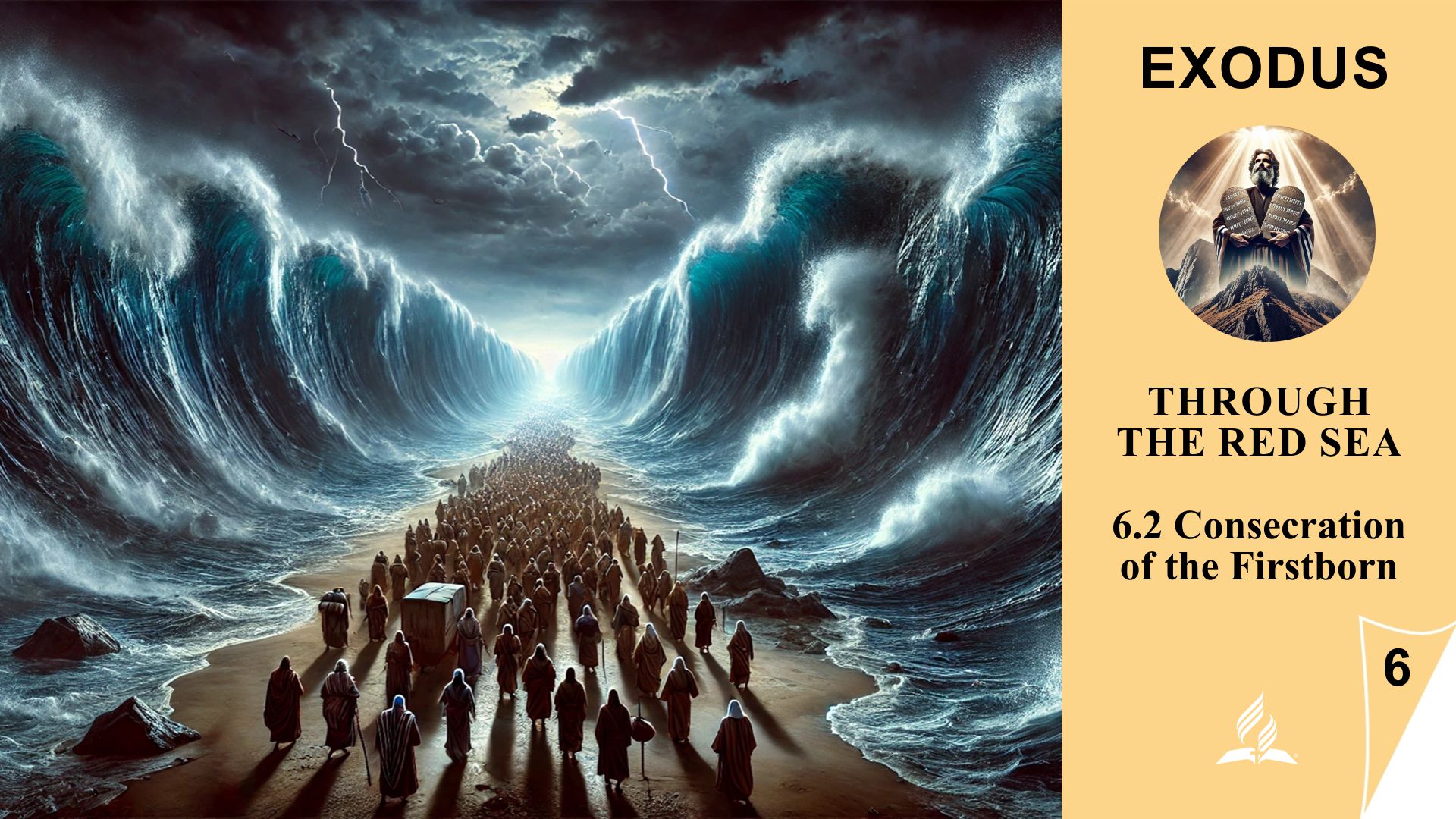
🌊 THE SECOND BOOK OF MOSES
⛪ Lesson 6: Through the Red Sea
📘 6.2 Consecration of the Firstborn
✨ Redeemed for a Life Belonging to God
🟦 Introduction
The story of the consecration of the firstborn is more than an Old Testament ritual. It is a profound symbol of God’s claim of ownership, redemption, and our practical life of faith. God saved Israel through the blood of the lamb—a foreshadowing of the ultimate sacrifice of Jesus Christ. This event reminds us that salvation is not just something we receive, but something that calls for a response: dedication and action.
…………………………….. 🌊 ……………………………..
📖 Bible Study – Exodus 13:1–16: The Consecration of the Firstborn
Introduction: The Historical and Spiritual Context
Israel had been enslaved in Egypt for over 400 years. The tenth plague—the death of the firstborn—was the decisive turning point that led to their release. God spared the Israelite firstborns through the blood of the lamb on the doorposts. As a visible sign of grace and redemption, God commanded that all firstborns be consecrated to Him—a lasting ordinance of remembrance and dedication.
Verse-by-Verse Interpretation
Verses 1–2: The Divine Command
“The Lord said to Moses, ‘Consecrate to me every firstborn male. The first offspring of every womb among the Israelites belongs to me, whether human or animal.’”
Observations:
-
“Consecrate to me”: A declaration of God’s right of ownership. To “consecrate” means to set apart for God, for a holy purpose.
-
The firstborn represents the whole—it is symbolic of everything that follows.
Spiritual Thought:
God doesn’t just ask for something—He asks for the first and the best—because He gave first (salvation, life, future).
Israel’s redemption through blood is not just a historical event but a lasting covenant.
Verses 3–10: The Feast of Unleavened Bread – Remembrance and Instruction
“Remember this day, the day you came out of Egypt, out of the land of slavery…” (v.3)
Observations:
-
Remembrance is a spiritual duty: They were to never forget the miracle of the Exodus.
-
The feast (Matzot) was celebrated annually with specific instructions on food, duration, and meaning.
-
Verse 9 emphasizes symbolic remembrance: A sign on the hand and forehead—our thoughts and actions are to be shaped by God’s works.
Application:
-
Our faith needs rituals of remembrance (e.g., communion, Sabbath, personal days of testimony).
-
Parents are to tell their children what God has done (v.8)—spiritual transmission is not optional but a divine assignment.
Verses 11–13: Practical Implementation – Redemption and Sacrifice
“Every firstborn male is to be dedicated to the Lord…”
Observations:
-
Animals were sacrificed—humans (firstborn sons) were redeemed (i.e., substituted by a sacrifice).
-
An “unclean” animal like a donkey had to be redeemed with a lamb—or killed.
Typology:
-
The lamb as a substitute clearly points to Christ.
-
The idea of “substitution” is the basis of redemption: someone dies in my place.
Modern Significance:
-
We are no longer redeemed by animals—but the obligation to dedicate remains.
-
Our lives belong to Christ because He purchased them at a high price (see 1 Corinthians 6:19–20).
Verses 14–16: Faith Education – Passing on the Faith
“In the future, when your son asks you, ‘What does this mean?’…” (v.14)
Observations:
-
God anticipates the curiosity of the next generation. He wants us to have answers.
-
Faith must not remain silent or private—it must be explained and witnessed.
-
Again: “A sign on your hand… between your eyes”—faith is not theory but must shape thought and action.
New Testament Reference:
-
James 2:17–20: Faith without works is dead.
-
Faith that does not show itself is not biblical faith.
Core Theological Themes
-
God’s Ownership of All Firsts
-
All life comes from God. Therefore, He has the right to the first (see Proverbs 3:9).
-
The firstborn symbolizes the whole. Giving God the first acknowledges His rule over everything.
-
Redemption by Substitution
-
The death of a lamb spared the firstborn—the lamb died, the human lived.
-
Jesus is “the Lamb of God who takes away the sin of the world” (John 1:29). Our salvation is based on substitution.
-
Faith Shows Itself in Obedience
-
Israel had to act: put blood on the door, consecrate the firstborn, celebrate the feasts.
-
Christian faith without obedient action is no true response to salvation.
-
Spiritual Education
-
Children are meant to ask questions—and parents are meant to explain.
-
Faith is not passed on automatically—it must be deliberately taught and lived.
Connection to the New Testament
-
Jesus as God’s Firstborn: Colossians 1:15 calls Jesus “the firstborn over all creation.”
-
Christ as the True Passover Lamb: 1 Corinthians 5:7: “Christ, our Passover lamb, has been sacrificed.”
-
Our Lives as an Offering: Romans 12:1: “Offer your bodies as a living sacrifice.”
Practical Applications
-
Give God the First – Not the Leftovers
-
Start each day with prayer and God’s Word.
-
Plan your tithe and gifts before your expenses.
-
-
Live Consciously as Redeemed
-
Live in gratitude, not in performance.
-
Your freedom was costly—live accordingly.
-
-
Raise Children in Faith
-
Tell your children about God’s faithfulness in your life.
-
Create rituals (e.g., Sabbath candles, table prayers, annual memory verses).
-
-
Regularly Remember God’s Works
-
Keep a gratitude journal.
-
Celebrate spiritual anniversaries (e.g., baptism day, day of conversion).
-
………………………………………………………………….
📖 Answers to the Questions
Question 1: Why was this ongoing command (consecration of the firstborn) given—and what does it mean for us today?
The ongoing command to consecrate the firstborn was not an isolated symbolic act but a central part of Israel’s spiritual identity. God didn’t spare the Israelites because of their strength or wisdom—but only through the blood of the Passover lamb. This divine intervention was not to be forgotten, but remembered across generations.
Consecration of the firstborn visibly demonstrated:
-
God owns all life.
The firstborn—both human and animal—belonged to God not just because they were spared, but because He is the Creator (see Ps. 24:1). -
Salvation demands dedication.
Redemption was never “free” in the sense of being meaningless. The sparing through blood cost a lamb—and pointed to Christ’s great sacrifice. The proper response is dedication—not from compulsion, but gratitude. -
Consecration became a lifelong sign.
This was not a one-time act but a lasting rhythm of remembrance—comparable to the Lord’s Supper today.
Today:
God still asks for our “firsts”—not because He needs them, but because it shapes our hearts. Whether time, talents, money, or our lives: we have been redeemed by Jesus’ blood—we no longer belong to ourselves (1 Cor. 6:19–20).
Question 2: What do the signs on the hands and between the eyes symbolize (v.16)?
“And it shall be a sign on your hand and a symbol on your forehead, that the Lord brought us out of Egypt with His mighty hand.”
Biblical meaning:
-
Hand = action, visible life, decisions.
-
Forehead = thought, inner convictions, worldview.
God’s command: “Let your thoughts and actions be marked by this redemption.”
Other Scripture comparisons:
-
Deuteronomy 6:8: same phrasing—about God’s law and love.
-
Revelation 13:16: the “mark of the beast” on hand and forehead—about full loyalty. So: Who owns your thoughts and actions?
Modern meaning:
God wants every area of our life shaped by His redemption:
-
Not just Sundays—but Mondays too.
-
Not just beliefs—but behaviors.
-
Not just prayers—but how we handle money, people, and time.
These “signs” are not jewelry or stickers—they’re lives visibly different because of redemption.
Summary:
The signs on hand and forehead challenge us to live our faith—not just confess it—in thoughts, actions, and lifestyle.
Question 3: What does it mean that the Israelites did not sacrifice their sons but “redeemed” them—and how does that apply today?
“Every firstborn of a donkey you shall redeem with a lamb. But if you do not redeem it, you must break its neck. And every firstborn among your sons you must redeem.” (Exodus 13:13)
Hebrew word “redeem” (pada) = to buy back, to set free by paying a price.
Why redeem?
-
Human sacrifice was strictly forbidden.
-
But the firstborn belonged to God.
-
So a lamb was sacrificed instead—symbolically saying: “This life is Yours, Lord—but thank You for providing redemption.”
New Testament meaning:
This practice clearly points to Jesus:
“You were not redeemed with perishable things like silver or gold, but with the precious blood of Christ, a lamb without blemish or defect.” (1 Peter 1:18–19)
We too are redeemed—but the cost was infinite: Jesus’ blood.
Application today:
-
Every child is a gift—but also under God’s claim.
We don’t dedicate children to career, culture, or state—but to God. -
I myself am redeemed—I no longer belong to myself.
This touches my relationships, career, money, and time. -
Redemption is costly—grace is not cheap.
Dietrich Bonhoeffer called it “cheap grace” when people want forgiveness without discipleship. True redeemed living means gratitude, conviction, and obedience.
Summary answers (one sentence each):
-
Q1: The command of consecration is a lasting reminder of God’s redemption—and calls us today to complete dedication to God.
-
Q2: The sign on hand and forehead challenges us to make our faith visible in thought and deed.
-
Q3: The redemption of the firstborn reminds us of Jesus’ costly sacrifice—we are bought to belong to God.
………………………………………………………………….
✨ Spiritual Principles
-
God’s ownership: All life belongs to God—we are just stewards.
-
Redemption through blood: Death passed over where the blood was—a clear picture of redemption in Jesus.
-
Faith shows in action: Those who believe act accordingly (James 2:17–20).
-
Remembrance and confession: Rituals and symbols help us not forget God’s works.
………………………………………………………………….
🛠️ Practical Life Application
-
Consecrate your time and possessions: Give God your “firstfruits”—time, resources, gifts.
-
Act deliberately in faith: Make decisions based on faith, not just emotions.
-
Shape your family spiritually: As the Israelites explained the sacrifice, so we must explain our faith to our children.
-
Don’t take salvation for granted: It is precious—and radically transforms our lives.
………………………………………………………………….
✅ Conclusion
The consecration of the firstborn was a powerful sign of redemption and dedication. It reminds us that salvation always calls for a response. Those who are under the blood of Jesus no longer live for themselves but for the One who redeemed them. Faith expresses itself through concrete acts—dedication, remembrance, daily life, and family.
………………………………………………………………….
💭 Thought of the Day
“You do not belong to yourself—you were redeemed by blood. Live today as a response to that redemption.”
Chapter 1 – The Rain Came Too Early
Cusco, Peru. An old city, paved with stories, legends—and guilt. The dry season wasn’t over yet, but this morning it rained. Hard. Ruthless. Rosa knelt in the mud in front of her small wooden hut in San Jerónimo, trying to dig a trench before the water reached her children’s room.
The morning was gray—not just because of the sky. Rosa had barely slept. Luis, her eldest, hadn’t come home. Again.
“Señor Jesús,” she whispered, “you spared my firstborn when he was born. Spare him now, when he’s lost himself.”
✦ ─────────────── ✦ ─────────────── ✦
Chapter 2 – Blood on the Streets
Luis, 17, stood on a street corner near the Mercado Central. His hood pulled low, his motorbike humming like his thoughts. The guys from La Culebra wanted him to prove himself tonight. A test of courage—or a lifelong bond.
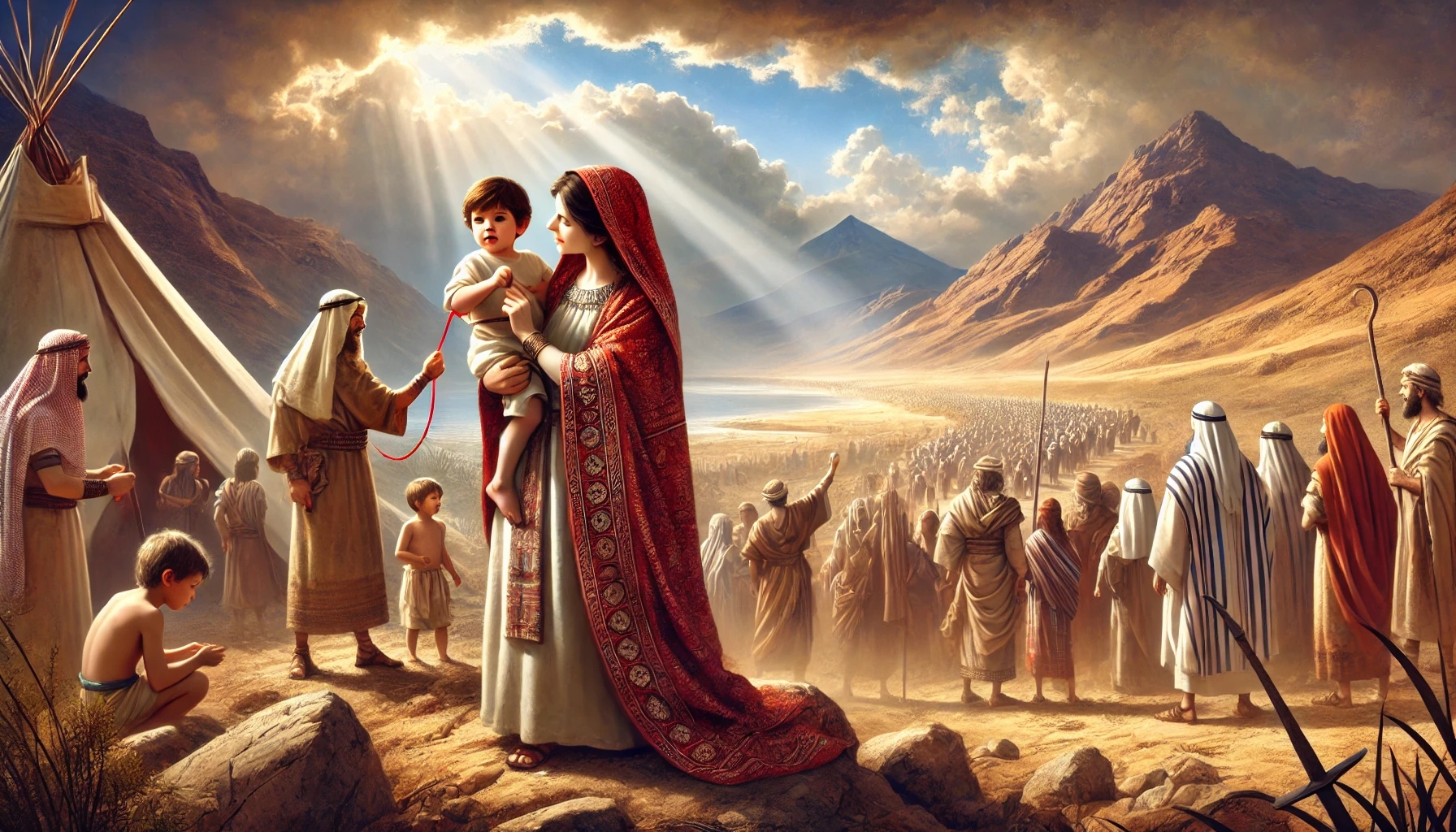
He had not consecrated his life to God. His mother had—but that was long ago. He was six when she dedicated him with tears at the little mud-brick church. Back then, he didn’t understand why she tied a red ribbon on his wrist.
“Just like in Moses’ time,” she said, “you’re under the blood.”
That ribbon was long gone. But the memory pricked like a thorn in his soul.
✦ ─────────────── ✦ ─────────────── ✦
Chapter 3 – The Old Woman on the Bus
Rosa boarded a bus to Quillabamba. She had work for a week—picking oranges. Her Bible was old, tattered. Inside it lay a small red ribbon. Every time she saw it, she spoke to God:
“Señor, I did not sacrifice my firstborn—I gave him to you. Like in Egypt. You said, ‘He shall be mine.’ Where is he now, Lord? Does he still belong to you?”
An old woman in a black hat and braided hair sat beside her. Seeing the ribbon, she nodded and whispered:
“Sometimes God leads our children through the shadow—so they learn where the light is.”
✦ ─────────────── ✦ ─────────────── ✦
Chapter 4 – The Night of Decision
Luis stood in a warehouse yard. A gun lay before him. Next to him, a boy barely older than him, pale with fear.
“Prove you’re one of us,” said the gang leader.
Luis raised the gun.
His hand shook.
A bolt of lightning tore through the August sky.
He remembered. His mother’s voice. The night she anointed his forehead with oil. The red ribbon.
“You don’t belong to the streets. You belong to God.”
He dropped the gun.
They yelled.
But Luis ran. Not away—but back.
✦ ─────────────── ✦ ─────────────── ✦
Chapter 5 – The Road to the Altar
Three days later. Sabbath. Luis entered the little clay church where he had been baptized at eleven—his mother’s request. The pastor spoke about the consecration of the firstborn. About Moses. About blood on the doorposts.
Luis sat in the back row. In his hand—an old red ribbon he’d found in a box of childhood drawings.
When the call came—not to baptism, but to surrender—Luis stood.
“I was lost. I wanted to belong. But I didn’t know I already did.”
He held up the red ribbon.
“I wasn’t bought with gold or silver. I was redeemed—by blood.”
✦ ─────────────── ✦ ─────────────── ✦
Chapter 6 – Signs on Forehead and Hand
One year later. Rosa stood before a chalkboard, teaching literacy. In her bag, a photo of Luis—now a trainee in medical mission work. No visible signs on his forehead. But his life, his choices—they were signs enough.
On his wrist, he wore a new red ribbon. Not out of superstition. Not as jewelry. But as a reminder.
His little brother Javier once asked:
“Why do you wear that?”
Luis replied:
“Because I know who I belong to.”
✦ ─────────────── ✦ ─────────────── ✦
Chapter 7 – The Red Thread
On the 13th of Nisan, exactly one year after his return, Luis tied a red ribbon to their hut’s doorframe. Rosa stepped outside, placed a hand on his shoulder, and said:
“Just like in Egypt. Just like with Moses.
Death passed over.
Because we were under the blood.”
Luis looked at her. Then at the sky.
Over the mountains, light pierced the gray.
“Life isn’t safe because you’re strong—
but because you’re consecrated.”
Afterword
This story touches many layers of biblical truth in modern language:
-
The power of spiritual consecration—and how it carries to children
-
Redemption through blood—made visible in a simple sign
-
Faith that acts—even when the world calls the other way
-
Passing on the faith—from a praying mother to her son
Spiritual Message Illustration
-
The red ribbon = symbol of consecration, protection, remembrance
-
The street = place of temptation, identity crisis, fight for belonging
-
The altar = return to God, surrender, new direction
-
The little brother = the next generation—watching what we do