📖 1. Introduction – A simple observation
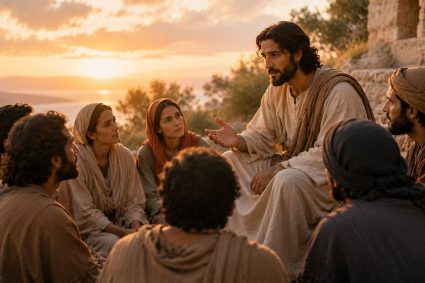
When we speak with a good friend, we are open, honest, and personal.
It is exactly the same with God:
👉 Prayer is relationship, not just ritual.
The question is:
How consciously do I enter this conversation?
📜 2. The biblical foundation – Prayer as relationship
“Prayer means opening the heart to God as to a friend.”
This shows:
Prayer is not a formal system, but personal communication.
At the same time, we see in the Bible different prayer postures – kneeling, standing, sitting.
👉 There is no prescribed form, but there is a clear inner attitude.
🌍 3. Connection to today
Today, prayer is often done casually:
- in stress
- without focus
- done quickly
The problem is not the position of the body, but the attitude of the heart.
However, outward posture can help strengthen inner alignment.
💡 4. Central message of the lesson
👉 The outward posture in prayer supports the inner attitude – but does not replace it.
True prayer comes from a humble, open heart.
✝️ 5. Theological focus
At the center of this lesson is the connection between outward action and inner spiritual reality.
The Bible makes it clear that God does not primarily look at the outward form, but at the heart. Nevertheless, outward actions are not meaningless. They can reflect what is happening inside and at the same time help cultivate that inner attitude.
Kneeling is a powerful symbol. It expresses submission, reverence, and dependence. In doing so, a person visibly acknowledges that God is above them. This physical action can deepen the awareness of God’s greatness and one’s own limitations.
Another important aspect is the spiritual dimension of prayer. Prayer is not only communication, but also a declaration. It shows to whom a person belongs. In this sense, prayer is also an expression of spiritual belonging and trust.
At the same time, the variety of biblical prayer postures shows that God is not bound to forms. People pray standing, sitting, or lying down – what matters is sincerity.
👉 Theologically decisive:
The outward posture has meaning, but the inner devotion determines the quality of prayer.
📖 6. Bible texts explained
Daniel 6:11 shows that Daniel deliberately kneels. His posture is not accidental, but an expression of his faithfulness and reverence.
Luke 22:41 describes Jesus kneeling. Even in the greatest distress, this posture of surrender remains.
Acts 7:60; 9:40; 20:36 show that the first Christians also knelt – often in decisive moments.
Other texts show prayer while standing or sitting. This makes clear:
👉 The Bible allows diversity, but not carelessness in the heart.
- 1 Thessalonians 5:17 (“pray without ceasing”) expands the understanding:
Prayer is not limited to a position or a place.
It can happen anytime:
- consciously
- personally
- continuously
👉 In summary:
The outward posture supports prayer, but what truly matters is a consistent, sincere connection with God.
🔧 7. Application in daily life
This lesson becomes practical through simple steps:
- intentionally choose time and posture for prayer
- try kneeling, if possible
- reduce distractions
- do not pray casually, but intentionally
- talk to God also in everyday life
❓ 8. Reflection question
Is my prayer just a habit – or does it truly express my relationship with God?
🌟 9. Final thought
God hears every prayer.
But He also sees the heart behind it.
Because:
👉 It is not the posture of the body that matters –
but the posture of the heart.