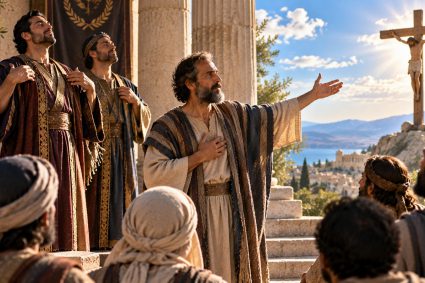
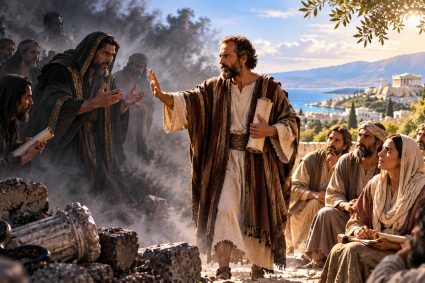
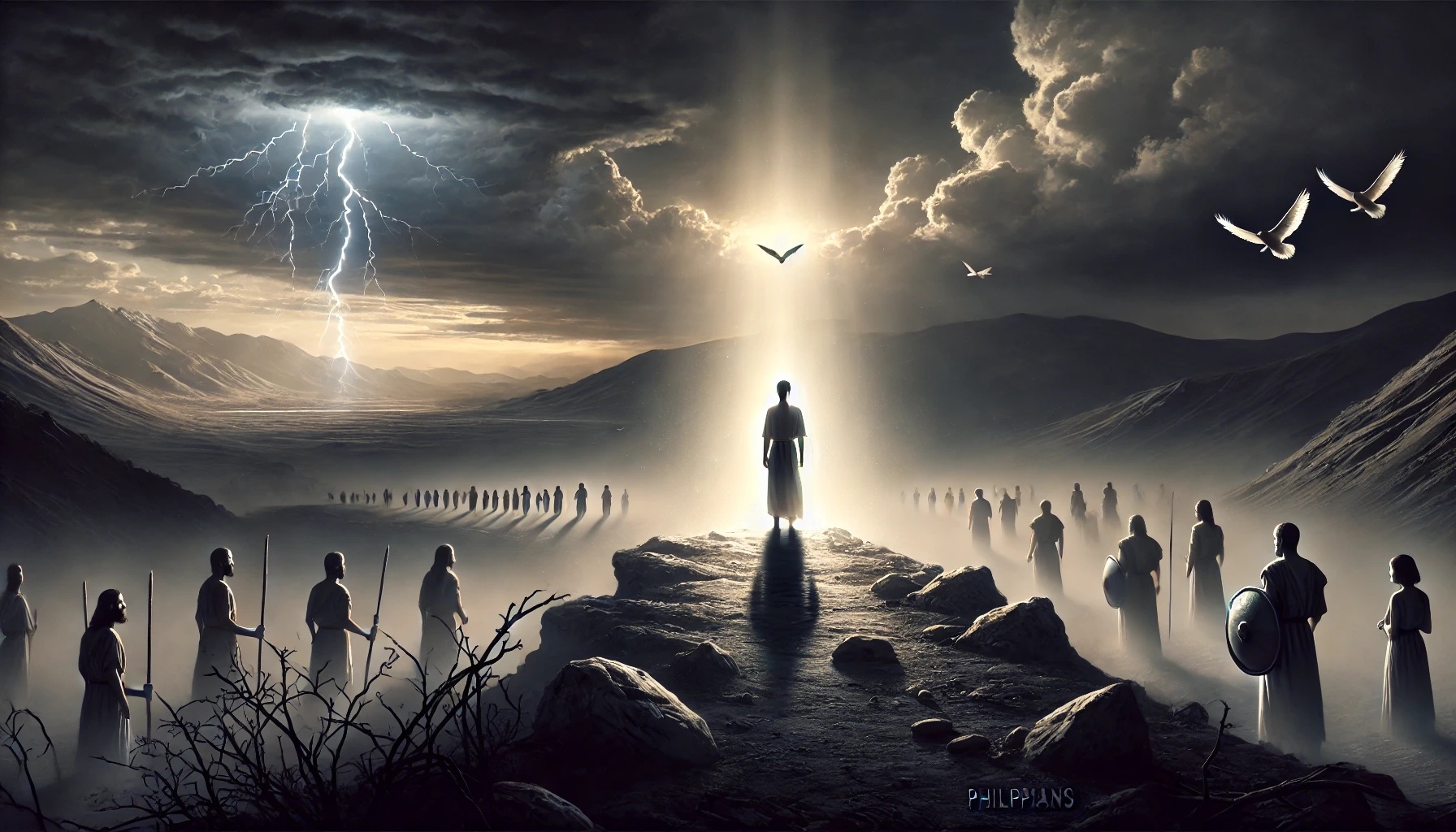
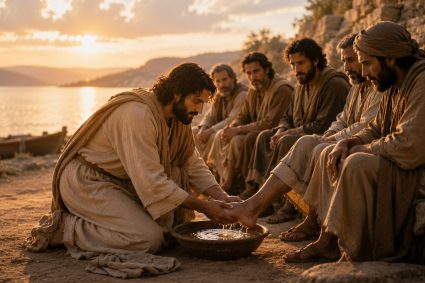
The second half of Philippians 2 brings us right into the practical core of the gospel: How do you live out salvation? Paul doesn’t stop at theology—he speaks about humility, service, sacrifice, character, and faithfulness.
Together, these five lessons form a powerful picture of Christian discipleship. They show us: it’s not power, platform, or performance that matters—rather obedience, light, sacrifice, proven character, and honor for the faithful.
In this Sabbath School, we want to go deeper—and understand how Christ becomes visible in our everyday lives when we follow Him with our whole heart.
………………..✉️………………..
📜 Bible Study
-
God works — we respond in obedience (Phil 2:12–13)
Paul calls for active cooperation in our own salvation—not out of works-righteousness, but from a reverent awe before the holy God. “With fear and trembling” describes the seriousness with which we receive God’s work in our lives.
A person can do nothing from themselves—but through God’s work, the will is re-created, and our actions are strengthened.
-
Light in a dark world (Phil 2:14–16)
A life without grumbling, pure and “unmixed,” shines like stars in the night. Paul urges Christians to live not conformed, but clearly distinct from the spirit of the world. The “word of life” is the standard—not feelings, opinions, or trends.
-
A living sacrifice (Phil 2:17; Rom 12:1–2)
Paul sees his life as a drink offering—added to the sacrifice of believers. Devotion means: your whole life belongs to God, not just worship services. That is true worship—and real discipleship.
-
Proven character (Phil 2:19–23)
Timothy has been “tested” through trials, patience, and faithfulness. Paul praises not his knowledge, but his authenticity under pressure. That is how a character forms that can carry weight—and deserves trust.
-
Honor for the quiet ones (Phil 2:25–30)
Epaphroditus is a model of quiet greatness. His service wasn’t prominent, but vital. Paul honors him—and calls us to value such people whose ministry often goes unnoticed.
………………..✉️………………..
💎 Spiritual Principles
-
Grace changes us — but not without our cooperation.
-
Our witness lives from being different from the world.
-
Sacrifice is the natural expression of real love.
-
Character is formed in hardship.
-
God honors quiet servants — and we should too.
………………..✉️………………..
🛠️ Everyday Application
-
Begin your day with this prayer: “Lord, work in me both the will and the ability to do what is right.”
-
Choose purity intentionally—in speech, media, and thoughts.
-
Live devotion in practical ways: time, money, energy for God’s cause.
-
Stay calm and faithful in conflicts—this shows proven character.
-
Honor quiet, faithful people: a thank-you, a call, a prayer.
………………..✉️………………..
✅ Conclusion
Paul shows us in Philippians 2: True discipleship isn’t loud, but faithful. Not proud, but serving. Not spectacular, but steady.
Whoever lives like Christ changes the world—often quietly, but deeply. The people God honors are not always on stages, but they are close to His heart.
………………..✉️………………..
💭 Thought of the Day
“In a world that loves performance, God seeks faithfulness.”
Honor begins where heaven sees what the world overlooks.
………………..✉️………………..
✍️ Illustration – The Path of Light
Five days, five decisions — a life in Christ’s shadow
🕊 Part 1 – The Call
David Keller was 37, father of two children, and ran a small construction company on the outskirts of Munich. He was an Adventist—not loud, not flashy, but faithful. At least, that’s what he thought.
One morning during his devotion time, he read Philippians 2:12–13:
“Work out your salvation with fear and trembling, for it is God who works in you both to will and to do for His good pleasure.”
He stared at the words. Am I actively involved? Or am I just waiting for God to do everything?
That same day, he received a call. Church leadership asked if he would be willing to take in a young refugee—Amin from Iran—for a while. Amin had recently visited the church, wanted to know more about Jesus, but had nowhere to stay.
“It would only be for two weeks,” the elder said.
“Only two weeks,” David thought. Obedience is easy when it fits.
But real obedience often begins when it becomes uncomfortable.
🌌 Part 2 – The Shadow
Amin moved in. Shy, polite—but full of questions. About God, Jesus, forgiveness, the Sabbath.
David made time—despite work, stress, and family life.
One evening, Amin asked:
“Why do you believe Jesus has changed you?”
David thought for a long time. Then he said:
“Because I used to be like everyone else. I lived the way the world expects. But since I’ve known Jesus, I can’t grumble, lie, or curse like I used to. I want to live differently—even when it’s hard.”
He quoted Philippians 2:15:
“Shine as lights in the world.”
That night he thought: I’m not perfect. But I want to shine—even when it’s dark around me.
🕯️ Part 3 – The Sacrifice
A week later, David’s son Elias stood in the kitchen with tearful eyes.
“Dad… I broke it. Your laptop.”
David needed it for all his projects.
He could have gotten loud—he used to, often.
But this time he took a deep breath, looked at his son, and said:
“Do you know what Paul said? ‘I am being poured out like a drink offering.’ My life belongs to God—and that means I can lose something too. Without anger.”
He stroked Elias’ head. Amin saw it and whispered:
“In my country, something like that would have been impossible.”
Sacrifice isn’t only material. It’s self-denial—out of love.
🛡 Part 4 – The Test
Amin began reading the Bible intensely. Questions came, discussions, doubts.
Some church members were skeptical.
“Is it real? Or just for asylum?”
David stood up in the church meeting.
“I don’t know his faith perfectly. But I know mine. And I know: if we’re going to test someone, we should test ourselves first.”
That same week, David was treated unfairly at a job site—a major client accused him even though he was innocent. The contract was lost.
That evening his wife asked:
“How do you manage to stay calm?”
He read to her:
“Proven character comes through patience, faithfulness, and gentleness.”
Then he said,
“I’d rather lose a client than lose my character.”
🤝 Part 5 – The Honor
Two months later, Amin was baptized. The church was moved.
At the celebration he said:
“I thank God. And also Brother David. He didn’t just tell me about Jesus—he lived Him.”
David wanted to wave it off. But the pastor stood up.
“Brother David—we want to honor you. Not because you’re perfect. But because you were faithful when no one saw it.”
The church applauded. David blushed.
But in his heart he felt peace. He hadn’t accomplished much—yet he had shone.
Like Epaphroditus—faithful, quiet, real.
………………..✉️………………..
📌 Final Thoughts on the Story
In just five days, David made five decisions:
-
To obey, even when it was uncomfortable.
-
To shine, even when it was dark.
-
To sacrifice, even when it hurt.
-
To stand firm, even when it was unfair.
-
And to love others, even when it was risky.
That’s how discipleship is lived. That’s how honor is formed—not through glamour, but through obedience in hidden places.
✨ May you also be someone whom God will honor in the end. Not because of your achievements—but because of your faithfulness.