
🌊 THE SECOND BOOK OF MOSES
⛪ Lesson 5: Passover
📘 5.7 Questions
✨ How God’s Justice and Love Work Hand in Hand
…………………………….. 🌊 ……………………………..
🟦 Introduction
This week, Sabbath School leads us into deep and difficult questions about the nature of God:
How can a loving God bring judgment?
How should we understand the blood of Christ as both protection and purification?
And how are we transformed into His image?
The answers are not found in surface-level logic, but in a heart submitted to God’s Word and open to the work of the Holy Spirit.
………………………………………………………………….
❓ Answers to the Questions
📌 Question 1: How do we reconcile God’s justice in killing the firstborn—many of whom were surely “innocent”—with His love?
This is one of the most challenging questions believers face. How can a loving God take life—especially innocent life?
The death of Egypt’s firstborn (Exodus 12) was not random. It was the tenth and final judgment in a long series of divine warnings. Pharaoh had numerous chances to release Israel—yet his heart grew harder (Exodus 8:15; 9:12).
The death of the firstborn was not a whim of God, but a legal consequence against a godless system—one that enslaved people and glorified death through child sacrifice (see Exodus 1:22).
Here, God reveals three aspects of His justice:
-
Patience: God did not act hastily. Only after nine previous plagues did He intervene decisively.
-
Distinction: Those under the blood’s protection (Israel) were spared—regardless of ethnicity or background. God’s judgment is infused with mercy.
-
Instruction: The plague was not only punishment but also a lesson—for Egypt, for Israel, and for future generations. The event shaped Israel’s view of God even to this day.
Compared with the flood (Genesis 6–9), we see the same pattern: God warns, waits, calls Noah as a preacher of righteousness (2 Peter 2:5)—and only acts when evil has reached its full measure.
What we learn:
God’s judgment is never impulsive. It is an expression of His holiness. But it is framed by patience, calls to repentance, and the opportunity for salvation.
His love is not sentimental—it is holy. And holy love must ultimately judge evil—otherwise it is not love.
📌 Question 2: What does it mean symbolically that believers are “covered by the blood of Jesus” and that this blood “cleanses” them?
To modern ears, the phrase “blood of Jesus” may sound strange or even disturbing. Yet it is central to biblical thought and runs like a red thread through Scripture—from Abel’s sacrifice (Genesis 4:4) to the Lamb on the throne (Revelation 5:6).
What does this symbol mean in practice?
-
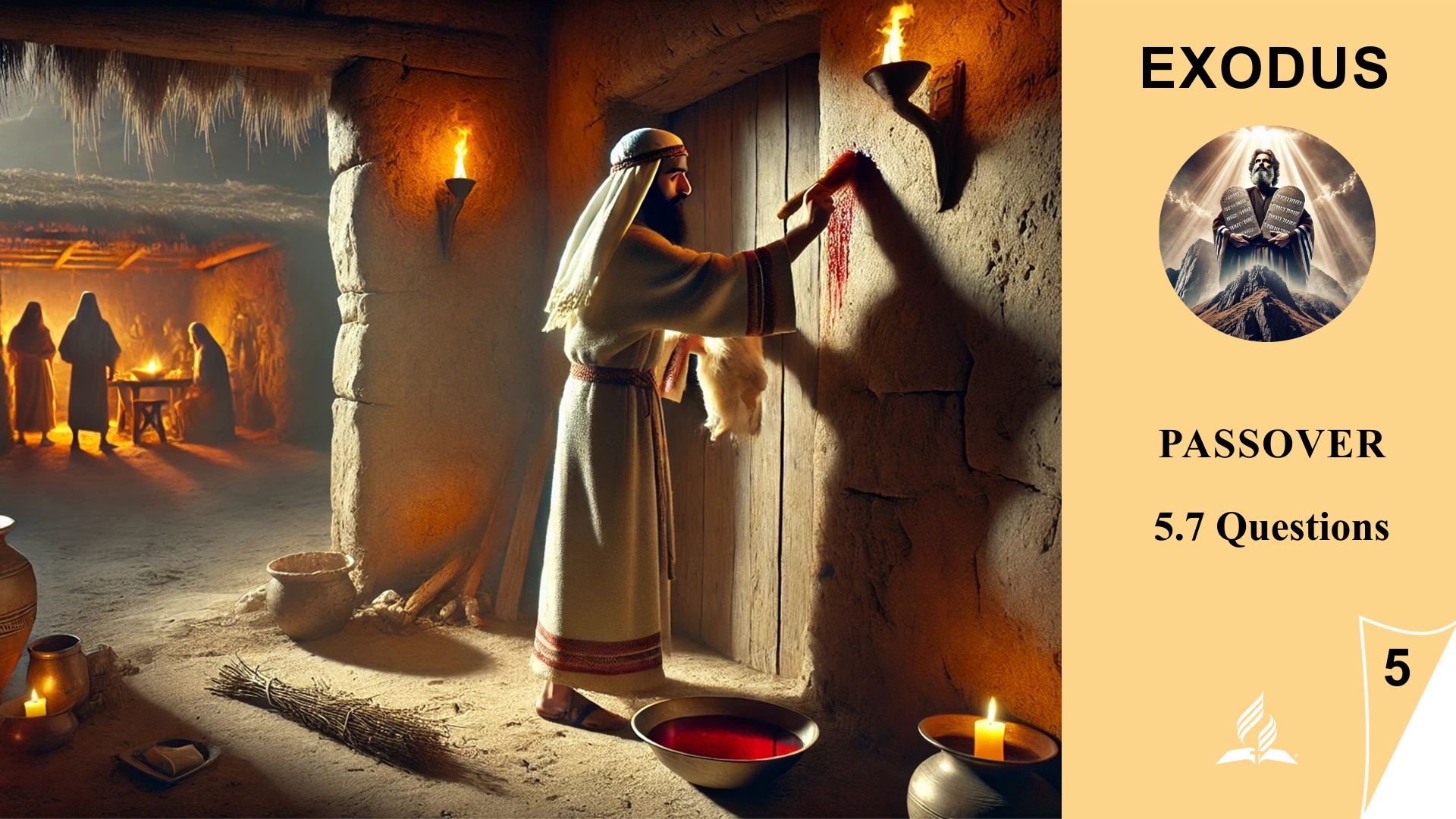
Protection: Just like in Egypt’s Passover (Exodus 12), where the lamb’s blood on the doorposts caused death to “pass over,” the blood of Jesus now protects those under His covenant.
-
Forgiveness: “Without the shedding of blood there is no forgiveness” (Hebrews 9:22). The blood of Jesus represents His life, freely given to atone for our guilt.
-
Cleansing: It offers more than legal acquittal—it provides inner cleansing (1 John 1:7). It removes not just sin’s penalty, but its power over our hearts.
In daily life:
To be “covered by Jesus’ blood” means to live under His grace.
It means that your identity is rooted in His sacrifice—not in your achievements or failures.
It means you are righteous before God—not because you are perfect, but because Christ is.
It is the ultimate expression of divine love—costly, yet freely given.
📌 Question 3: How do we allow Christ to do in us what is described in WAB 256—that we are transformed, reflect His character, and act like Him?
Transformation is the great goal of the gospel. God doesn’t just want to forgive us—He wants to make us new (2 Corinthians 5:17). But how does transformation happen?
“You must accept and absorb the Word of God so that it becomes the driving force in your life and actions.” – WAB 256
The key lies in the interplay of:
-
God’s Word (Nourishment): Like physical food, spiritual nourishment shapes our inner being. Those who read the Bible regularly allow truth to shape their thoughts. The Bible isn’t just read—it reads you.
-
Prayer (Connection): Transformation happens in relationship. In prayer, we open our hearts. We confess weakness and receive strength. We don’t meet abstract principles—we meet a Person.
-
Holy Spirit (Power): He is the source of every change. He convicts, reminds, strengthens, and guides. But He doesn’t act without our “yes.”
-
Obedience (Response): Transformation isn’t passive. Every small act of obedience deepens the Spirit’s work in us.
How do we apply this?
-
Daily “eat” God’s Word—not just read it, but meditate and apply it.
-
Fix your eyes on Christ as your example—especially in the Gospels.
-
Seek stillness—create space for listening prayer.
-
Don’t justify sin—bring it into the light.
-
Expect change—even if it takes time.
Transformation is not achievement—it is a response of love.
It begins when you say: “Lord, change me—not into my ideal version of myself, but into Your image.”
………………………………………………………………….
✨ Spiritual Principles
-
God’s justice is never separated from His love.
-
Judgment is also protection—for the oppressed.
-
Forgiveness does not come from minimizing guilt—but through the blood of Jesus.
-
Sanctification is a daily process—and a divine miracle in the human soul.
…………………………………………………………………
🧩 Application for Daily Life
-
Talk to God about things you don’t understand—He’s not afraid of your questions.
-
Live under the protection of Jesus—through prayer, forgiveness, and fellowship with Him.
-
When you fall, don’t run away—run back to the cross.
-
Let God’s Word penetrate your heart—not just your mind.
-
Trust this: Change is possible—even in you.
………………………………………………………………….
✅ Conclusion
God’s story is sometimes hard to grasp. Yes, it includes judgment—but it is a judgment motivated by love.
The Lamb was slain—so we could live.
The blood speaks. It protects. It heals.
And it calls us into deeper fellowship with the One who said:
“I am the LORD your God.” (Leviticus 18:4)
………………………………………………………………….
💭 Thought of the Day
“God does not judge to destroy – but to redeem.”
The blood on the doorposts saved then. And it still saves today.
A story of guilt, grace, and the quiet power of transformation
Location: Northern Vietnam, 2022
Chapter 1 – The Shadow at the Market
Hà Giang, a mountain village in northern Vietnam.
The market buzzed with colors, voices, and the scent of fermented fish and dried tea.
But in the middle of it all moved Lien—a young woman whose face was always half-hidden by a red scarf.
“She’s the one with the blood,” some whispered.
“A curse is on her family,” others said.
No one dared touch her—even though she never harmed anyone.
Two years earlier, during a traditional family ritual, Lien had lost her firstborn son.
Her grandmother had insisted on the old custom: a sacrifice to the ancestral spirits at new moon.
Lien hadn’t resisted—out of fear, tradition, and silence.
But that night, the child died.
Since then, she wore the red scarf daily—not just in mourning, but as a sign of guilt.
✦ ─────────────── ✦ ─────────────── ✦
Chapter 2 – The Woman with the Book
One rainy Thursday—when the alleyways shone like quiet rivers—an old woman arrived in the village.
No one knew her, but she spoke fluent Vietnamese and gave smiles as freely as rice from a full bowl.
She carried a book. Its cover was worn, with gold lettering Lien couldn’t read: “Thánh Kinh” – Bible.
She introduced herself as Mẹ Thu.
“I haven’t come to bring you a religion,” she said.
“I’ve come to tell you about blood—not the kind that screams, but the kind that cleanses.”
Lien was confused at first—then curious.
She began visiting Mẹ Thu every evening.
There, she heard about a God who didn’t demand sacrifice—but became the sacrifice Himself.
About blood that didn’t curse—but redeemed.
About a name: Jesus.
✦ ─────────────── ✦ ─────────────── ✦
Chapter 3 – The Night of the Wind
One dark, windy night, Lien woke from a dream.
She stood on a bridge, a raging river below.
In her arms: the child.
Behind her: the village—silent, judging.
A man with eyes like fire approached.
In His hand: a cloth, white as light, soaked in blood—yet spotless.
“This is my blood,” He said. “It speaks better than the blood of your guilt.”
She woke up in turmoil—and yet filled with peace.
✦ ─────────────── ✦ ─────────────── ✦
Chapter 4 – The New Scarf
The next day, Lien wore a new scarf—not red, but white.
She walked openly through the village.
People stared.
But in her hand, she held a small New Testament like a shield.
She told her story—not as a victim, but as a witness.
She spoke of the Passover Lamb—like in Egypt—and how she now lived “under the blood.”
She spoke of cleansing—not outward, but deep in the soul.
✦ ─────────────── ✦ ─────────────── ✦
Chapter 5 – God’s Justice and Transformation
A year later, Lien was part of a small but growing community of Christians in the region.
She had finished school and was now teaching other women to read—using the Bible as a textbook.
She now understood:
God’s judgment is real—but not unjust.
It is a fire that burns lies, but also lights the path to truth.
She once said:
“I used to think justice meant: I must pay.
Now I know justice means: Jesus paid—and now calls me to live differently.”
✦ ─────────────── ✦ ─────────────── ✦
Chapter 6 – The Red Scarf in the Window
Lien kept the old scarf—not from guilt, but as a testimony.
She hung it in the window.
“This is who I was,” she said once.
“And this is what He did.”
Spiritual Principles from the Story
-
God’s judgment is not random – it separates truth from darkness.
-
Jesus’ blood doesn’t just cleanse the outside – it transforms the heart.
-
Change happens through Word, relationship, and obedience – just like in Lien’s life.
-
Forgiveness becomes visible when people walk upright again – heads held high.
Application for Daily Life
-
Are you still wearing “red scarves” from the past?
-
Have you heard the voice of the One who says: “My blood cleanses you fully”?
-
Are you ready to turn your story of guilt into a story of testimony?