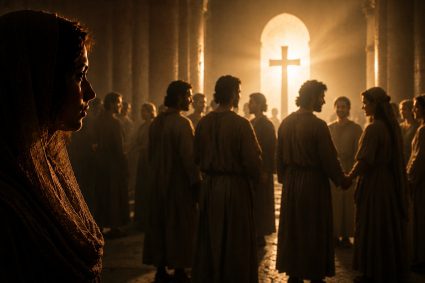
Israel’s history is marked by highs and lows, obedience and rebellion. When God’s people were led into Babylonian captivity, His plan seemed to falter. Yet even in that dark hour, God showed that His work was not confined to Israel alone. He used pagan kings like Nebuchadnezzar and Cyrus to accomplish His will and guide His people. These events challenge us to examine our own relationship with God—and to see how much “Babylon” may still dwell within us.
📖 Bible Study
🔹 Nebuchadnezzar’s Humbling and Recognition (Daniel 4) King Nebuchadnezzar of Babylon experienced a profound transformation. After dreaming of a great tree cut down, Daniel warned him of God’s judgment. In pride he ignored the warning, lost his sanity, and lived like an animal for seven years. At the end, he acknowledged God’s sovereignty and praised “the Most High.” This shows that God can humble the proudest hearts to draw them to Himself.
🔹 Cyrus’ Decree and Israel’s Return (Ezra 1) King Cyrus of Persia—a non-Israelite—was called by God to free Israel from captivity. He issued a decree allowing the Jews to return to Jerusalem and rebuild the temple. Scripture even calls Cyrus God’s “anointed,” a title usually reserved for Israelite kings. This underscores that God can use people outside Israel to fulfill His purposes.
❓ Reflection Questions & Answers
What does it teach us about how God sees humanity that He employed people outside Israel—like Nebuchadnezzar and Cyrus—to achieve His goals? God does not view humanity through national or ethnic lenses. He is sovereign and can use anyone—regardless of background or faith—to accomplish His purposes. The stories of Nebuchadnezzar and Cyrus demonstrate that God’s grace and calling are universal. He seeks hearts willing to do His will and can enlist the most unlikely instruments in His plan.
We may not live in Babylon, but how much of Babylon might dwell within us? How do we recognize this, and how can we change? “Babylon” in Scripture symbolizes pride, idolatry, and rebellion against God. Though we aren’t physically in Babylon, these attitudes can reside in our hearts. When we rely more on material security, power, or human wisdom than on God, we reflect Babylon’s values. To recognize this, we must regularly examine our hearts by God’s Word, repent of our ways, and deliberately choose to follow God’s paths.
✨ Spiritual Principles
God’s Sovereignty: He rules over all nations and can use anyone for His purposes.
Humility Before God: Pride separates us from Him; humility draws us near.
Universal Calling: God’s invitation to repentance and service is open to all, regardless of origin.
🧭 Practical Application
Self-Examination: Regularly ask whether you’ve adopted values or behaviors God disapproves.
Openness: Be ready to see God at work in unexpected people and situations.
Humility: Acknowledge your need for God’s guidance and submit to His leading.
✅ Conclusion
God’s ways are higher than ours. He can humble the mightiest rulers and call the most unlikely people to fulfill His will. Our task is to remain humble, to examine our hearts, and to be willing to be used by God wherever He leads.
💬 Thought of the Day
“God does not look at outward status but at the heart. He can use anyone who is willing to heed His call.”
✍️ Illustration – “Light Over Babylon”
Baghdad, Iraq – Spring 2025
The sun set over the dusty rooftops of the Old City. In a small internet café near a bustling market sat 29-year-old Zaid, brow furrowed before a battered computer. The generator hummed. Outside, the muezzin’s call to prayer echoed—but Zaid remained seated, stirred by another summons in his heart.
A historian and seeker, Zaid had grown up among ruins and pondered why Babylon—center of so many stories—reappeared as a spiritual symbol in Scripture. One name gripped him: Daniel—a man in Babylon who was not of Babylon, a captive who influenced kings, a foreigner serving a God beyond golden idols. He’d secretly read Daniel’s book in Arabic, then in English, and found himself bewildered. Why did God speak in dreams? Why did He use pagan rulers?
Clicking through to an Adventist website in Jordan, Zaid read of Abraham’s calling—also from Mesopotamia—and how God had later used King Cyrus to free His people. It struck him: if God could call Abraham from Ur and enlist Cyrus, might He include Zaid too?
He began to pray, softly, in his heart: “If You are the same God who spoke through Daniel, show me the way.”
He joined an underground group studying Revelation in Baghdad, learning of the call to “come out of Babylon” —not geographically but spiritually. He realized: though he’d never lived in ancient Babylon, its spirit lay in his pride, self-justification, and doubt.
A year later, Zaid stood in the baptismal pool of a hidden house church, tears streaming as the pastor declared, “You are a child of Abraham—not by blood, but by faith.”
He now knew his story did not end with Nimrod, Nebuchadnezzar, or the Babylonian exile—but continued with Cyrus, Daniel, Jesus—and now with him.
That evening, in his room, Zaid opened his new Bible and read aloud in Arabic:
“Then I heard another voice from heaven say: ‘Come out of her, my people, lest you share in her sins…’” (Revelation 18:4)
A call from Babylon—and a light over Babylon. That was his calling.