
📅 27 December 2025
📚 BELIEVE HIS PROPHETS
📖 Daily Bible Reading
👑 1 Samuel 19 – David on the Run – Preserved by God’s Intervention
✨ When God keeps His hand over a life, even kings cannot prevail
🌐 Read online here
📍 Introduction
In 1 Samuel 19, the tense relationship between Saul and David escalates even further. The king sees David as a rival and wants to kill him—repeatedly and in different ways. But God protects David through faithful people and supernatural intervention. In the middle of fear, intrigue, and violence, we meet a God who does not merely watch—He intervenes and acts.
⋯⋯⋯⋯⋯⋯⋯⋯⋯⋯◆⋯⋯⋯⋯⋯⋯⋯⋯⋯⋯
🧵 Commentary
The story begins dramatically: Saul, tormented by jealousy and inner darkness, decides to kill David—openly. In front of his servants. In front of his son. But Jonathan, the king’s son, loves David and becomes a rescuer in a dark hour. Secretly, he warns David and tries to reason with his father. And for a moment, good seems to win—Saul swears he will not kill David. A breath of hope.
But it is a deceptive calm. A new war breaks out, David fights bravely and successfully—and Saul’s jealousy flares up again. The “evil spirit from the Lord”—an expression showing that God has withdrawn His guiding presence from Saul—comes upon him, and once again a spear flies in David’s direction. Again David escapes—this time by a narrow margin.
That night, Michal, David’s wife and Saul’s daughter, becomes the next rescuer. With courage and cleverness she deceives her father: an idol in the bed, a goatskin, a bit of strategy. And David slips out through the window into the night. Michal protects David—but at the same time lies to her father out of fear. The tension grows. The royal household is deeply divided.
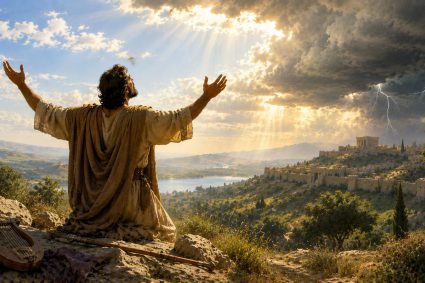
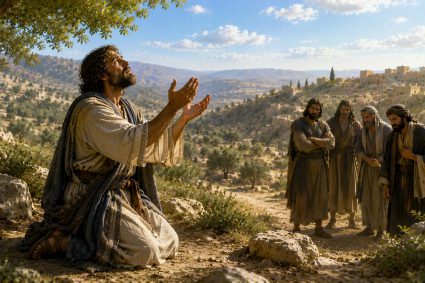
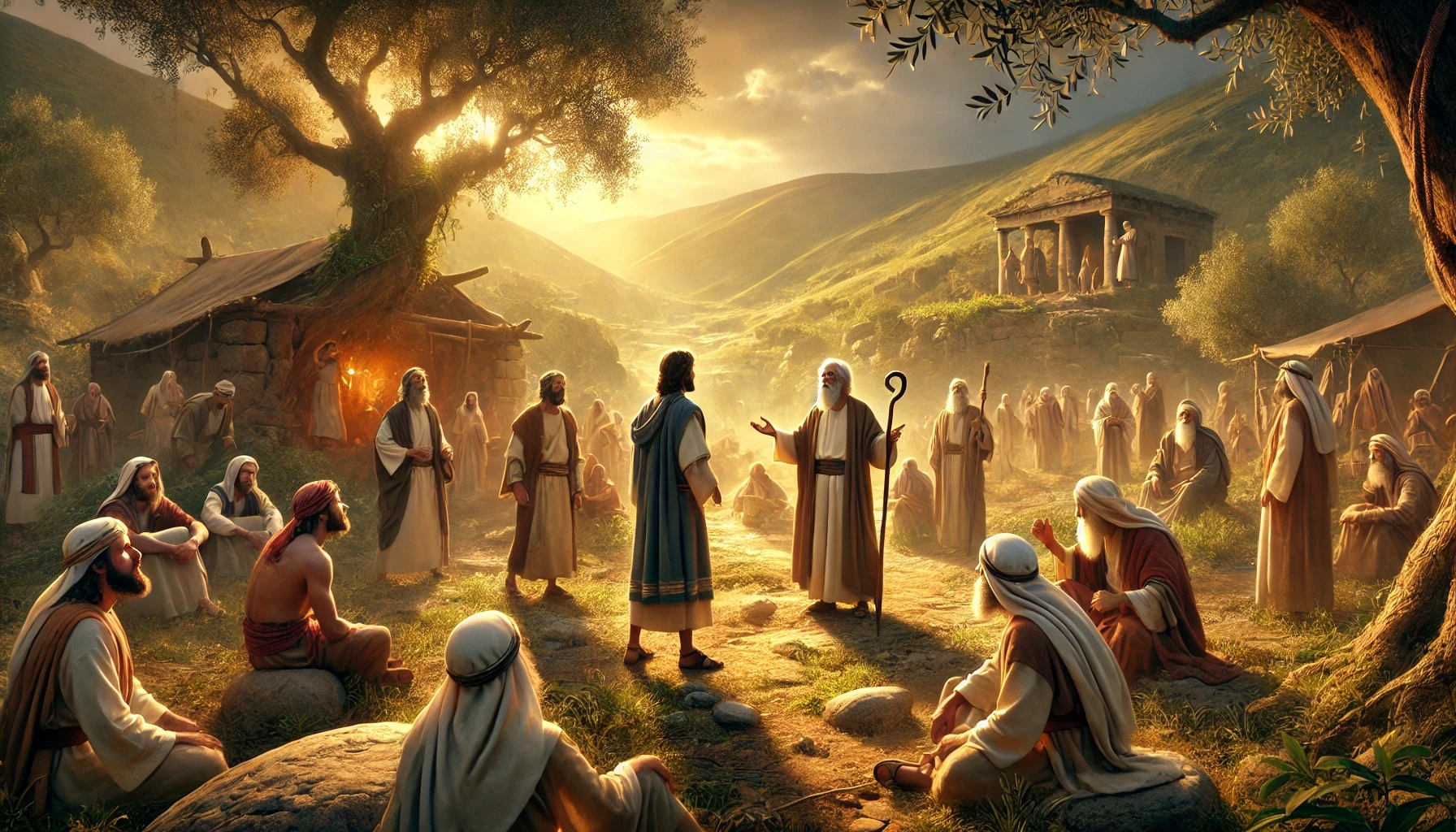
David flees to Samuel, his spiritual mentor. Perhaps he is seeking counsel, perhaps simply refuge. There, among the prophets at Naioth, something unexpected happens: Saul sends men to capture David—but they suddenly begin to prophesy! God’s Spirit falls on them so powerfully that they forget their mission. Twice more the same thing happens—the second and third groups of messengers are also overwhelmed by God’s Spirit. Finally Saul comes himself—and even the king is seized. He prophesies, tears off his clothes, and lies exposed on the ground all night long. A picture of humiliation—and of God’s power, declaring: “This far—and no further.”
So the chapter ends with a proverb: “Is Saul also among the prophets?” It is almost mocking. Yet behind it stands a serious message: God can use anyone—even an opponent—to accomplish His will.
⋯⋯⋯⋯⋯⋯⋯⋯⋯⋯◆⋯⋯⋯⋯⋯⋯⋯⋯⋯⋯
🧺 Summary
In 1 Samuel 19, Saul wants to kill David. Jonathan protects him first, then Michal. David flees to Samuel. Three times Saul sends men to seize David, but God’s Spirit stops them—and finally even Saul himself. The Lord preserves David in a supernatural way and shows that no human will is stronger than His own.
⋯⋯⋯⋯⋯⋯⋯⋯⋯⋯◆⋯⋯⋯⋯⋯⋯⋯⋯⋯⋯
🔦 Message for Us Today
God’s protection is real—even when we are surrounded by enemies or circumstances seem hopeless. He uses people (like Jonathan or Michal), but also supernatural means, to guide and preserve us. And sometimes He prevents evil not through visible miracles, but through inner interventions—like Saul, who suddenly prophesies instead of killing.
This story invites us to trust God’s actions even when we cannot yet see them. He sees the bigger picture—and He stands by those who follow Him.
⋯⋯⋯⋯⋯⋯⋯⋯⋯⋯◆⋯⋯⋯⋯⋯⋯⋯⋯⋯⋯
📝 Reflection
Where in your life do you feel pursued, threatened, or overwhelmed?
Whom might God have placed beside you—as a “Jonathan” or a “Michal”?
Do you trust that God will intervene at the right time, even when the path becomes narrow?
═══════════ ✶ ✶ ═══════════
📆 24–27 December 2025
📚 BELIEVE HIS PROPHETS
📖 Weekly Reading from the Spirit of Prophecy
📘 Ellen White | Patriarchs and Prophets
🔥 Chapter 52: The Annual Feasts
✨ Feasts of Remembrance and Hope – How God Strengthened His People through Worship Seasons
🌐 Read online here
📘 Blog 4
🎺 Feasts of Encounter – God’s Answer to Isolation
✨ Community strengthens faith—then as now
📍 Introduction
The annual feasts were not merely rituals, but God’s means of spiritual renewal and of strengthening relationships. Shared worship carried spiritual and social power.
⋯⋯⋯⋯⋯⋯⋯⋯⋯⋯◆⋯⋯⋯⋯⋯⋯⋯⋯⋯⋯
🧵 Commentary
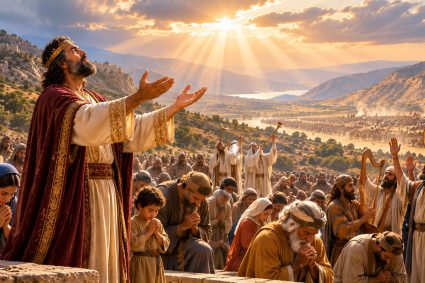
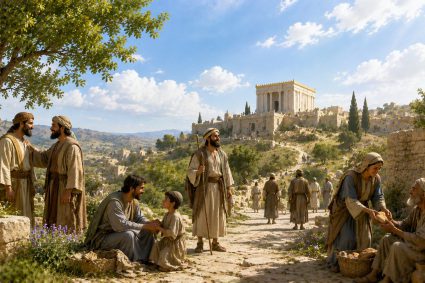
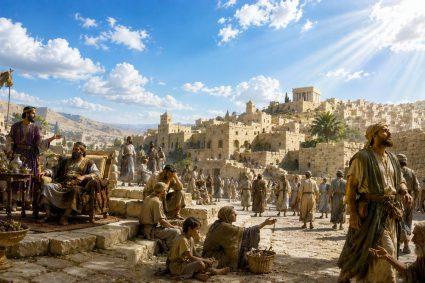
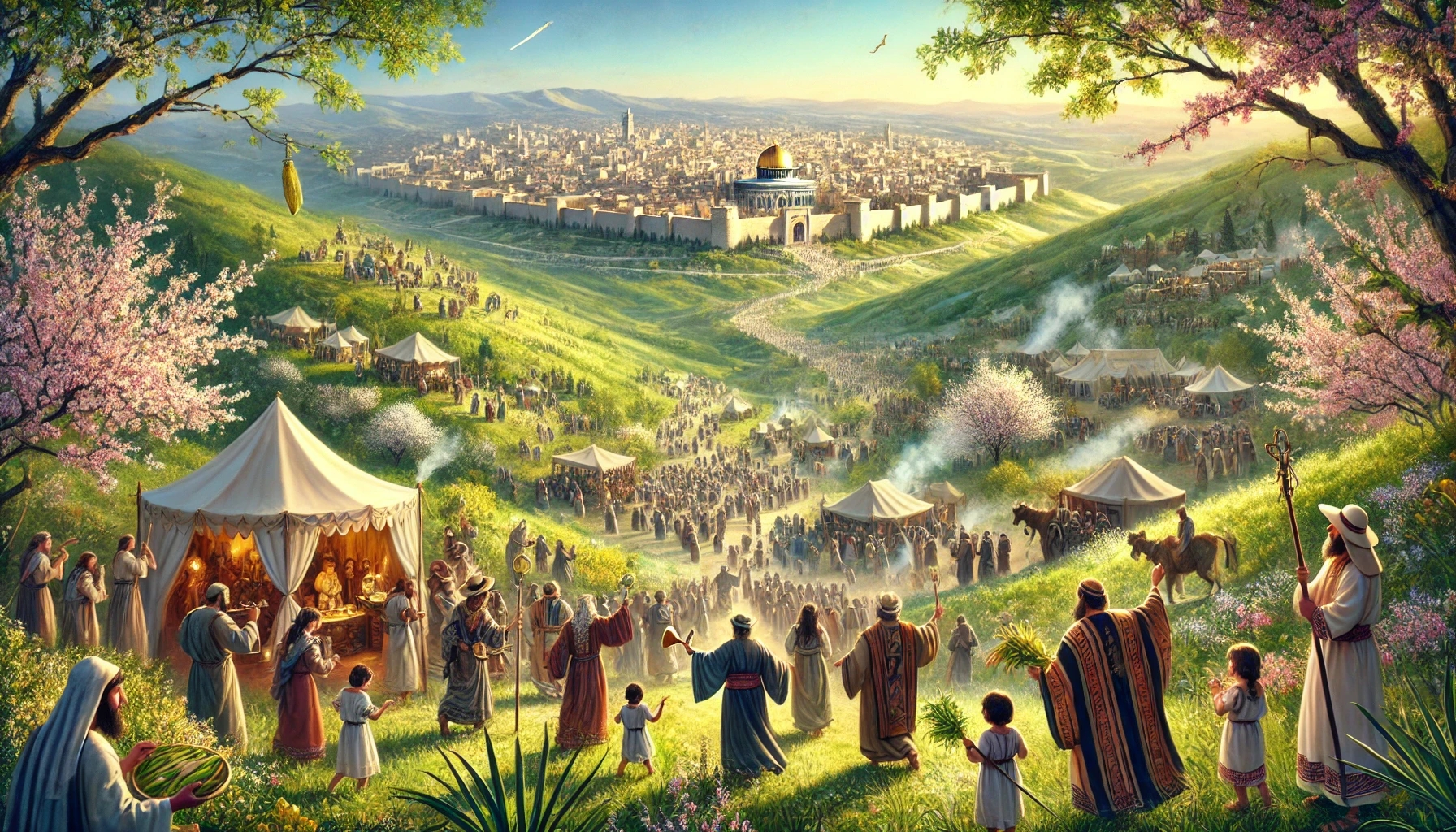
Israel was not a people who believed only at home. God intentionally established times each year when the whole nation gathered—men, women, children, servants, the poor, and foreigners. Three great feasts—three great encounters.
They were a traveling people. From north and south, from the Jordan and the Mediterranean, they came—slowly, often walking for days. And as they traveled, they sang: psalms, blessings, songs of praise. It was a living expression of faith.
Humanly speaking, these pilgrimages were dangerous. Homes were left empty, villages unprotected. But God promised: no one would covet their land while they served Him. And He kept His word. Faith in God’s protection was challenged anew each year—and strengthened.
In Jerusalem they met. Strangers became friends. Stories were shared. Children learned they belonged to a great people. The temple, the singing, the scent of the offerings—everything worked together to renew spiritual life.
Today many live their faith in isolation—no temple in sight, no pilgrimages. But the longing remains: for encounter, for community, for spiritual renewal. Israel’s feasts were God’s answer to spiritual loneliness. They called people out of routine into the rhythm of worship.
Those who took part returned changed—strengthened in faith, connected to the people, and filled with joy in God.
⋯⋯⋯⋯⋯⋯⋯⋯⋯⋯◆⋯⋯⋯⋯⋯⋯⋯⋯⋯⋯
🧺 Summary
The feasts strengthened faith and community. They gave spiritual identity—even across great distances.
⋯⋯⋯⋯⋯⋯⋯⋯⋯⋯◆⋯⋯⋯⋯⋯⋯⋯⋯⋯⋯
🔦 Message for Us Today
We lose spiritual strength when we believe in isolation. Regular fellowship and worship are God’s medicine against spiritual stagnation.
⋯⋯⋯⋯⋯⋯⋯⋯⋯⋯◆⋯⋯⋯⋯⋯⋯⋯⋯⋯⋯
📝 Reflection
When was the last time you felt spiritually refreshed—through fellowship with other believers?
⋯⋯⋯⋯⋯⋯⋯⋯⋯⋯◆⋯⋯⋯⋯⋯⋯⋯⋯⋯⋯