
📅 March 12, 2026
📚 BELIEVE HIS PROPHETS
📖 Daily Bible Reading
🏚️ 2 Kings 17 – The Fall of a Kingdom – When Warnings Are Ignored for Too Long
✨ Why the northern kingdom of Israel falls and what spiritual conclusion is drawn.
🌐 Read online here
📍 Introduction
Chapter 17 is one of the most decisive sections in the Second Book of Kings. Here the story of the northern kingdom of Israel comes to an end. Political events and military defeats are not only described historically but also interpreted spiritually. The chapter shows how long-term decisions and repeated warnings eventually lead to consequences—and how God remained patient despite everything.
⋯⋯⋯⋯⋯⋯⋯⋯⋯⋯◆⋯⋯⋯⋯⋯⋯⋯⋯⋯⋯
🧵 Commentary
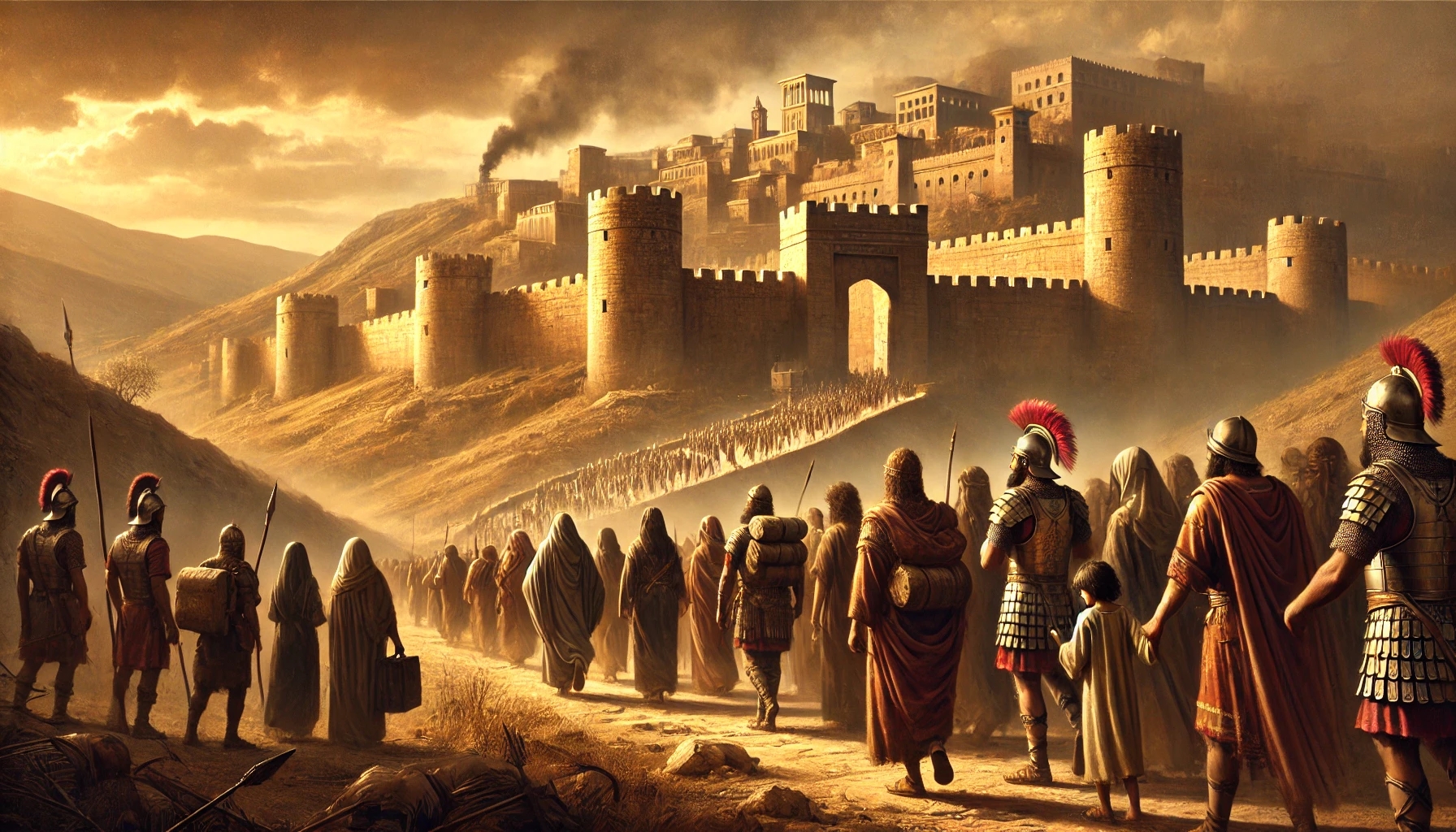
Hoshea becomes the last king of the northern kingdom of Israel. At first he submits to the powerful Assyrian king and pays tribute to secure peace. But political alliances are fragile. Hoshea tries to free himself from dependence by making an agreement with Egypt and stops the payments. Assyria reacts quickly: the king is captured, and Samaria—the capital of Israel—is besieged.
The siege lasts three years. Eventually the city falls. Many inhabitants of Israel are deported and resettled in distant regions of the Assyrian empire. With this, the northern kingdom ceases to exist as an independent nation. A long chapter of history comes to an end.
But the narrative does not remain with political facts. The text pauses and explains in detail the reasons for this fall. Again and again the people had worshiped other gods, built high places, and adopted practices that distanced them from God’s ways. Prophets had been sent to call them back to repentance, but their words were ignored or mocked.
It is especially emphasized that the break did not happen suddenly. Over generations the distance from God grew. Kings changed, but the fundamental direction remained the same. Eventually the path led to a point where the consequences could no longer be stopped.
After the conquest, the Assyrians settle people from different regions in Samaria. These new inhabitants do not know the God of the land, and soon problems arise that they interpret as signs of divine anger. An Israelite priest is sent to teach them the worship of the Lord. Yet the result remains mixed: the people worship the Lord—and at the same time their own gods. A religion of coexistence emerges, without clear devotion.
The chapter ends with a serious echo. The history of Israel becomes a warning: outward belonging cannot replace inner faithfulness.
⋯⋯⋯⋯⋯⋯⋯⋯⋯⋯◆⋯⋯⋯⋯⋯⋯⋯⋯⋯⋯
🧺 Summary
2 Kings 17 describes the fall of Samaria and the end of the northern kingdom of Israel through the Assyrians. The text explains this downfall as the result of long-term unfaithfulness toward God and ignored prophetic warnings. New population groups settle in the land and mix different religious practices.
⋯⋯⋯⋯⋯⋯⋯⋯⋯⋯◆⋯⋯⋯⋯⋯⋯⋯⋯⋯⋯
🔦 Message for us today
The chapter shows that major changes rarely come suddenly—they develop through many small decisions over a long period of time. God’s patience is great, but warnings should be taken seriously. At the same time, the story reminds us that a “mixed” faith that holds different priorities at the same time can become inwardly empty.
It invites us to regularly examine our course before wrong habits become firmly established.
⋯⋯⋯⋯⋯⋯⋯⋯⋯⋯◆⋯⋯⋯⋯⋯⋯⋯⋯⋯⋯
📝 Reflection
Are there areas in my life where I allow compromises to gradually become habits?
And how can I intentionally listen to God’s voice before small deviations lead to greater consequences?
════════ ✶ ✶ ════════

📆 March 12 – 14, 2026
📚 BELIEVE HIS PROPHETS
📖 Weekly Reading from the Spirit of Prophecy
📘 Ellen White | Patriarchs and Prophets
🔥 Chapter 67 : Ancient and Modern Sorcery
✨ The old deception in a new form
🌐 Read online here
📘 Blog 1: 🌙 The Deception of Endor
When false voices sound like truth
📍 Introduction
The story of Saul’s visit to the witch of Endor raises many questions. Did Samuel really speak? Or was it a deception? The Bible clearly shows that it was not God’s prophet speaking, but a power of darkness at work.
⋯⋯⋯⋯⋯⋯⋯⋯⋯⋯◆⋯⋯⋯⋯⋯⋯⋯⋯⋯⋯
🧵 Commentary
The night of Endor lies heavy and silent over the hills of Israel. In the small hut of the fortune teller, a faint light flickers. Saul, the former king of Israel, desperately seeks a voice from the unseen world.
But heaven is silent.
God had already refused to answer him—neither through dreams nor through prophets. These were the ways the Lord Himself had established. If God now refused to speak, He certainly would not overturn His decision by sending a message through a sorceress.
So what happened in Endor?
The figure that appeared was not Samuel. The prophet of God rested in the grave and was beyond Satan’s power. But the great deceiver could produce an appearance that looked like Samuel.
The purpose of the message reveals its origin. It did not call Saul to repentance. It drove him deeper into despair.
That is exactly Satan’s strategy. First he minimizes sin, then he shows its full weight—not to save, but to drive a person into hopelessness.
The Bible itself confirms this. Later Saul’s death is explicitly explained by the fact that he consulted a medium instead of seeking God.
Thus Endor became a symbol of a tragic truth:
Whoever rejects God’s voice will eventually hear other voices.
⋯⋯⋯⋯⋯⋯⋯⋯⋯⋯◆⋯⋯⋯⋯⋯⋯⋯⋯⋯⋯
🧺 Summary
The appearance in Endor was not Samuel, but a satanic deception. Saul sought counsel from a forbidden source and finally turned away from God completely.
⋯⋯⋯⋯⋯⋯⋯⋯⋯⋯◆⋯⋯⋯⋯⋯⋯⋯⋯⋯⋯
🔦 Message for us today
Not every supernatural experience comes from God. Truth must always be tested by the Word of God.
⋯⋯⋯⋯⋯⋯⋯⋯⋯⋯◆⋯⋯⋯⋯⋯⋯⋯⋯⋯⋯
📝 Reflection
Which voices influence my decisions—God’s Word or other sources?
