
📅 March 13, 2026
📚 BELIEVE HIS PROPHETS
📖 Daily Bible Reading
🏚️ 2 Kings 18 – Trust in the Crisis – Hezekiah and the Courage to Renew
✨ How a king seeks God’s ways even as powerful threats draw near.
🌐 Read online here
📍 Introduction
After the fall of the northern kingdom of Israel, the focus now turns to Judah. Chapter 18 introduces King Hezekiah—a ruler who deliberately turns away from the ways of many of his predecessors. While political dangers increase and the Assyrian Empire grows stronger, Hezekiah chooses reform and trust in God. The story shows how genuine faith becomes visible especially in times of external uncertainty.
⋯⋯⋯⋯⋯⋯⋯⋯⋯⋯◆⋯⋯⋯⋯⋯⋯⋯⋯⋯⋯
🧵 Commentary
Hezekiah begins his reign at a time when the memory of Israel’s downfall is still fresh. Unlike his father Ahaz, he reorients himself toward God. He removes the high places, destroys cult objects, and ends practices that had drawn the people away from God. Particularly remarkable is the destruction of the bronze serpent that had once been made by Moses. What had originally been a sign of salvation had, over time, become an object of false worship. Hezekiah recognizes that even good symbols can become dangerous when they become more important than God Himself.
The text describes Hezekiah as a king who trusted in the Lord like hardly any other before or after him. This trust is also visible politically: he frees himself from dependence on Assyria and refuses to continue paying tribute. At the same time, he succeeds militarily against the Philistines.
But the greatest test soon follows. The Assyrian king Sennacherib marches against Judah with a powerful army and conquers many fortified cities. The threat becomes real and tangible. At first, Hezekiah attempts to buy peace through tribute—even taking silver and gold from the temple. Yet this is not enough; the Assyrians continue advancing.
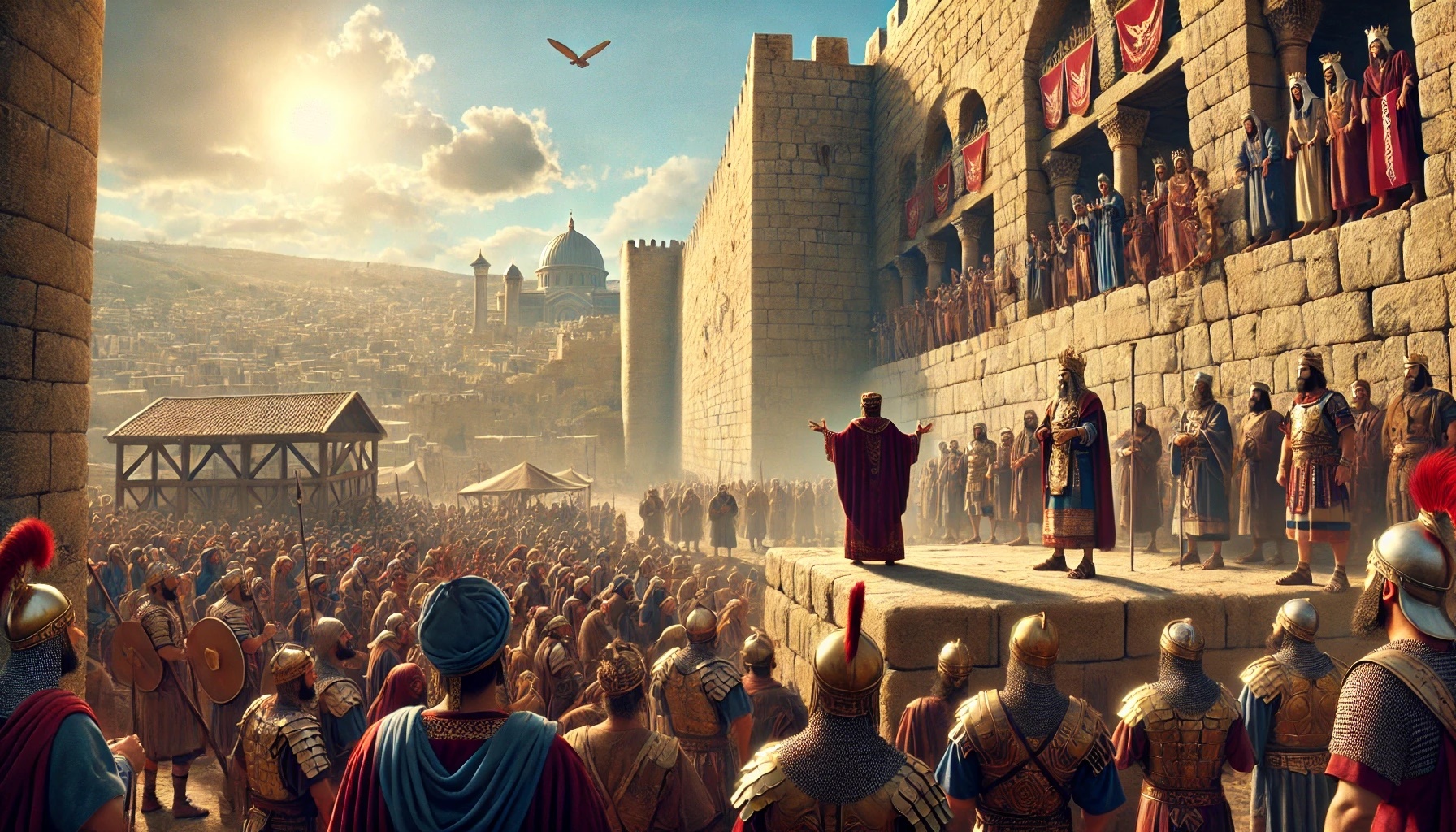
Before Jerusalem, a psychological battle begins. The Assyrian commander stands before the walls and speaks loudly to the people. He mocks their trust in Egypt and especially their trust in God. His words are carefully chosen to spread fear: no god of other nations had been able to save their people from Assyria—why should it be different this time?
Hezekiah’s envoys listen in silence, as they had been commanded, but when they return their clothes are torn—a sign of deep distress. The chapter ends in tense silence. The threat is not yet over, and the decisive question remains: will trust prove stronger than fear?
⋯⋯⋯⋯⋯⋯⋯⋯⋯⋯◆⋯⋯⋯⋯⋯⋯⋯⋯⋯⋯
🧺 Summary
2 Kings 18 describes the reforms of King Hezekiah, who renews the worship of God in Judah and places his trust in the Lord. At the same time, the threat from Assyria grows as it conquers many cities and puts Jerusalem under pressure. The words of the Assyrian commander put the people’s trust to a severe test.
⋯⋯⋯⋯⋯⋯⋯⋯⋯⋯◆⋯⋯⋯⋯⋯⋯⋯⋯⋯⋯
🔦 Message for us today
The chapter shows that genuine faith often begins with decisions that restore inner order. Trusting in God does not mean that difficulties disappear—sometimes faithful action leads directly into challenging situations. Yet the story reminds us that fear and mockery do not have to have the final word.
It invites us to reflect on which “old symbols” or securities we may still be holding onto, even though they distract us from true trust.
⋯⋯⋯⋯⋯⋯⋯⋯⋯⋯◆⋯⋯⋯⋯⋯⋯⋯⋯⋯⋯
📝 Reflection
What steps of renewal might be necessary in my life to place God first again?
And how do I respond when outside voices question my trust?
════════ ✶ ✶ ════════

📆 March 12 – 14, 2026
📚 BELIEVE HIS PROPHETS
📖 Weekly Reading from the Spirit of Prophecy
📘 Ellen White | Patriarchs and Prophets
🔥 Chapter 67 : Ancient and Modern Sorcery
✨ The old deception in a new form
🌐 Read online here
📘 Blog 2: 👻 The Old Lie in a New Form
Spiritism and the deception of the dead
📍 Introduction
The belief in contact with the dead is by no means new. Even in ancient times it formed the basis of many religions. Yet the Bible clearly shows what really stands behind such appearances.
⋯⋯⋯⋯⋯⋯⋯⋯⋯⋯◆⋯⋯⋯⋯⋯⋯⋯⋯⋯⋯
🧵 Commentary
From the earliest times, people have longed to lift the veil between life and death.
Pagans believed that deceased heroes became gods. They called upon their spirits, sought advice from them, and offered sacrifices.
But behind this apparent connection with the dead stood another power.
The Bible explains clearly:
The dead know nothing.
They no longer take part in the events of the world. If voices appear claiming to be deceased people, they cannot truly be the dead.
They are other beings.
Scripture calls them demons—fallen angels who disguise themselves as the dead.
This deception already began in the Garden of Eden. There the first spiritualistic message in history was spoken:
“You will not surely die.”
To this day, Satan repeats the same lie.
In the modern world this deception appears under new names—spiritism, mediums, fortune-telling, or occult practices. Yet its core remains the same: the attempt to seek knowledge or comfort apart from God.
⋯⋯⋯⋯⋯⋯⋯⋯⋯⋯◆⋯⋯⋯⋯⋯⋯⋯⋯⋯⋯
🧺 Summary
The belief in contact with the dead is based on Satan’s original lie. The Bible explains that such manifestations come from demonic powers.
⋯⋯⋯⋯⋯⋯⋯⋯⋯⋯◆⋯⋯⋯⋯⋯⋯⋯⋯⋯⋯
🔦 Message for us today
Anyone who seeks comfort or guidance outside of God easily opens themselves to deception.
⋯⋯⋯⋯⋯⋯⋯⋯⋯⋯◆⋯⋯⋯⋯⋯⋯⋯⋯⋯⋯
📝 Reflection
Am I seeking answers from God—or from things He has clearly forbidden?
