

📅 17 August 2025
📚 BELIEVE HIS PROPHETS
📖 Daily Bible Reading
🏕️ Numbers 6 – Holy to the Lord – A Life of Consecrated Devotion
✨ The Nazirite vow and the priestly blessing – A call to holiness and divine protection
══════════════════════════════════════════════
📜 Bible Text – Numbers 6 (KJV)
1 And the Lord spake unto Moses, saying,
2 Speak unto the children of Israel, and say unto them, When either man or woman shall separate themselves to vow a vow of a Nazarite, to separate themselves unto the Lord:
3 He shall separate himself from wine and strong drink, and shall drink no vinegar of wine, or vinegar of strong drink, neither shall he drink any liquor of grapes, nor eat moist grapes, or dried.
4 All the days of his separation shall he eat nothing that is made of the vine tree, from the kernels even to the husk.
5 All the days of the vow of his separation there shall no razor come upon his head: until the days be fulfilled, in the which he separateth himself unto the Lord, he shall be holy, and shall let the locks of the hair of his head grow.
6 All the days that he separateth himself unto the Lord he shall come at no dead body.
7 He shall not make himself unclean for his father, or for his mother, for his brother, or for his sister, when they die: because the consecration of his God is upon his head.
8 All the days of his separation he is holy unto the Lord.
9 And if any man die very suddenly by him, and he hath defiled the head of his consecration; then he shall shave his head in the day of his cleansing, on the seventh day shall he shave it.
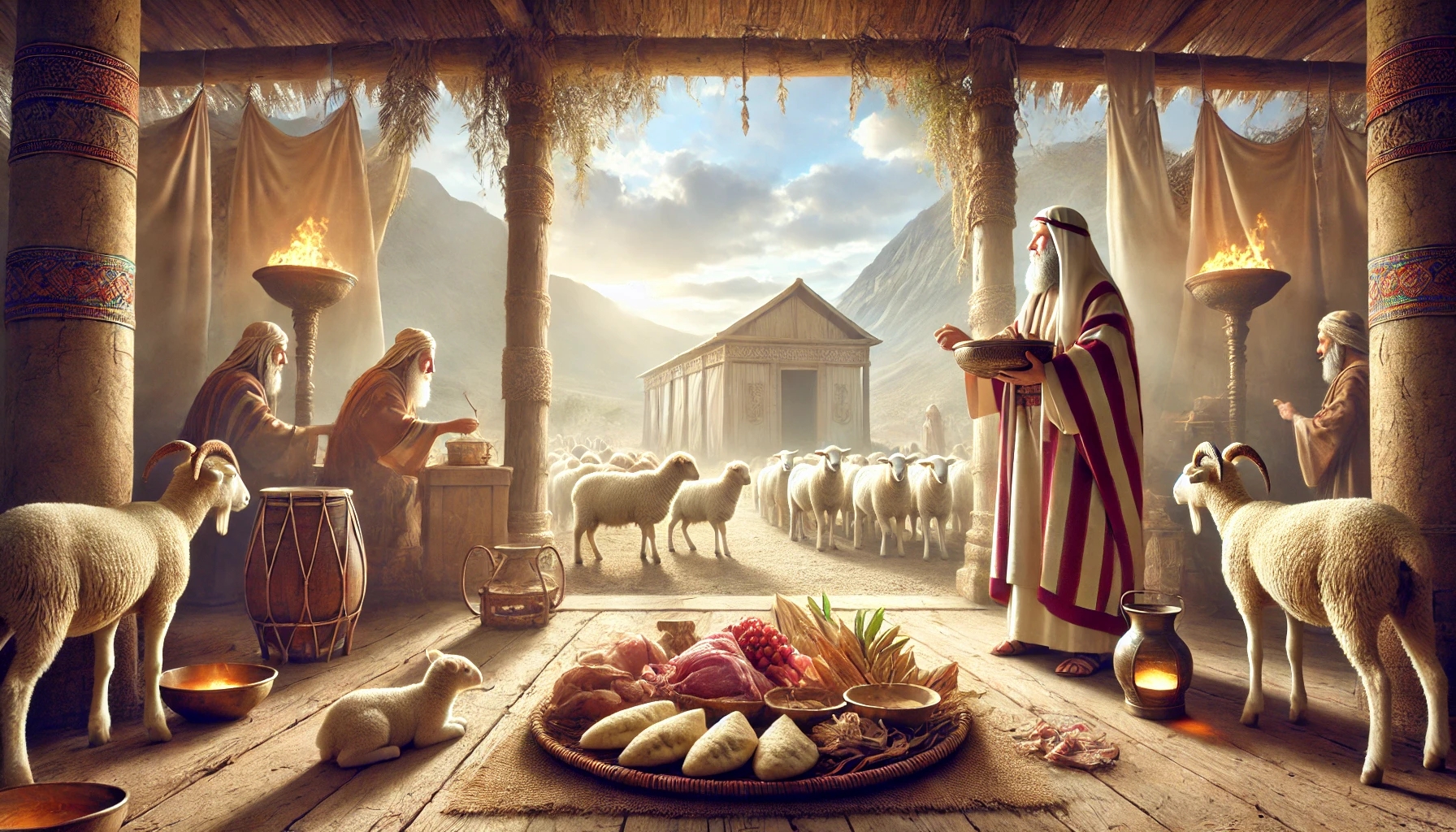
10 And on the eighth day he shall bring two turtles, or two young pigeons, to the priest, to the door of the tabernacle of the congregation:
11 And the priest shall offer the one for a sin offering, and the other for a burnt offering, and make an atonement for him, for that he sinned by the dead, and shall hallow his head that same day.
12 And he shall consecrate unto the Lord the days of his separation, and shall bring a lamb of the first year for a trespass offering: but the days that were before shall be lost, because his separation was defiled.
13 And this is the law of the Nazarite, when the days of his separation are fulfilled: he shall be brought unto the door of the tabernacle of the congregation:
14 And he shall offer his offering unto the Lord, one he lamb of the first year without blemish for a burnt offering, and one ewe lamb of the first year without blemish for a sin offering, and one ram without blemish for peace offerings,
15 And a basket of unleavened bread, cakes of fine flour mingled with oil, and wafers of unleavened bread anointed with oil, and their meat offering, and their drink offerings.
16 And the priest shall bring them before the Lord, and shall offer his sin offering, and his burnt offering:
17 And he shall offer the ram for a sacrifice of peace offerings unto the Lord, with the basket of unleavened bread: the priest shall offer also his meat offering, and his drink offering.
18 And the Nazarite shall shave the head of his separation at the door of the tabernacle of the congregation, and shall take the hair of the head of his separation, and put it in the fire which is under the sacrifice of the peace offerings.
19 And the priest shall take the sodden shoulder of the ram, and one unleavened cake out of the basket, and one unleavened wafer, and shall put them upon the hands of the Nazarite, after the hair of his separation is shaven:
20 And the priest shall wave them for a wave offering before the Lord: this is holy for the priest, with the wave breast and heave shoulder: and after that the Nazarite may drink wine.
21 This is the law of the Nazarite who hath vowed, and of his offering unto the Lord for his separation, beside that that his hand shall get: according to the vow which he vowed, so he must do after the law of his separation.
22 And the Lord spake unto Moses, saying,
23 Speak unto Aaron and unto his sons, saying, On this wise ye shall bless the children of Israel, saying unto them,
24 The Lord bless thee, and keep thee:
25 The Lord make his face shine upon thee, and be gracious unto thee:
26 The Lord lift up his countenance upon thee, and give thee peace.
27 And they shall put my name upon the children of Israel, and I will bless them.
══════════════════════════════════════════════
🔵 Introduction
The sixth chapter of the Book of Numbers presents two significant spiritual themes: the voluntary Nazirite vow — a special consecration to the Lord — and the well-known Aaronic blessing, still spoken in Christian worship today.
Both sections call for holiness and mindful living under God’s gaze. This message still speaks powerfully to us today — in a time when devotion and humility are often seen as weakness.
══════════════════════════════════════════════
🟡 Commentary
🔸 1. The Nazirite Vow (Verses 1–21)
-
The word “Nazirite” comes from the Hebrew nāzar, meaning “to separate, to consecrate.”
-
Men or women could voluntarily dedicate themselves to God for a set period.
-
The vow involved visible outward signs:
-
Abstaining from wine and grape products (symbolizing separation from worldly pleasures)
-
No cutting of hair (a visible sign of dedication)
-
No contact with the dead (separation from impurity and death)
-
🧠 Meaning:
These outward requirements symbolized an inner attitude: complete focus on God, holiness, and purity.
While the external form is no longer binding today, the spiritual lesson remains:
A life devoted to God is marked by conscious separation from worldly influences.
🔸 2. Completion of the Vow (Verses 13–21)
-
At the end of the consecration period, an extensive offering was made (burnt, sin, and peace offerings).
-
The hair was cut and burned — a sign that the time of devotion was completed.
-
Only after that could the Nazirite drink wine again.
🧠 Lesson for Us:
Devotion to God is not casual or superficial — it is visible, intentional, and binding.
God takes our promises seriously — and so should we.
🔸 3. The Priestly Blessing (Verses 22–27)
-
A three-part blessing that brings God’s presence, grace, and peace over His people
-
A divine promise: “The Lord bless you and keep you…”
🧠 Depth of the Blessing:
-
Bless and keep: God’s goodness and protection
-
Make His face shine upon you: God turns toward you in grace
-
Give you peace: Shalom — more than absence of conflict; a full, blessed life
══════════════════════════════════════════════
🟢 Summary
Numbers 6 shows us what it means to be fully consecrated to God — and how God pours out His faithfulness, grace, and blessing on those who belong to Him.
It’s about decision, separation, and purity — but also about divine care, protection, and peace.
══════════════════════════════════════════════
📢 Message for Us Today
Even though we are not Nazirites in the literal sense, God still calls people today to fully dedicate themselves to Him — in heart, mind, and lifestyle.
He is seeking Christians who will not conform to the spirit of the age, but who visibly, audibly, and credibly follow Jesus Christ.
And for them, He promises abundant blessing — spiritual, deep, and eternal.
══════════════════════════════════════════════
💡 Reflection Questions
What if you viewed your life today as a “holy vow”?
Not just on Sundays — but in your daily decisions, your words, and your goals?
Are you ready to consciously let go of the earthly to live for God?
“The Lord bless you and keep you… and give you peace.”
— Numbers 6:24–26
~~~~~🏕️~~~~~



📅 August 17 – 23, 2025
📚 BELIEVE HIS PROPHETS
📖 Weekly Reading from the Spirit of Prophecy
📘 Ellen White | Patriarchs and Prophets – Chapter 23
🔥 The Plagues of Egypt
🌐 Read online here
🔵 Introduction
The story of the ten plagues is not only a dramatic display of God’s power over Egypt’s gods, but also a testimony of His patience and mercy — toward a doubting, oppressed people and even toward a pagan king who resisted Him.
In this devotional, we reflect on how God prepared His people through signs, wonders, and judgments to trust Him — and how He showed the world that He alone is Lord over life, nature, and history.
══════════════════════════════════════════════
🟡 Commentary
🔹 1. The Beginning of Deliverance – Encounter and Calling (Exodus 4–5)
-
Moses and Aaron meet in the wilderness and journey together to Egypt.
-
They appear before the people and Pharaoh in God’s name.
-
First rejection: Pharaoh refuses God’s command — “Who is the Lord?” (Exodus 5:2)
-
Conditions worsen dramatically: harder labor, no straw, deep discouragement among the people.
-
God’s lesson: Obedience is the first step toward deliverance — even if things get harder at first.
🔹 2. Pharaoh’s Resistance and the Stages of Divine Judgment (Exodus 7–10)
-
The signs: Aaron’s staff becomes a serpent — a symbolic act of God’s power.
-
The magicians: Satanic counterforces attempt to imitate God’s work but cannot surpass it.
-
The plagues:
-
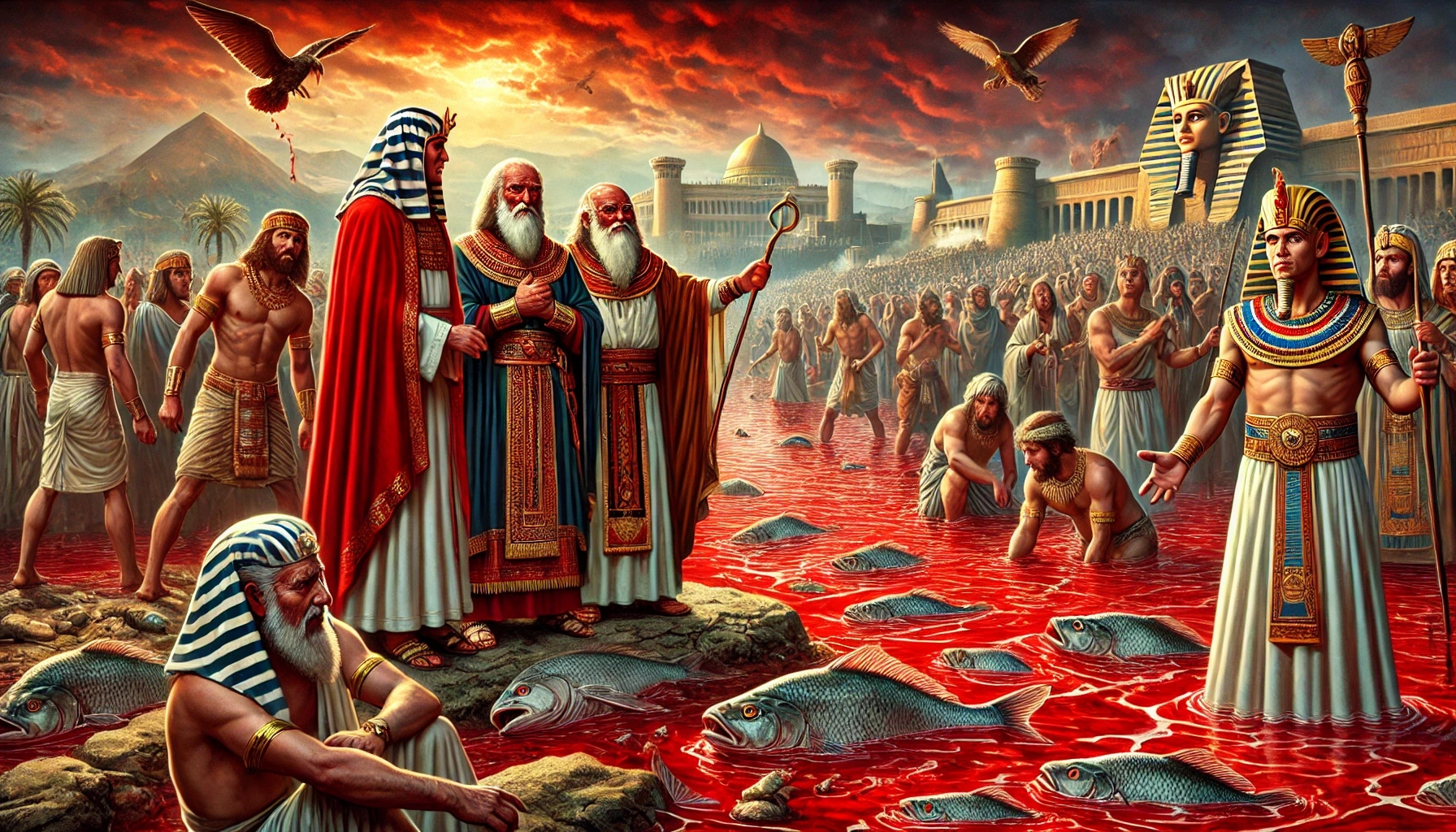
Water to blood
-
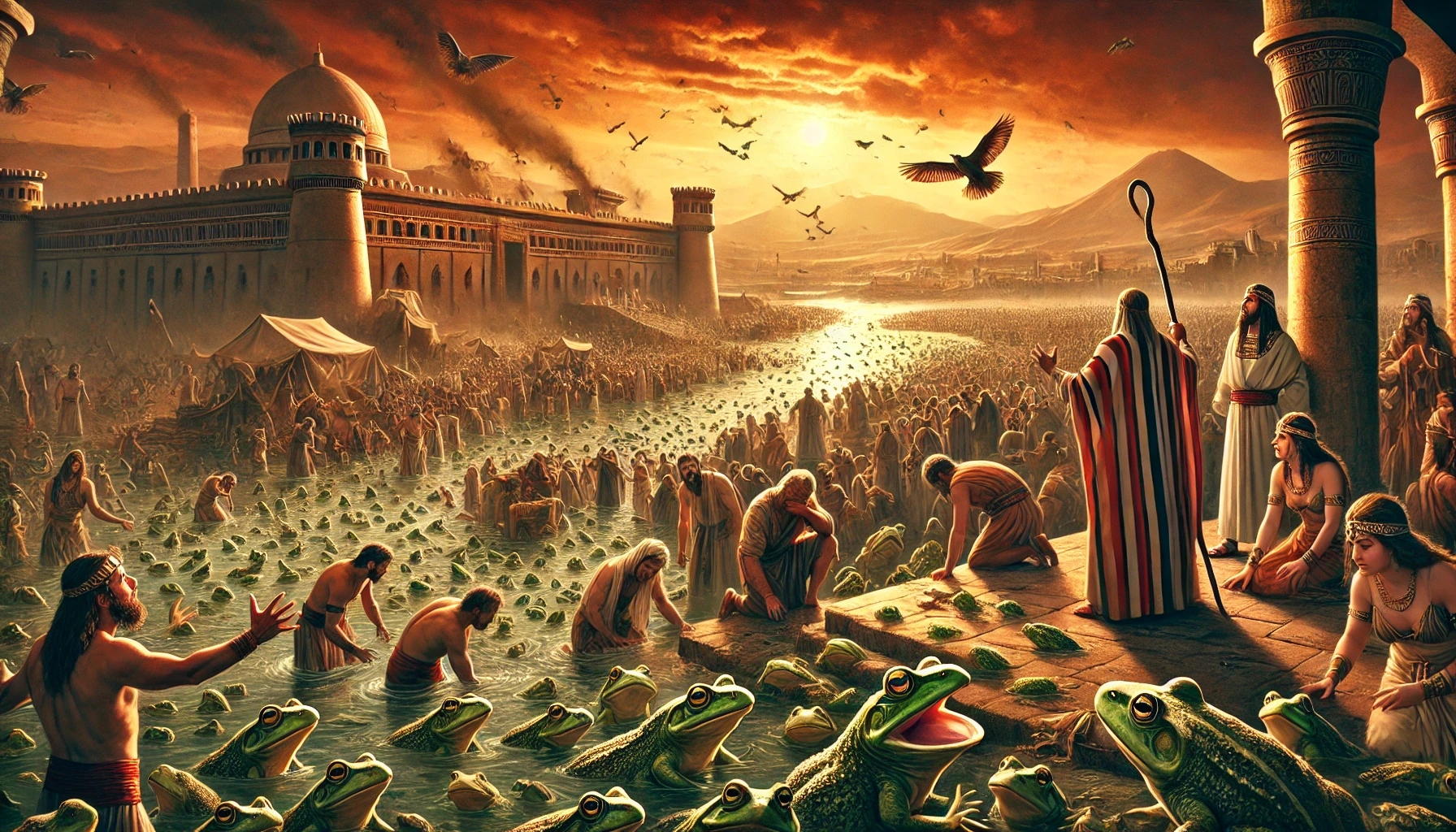
Frogs
-
Gnats (not replicated by magicians!)
-
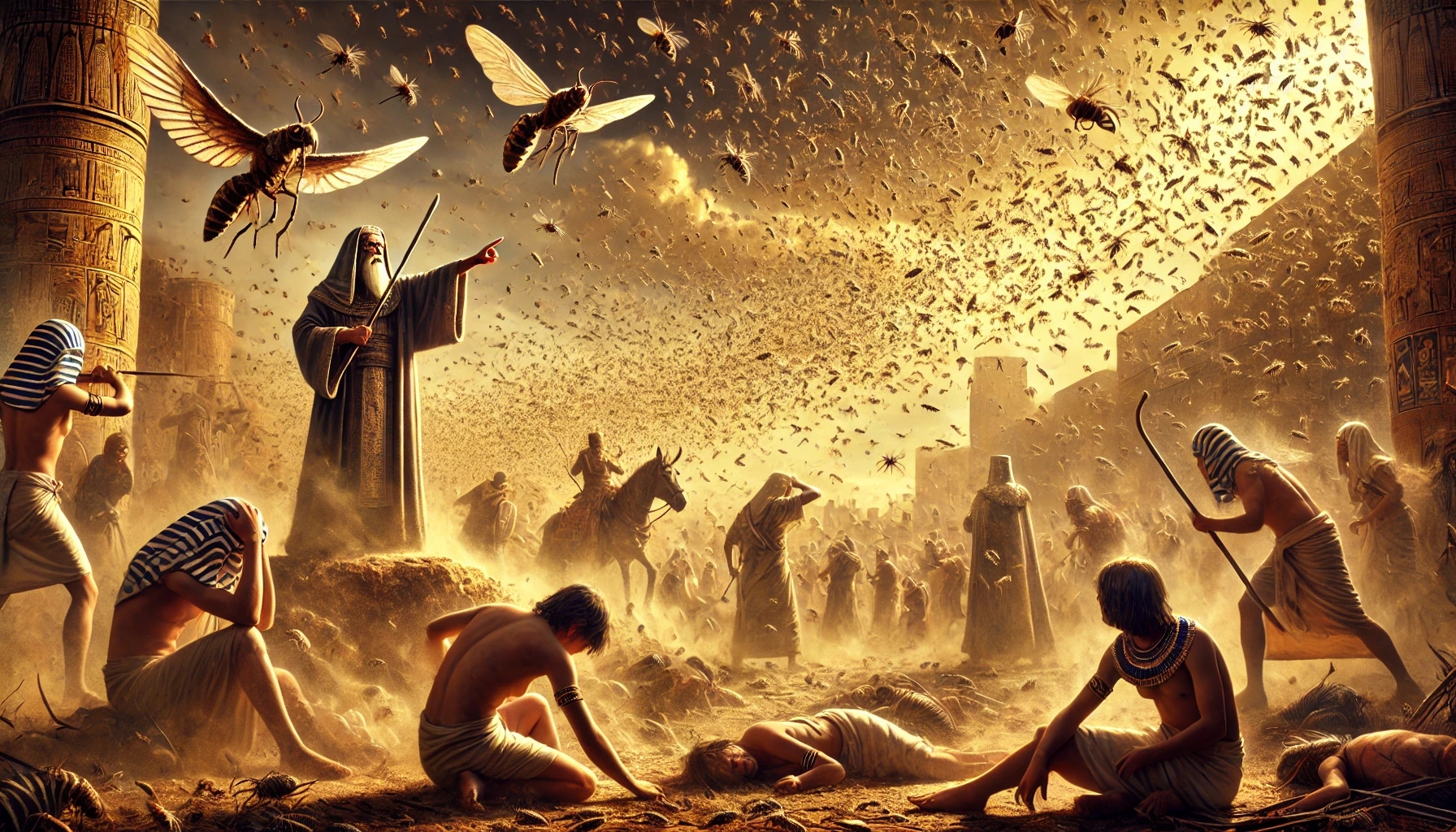
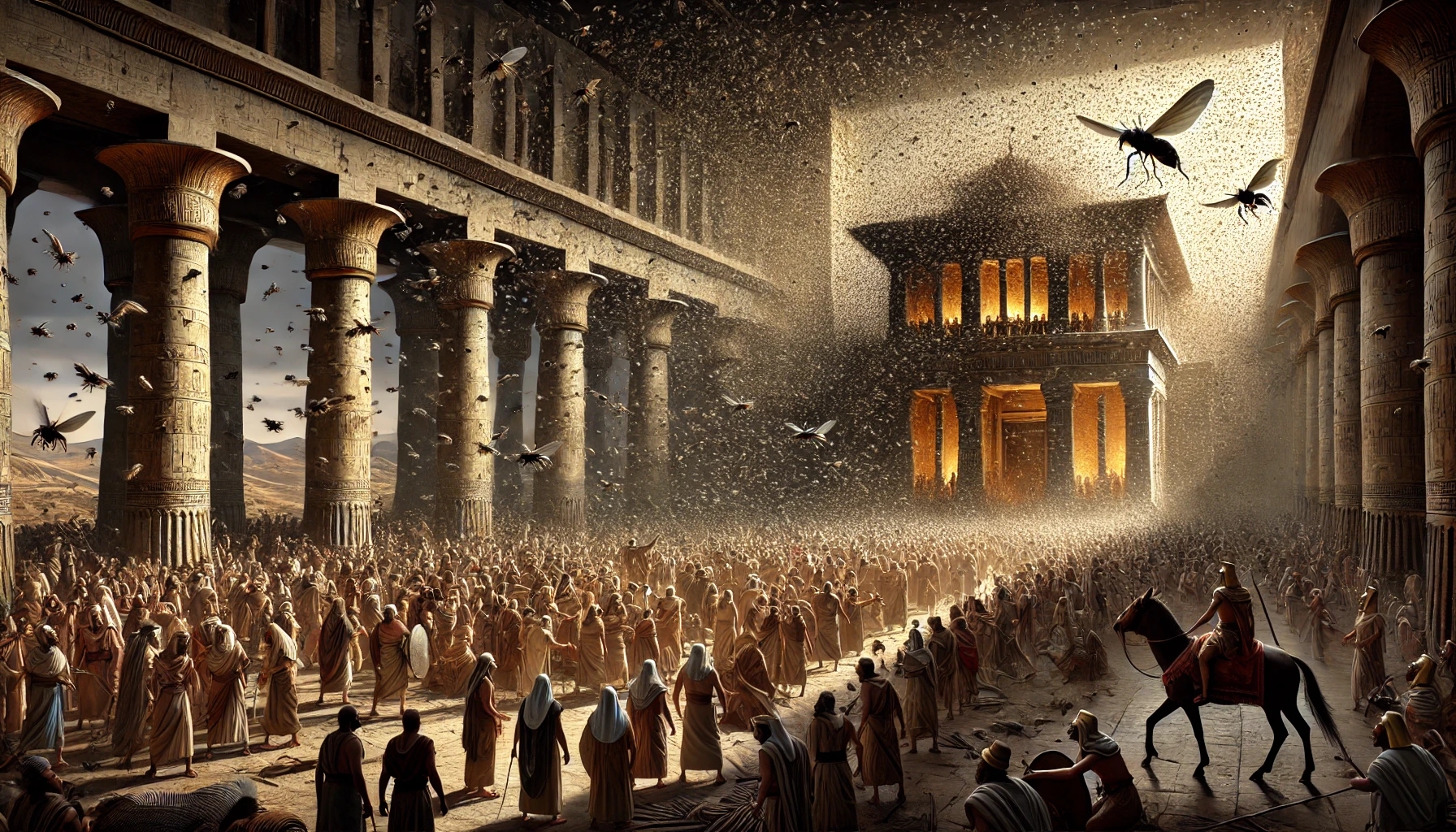
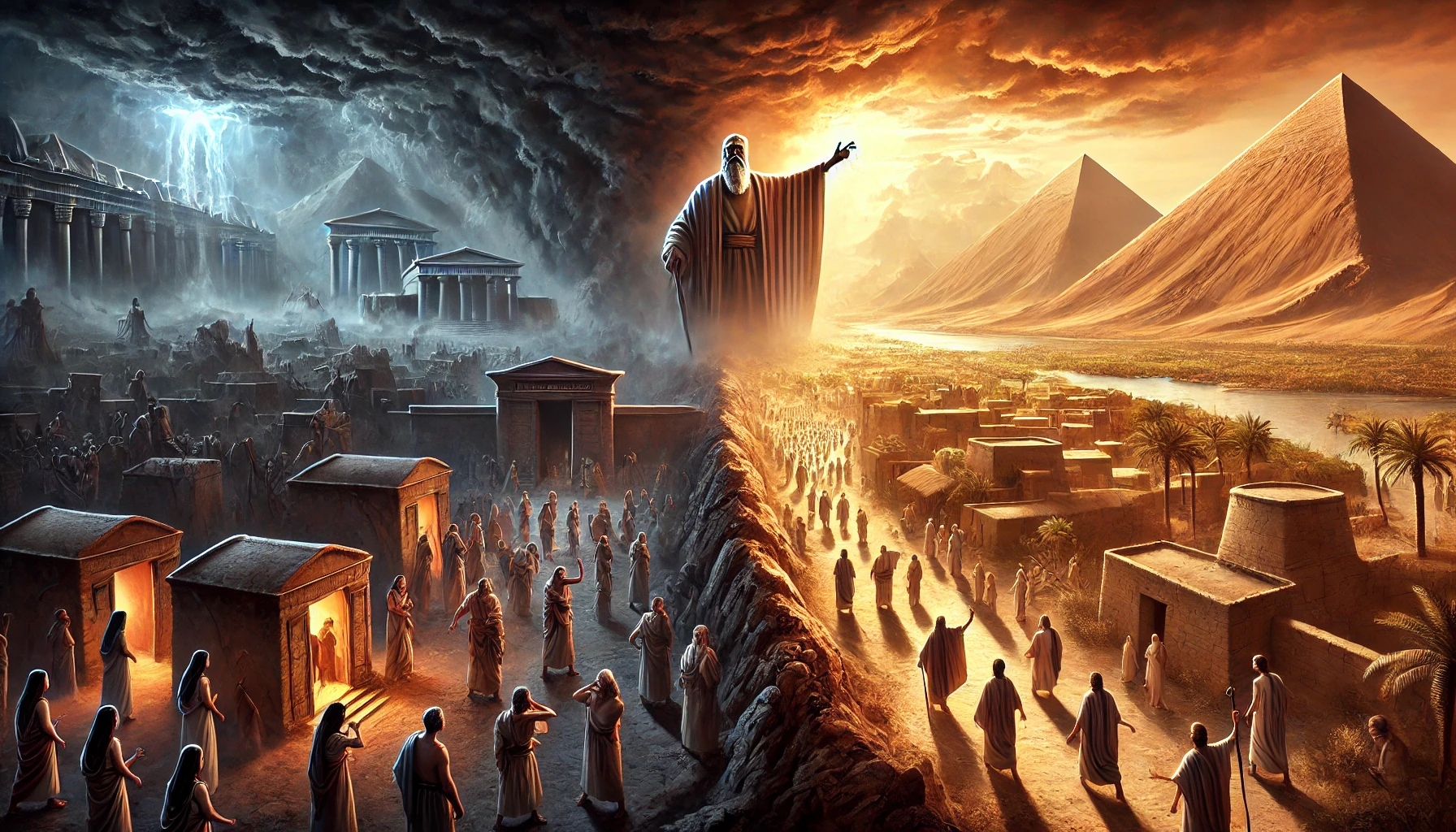
Flies (Goshen is spared!)
-
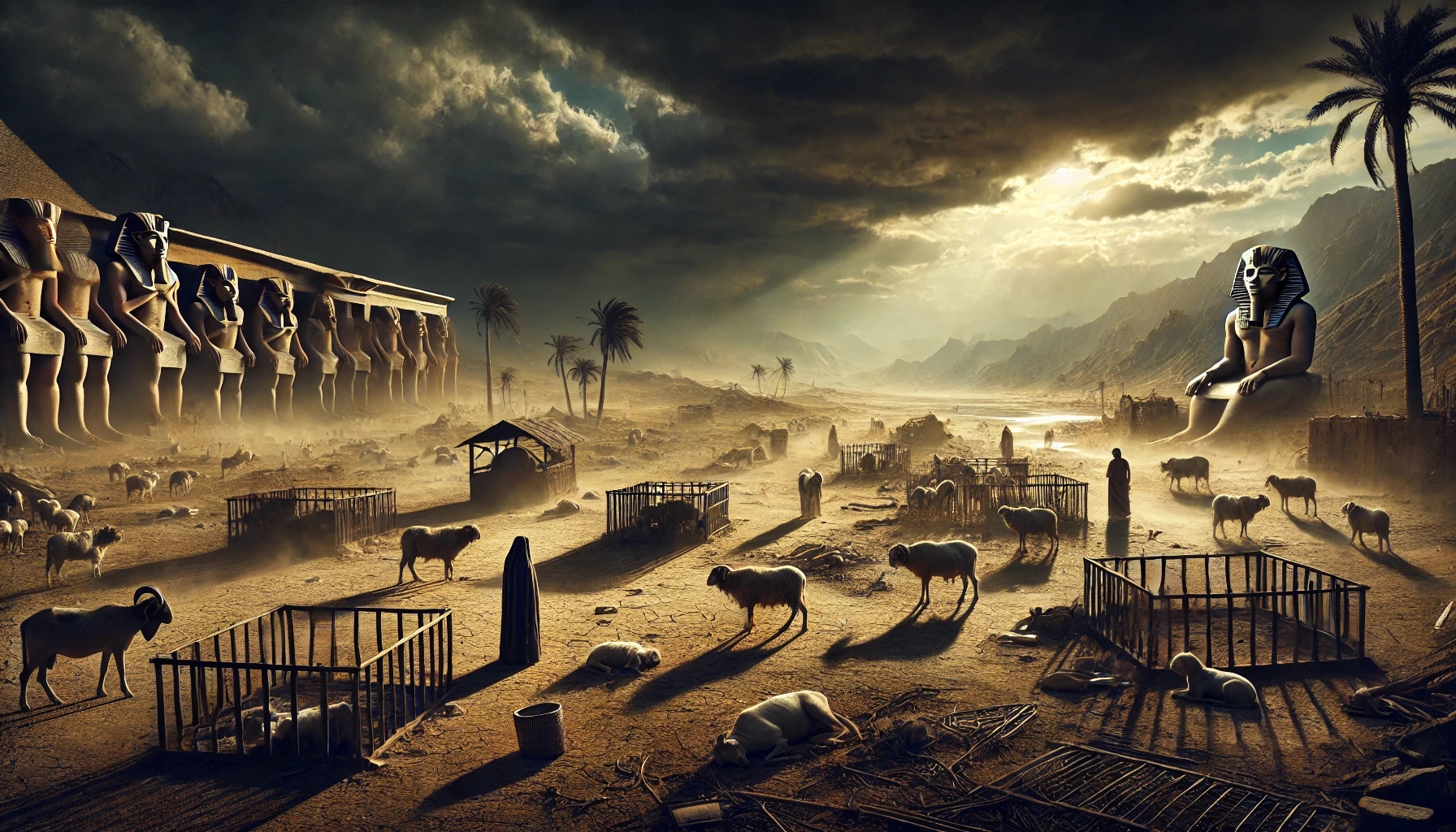
Livestock disease
-
Boils
-
Hail (with mercy: those who obey are spared)
-
Locusts
-
Darkness
-
-
Each plague is a direct confrontation with an Egyptian deity — a systematic collapse of idolatry.
🔹 3. Pharaoh’s Reactions – Tactics, Deceit, Defiance
-
Pharaoh alternates: at times allowing only the men to go, other times no one, or only without their herds — always with conditions.
-
He repeatedly asks for prayer, but never truly repents.
-
His promises are empty — his heart hardens more with each plague.
🔹 4. The People of Israel – Torn Between Faith and Fear
-
Many Israelites lose courage.
-
Some prefer slavery over the risk of freedom.
-
Others cling faithfully to God’s promises.
-
God’s goal: A purified and refined people, ready to serve Him.
══════════════════════════════════════════════
🟢 Summary
The plagues of Egypt were not just punishments, but God’s method to expose the powerlessness of false gods, to strengthen His people’s faith, and to make the nations aware of the true God.
Pharaoh’s hardened heart was not the result of coercion, but of repeatedly rejecting divine grace.
══════════════════════════════════════════════
📢 Message for Us Today
God uses trials and opposition to refine our trust and shape our character.
Even today, He places us before a choice: either we humble ourselves under His hand — or we harden our hearts like Pharaoh.
God sends light before He sends judgment. And even His warnings are filled with mercy.
══════════════════════════════════════════════
💬 Reflection Question
What does obedience mean to me — even when it brings suffering for a time?
Do I trust God’s timing — or do I give up when things don’t improve quickly?
Do I let opposition strengthen or discourage me?
“The Lord will fight for you, and you shall hold your peace.”
– Exodus 14:14
══════════════════════════════════════════════
LuxVerbi | The light of the Word. The clarity of faith.
