
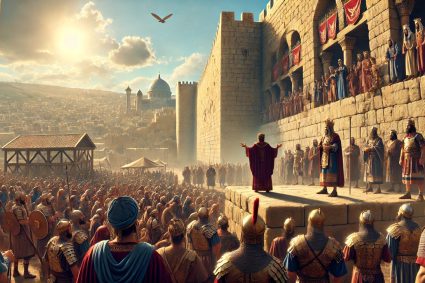
13.05.2025 – Genesis Chapter 27 | BELIEVE HIS PROPHETS

📅 May 13, 2025
📖 DAILY BIBLE READING
✨ Genesis 27 – Jacob’s Deceit and the Birthright Blessing: A Chapter of Deception, Tragedy, and Divine Providence
══════════════════════════════════════════════
📜 Bible Text – Genesis 27 (KJV)
1 And it came to pass, that when Isaac was old, and his eyes were dim, so that he could not see, he called Esau his eldest son, and said unto him, My son: and he said unto him, Behold, here am I.
2 And he said, Behold now, I am old, I know not the day of my death:
3 Now therefore take, I pray thee, thy weapons, thy quiver and thy bow, and go out to the field, and take me some venison;
4 And make me savoury meat, such as I love, and bring it to me, that I may eat; that my soul may bless thee before I die.
5 And Rebekah heard when Isaac spake to Esau his son. And Esau went to the field to hunt for venison, and to bring it.
6 And Rebekah spake unto Jacob her son, saying, Behold, I heard thy father speak unto Esau thy brother, saying,
7 Bring me venison, and make me savoury meat, that I may eat, and bless thee before the Lord before my death.
8 Now therefore, my son, obey my voice according to that which I command thee.
9 Go now to the flock, and fetch me from thence two good kids of the goats; and I will make them savoury meat for thy father, such as he loveth:
10 And thou shalt bring it to thy father, that he may eat, and that he may bless thee before his death.
11 And Jacob said to Rebekah his mother, Behold, Esau my brother is a hairy man, and I am a smooth man:
12 My father peradventure will feel me, and I shall seem to him as a deceiver; and I shall bring a curse upon me, and not a blessing.
13 And his mother said unto him, Upon me be thy curse, my son: only obey my voice, and go fetch me them.
14 And he went, and fetched, and brought them to his mother: and his mother made savoury meat, such as his father loved.
15 And Rebekah took goodly raiment of her eldest son Esau, which were with her in the house, and put them upon Jacob her younger son:
16 And she put the skins of the kids of the goats upon his hands, and upon the smooth of his neck:
17 And she gave the savoury meat and the bread, which she had prepared, into the hand of her son Jacob.
18 And he came unto his father, and said, My father: and he said, Here am I; who art thou, my son?
19 And Jacob said unto his father, I am Esau thy first born; I have done according as thou badest me: arise, I pray thee, sit and eat of my venison, that thy soul may bless me.
20 And Isaac said unto his son, How is it that thou hast found it so quickly, my son? And he said, Because the Lord thy God brought it to me.
21 And Isaac said unto Jacob, Come near, I pray thee, that I may feel thee, my son, whether thou be my very son Esau or not.
22 And Jacob went near unto Isaac his father; and he felt him, and said, The voice is Jacob’s voice, but the hands are the hands of Esau.
23 And he discerned him not, because his hands were hairy, as his brother Esau’s hands: so he blessed him.
24 And he said, Art thou my very son Esau? And he said, I am.
25 And he said, Bring it near to me, and I will eat of my son’s venison, that my soul may bless thee. And he brought it near to him, and he did eat: and he brought him wine and he drank.
26 And his father Isaac said unto him, Come near now, and kiss me, my son.
27 And he came near, and kissed him: and he smelled the smell of his raiment, and blessed him, and said, See, the smell of my son is as the smell of a field which the Lord hath blessed:
28 Therefore God give thee of the dew of heaven, and the fatness of the earth, and plenty of corn and wine:
29 Let people serve thee, and nations bow down to thee: be lord over thy brethren, and let thy mother’s sons bow down to thee: cursed be every one that curseth thee, and blessed be he that blesseth thee.
30 And it came to pass, as soon as Isaac had made an end of blessing Jacob, and Jacob was yet scarce gone out from the presence of Isaac his father, that Esau his brother came in from his hunting.
31 And he also had made savoury meat, and brought it unto his father, and said unto his father, Let my father arise, and eat of his son’s venison, that thy soul may bless me.
32 And Isaac his father said unto him, Who art thou? And he said, I am thy son, thy firstborn Esau.
33 And Isaac trembled very exceedingly, and said, Who? where is he that hath taken venison, and brought it me, and I have eaten of all before thou camest, and have blessed him? yea, and he shall be blessed.
34 And when Esau heard the words of his father, he cried with a great and exceeding bitter cry, and said unto his father, Bless me, even me also, O my father.
35 And he said, Thy brother came with subtilty, and hath taken away thy blessing.
36 And he said, Is not he rightly named Jacob? for he hath supplanted me these two times: he took away my birthright; and, behold, now he hath taken away my blessing. And he said, Hast thou not reserved a blessing for me?
37 And Isaac answered and said unto Esau, Behold, I have made him thy lord, and all his brethren have I given to him for servants; and with corn and wine have I sustained him: and what shall I do now unto thee, my son?
38 And Esau said unto his father, Hast thou but one blessing, my father? bless me, even me also, O my father. And Esau lifted up his voice, and wept.
39 And Isaac his father answered and said unto him, Behold, thy dwelling shall be the fatness of the earth, and of the dew of heaven from above;
40 And by thy sword shalt thou live, and shalt serve thy brother; and it shall come to pass when thou shalt have the dominion, that thou shalt break his yoke from off thy neck.
41 And Esau hated Jacob because of the blessing wherewith his father blessed him: and Esau said in his heart, The days of mourning for my father are at hand; then will I slay my brother Jacob.
42 And these words of Esau her elder son were told to Rebekah: and she sent and called Jacob her younger son, and said unto him, Behold, thy brother Esau, as touching thee, doth comfort himself, purposing to kill thee.
43 Now therefore, my son, obey my voice; arise, flee thou to Laban my brother to Haran;
44 And tarry with him a few days, until thy brother’s fury turn away;
45 Until thy brother’s anger turn away from thee, and he forget that which thou hast done to him: then I will send, and fetch thee from thence: why should I be deprived also of you both in one day?
46 And Rebekah said to Isaac, I am weary of my life because of the daughters of Heth: if Jacob take a wife of the daughters of Heth, such as these which are of the daughters of the land, what good shall my life do me?
══════════════════════════════════════════════
🟦 Introduction
Chapter 27 of Genesis depicts a pivotal turning point in the patriarchal family saga: Jacob, the younger son, with his mother Rebekah’s collusion, steals the elder’s blessing that rightly belongs to his brother Esau. This episode is fraught with tension, human frailty, familial intrigue—and yet beneath it all, the mysterious workings of God’s providence. Though deception abounds, God’s sovereign plan moves forward in unexpected ways. This chapter challenges us to reflect on truth, faith, responsibility, and the inscrutable paths of divine sovereignty.
══════════════════════════════════════════════
🟨 Commentary
-
Isaac’s Charge to Esau (vv. 1–4)
Now blind and old, Isaac senses his own death approaching. He summons Esau to hunt game, prepare a savory meal, and come receive the patriarchal blessing. This ritual—so bound up with family tradition—reveals Isaac’s deep attachment to Esau, foreshadowing the family’s coming division. -
Rebekah’s Scheme and Jacob’s Reluctance (vv. 5–17)
Rebekah overhears Isaac’s instructions and hatches a plan to secure the blessing for Jacob. Though God had already foretold that “the older shall serve the younger” (Gen. 25:23), Rebekah resorts to subterfuge rather than patient faith. Jacob hesitates, fearing discovery and a curse. Rebekah pledges the curse upon herself if necessary, and Jacob obeys her by bringing goat meat dressed up as venison. -
The Deception Succeeds—Isaac Blesses Jacob (vv. 18–29)
Disguised in Esau’s garments and goat skins, Jacob deceives the blind Isaac. Though suspicious, Isaac is convinced by the hairy arms and the “voice” of the elder son. He bestows a sweeping blessing: fertile land, dominion over nations, authority over brothers, and protection for all who bless him. This deceit irrevocably alters the family’s destiny. -
Esau’s Return and Despair (vv. 30–40)
No sooner has Jacob fled than Esau arrives with his venison and homemade stew. Isaac realizes he’s been tricked, and Esau breaks into a bitter wail. He begs for a blessing, but Isaac affirms that Jacob’s blessing stands. He grants Esau a secondary promise: a life of hardship, dependence on his brother, and eventual liberation by the sword. The pain of Esau’s lost inheritance cuts deep. -
Esau’s Vengeful Plan and Rebekah’s Intervention (vv. 41–46)
Consumed by rage, Esau vows to kill Jacob once Isaac dies. Rebekah learns of the plot and again takes matters into her own hands—urging Jacob to flee to her brother Laban in Haran. She hopes to delay Esau’s wrath until it abates, and also to prevent Jacob from marrying a local Canaanite woman. Ironically, Jacob will remain away for many years—and never see his mother again.
══════════════════════════════════════════════
🟩 Summary
In Genesis 27 we witness a deeply fractured family: a father unwittingly blind to God’s own promises, a mother forcing God’s will by human trickery, a son’s calculated lie, and another son’s bitter anguish. Yet through it all, God’s blessing persists. Though secured by deceit, Jacob becomes the rightful bearer of the covenant promise. The narrative underscores that divine purposes triumph despite—and sometimes through—human failure.
══════════════════════════════════════════════
🟥 Message for Today
-
God’s plans cannot be thwarted by human schemes. Rebekah sought to advance God’s promise, yet her deception brought strife.
-
Deception destroys relationships. Jacob gained the blessing but traded it for years of exile and separation. The ends do not justify the means.
-
God’s blessing is irrevocable—even when conveyed through weakness. Once Isaac blessed Jacob, it could not be undone. God remains faithful despite our failures.
-
Forgiveness is essential for reconciliation. The rift between Jacob and Esau took decades to heal (see Gen. 33), but reunification was possible.
-
Wait on God’s timing. Impulsive interference brings unintended consequences. Rebekah’s haste had dire repercussions, even though God’s will ultimately prevailed.
“Do not let your heart be distressed; your brother Esau will show you mercy.”
— Trust that in God’s time, even broken relationships can be restored.
~~~~~ 📚 ~~~~~
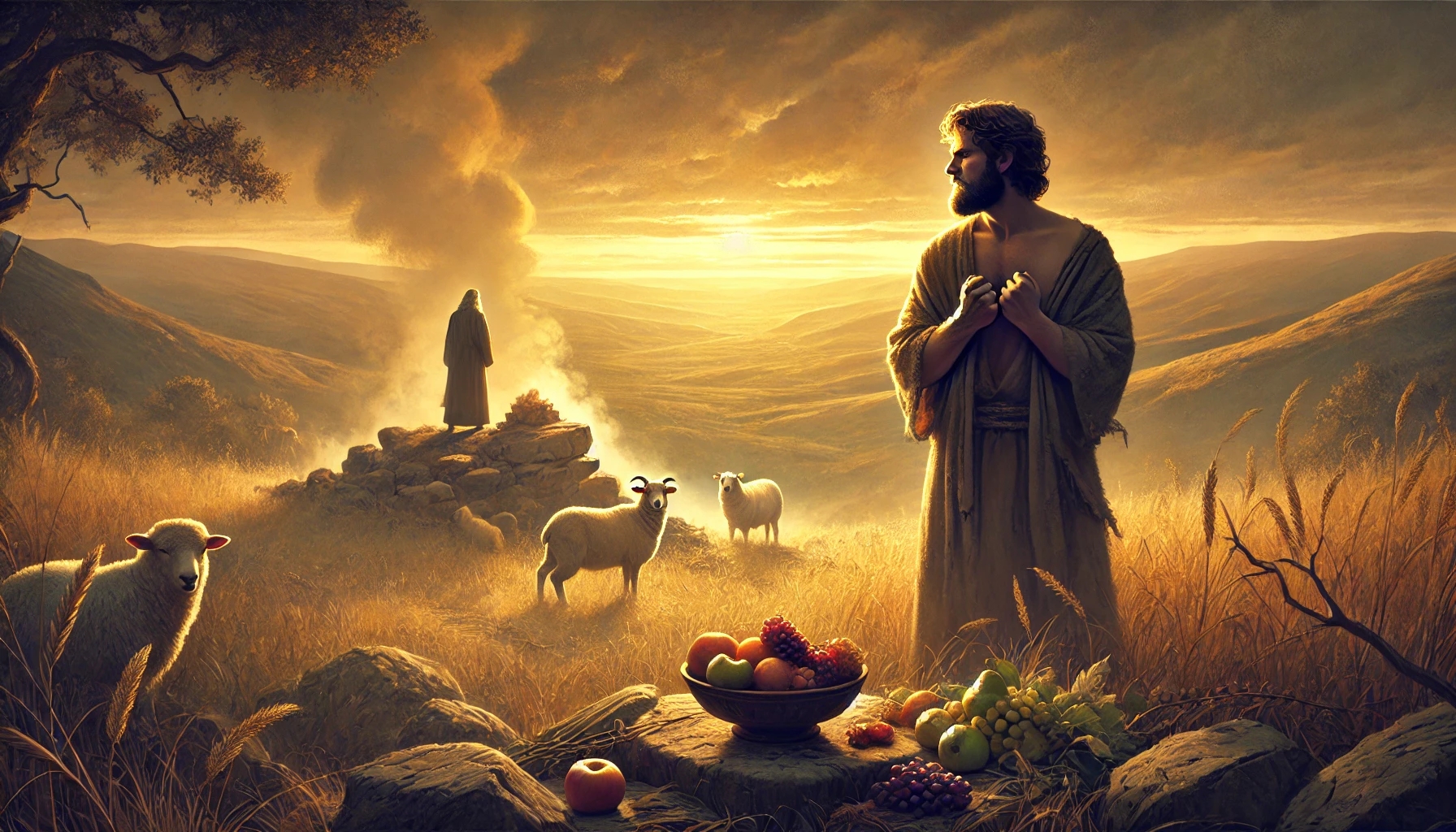
📆 May 11–17, 2025
📆 WEEKLY SPIRIT OF PROPHECY READING
📖 Ellen G. White │ Patriarchs and Prophets – Chapter 5
✨ Cain and Abel Tested
📖 Read online here
══════════════════════════════════════════════
🟦 Introduction
The story of Cain and Abel is more than an account of the first murder. It’s a portrait of two fundamentally different attitudes toward God—faith versus self-righteousness, obedience to one’s own works. In their contrast we see the two great camps that will persist throughout salvation history: those who accept God’s way of redemption through the blood of Jesus—and those who think they can come to God without sacrifice, humility, or a Savior. The tragic escalation between the brothers reveals the consequences of a religion without heart, without grace, and without genuine repentance.
══════════════════════════════════════════════
🟨 Commentary
- Two Brothers, Two Hearts – Cain’s Pride, Abel’s Faith
Abel saw God’s law as grace and order, offering an animal sacrifice in faith for redemption. Cain treated sacrifice as mere duty, refused the blood offering, and sought approval through his own works. - The Difference in the Offering—and in the Attitude
Both built altars and offered gifts. But God looked at the heart: Abel’s offering was accepted—through faith (Heb. 11:4); Cain’s was rejected—for unbelief and rebellion. Cain rejected God’s way and tried to justify himself by performance. - Faith Shows Itself in Obedience
Cain’s offering was externally correct but internally empty. True worship requires obedience born of faith, subordinating us to God’s will. Abel recognized his sin and need for atonement—Cain did not. - God’s Warning and Cain’s Rejection
God speaks kindly to Cain, warning him of sin (Gen. 4:6–7). Cain refuses to submit and allows jealousy and anger to grow. The brother who shames him by obedience becomes his enemy. - The Murder of Abel—and the Spiritual Line
Cain kills Abel—not in self-defense, but out of hatred for his righteousness. This is the first act of spiritual persecution: the righteous pursued by the unrighteous—a pattern repeated through history. Abel dies as a witness of faith—his testimony still speaks (Heb. 11:4). - God’s Judgment and Mercy
Cain is held accountable: he lies and shows no remorse. God’s judgment follows—cursed ground, restless wandering, exile. Yet God does not destroy him; He gives him a chance to repent, which Cain never takes. - Cain as Father of Rebellion
Unrepentant, Cain becomes the progenitor of a godless culture. His example shapes generations—up to the Flood. God’s decision not to slay the first murderer at once shows the full scope of human defiance. - The Great Conflict—Until the End of Time
Cain and Abel exemplify two spiritual camps: those who trust in Christ’s blood and those who think they can save themselves. This chapter foreshadows the cosmic struggle between light and darkness, truth and error, grace and lawlessness. The story repeats in new forms until Christ returns.
══════════════════════════════════════════════
🟩 Summary
Cain and Abel are two brothers of the same origin but with completely different paths. Abel brings the sacrifice God demands and is counted righteous by faith; Cain rejects God’s instructions and, in envy, kills his brother. Their story mirrors humanity: two modes of worship, two attitudes toward God’s Word—and two very different outcomes. Abel’s blood calls for justice; Cain’s rebellion brings God’s judgment. Yet throughout, God’s patience and mercy remain visible—even toward the murderer.
══════════════════════════════════════════════
🟥 Message for Us Today
- True faith produces obedience. Faith without obedience is dead. Abel obeyed and was justified—this remains true.
- We cannot impress God by our works. Those who come without Christ’s blood are rejected like Cain—not for lack of effort, but out of pride.
- God’s way is non-negotiable. He has ordained the path of redemption through Jesus’ blood. Any attempt to bypass it leads to ruin.
- God’s warnings are an expression of love. Cain was warned. Today God still calls sinners to repentance before judgment falls.
- Faith is a choice. Abel and Cain faced the same truth—only one embraced it. Faith is not accidental but obedience in trust.
- The conflict between light and darkness endures. Followers of Christ will face rejection, resistance, even hatred. But like Abel, we can know: God sees, God remembers, and God will bring justice.

More Stories