📘 Introduction: At the End of a Journey of Observation
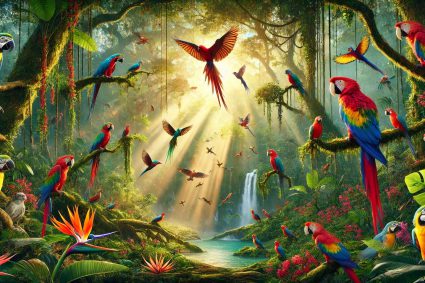
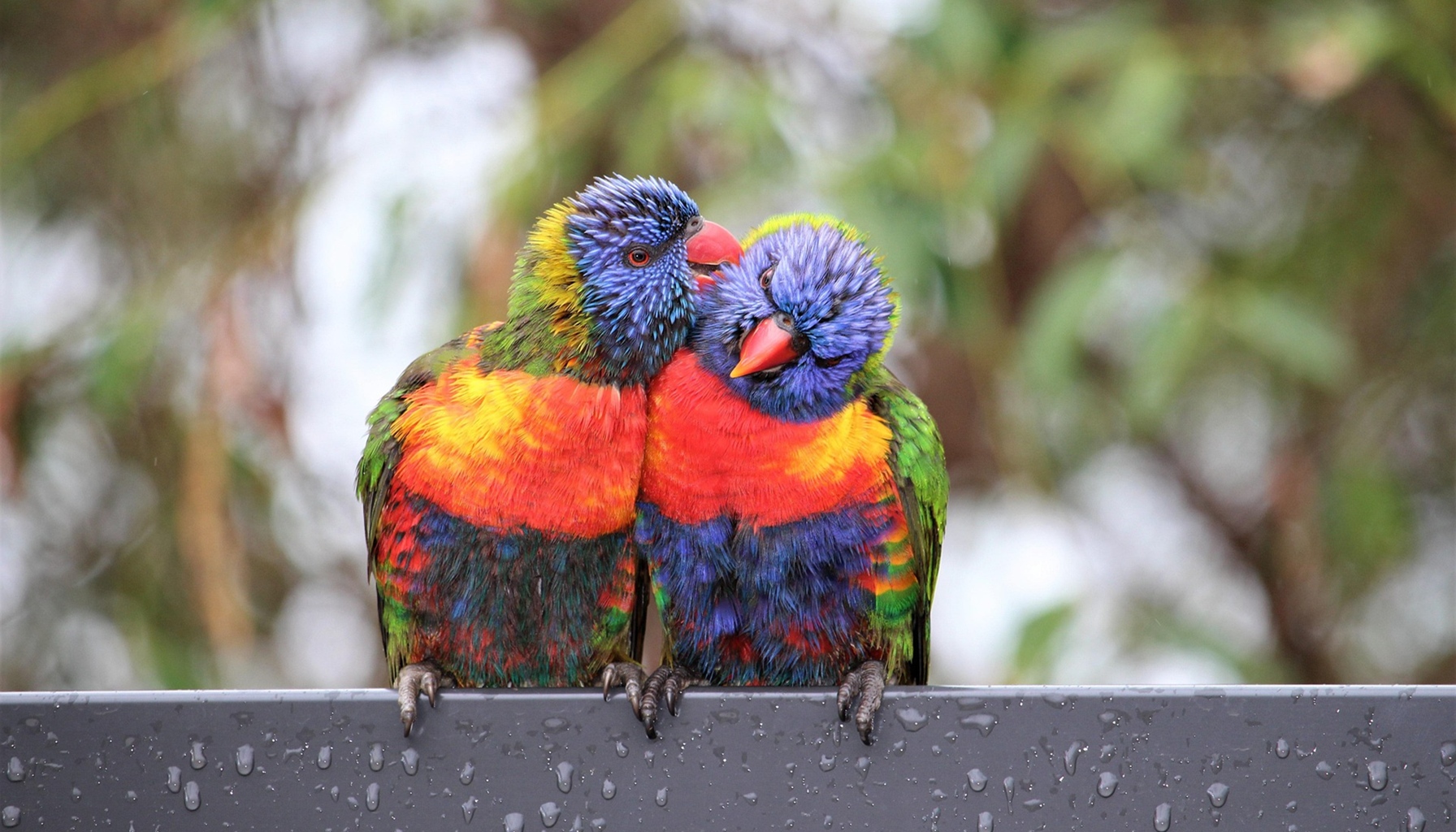
For thirteen weeks, we have observed the world of birds up close.
Not superficially, not romantically, but attentively.
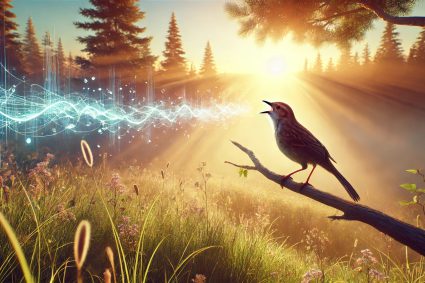
We have seen how birds breathe, navigate, sleep, see, communicate, grow, and survive.
And with each of these observations, one thing became clearer:
Nature is not only diverse—it is ordered.
This final chapter is not a new discovery in the narrow sense.
It is an invitation to bring together what we have seen.
🧩 1. What runs through all episodes
Whether we spoke about breathing, orientation, feathers, or instinct—
again and again we encountered the same fundamental patterns:
- Systems function only as a whole
- Information is a prerequisite for function
- Adaptation operates within clear boundaries
- Beauty and purpose do not contradict each other
- Life begins prepared, not improvised
These patterns are not spectacular.
But they are consistent.
And that is exactly where their significance lies.
🔬 2. Order is not the opposite of science
Recognizing order does not mean rejecting science.
On the contrary:
Without order, there would be no natural science.
Measurement, comparison, repeatability—
all of this presupposes that nature is reliable.
So the question is not
whether order exists,
but how we interpret it.
Is it the result of blind processes?
Or does it point to something beyond chance?
This series has not forced answers.
It has taken observations seriously.
✝️ 3. The Christian perspective as a framework of interpretation
The Christian view of nature speaks of creation.
Not as a competitor to biology,
but as an interpretation of what
biology makes visible.
Creation means:
- Order is intentional
- Life is meaningfully equipped
- Boundaries are part of care
This perspective does not explain every detail.
But it offers a framework
in which order does not become meaningless.
Not as proof.
But as an invitation to reflection.
🌍 4. From wonder to responsibility
Whoever recognizes order
inevitably arrives at another question:
👉 What does this mean for us?
If nature is not merely a resource,
but a finely tuned system,
then it changes how we relate to it.
Birds are then not:
- interchangeable
- arbitrary
- insignificant
But part of a larger whole
for which we bear responsibility.
Not out of sentimentality,
but out of understanding.
👤 5. The human being – observer and participant
This series about birds was never just a series about animals.
It was always also about us.
Because humans are not outside of nature.
We observe it, use it, influence it.
And that is exactly why we carry responsibility.
Not as rulers over a random system,
but as stewards of an order
we did not create.
🪶 6. What birds ultimately teach us
If we summarize everything, birds teach us above all this:
- That life is more than mechanics
- That function presupposes meaning
- That boundaries can sustain
- That beauty has significance
- That order invites wonder
Not loudly.
Not forcefully.
But consistently.
✨ Final Thought: The View Continues
This first series ends here.
But observation does not end.
Nature remains open to everyone
who is willing to look closely.
Perhaps this is the most important lesson of these months:
That attentive observation
is not the opposite of thinking,
but its beginning.
Whoever preserves this way of seeing
will discover not only in the world of birds,
but everywhere
traces of creation.
🌿 Outlook:
In the next series, we turn our attention to another world—
smaller, more inconspicuous, yet no less astonishing:
“Transformation and Order – What Insects Teach Us”
🦋 Preview of the Second Series
Transformation and Order – What Insects Teach Us
They are small.
Often overlooked.
Sometimes even unwanted.
And yet insects are among the most astonishing living beings in our world.
In this second series of Traces of Creation, we focus on a world
that usually appears only at the margins of our perception—
and yet is shaped by order, precision, and astonishing complexity.
How does a transformation work in which a body is completely rebuilt?
How do insects navigate across great distances?
Why do their systems function so reliably despite their tiny size?
This series invites us to take the small seriously.
Objectively. Clearly. Without exaggeration.
And it shows:
Size is not a measure of significance.