Why change needs limits
🔄 Introduction: Change – but not without limits
Nature is full of movement.
Seasons change, populations adapt, individuals differ from one another.
Change is clearly part of life.
And yet, in the world of birds, something remarkable stands out:
Despite all diversity, despite adaptation and variation,
birds remain birds.
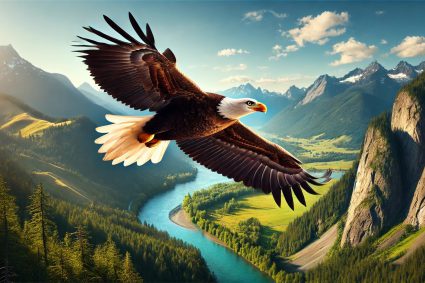
A sparrow does not become an eagle.
A penguin does not become a flying seabird.
A crow remains a crow – yesterday, today, and tomorrow.
Why is this so?
🧩 1. Diversity within clear limits
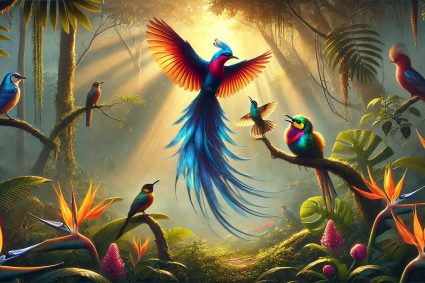
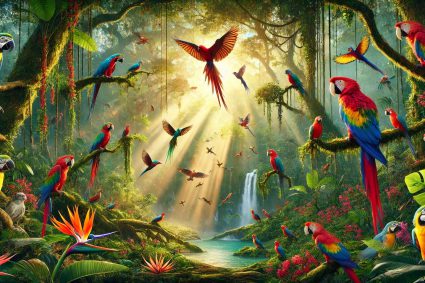
The bird world is extremely diverse:
-
more than 10,000 species
-
great differences in size, color, and habitat
-
a wide variety of lifestyles
And yet we immediately recognize
what a bird is.
All birds share basic characteristics:
Diversity exists within a framework,
not beyond it.
This is not a lack of creativity,
but a sign of structured order.
⚖️ 2. Adaptation is real – but limited
Birds can adapt:
-
beaks vary depending on diet
-
plumage adapts to climate
-
behavior responds to environmental conditions
These adaptations are real and observable.
They show flexibility.
But they do not change the basic concept of “bird.”
Adaptation means:
The limits remain.
🔗 3. Why fundamental changes would be problematic
The characteristics of a bird are closely connected.
Feathers, flight, respiration, bone structure, and instinct
form a coordinated system.
A deep change in one element
would require adjustments in many others –
at the same time.
A bird cannot:
-
lose its feathers
-
and still fly
It cannot:
The systems are interdependent.
This limits the direction of possible changes.
🚫 4. Why intermediate forms would not be advantageous
As we have already seen several times,
many bird characteristics function only as a whole.
A “partially changed” bird:
Such intermediate states
would not be an advantage,
but a risk.
This explains
why we see variation in nature,
but not unlimited transformation.
🛡️ 5. Species remain stable – despite environmental changes
Birds exist in very different environments:
-
Arctic
-
tropics
-
deserts
-
high mountains
And yet their basic structures remain stable.
This points to a robust foundation,
that allows adaptation
without losing identity.
Stability here is not stagnation,
but resilience.
📐 6. A rational view of limits
In every functioning system, there are limits.
A car can:
But it remains a car.
Limits define
what makes sense.
Biological systems also show such limits –
not as restrictions,
but as conditions for function.
🌪️ 7. Why the idea of unlimited change is appealing
The idea of limitless change
matches human expectations:
endless growth,
progress without boundaries.
But nature tells a different story:
stability is just as important as adaptation.
Not everything that changes
automatically becomes better.
✝️ 8. The Christian perspective: order with diversity
The Christian view speaks of orders of creation.
This means:
Birds remain birds,
not because change is impossible,
but because order preserves identity.
Not as proof,
but as an interpretation
of what we observe.
🌿 9. What this constancy teaches us
That birds remain birds teaches us:
Perhaps this observation also reminds us
that not every limit must be overcome
to be meaningful.
🪶 Final thought
The bird world is rich in diversity,
but not chaotic.
It changes,
without losing itself.
Birds remain birds –
and precisely in this we see an order
that does not restrict,
but sustains.
Those who take this constancy seriously
discover here as well
traces of creation.