


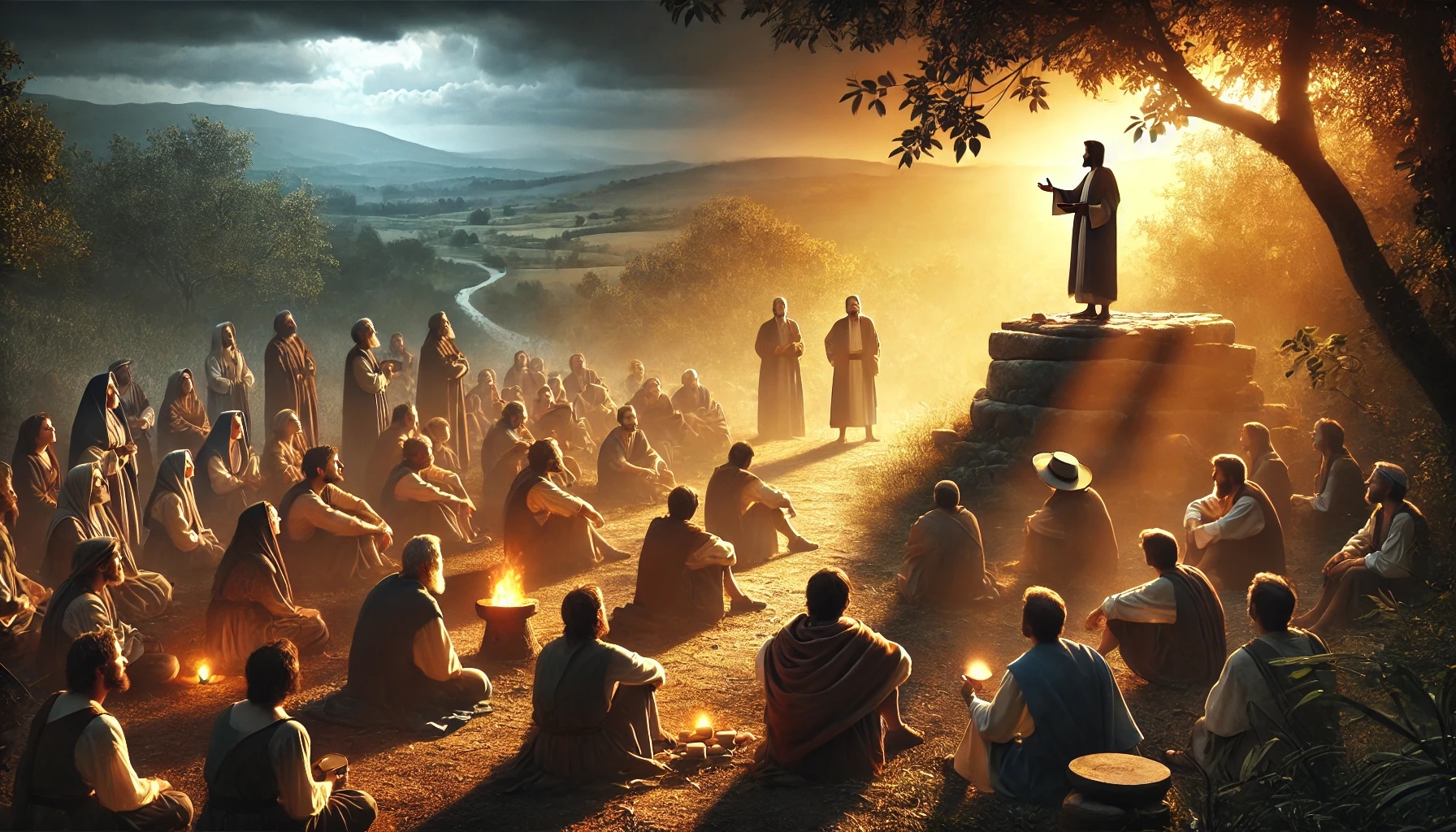
🗺️ THE BOOK OF JOSHUA
⛪ Lesson 13: Choose This Day!
📘 13.4 The Dangers of Idolatry
✨ True devotion is shown not only in promises — but in turning away from idols
🟦 Introduction
Sometimes we think idolatry is a phenomenon of ancient cultures – foreign altars, carved images, pagan rituals. But Joshua speaks of idols that are among you. Idols don’t just live in temples – but in the heart. In subtle inclinations, in things we trust more than God himself.
Joshua’s call is therefore timeless: Remove the idols. Incline your heart to the LORD.
………….. 🗺️ …………..
📖 Bible Study
📍 Joshua 24:22–24 – A serious reminder of old idols
Verse 22
“Then you are witnesses against yourselves that you have chosen the LORD, to serve Him.”
Joshua makes it clear: Those who choose God place themselves under a witness. The decision is public, binding – and self-examining. It’s not Joshua forcing the people – they themselves testify they want to serve God.
Verse 23
“Now therefore, put away the foreign gods which are among you.”
Here Joshua’s warning becomes concrete: the gods are still there! It’s not enough to say “yes” – idolatry, inward and outward, must be actively removed. Otherwise, it remains like a virus in the heart.
The Hebrew word “natah” – to incline the heart – is used here with depth:
-
It means: to bow, direct, humble the heart
-
In 1 Kings 11 it describes Solomon’s turning away – his heart inclined to other gods
So Joshua is calling for a heart decision, not just outward behavior.
Verse 24
“We will serve the LORD our God and obey His voice.”
This phrase emphasizes relationship, not just rule-following. Obedience = a living connection.
………….. 🗺️ …………..
🗣️ Answers to the Questions
🟢 Question 1: Why does Joshua repeat the call to remove the idols?
Answer:
Because the people verbally say “yes,” but the idols are still physically among them. Joshua knows:
-
Words without action are empty
-
Idols run deep – not just in the house, but in the heart
-
A true decision is shown in action
He acts like a good shepherd – not content with agreement, but concerned for spiritual purity.
🟢 Question 2: How often have you promised something to God but not followed through? What does that teach you about grace?
Answer:
Every believer knows it: You promise God more prayer, more time, more love – and fail. Why?
-
We underestimate our weakness
-
We overestimate our determination
-
We forget that faithfulness comes from relationship, not willpower
But here is grace: God doesn’t give up when we fail.
He calls again, not out of anger, but out of love.
………….. 🗺️ …………..
💎 Spiritual Principles
-
Idolatry is not just external, but begins in the heart
-
A “yes” to God must be followed by practical steps
-
Obedience means: giving the heart a direction
-
Grace is not cheap – it is holy, renewing, and restorative
-
God calls us again and again, not to control us, but because He loves us
………….. 🗺️ …………..
🛠️ Application in Daily Life
-
Identify your idols: What takes God’s place in your heart?
-
Incline your heart to God intentionally: through prayer, Bible study, honest silence
-
Connect decision with action: actively let go of what binds you
-
Learn to live in grace: don’t rely on your strength – but on God’s daily faithfulness
………….. 🗺️ …………..
✅ Conclusion
Joshua’s words still echo today:
“Now therefore put away the foreign gods… and incline your heart to the LORD.”
It’s an invitation – not compulsion. But it calls for consistency.
God wants your heart – not just for a moment, but for every day.
………….. 🗺️ …………..
💭 Thought of the Day
“Idols are not always worshiped – often, they are simply tolerated.”
………….. 🗺️ …………..
✍️ Illustration
“The Voice Among the Stones”
When God speaks – and we truly listen
Chapter 1 – The Inheritance
It was a quiet autumn afternoon when Rebekka entered her parents’ old farmhouse in rural New Zealand. The wind whistled through the cracks in the shutters, and decades of dust covered everything – furniture, books, memories.
Her parents had died a year ago, faithful first-generation Adventists. Rebekka had once been a believer – but at twenty she had left it all behind: Sabbath, church, faith. Life in Wellington, her career, self-determination – that had become her god.
Now, at forty, she stood again in the old kitchen. On the wall still hung the framed quote from Joshua 24:
“As for me and my house, we will serve the Lord.”
She frowned. “Back then, it was easy to say that,” she murmured. “Today…” – she didn’t finish the sentence.
Chapter 2 – The List
While rummaging through an old wooden chest in the bedroom, she found a notebook in her father’s handwriting. It wasn’t a sermon or theology – just a list:
-
More patience with Rebekka
-
Start every day with God
-
Settle the old dispute with Uncle Karl
-
Lay down pride
-
Don’t rely on my works
Rebekka flipped to the last page. A single sentence:
“Lord, help me recognize the idols that dress in piety.”
She was confused. Her father had been such a devout man. Idols?
Chapter 3 – The Conversation
The next day she visited Pastor Elias, the old Adventist pastor in the village. As a child, she had feared his serious gaze. Now he was frail, but sharp in mind.
“Why do you think Joshua spoke so harshly about idolatry, even though the people clearly chose God?” he asked.
Rebekka shrugged.
“Because Joshua knew how deceitful the heart is,” said the pastor. “An idol isn’t just a golden calf. It’s anything that takes God’s place. Even good things. Even our pride in our own faithfulness.”
He smiled. “You know, sometimes our greatest idol… is the idea that we have no idols.”
Rebekka was quiet for a long time. “I think… I have many.”
Chapter 4 – The Voice Among the Stones
A few days later, Rebekka walked alone through the small forest behind the house. Her father used to pray with her there, on an old stone they had called the “listening stone.”
She sat down. And for the first time in years, she prayed. Not a grand, eloquent prayer. Just a whisper:
“Lord, I left you.
I’ve worshiped many things – my independence, my strength, my career.
And I remained empty.
If you still want me…
then teach me to listen again.”
The wind gently rustled the trees. No voice from heaven. But peace. A quiet, unfamiliar peace.
Chapter 5 – Decision in Everyday Life
Rebekka stayed two weeks on the farm. She began reading the Bible again – not out of duty, but hunger. She reordered her life. Quit a contract she had taken out of greed. Apologized to an old friend she had wronged. Began keeping the Sabbath again – alone, simply, quietly.
And she found a new verse, which she hung in the kitchen where Joshua 24 had once been:
“We will obey His voice.” (Joshua 24:24)
Chapter 6 – Return
Two months later, she returned to an Adventist church in Wellington. No one knew her. But she didn’t care. She hadn’t come to be seen. But to listen.
After the service, she stood in the parking lot and closed her eyes.
“Idols live in silence. But so does God’s voice,” she whispered.
………….. 🗺️ …………..
🧠 Closing Thoughts
Rebekka’s story shows:
-
Idols don’t need to be visible to be dangerous
-
Decisions for God require more than words – they need a heart movement
-
God still calls today – not with thunder, but with the quiet voice among the stones of our lives
And those who listen – will live.
