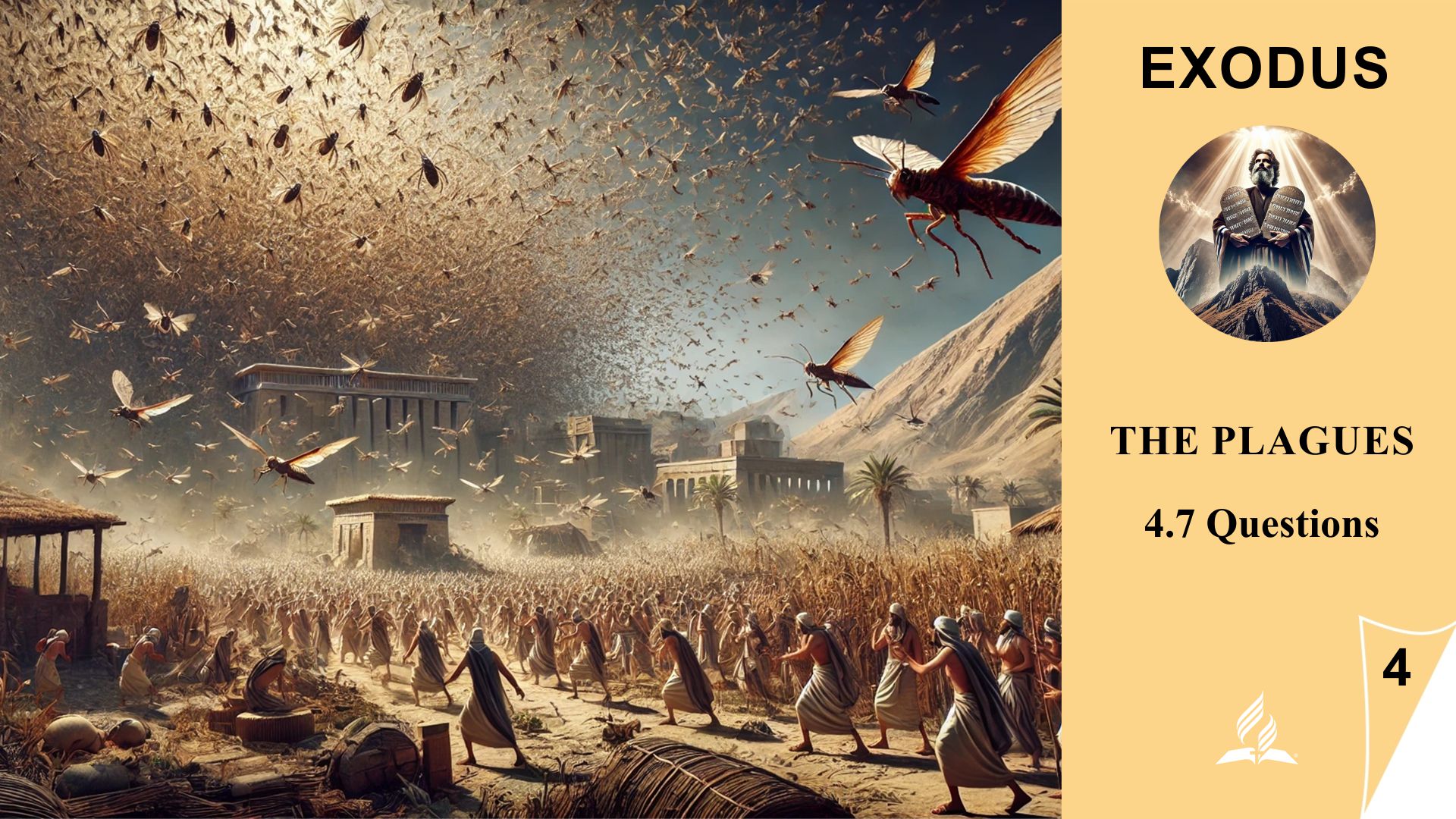
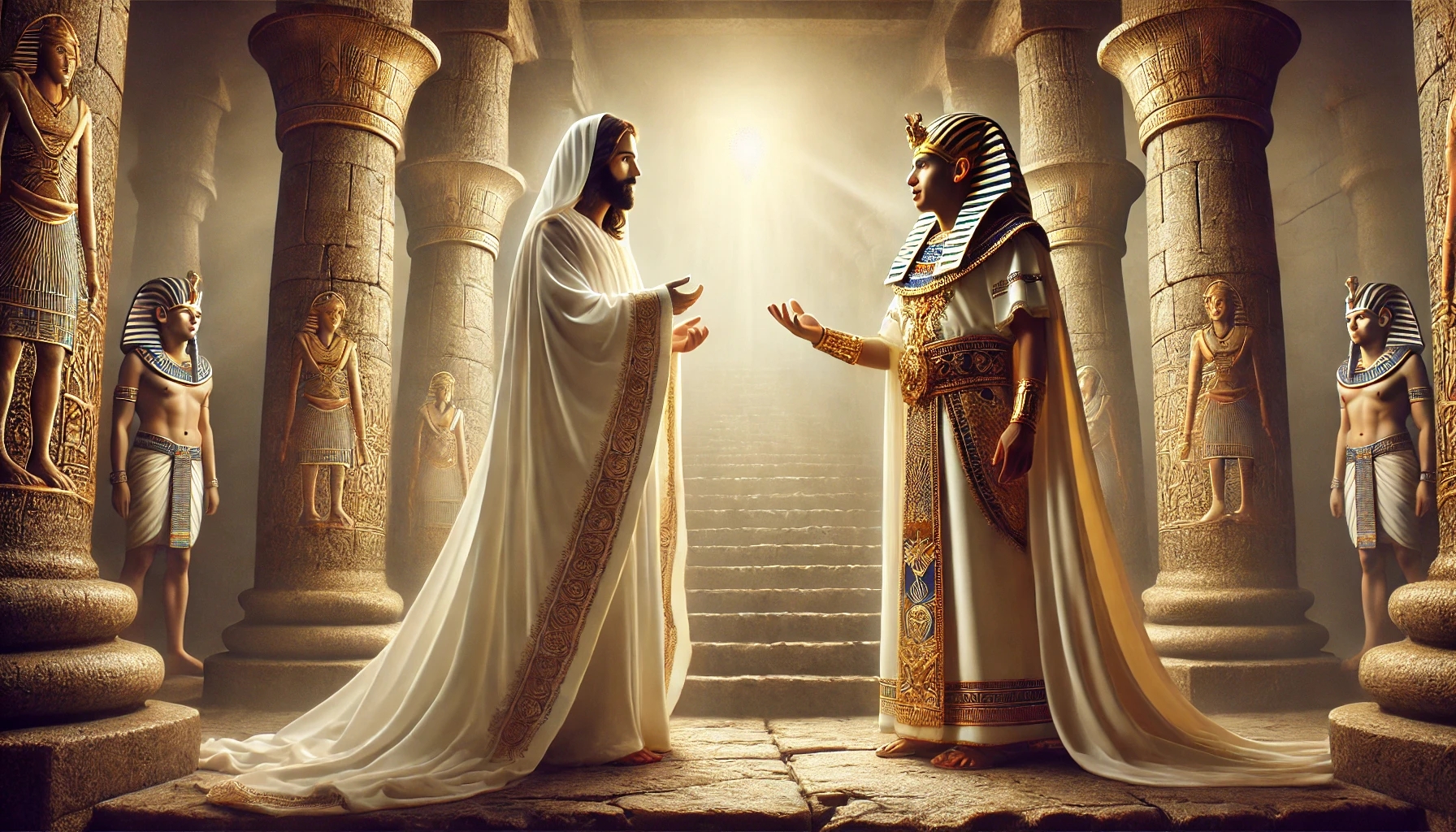
There are moments in life when truth stands unmistakably before us. It calls, it knocks, it warns. And yet… people repeatedly choose to turn away. Not because they didn’t know. But because their heart—like Pharaoh’s—is hardened.
This hardening doesn’t happen all at once. It is a process—a path along which one gradually becomes deaf to God’s voice.
Pharaoh’s story is not merely a tragedy from ancient times. It is a mirror: for modern people, churches, leaders, and young believers. It asks us a crucial question: What do I do with the truth when it makes me uncomfortable?
………………………………………………………………….
📖 Answers to the Questions
📌 Question 1:Examine more closely why Pharaoh took it upon himself to be so hard‑hearted. Why, despite what was obviously the right decision—“Let my people go!”—was he so resistant? How does one come to deceive oneself like that? We really can become so calloused in sin that we make absolutely disastrous choices, even when the right decision and the right path have been before us all along. What warnings should we draw from this? Which biblical figures made the same kind of mistake? Think, for example, of Judas.
The hardening of the heart is no accident but the result of conscious choices:
Pride and demand for authority: Pharaoh saw himself as a god. A god does not bow to another “god.” The demand to let Israel go was an attack on his authority.
False security: He was surrounded by magicians, wealth, and military strength—this blinded him to his own vulnerability.
Callousness through habit: Repeated rejection of the truth leads to insensitivity to God’s voice.
“Sin is like a fire alarm you ignore too often—eventually you stop hearing it.”
Modern parallel: People today listen to sermons, read the Bible, and “know” what is right. But when the heart resists change, even the clearest call of God is rendered ineffective.
📌 Question 2: At a certain point, in the midst of the devastation Pharaoh had brought upon his land and people, he admitted: “This time I have sinned; the LORD is in the right, and I and my people are in the wrong” (Exodus 9:27). Even though that was a wonderful confession of sin in that moment—how do we know it wasn’t genuine?
At first glance it sounds sincere:
“I have sinned … the LORD is right … I am guilty.”
But biblical repentance bears fruit—real change. With Pharaoh we see:
No true turning: As soon as the threat passed, he returned to his old behavior.
Relief sought, not insight: He wanted an end to the plague—not a new relationship with God.
Lack of humility: Despite all the losses, his heart remained proud and controlling.
True repentance springs not from fear of consequences but from grief over separation from God (cf. 2 Corinthians 7:10).
………………………………………………………………….
✨ Spiritual Principles
God is patient—but he forces no one to repent. Everyone is given chances to hear God’s voice. But if we ignore them, our heart grows numb.
Hardening happens in small steps. It starts with little compromises—until we no longer hear God’s call.
True repentance is shown in change. Words alone aren’t enough. It requires a movement of the heart—visible in obedience.
Each person faces the same choice—like Pharaoh. Grace or resistance? Humility or self‑deception?
………………………………………………………………….
🧩 Application for Daily Life
This story should not only alarm us—it should awaken us. Let us ask ourselves:
Where do I ignore God’s voice, even though I clearly hear it?
Am I willing to acknowledge my guilt—even without external pressure?
Are there areas where I have become inwardly “hardened”—for example, toward people, toward truth, toward change?
Repentance is not a feeling. Repentance is a decision to concede that God is right—and to turn back to Him.
………………………………………………………………….
✅ Conclusion
Pharaoh’s story shows us:
Pride and repeated rejection lead to the hardening of the heart.
False repentance sees only the punishment—not the guilt.
God’s patience is great, but not unlimited.
Lesson for us: Do not delay true turning back. A soft heart hears— a hard heart loses itself.
………………………………………………………………….
💭 Thought of the Day
A soft heart recognizes God’s voice—a hard heart hears it only when it’s too late.
………………………………………………………………….
✍️ Illustration – The Contract He Never Signed
A modern parable about grace, pride, and a hardened heart
Chapter 1 – The Offer
Julian Becker was the CEO of a successful company. A doer. A visionary. Tough. His decisions were final—and nobody dared to contradict him. He was neither a believer nor an atheist. Religion, he said, was for the weak. For people who needed hope.
One day at a business reception he ran into an old school friend—Simon, now a pastor. “Julian,” he said, “you have everything money can buy. But what about what money can’t buy?” Julian just laughed. But Simon left him a small, unassuming book: A modern parable about King Pharaoh.
Julian never read it.
Chapter 2 – The Warning
Months passed. First there was a broken contract. Then a scandal. Then the sudden death of an employee—a heart attack. His company’s image collapsed; the press descended on him.
One night—alone in his office—his gaze fell on the small book. Curious, he opened it. It was no sermon. It was a story—his story. A person who, despite every sign from God, would not listen.
Julian swallowed hard. He couldn’t explain it, but it felt like a personal warning. He was on the verge of breaking his pride. Almost.
But then a new investor came. A new chance. “I’m not done yet,” he told himself. The book went into the trash.
Chapter 3 – The Point of No Return
A year later. Julian was publicly rehabilitated—but inwardly empty. Relationships broken, his son wouldn’t speak to him, his wife lived separately.
One evening—in his hotel room—he opened the Bible lying there. He read: “Today, if you hear his voice, do not harden your hearts” (Hebrews 3:15).
He felt it again. That tug. That voice. One more time.
But then there was a knock at the door. Room service. Life went on. And Julian never returned.
He never officially said “No.” But he never said “Yes,” either. And his heart grew silent. And hard.