⛪ Lesson 12: Precursors
📘 12.3 Worshiping the Image, Again
✨ Whom Do We Worship – the Creator or the Image?
…………………………………………………………………
🟦 Introduction – The Final Question of Loyalty
Throughout world history, it has often been the great moments of decision that reveal a person’s true character. In Daniel 3, we see three young men who do not bow—neither before a golden statue nor under the threat of death by fire. Centuries later, the book of Revelation picks up this same theme: an image is set up, worship is demanded, and pressure becomes global. But just like then, it’s not merely about rituals or outward gestures. It’s about the ultimate question of all questions: To whom do we owe our loyalty?
………………………………………………………………….
📖 Bible Study
-
The Second Image in Revelation 13
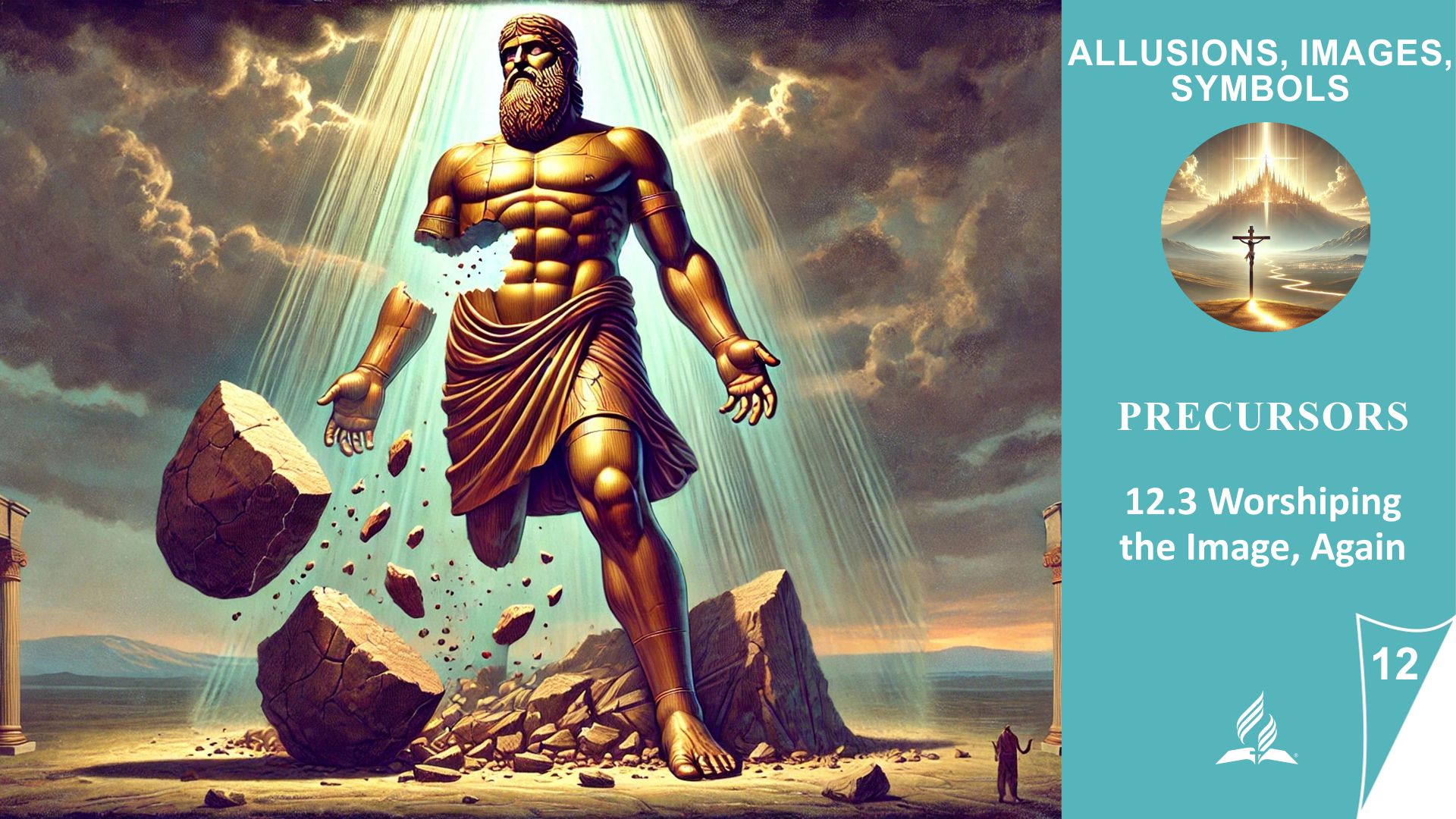
Revelation 13:11–17 describes a second beast (often interpreted as an end-time power) that sets up an image of the first beast and forces all to worship it. This image symbolizes a religious-political union that replaces God’s authority with human authority. The parallel to Daniel 3 is unmistakable: an image, a threat of death, and a small group of believers who refuse to comply.
-
The Call to True Worship
Revelation 14:9–12 counters this with the so-called “Three Angels’ Message.” Here, there is a call to loyalty to God the Creator. The Bible connects true worship with remembering the Sabbath—the sign of Creation. In contrast, the “mark of the beast” stands for a system of human authority over God’s commandments.
-
Romans 1 and the Confusion Between Creator and Creation
Romans 1:18–25 describes how humanity, having turned away from God, worships the creation rather than the Creator. This reversal lies at the heart of the end-time conflict. The question is not whether we worship—but whom we worship.
………………………………………………………………….
📖 Answers to the Questions
📌 Question 1: What contrast is presented in Rev 13:11–17; 14:9,11–12; 16:2; 19:20; 20:4?
👉 These texts reveal a profound contrast: God’s commandments vs. human decrees.
The beast demands worship under threat of death and economic exclusion.
God’s people, however, are called to worship the Creator (Rev 14:7) and to keep His commandments (14:12).
The mark represents a human institution usurping God’s authority.
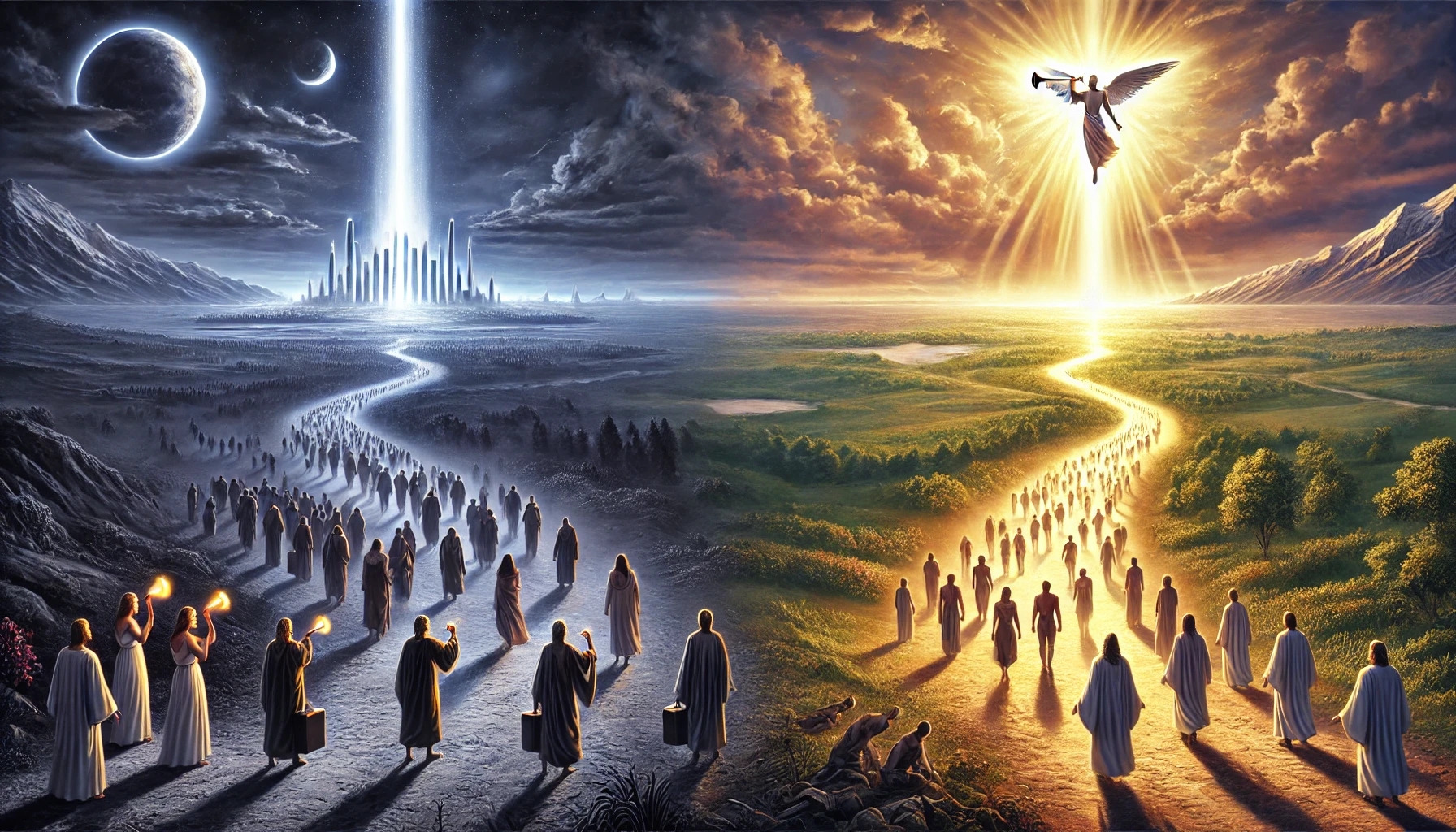
➡ The final battle in history centers around loyalty: to God or to a religious-political system.
📌 Question 2: How does Romans 1:18–25 parallel the worship of the image?
👉 Romans 1 describes how people honored the creation more than the Creator.
This reversal is the essence of idolatry.
Revelation 14 calls for worship of the Creator.
Those who worship the image of the beast make the same mistake as the people in Romans 1: they give their loyalty to a system instead of to God.
➡ Ultimately, worship equals loyalty—and loyalty can only belong to one: God or the beast.
………………………………………………………………….
✨ Spiritual Principles
-
True worship is based on knowledge and relationship.
-
Loyalty is shown through obedience, not mere feelings.
-
God’s commandments are non-negotiable, even if the world demands compromise.
-
Faith is tested when truth comes at a cost.
………………………………………………………………….
🧩 Application for Daily Life
In a world constantly talking about “truths,” Christians must learn to rely on God’s Word.
Media, trends, and societal pressure shape subtle images that demand our loyalty.
Sabbath, Creation, and Redemption are not just beliefs—they are signs of true worship.
………………………………………………………………….
✅ Conclusion
The battle over worship is not an ancient myth but the final act of a cosmic drama. Just as in Daniel 3, every person today faces the choice of whom they serve. The Bible calls us to understand loyalty not as a feeling, but as lived-out truth. The three friends in Babylon chose the fire—and met the Son of God there.
Today, we are invited to stand tall—no matter how many others bow.
………………………………………………………………….
💭 Thought of the Day
Worship not only defines our past—it determines our future.
………………………………………………………………….
✍️ Illustration – “The Call to Loyalty”
The streets of Genova City were lined with glowing screens flashing the symbol of the new global unity: a silver circle with an eye inside—the “Sign of Harmony,” as it was called. It was the year 2036. The world had changed. After years of global crises, humanity had made unity and order its top priority. Under the banner of the “World Alliance for Peace and Progress,” nations were unified, and the new order had its rules.
One central law stated: Every Friday evening at 7 p.m., the world must gather—digitally or physically—for the “Hour of Unity.” During this hour, words of gratitude were spoken, the image was honored, and people publicly pledged loyalty to the Alliance’s principles. Those who didn’t participate were labeled “divisive and dangerous.”
Micah was 23. A quiet, thoughtful young man with a deep love for the Bible his grandmother had shared with him as a child. His parents had joined the Alliance, like almost everyone else. But Micah couldn’t. Since reading the words of Revelation 13, they echoed in his heart like drumbeats: “And it was granted power to give breath to the image of the beast…”
At first, he just ignored it. He turned off his devices, hid during the ceremony. But one evening, a notification appeared on his personal pad: Micah Levin – Your participation in the Hour of Unity has not been recorded for the past five weeks. Please report to your district center.
At the center, he faced an official who spoke kindly but firmly. “Micah, you’re a bright young man. But your refusal has been logged. This world needs unity—not old myths and individual rebellions.”
“I respect your efforts, sir,” Micah replied calmly. “But I cannot bow to an image. I only worship the One who made heaven and earth.”
The officer sighed. “Then you know what this means.”
Micah nodded. Two days later, he was suspended—his studies, his digital access, his accounts: frozen. But Micah began to find others. In the woods outside the city, they met, whispered scriptures, kept the Sabbath, strengthened each other’s faith. Not in rebellion—but in quiet, faithful worship.
One night, drones hovered overhead. The group was found. They stood in a line—Micah at the front. One last offer was made: “Bow once—and you walk free.”
Micah looked around. Some began to tremble. Then he said, loud enough for the camera to record:
“Our God whom we serve is able to deliver us. But even if He does not—we will not bow.”
Silence.
Then a soft hum. The drones withdrew. Later, it was revealed: a high-ranking official had voiced last-minute concerns. The footage went viral. “Young believers risk everything for their faith.”
A movement began. More and more people started asking questions, rethinking their beliefs. Micah’s stand became a light—not because he shouted, but because he stayed faithful when it cost him.
And as the world continued to shift, God’s people remembered an ancient story—of three men in a furnace—and a fourth, who stood in the fire with them.
Closing Thought:
“When everyone bows—God stands. And with you—if you stand for Him.”