

⛪ Lesson 10: Upon Whom the Ends Have Come
📘 10.3 The Story of Sodom and Gomorrah
✨ When the Fire of Judgment Falls – Lessons from Sodom and Gomorrah
…………………………………………………………………
🟦 Introduction
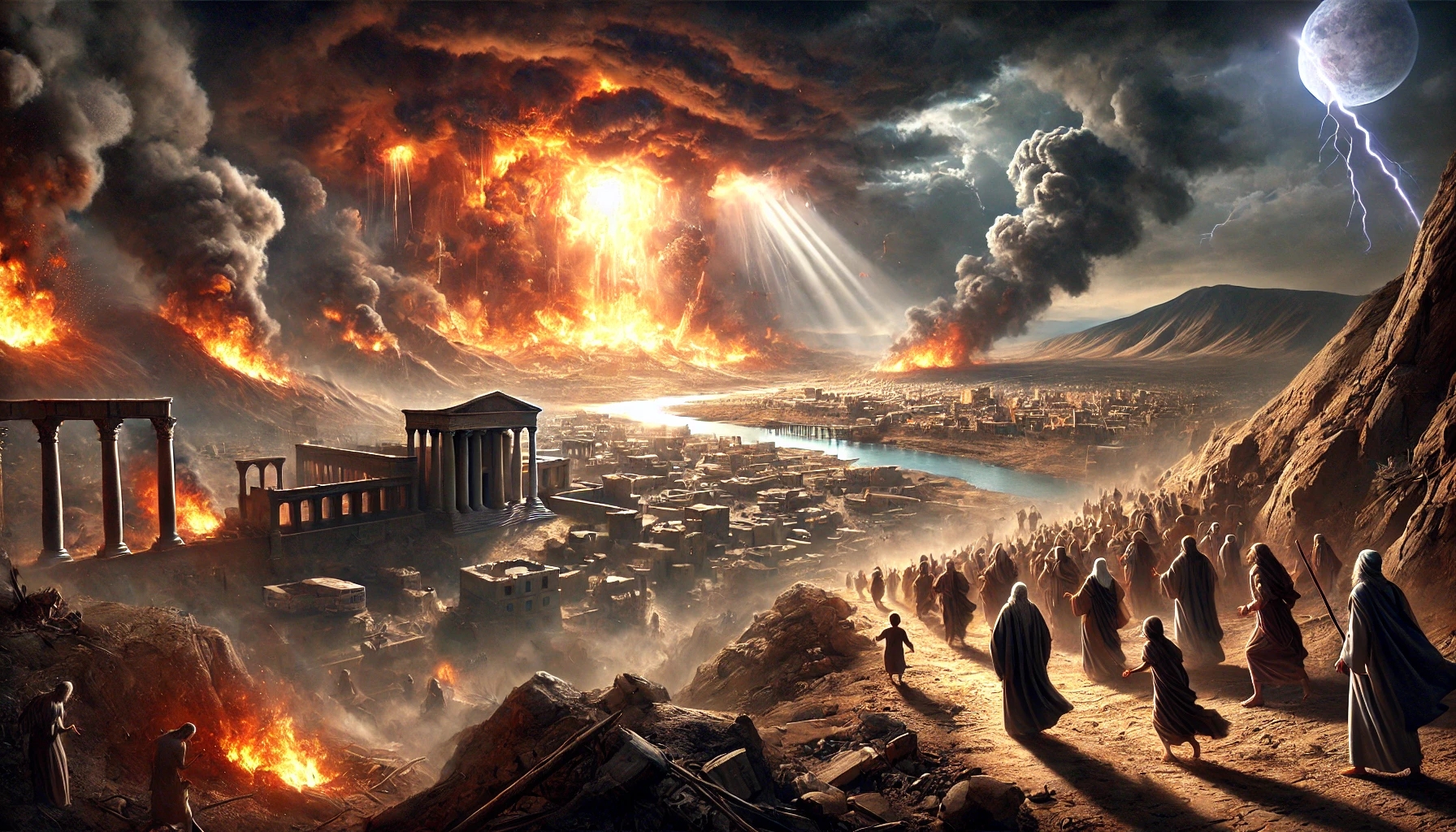
The story of Sodom and Gomorrah is one of the most powerful and sobering accounts in the Old Testament. Two cities, known for their immorality, social injustice, and spiritual rebellion, are destroyed by fire from heaven. Yet the biblical writers—especially Peter, Jude, and Ezekiel—make it clear: This story is not a distant event from antiquity, but a prophetic warning for every generation—including our own.
When we read 2 Peter 2:4–11, Jude 5–8, and Ezekiel 16:46–50, we realize: God does not tolerate evil indefinitely. Equally important: God’s judgment never comes without reason. It is the response to persistent, willful rebellion against His grace and order.
………………………………………………………………….
📖 Bible Study
🔹 1. Sodom in the Old and New Testament
2 Peter 2:4–11: Sodom and Gomorrah are given as examples of how God judges the ungodly. Lot is portrayed as a “righteous man” whose soul was tormented by the lawless deeds of his neighbors.
Jude 5–8: The cities are cited as examples of those who “indulged in sexual immorality” and “pursued unnatural desires.” Their punishment with “eternal fire” is explicitly mentioned.
Ezekiel 16:46–50: Beyond sexual sin, Ezekiel lists pride, excess of food, laziness, and failure to help the poor as the primary sins of Sodom.
🔹 2. The Deeper Sin: Spiritual Arrogance
Ezekiel 16 shows that sin isn’t always what it appears to be. Israel despised God’s mercy and committed spiritual adultery.
God compares His own people to Sodom—and declares: “You are worse.”
The deepest sin is not immorality, but religious self-righteousness that numbs the heart.
🔹 3. Judgment and Grace – Side by Side
God does not destroy recklessly. He warns, He pleads, He gives time.
But when the human heart hardens, consequences follow.
The story of Sodom is also a call to repentance—before judgment comes.
………………………………………………………………….
📖 Answers to the Questions
📌 Question 1: What moral conditions led to the destruction of Sodom?
Answer: The Bible presents several reasons:
-
Sexual immorality and perversion (Jude 7)
-
Pride and arrogance (Ezekiel 16:49)
-
Abundance without care for the poor (Ezekiel 16:49)
-
Indifference to God’s commandments
-
Contempt for divine order (2 Peter 2:10)
This combination of personal depravity, social cruelty, and spiritual arrogance made Sodom ripe for judgment.
📌 Question 2: What parallels can we see today?
Answer:
-
A society that relativizes everything—including morality
-
Self-fulfillment above all—regardless of the harm to others
-
Sexual orientation and identity as the highest form of self-expression
-
Coldness toward suffering, exploitation of the weak
-
Pride in “tolerance”—but intolerance toward biblical truth
-
Disregard for Scripture, indifference to sin even within the church
These are not just “worldly” problems—many of them affect the church as well.
📌 Question 3: Why does God speak so harshly to His own people in Ezekiel?
Answer:
-
Because they knew the truth—and rejected it
-
Because religious people are often dangerously close to spiritual blindness
-
Because self-righteousness can be more deadly than open sin
Like David (2 Samuel 12):
He was enraged at the injustice of the rich man who stole the poor man’s lamb—until Nathan said, “You are the man!”
………………………………………………………………….
✨ Spiritual Principles
-
God’s patience is long—but not endless
-
Rebellion often begins with complacency
-
True faith shows in compassion, purity, and justice
-
God’s judgment begins with His own house (1 Peter 4:17)
-
Genuine obedience begins with recognizing oneself as a sinner and seeking grace
………………………………………………………………….
🧩 Application for Daily Life
-
Self-examination: Where have I grown complacent? Where do I judge others without examining my own heart?
-
Live mercy: Do I see the needs around me—or am I like the rich in Sodom: full, bored, and cold?
-
Humble repentance: When the Spirit convicts me, do I respond like David: “I have sinned against the Lord”?
-
Speak warning with love: Not moralistically, but prophetically—like Nathan to David, like Ezekiel to Israel
………………………………………………………………….
✅ Conclusion
Sodom was not destroyed merely because of sexual sin, but because a whole people elevated themselves above God. They despised life, oppressed the poor, and dulled their conscience. This story is a living warning—but also a call to repentance and grace. If we repent, God is faithful and just.
………………………………………………………………….
💭 Thought of the Day
“The greatest blindness is failing to see our own guilt while loudly condemning the guilt of others.”
………………………………………………………………….
🎨 Illustration – Under the Glass Roof
It was late. The city lights reflected off the glass wall of Elina’s apartment, perched high above the streets of Frankfurt. Cars left glowing streaks, music thumped from a rooftop club, and her phone vibrated silently on the table. She ignored it—just like she had been ignoring most things lately.
Elina was 29. Successful, efficient, independent. She worked in digital brand management. By day she spoke about client engagement and vision strategies; by night she scrolled through endless streams and documentaries about climate collapse, social debates, and identity politics. Everything seemed to unravel, yet no one stopped to breathe.
In the corner of her apartment sat an old moving box—untouched since inheriting her mother’s house. Childhood memories. Things forgotten but not discarded. One evening she opened it—she didn’t know why. Between old calendars, faded letters, and a stuffed bunny, she found a small, worn Bible. Inside, her mother had written:
“Read before you judge. – Mom”
She flipped through randomly—no intention, no faith—and landed in Ezekiel 16. Her eyes caught the words:
“This was the guilt of your sister Sodom: pride, excess of food, and careless ease, but she did not help the poor and needy.”
Not what she expected. No fire from heaven—just a mirror. Arrogance. Fullness. Indifference.
She closed the book, unsettled by the whisper inside: “You know this.”
In the following days, her awareness grew. Things she once ignored hit her deeply. The homeless boy on the subway vent. The heated meeting at work where a colleague was fired for speaking openly about his Christian faith. The way people treated him—as if belief were more dangerous than greed.
Elina defended him. Not loudly—just quietly. And that was enough for people to watch her differently.
At night, she dreamed of flames—not war, not disaster—but a city drenched in luxury, facing heaven’s response. She wasn’t watching. She was inside. Her glass ceiling shattered. The skyline burned. The proud city crumbled into silence. Then a figure appeared. White. Calm. No scream. No condemnation. Only one sentence:
“You are the woman.”
She woke up drenched in sweat. The silence was deafening. She knelt—so unlike her—normally the one in control, structured, self-made. And she whispered her first true prayer:
“I see myself. And I see You. Lord, save me from myself.”
Over the months, her life changed radically. She quit her job. Gave up her apartment. Moved into something simpler. She started volunteering in a soup kitchen and a women’s shelter. She spoke to people, not target groups. She stopped managing and started listening.
She was no longer admired. No longer “the career woman,” no longer “the enlightened one.” But she was free. And at peace.
When asked why she changed her life so dramatically, she doesn’t use theological terms. She simply says:
“I was proud. Full. Tired. And blind. But God opened my eyes—before the fire came.”
Reflection from the Story:
Sodom was not just a city. It was a condition of the heart. And those who recognize it can be saved—before it’s too late.
