
📅 March 8, 2026
📚 BELIEVE HIS PROPHETS
📖 Daily Bible Reading
🏚️ 2 Kings 13 – Halfhearted Trust – God’s Patience Despite Limited Devotion
✨ Of weak kings, ongoing pressure, and the final influence of the prophet Elisha.
🌐 Read online here
📍 Introduction
Chapter 13 describes a difficult phase for the northern kingdom of Israel. Political weakness, military pressure, and spiritual stagnation characterize this period. At the same time, it becomes clear that God’s patience is greater than human inconsistency. The chapter ends with the final days of the prophet Elisha—and even after his death, God’s power continues to work. The narrative raises the question of how much trust people are truly willing to risk.
⋯⋯⋯⋯⋯⋯⋯⋯⋯⋯◆⋯⋯⋯⋯⋯⋯⋯⋯⋯⋯
🧵 Commentary
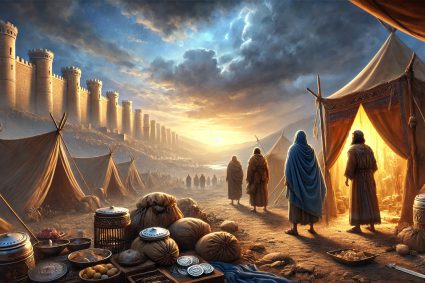
After the death of Jehu, his son Jehoahaz takes over the rule of Israel. Like many kings before him, he continues in the old, false ways. The people remain spiritually directionless, and the consequences soon appear politically: the king of Aram increasingly gains the upper hand and severely oppresses Israel. The army is almost completely destroyed; only a few chariots and horsemen remain.
In this distress, Jehoahaz finally calls upon the Lord. Although his repentance does not seem deep or lasting, God still listens to his plea. Out of compassion for the suffering people, He grants temporary relief. But as soon as the pressure decreases, Israel returns to its old patterns. The chapter paints a picture of people who seek God’s help but are only partially willing to truly change their ways.
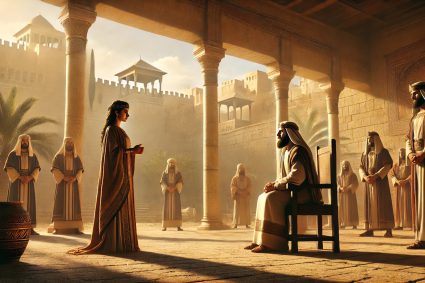
After Jehoahaz, his son Joash becomes king. His reign also stands in the shadow of earlier mistakes. During this time, the prophet Elisha lies dying—a symbolic scene, because with him a long prophetic era comes to an end.
King Joash visits the sick Elisha and weeps. His words recall Elisha’s cry at Elijah’s departure: “My father, my father, the chariots of Israel and its horsemen!” It is an admission that the true strength of the nation did not lie merely in military power but in God’s presence through His prophet.
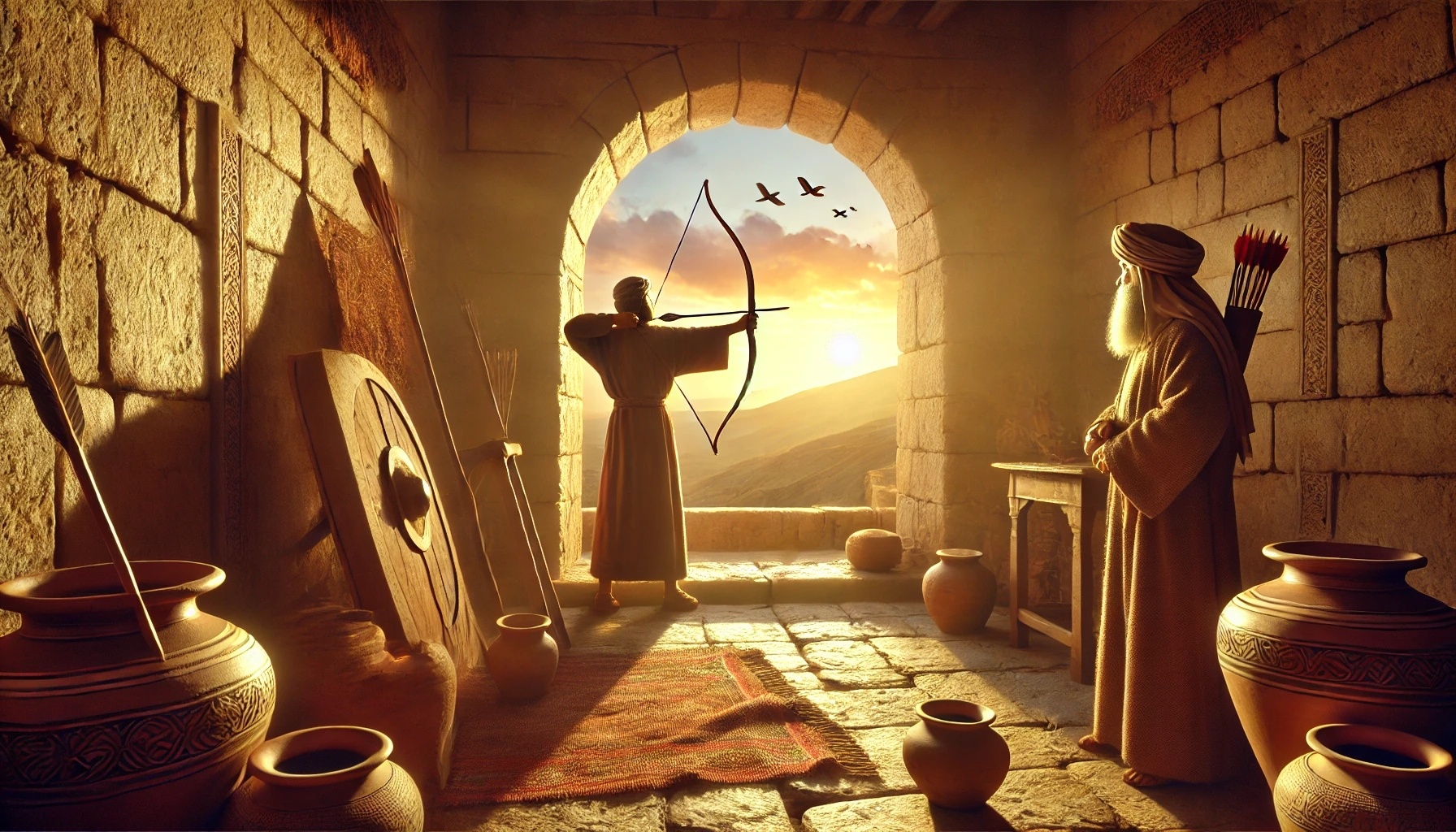
Elisha gives the king one final action. He is to take a bow and shoot an arrow toward the east—a sign of future victories over Aram. After that he is to strike the ground with additional arrows. Joash strikes only three times and then stops. Elisha becomes angry: if he had struck five or six times, the victory would have been complete. Now there will be only limited successes.
This scene is deeply symbolic. The king acts, but without passion or perseverance. His halfhearted commitment limits what could have been possible.
After Elisha’s death, one last miracle occurs. When a dead man is hastily placed in Elisha’s tomb and touches the prophet’s bones, the man comes back to life. Even in death it becomes clear that God’s power is not bound to human lifespan.
The chapter ends with a cautious turning point: under Joash, Israel recaptures several cities from Aram, but the successes remain limited—exactly as Elisha had announced.
⋯⋯⋯⋯⋯⋯⋯⋯⋯⋯◆⋯⋯⋯⋯⋯⋯⋯⋯⋯⋯
🧺 Summary
2 Kings 13 reports about the kings Jehoahaz and Joash, who live under pressure from Aram and only partially seek God’s ways. The dying prophet Elisha gives Joash a symbolic sign of future victories, but because of halfhearted action the victories remain limited. Even after Elisha’s death, a miracle shows God’s continuing power.
⋯⋯⋯⋯⋯⋯⋯⋯⋯⋯◆⋯⋯⋯⋯⋯⋯⋯⋯⋯⋯
🔦 Message for us today
The chapter shows that God listens even when people come to Him weakly or imperfectly. At the same time, it reveals that the measure of our trust and commitment can influence what we experience. Halfheartedness limits possibilities, while determined devotion opens new paths.
The story also reminds us that God’s work is not tied to individual personalities. His power works across generations.
⋯⋯⋯⋯⋯⋯⋯⋯⋯⋯◆⋯⋯⋯⋯⋯⋯⋯⋯⋯⋯
📝 Reflection
In which areas of my life might I be “striking the ground only three times,” even though greater trust would be possible?
And how can I approach God with greater determination?
════════ ✶ ✶ ════════
📆 March 8 – 11, 2026
📚 BELIEVE HIS PROPHETS
📖 Weekly Reading from the Spirit of Prophecy
📘 Ellen White | Patriarchs and Prophets
🔥 Chapter 66 : The Death of Saul
✨ When a heart finally turns away from God
🌐 Read online here
📘 Blog 1 : 🌑 The Night of Endor
When fear shows the wrong path
📍 Introduction
The battle against the Philistines is approaching. King Saul sees the massive army of his enemies and realizes that God no longer answers him. In his desperation he seeks help—but no longer from God.
⋯⋯⋯⋯⋯⋯⋯⋯⋯⋯◆⋯⋯⋯⋯⋯⋯⋯⋯⋯⋯
🧵 Commentary
The plain of Jezreel lies under the pale light of the moon. On one side the Philistine army is camped; on the other side stands Saul’s army at the foot of Gilboa.
The king looks into the darkness and feels something he has long suppressed: God is silent.
He asks for dreams, for prophets, for the sacred lot—but no answer comes. The silence of heaven is heavier than any army.
But Saul does not seek repentance. He seeks a way out.
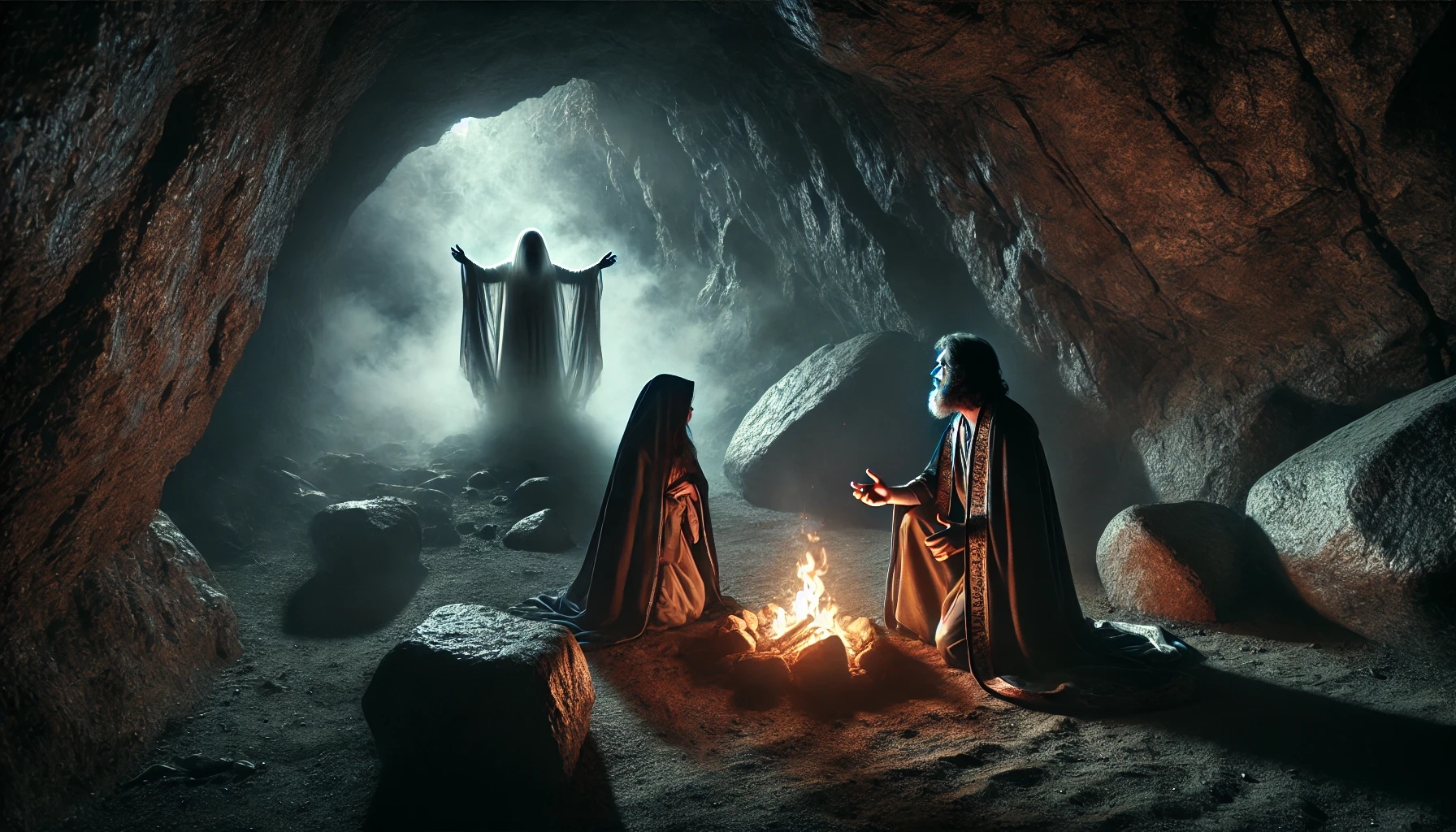
During the night he leaves the camp in disguise, accompanied only by two servants. The king of Israel moves like a shadow across the plain. His destination is a house in Endor—the hiding place of a woman who summons the dead.
The image could hardly be more ironic:
The man who once expelled all mediums from the land now seeks their help himself.
Inside the dark hut a weak fire flickers. The woman murmurs her incantations. Soon a figure appears—seemingly Samuel.
But it is not the prophet of God.
It is a deception of the enemy, meant to drive Saul completely into despair.
The message is cruel:
Saul will die. Israel will fall. And the kingdom will belong to David.
Saul collapses.
The night of Endor is the night when his hope finally dies.
⋯⋯⋯⋯⋯⋯⋯⋯⋯⋯◆⋯⋯⋯⋯⋯⋯⋯⋯⋯⋯
🧺 Summary
Because God is silent, Saul seeks help from a medium. Through a satanic deception he receives a dark prophecy about his defeat and death.
⋯⋯⋯⋯⋯⋯⋯⋯⋯⋯◆⋯⋯⋯⋯⋯⋯⋯⋯⋯⋯
🔦 Message for us today
Whoever deliberately distances themselves from God’s voice will ultimately find only false voices.
⋯⋯⋯⋯⋯⋯⋯⋯⋯⋯◆⋯⋯⋯⋯⋯⋯⋯⋯⋯⋯
📝 Reflection
Do I truly seek God for forgiveness—or only when I need a solution to my problems?
