📅 8 December 2025
🛡️ Daniel – Strong in Faith. Faithful in the Fire
Devotions from the life of a young man of conviction
👑 9. Humble Power – How Daniel Handled Influence the Right Way
Why spiritual maturity is more important than position
📖 Daily Verse
“Then the king set him over the whole kingdom … But Daniel remained in service until the first year of King Cyrus.”
– Daniel 2:48 + 1:21
────────────────🛡️────────────────
✨ Introduction: Power reveals character
Power does not automatically change people – it exposes what was already inside them.
Some flourish, others puff out their chest and lose themselves in honor and recognition. Others remain quiet, even when they could suddenly be loud. Daniel belonged to the last group.
He had position – but remained a servant.
He had influence – but never sought applause.
He was known – but knew to whom the honor belongs.
────────────────🛡️────────────────
📜 Devotion – Responsibility without pride
The story of Daniel is not only one of miracles, but of a life that remained steady for decades. While kingdoms changed, his character stayed the same. He was taken to Babylon as a young man, a captive in a world that thought, prayed, and lived differently.
Yet while many his age tried to build a career, Daniel did not chase opportunities, he chose faithfulness.
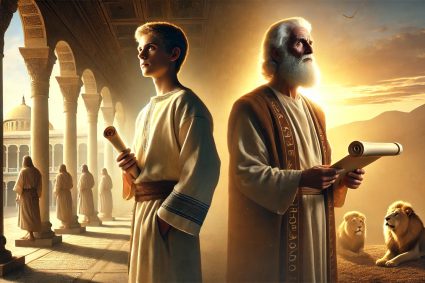
When Nebuchadnezzar had his dream, the wisest men of the court had already failed. No one could explain what the king had seen. Then Daniel stepped forward, but he did not claim to be smarter than everyone else. His first words did not aim to show his knowledge but God’s greatness:
“Not I can interpret this. There is a God in heaven.”
He said this to a man who held life and death in his hands. He spoke truth, not diplomacy. And when he finally explained the dream, Nebuchadnezzar recognized that Daniel was different.
The king wanted to reward him. Gold, robes, titles, power. Daniel could easily have gotten used to it. Everything was within reach: the highest office in the kingdom, respect among officials, influence over decisions.
But Daniel remained the same.
He knew: position changes nothing if heart and attitude are stable.
What stands out: Daniel remained in service under four different kings – Nebuchadnezzar, Belshazzar, Darius, and Cyrus.
That means:
Not his connections, not his achievements, and certainly not his tricks kept him at the top – but his credibility.
Other officials came and went, disappeared in scandals, power struggles, conspiracies. Only Daniel remained. Why?
Because Daniel did not see influence as a stage, but as responsibility.
He did not want to rule – he wanted to serve.
He governed provinces, managed finances, advised politically, yet all with a rare attitude: humility before God – not pride before people.
You can almost hear it when you read the story:
He was not loud, not harsh, not arrogant. He remained balanced. Clear. Incorruptible.
Perhaps the most important thing: Daniel did not simply shape decisions – God shaped Daniel.
What was entrusted to him, he never treated as his own.
His success was not a platform for himself but a window through which God’s truth could shine into a pagan empire.
Even after years at court, when others might have grown weary or bitter, Daniel kept moving, stayed alert, remained faithful – until the first year of King Cyrus. Decades in service without self-interest. No retreat, no looking back in frustration.
When Babylon fell and Persia rose, Daniel stayed because his foundation was not a system, but his God.
────────────────🛡️────────────────
💭 What does this mean for us?
Many want position, but few want character.
Many dream of influence, but few want serving responsibility.
Daniel shows: The value of a person is not measured by what they achieve, but by how they achieve it.
When God gives you responsibility – in family, work, church, or society – He does not ask for your volume, but for your faithfulness.
────────────────🛡️────────────────
💎 What we can learn from Daniel
-
Influence is not permission to promote yourself.
-
The right attitude is more important than the right position.
-
Faithfulness carries us through changing circumstances.
-
God entrusts responsibility to those who give Him the glory.
────────────────🛡️────────────────
🪜 Practical steps for today
-
Examine where you have influence today – and how you use it.
-
Ask yourself: “Do I want recognition or faithfulness?”
-
Offer God your abilities – not your agenda.
-
Choose a serving style over control.
────────────────🛡️────────────────
❓ Questions to reflect on
-
Does responsibility change me – or simply reveal who I already am?
-
Where could humility today be stronger than my need for recognition?
-
What attitude do I desire in the position where God places me?
────────────────🛡️────────────────
🙏 Prayer
Lord,
I thank You for everything You entrust to me – big or small.
Protect my heart from becoming proud.
Teach me to understand influence as service, not as a stage.
Give me humility before people and reverence before You.
Make me like Daniel: faithful, clear, humble, and true.
Amen.
────────────────🛡️────────────────
🔑 Key thought of the day
True greatness is not shown by how high you rise –
but by how low you remain before God.
────────────────🛡️────────────────
LumenCorde | Daily light for a living soul.