




📅 27 February 2026
📚 BELIEVE HIS PROPHETS
📖 Daily Bible Reading
🏚️ 2 Kings 4 – God’s Help When Everything Seems Over
✨ When little is enough because God is enough
🌐 Read online here
📍 Introduction
2 Kings 4 shows a day in life that feels almost unbearable: debt, fear for children, a dead child, famine in the land. And yet it is precisely here that we see how God works: quietly, concretely, and full of compassion. Not always spectacularly loud — but life-changing.
⋯⋯⋯⋯⋯⋯⋯⋯⋯⋯◆⋯⋯⋯⋯⋯⋯⋯⋯⋯⋯
🧵 Commentary
A woman stands before Elisha. Her voice is a cry, not a polite report. Her husband is dead. He was one of the sons of the prophets — God-fearing, but poor. Now the house is empty, and the creditor is coming. He does not only want money. He wants her two sons as servants. For this mother it means: she is about to lose everything she has left.
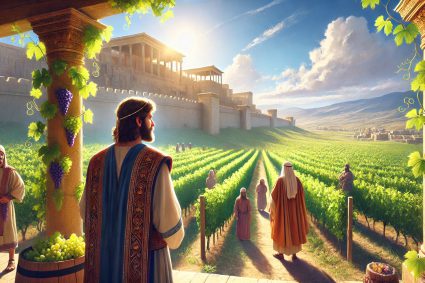
Elisha looks at her and does not first ask for details, but for what remains: “What do you have in the house?” She answers, “Nothing… except a jar of oil.” It sounds like almost nothing — but it is something. And with God, “something” is often the beginning.
Elisha gives a strange instruction: She is to borrow empty vessels from all her neighbors — not a few. Then she is to shut the door, be alone with her sons, and pour the oil from the small jar into the vessels. No stage. No spectators. Just obedience in secret.
The sons bring vessel after vessel. The mother pours — and the oil keeps flowing. It does not stop. The more empty vessels there are, the more is filled. Only when there is no vessel left does the oil stop. Not because God could not give more, but because nothing more was ready to receive it.
Breathless, caught between amazement and trembling, she runs to Elisha. And he speaks very practically: “Sell the oil. Pay your debts. Live on the rest.” The miracle does not end in emotion — it becomes daily salvation.
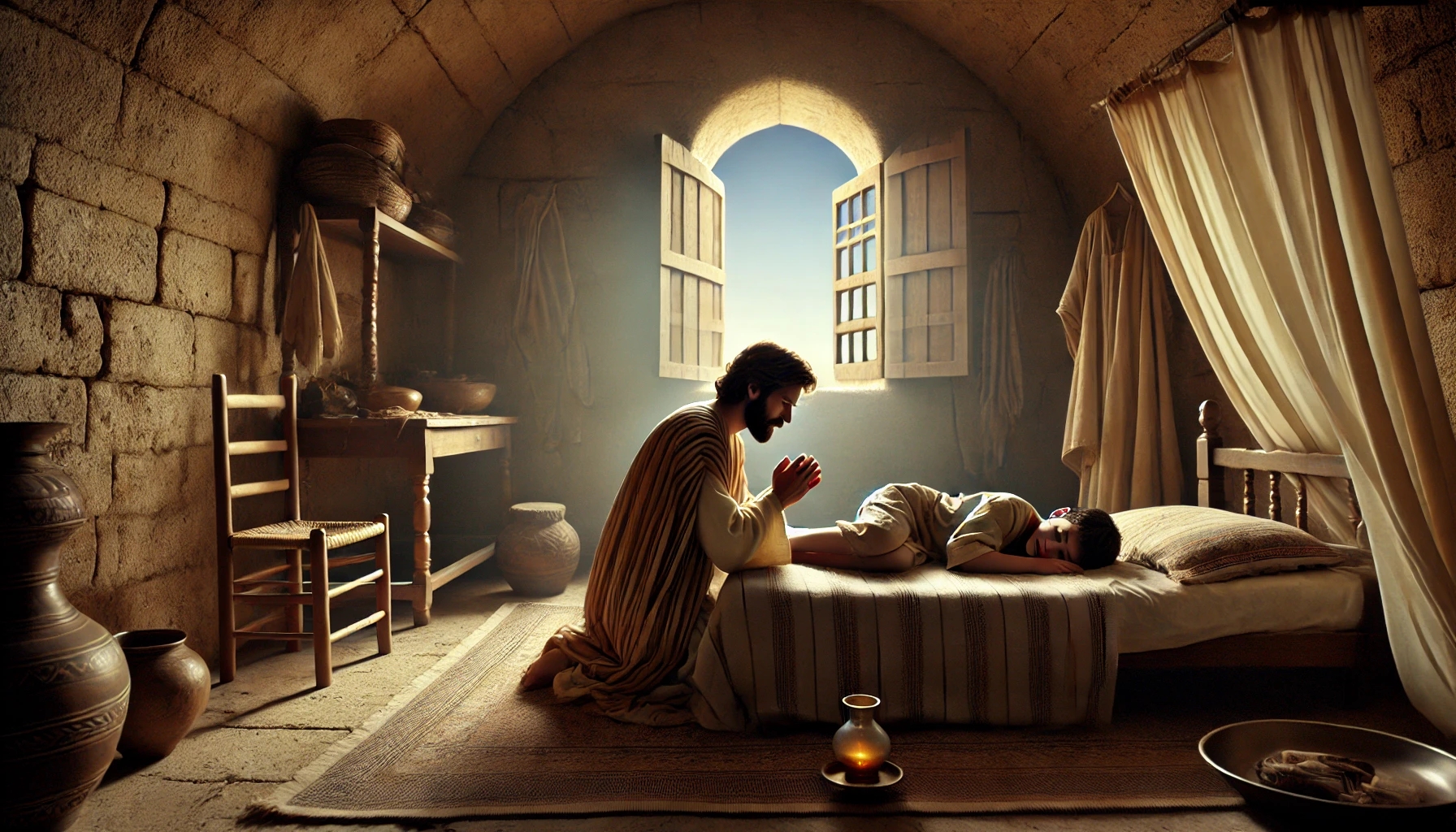
Then the scene changes. Elisha comes to Shunem. There lives a wealthy woman. She recognizes: This is a holy man of God. So she does something simple and great: she makes room. A small upper chamber. A bed, a table, a chair, a lamp. No luxury — but a serving heart.
Elisha wants to thank her. “What can I do for you?” She asks nothing from the king, nothing from the commander. “I dwell among my own people,” she says. But Gehazi notices something: She has no son — and her husband is old.
Elisha speaks a promise: In a year she will hold a son in her arms. She almost recoils: “Do not deceive me!” Hope can hurt when one has waited long without it.
But the word is fulfilled. A child is born. Life enters the house.
Years later the unthinkable happens. The boy goes to his father in the field, complains of terrible pain in his head, and dies at noon in his mother’s lap.
Now watch this woman. She does not collapse in the street. She does not scream in public. She carries the child to the upper room of the man of God, lays him on the bed, shuts the door, and sets out. She runs with her pain to the place where she has learned: God can help.
She rides to Mount Carmel. When Elisha sees her, he senses deep distress. Gehazi tries to push her away — but Elisha says, “Let her alone.” Her soul is in anguish.
Her words pierce like an arrow: “Did I ask for a son? Did I not say, Do not deceive me?” This is not unbelief. This is honest wrestling.
Elisha first sends Gehazi with his staff. Nothing happens. The boy does not awaken. It becomes clear: this is not about technique or objects — it is about God’s intervention.
Elisha himself enters, shuts the door, and prays. He stretches himself over the child. The body grows warm. The boy sneezes seven times — and opens his eyes. Life returns.
Elisha calls the mother: “Take up your son.” She falls at his feet, takes her child — and goes out. No long speeches. Only gratitude deeper than words.
And as if that were not enough, the chapter continues with famine in Gilgal. A pot with “death in the pot” — poisonous food. Elisha has flour brought. The food becomes harmless.
Then twenty barley loaves are brought for a hundred men. It is too little. Yet Elisha says, “Give it to the people to eat.” They eat — and there is some left over.
The same pattern again: God makes little enough when it is given to Him.
This chapter is like a chain of dark moments into which God sets light: debt, grief, death, hunger — and again and again provision, life, future.
⋯⋯⋯⋯⋯⋯⋯⋯⋯⋯◆⋯⋯⋯⋯⋯⋯⋯⋯⋯⋯
🧺 Summary
-
God multiplies the widow’s oil and saves her family from bondage.
-
Elisha promises the Shunammite woman a son — and God fulfills it.
-
The child dies, but God gives new life through Elisha.
-
In famine, God makes poisonous food safe and feeds many with little bread — with abundance.
⋯⋯⋯⋯⋯⋯⋯⋯⋯⋯◆⋯⋯⋯⋯⋯⋯⋯⋯⋯⋯
🔦 Message for us today
-
God does not first ask what you lack, but what you still have. A small “jar of oil” can become a beginning.
-
Empty vessels matter. Whoever makes room — in the heart, in daily life, in faith — will see that God can fill it.
-
Faith may be honest. The Shunammite woman shows that we may come to God with pain, questions, and disappointment.
-
God’s help is often practical. Debts are paid, hunger is satisfied, life is preserved.
-
When God gives, there is something left over. His provision is not scarce.
⋯⋯⋯⋯⋯⋯⋯⋯⋯⋯◆⋯⋯⋯⋯⋯⋯⋯⋯⋯⋯
📝 Reflection
-
What “small vessel” are you still holding in your hand — something you think is too little?
-
Where could you prepare “empty vessels”: time, trust, prayer, steps of obedience?
-
Are you more like the widow (acute need) or the Shunammite woman (quiet faithfulness)? What might God be saying to you through that?
-
Where do you need a miracle of provision — and where a miracle of life (new hope, a new heart, new courage)?
════════ ✶ ✶ ════════
📆 22 – 28 February 2026
📚 BELIEVE HIS PROPHETS
📖 Weekly Reading from the Spirit of Prophecy
📘 Ellen White | Patriarchs and Prophets
🔥 Chapter 64 : David a Fugitive
✨ Hunted by the king, sustained by God
🌐 Read online here
📘 Blog 6: ⚖️ Saul’s Cruel Downfall
When one abandons God’s guidance
📍 Introduction
The king who once hesitated to judge Amalek now orders priests to be killed. Saul’s heart has become hardened.
⋯⋯⋯⋯⋯⋯⋯⋯⋯⋯◆⋯⋯⋯⋯⋯⋯⋯⋯⋯⋯
🧵 Commentary
Doeg reports. Saul immediately believes the worst.
Eighty-five priests die. Men of God. Then the entire city of Nob — women, children, animals.
A horrifying act.
Saul, once called by God, now acts under satanic influence.
How did it come to this?
Not through one single great mistake — but through continued refusal to submit to God’s will.
Whoever hardens his heart loses moral sensitivity.
Israel was shaken. Their chosen king acted worse than pagan rulers.
⋯⋯⋯⋯⋯⋯⋯⋯⋯⋯◆⋯⋯⋯⋯⋯⋯⋯⋯⋯⋯
🧺 Summary
Saul’s persistent disobedience led to moral decline and a cruel deed.
⋯⋯⋯⋯⋯⋯⋯⋯⋯⋯◆⋯⋯⋯⋯⋯⋯⋯⋯⋯⋯
🔦 Message for us today
A heart that withdraws from God’s correction will, over time, become insensitive to guilt.
⋯⋯⋯⋯⋯⋯⋯⋯⋯⋯◆⋯⋯⋯⋯⋯⋯⋯⋯⋯⋯
📝 Reflection
Where might I be ignoring God’s quiet warnings?
