


📅 25 February 2026
📚 BELIEVE HIS PROPHETS
📖 Daily Bible Reading
🏚️ 2 Kings 2 – The Passing of the Mantle – Elijah Goes, Elisha Takes Over
✨ A farewell full of miracles and the beginning of a new spiritual calling.
🌐 Read online here
📍 Introduction
The second chapter of 2 Kings is one of the most powerful stories in the Old Testament. It describes not only the farewell of the prophet Elijah, but also the transfer of his mission to Elisha. Between miracles, the pain of separation, and a new calling, the narrative shows that God’s work does not end when a significant person departs—it continues through those who are willing to follow.
⋯⋯⋯⋯⋯⋯⋯⋯⋯⋯◆⋯⋯⋯⋯⋯⋯⋯⋯⋯⋯
🧵 Commentary
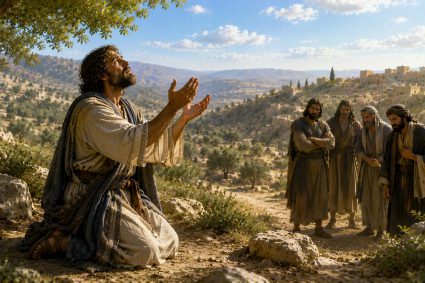
The story begins with a noticeable tension. Elijah knows that his time on earth is coming to an end, and he sets out from Gilgal to Bethel. Repeatedly, he urges Elisha to stay behind. Yet each time Elisha responds firmly that he will not leave his master. This repeated dialogue feels like a test of faithfulness—and Elisha passes it.
Along the way, they meet groups of prophets who already sense what is about to happen. They whisper to Elisha that his master will be taken from him that day. But Elisha asks them to be silent; the farewell is too personal, too heavy. The journey continues to Jericho and finally to the Jordan. There Elijah takes his mantle, rolls it up, and strikes the water. The river parts, and both cross over on dry ground—a scene that recalls earlier mighty acts of God.
On the other side, Elijah asks Elisha a final question: What shall he do for him before he is taken away? Elisha asks for a double portion of his master’s spirit—not out of ambition, but from a desire to bear the responsibility. Elijah explains that this request is difficult, yet it will be granted if Elisha sees him taken.
Then the unimaginable happens: a chariot of fire with horses of fire appears and separates the two of them. Elijah ascends to heaven in a whirlwind. Elisha cries out in pain and reverence, tears his clothes in two—a sign of deep grief—and picks up Elijah’s fallen mantle. The mantle symbolizes more than clothing; it represents calling, authority, and God’s presence.
When Elisha returns to the Jordan, he strikes the water with the mantle and asks, “Where is the Lord, the God of Elijah?” Again, the water parts. The sons of the prophets immediately recognize it: the spirit of Elijah now rests on Elisha.
The following events confirm his new role. In Jericho, Elisha heals the bad water of the city, restoring life. Shortly afterward, however, a serious scene follows: youths mock him, and God’s judgment falls upon them. This episode shows that the prophetic calling includes not only comfort but also responsibility and holiness.
The chapter ends with Elisha beginning his path as the new prophet—not as a copy of Elijah, but as a successor called by God.
⋯⋯⋯⋯⋯⋯⋯⋯⋯⋯◆⋯⋯⋯⋯⋯⋯⋯⋯⋯⋯
🧺 Summary
2 Kings 2 tells of Elijah’s farewell and his being taken up into heaven. Elisha remains faithfully at his side, receives the mantle, and with it the prophetic mission. Through the parting of the Jordan and further miracles, it is confirmed that God’s Spirit now rests upon Elisha.
⋯⋯⋯⋯⋯⋯⋯⋯⋯⋯◆⋯⋯⋯⋯⋯⋯⋯⋯⋯⋯
🔦 Message for us today
This chapter reminds us that transitions and farewells are part of life. God works across generations—when one door closes, another often opens. Faithfulness in small things prepares us for greater responsibility. Elisha is not called through spectacular words, but through perseverance and closeness to his teacher.
The story also shows that calling does not mean fame, but responsibility, humility, and trust in God’s power.
⋯⋯⋯⋯⋯⋯⋯⋯⋯⋯◆⋯⋯⋯⋯⋯⋯⋯⋯⋯⋯
📝 Reflection
What “mantles”—tasks or responsibilities—might God be placing into my life right now?
Am I ready to remain faithful, even when a familiar season comes to an end?
════════ ✶ ✶ ════════
📆 22 – 28 February 2026
📚 BELIEVE HIS PROPHETS
📖 Weekly Reading from the Spirit of Prophecy
📘 Ellen White | Patriarchs and Prophets
🔥 Chapter 64 : David a Fugitive
✨ Hunted by the king, sustained by God
🌐 Read online here
📘 Blog 4: 😔 When Faith Wavers
Nob, Gath, and human weakness
📍 Introduction
Even heroes of faith stumble. David’s flight to Nob and Gath reveals his human side.
⋯⋯⋯⋯⋯⋯⋯⋯⋯⋯◆⋯⋯⋯⋯⋯⋯⋯⋯⋯⋯
🧵 Commentary
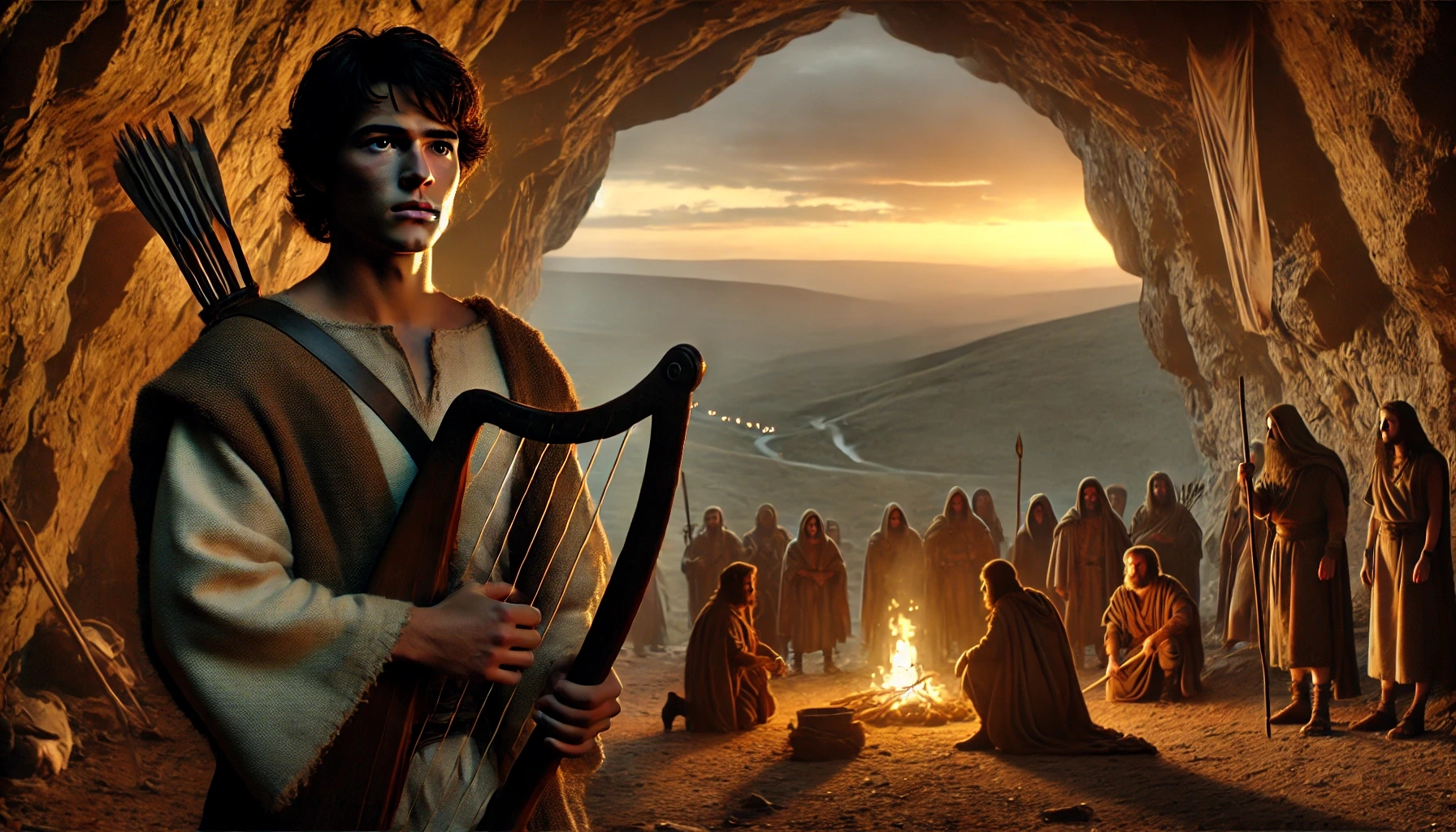
In Nob, David resorts to a lie. Out of fear. Out of desperation. He deceives Ahimelech.
How tragic: his untruth later leads to the death of many priests.
Then Gath—of all places, the hometown of Goliath! David pretends to be insane in order to survive.
Where is the brave hero who once faced the giant?
The answer is simple: he is human.
Persecution, isolation, and constant stress wear down faith. David sees traitors everywhere. He feels alone.
Yet God does not reject him. Instead, this season teaches him dependence. His psalms are born out of this distress—deep, honest, filled with repentance and trust.
⋯⋯⋯⋯⋯⋯⋯⋯⋯⋯◆⋯⋯⋯⋯⋯⋯⋯⋯⋯⋯
🧺 Summary
David fails—but God remains faithful and shapes him precisely through these experiences.
⋯⋯⋯⋯⋯⋯⋯⋯⋯⋯◆⋯⋯⋯⋯⋯⋯⋯⋯⋯⋯
🔦 Message for us today
God does not rewrite our story because of our mistakes—but through them.
⋯⋯⋯⋯⋯⋯⋯⋯⋯⋯◆⋯⋯⋯⋯⋯⋯⋯⋯⋯⋯
📝 Reflection
What might God be teaching me right now through my weakness?