📅 21 February 2026
📚 BELIEVE HIS PROPHETS
📖 Daily Bible Reading
🏛️ 1 Kings 20 – God’s Victory and Human Weakness
✨ Between Grace and Disobedience
🌐 Read online here
📍 Introduction
Chapter 20 of 1 Kings brings us into a time of political threat, spiritual confusion, and divine patience. King Ahab of Israel faces an overwhelming enemy: Ben-Hadad, king of Aram (Syria). Militarily, Israel seems inferior. Yet in the midst of fear, arrogance, and power struggles, God acts—not because of Ahab’s faithfulness, but to reveal His own name.
This chapter clearly shows: God grants victory, but human beings remain responsible for how they handle His grace.
⋯⋯⋯⋯⋯⋯⋯⋯⋯⋯◆⋯⋯⋯⋯⋯⋯⋯⋯⋯⋯
🧵 Commentary
Ben-Hadad advances against Samaria with a massive coalition of 32 kings. His message to Ahab is bold and humiliating: everything belongs to him—silver, gold, wives, children. Ahab initially responds with shocking submission. He accepts the demands without resistance. But when Ben-Hadad goes further and announces total search and plunder, Ahab realizes: this is no longer about tribute—it is about complete humiliation.
The elders of Israel advise resistance. Ahab refuses the second demand. Ben-Hadad responds with arrogance and mockery. He is so confident of victory that he issues commands while drinking in his tent.
And here God intervenes.
A prophet comes to Ahab—remarkable, since Ahab is not a faithful king. Yet God speaks to him. The Lord announces that He Himself will deliver the vast Syrian army into Ahab’s hand, “so that you will know that I am the Lord.”
Not elite warriors, but 232 young officers begin the attack. Only 7,000 men follow them—a tiny force compared to the enormous Syrian army. While Ben-Hadad is drunk, Israel attacks. God grants a surprising victory. The Syrians flee; Ben-Hadad barely escapes.
But God knows: the conflict is not over. A prophet warns Ahab that another attack will come the following year.
The Syrian advisors misinterpret their defeat. They claim Israel’s God is a “god of the hills”—that is why Israel won in the mountainous terrain. On the plains, they assume, Syria will prevail. They reduce God to a local deity.
Again God speaks: precisely because the Syrians have limited Him, He will act once more. Israel’s strength is not decisive—God’s honor is.
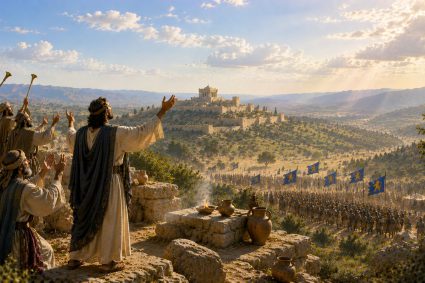
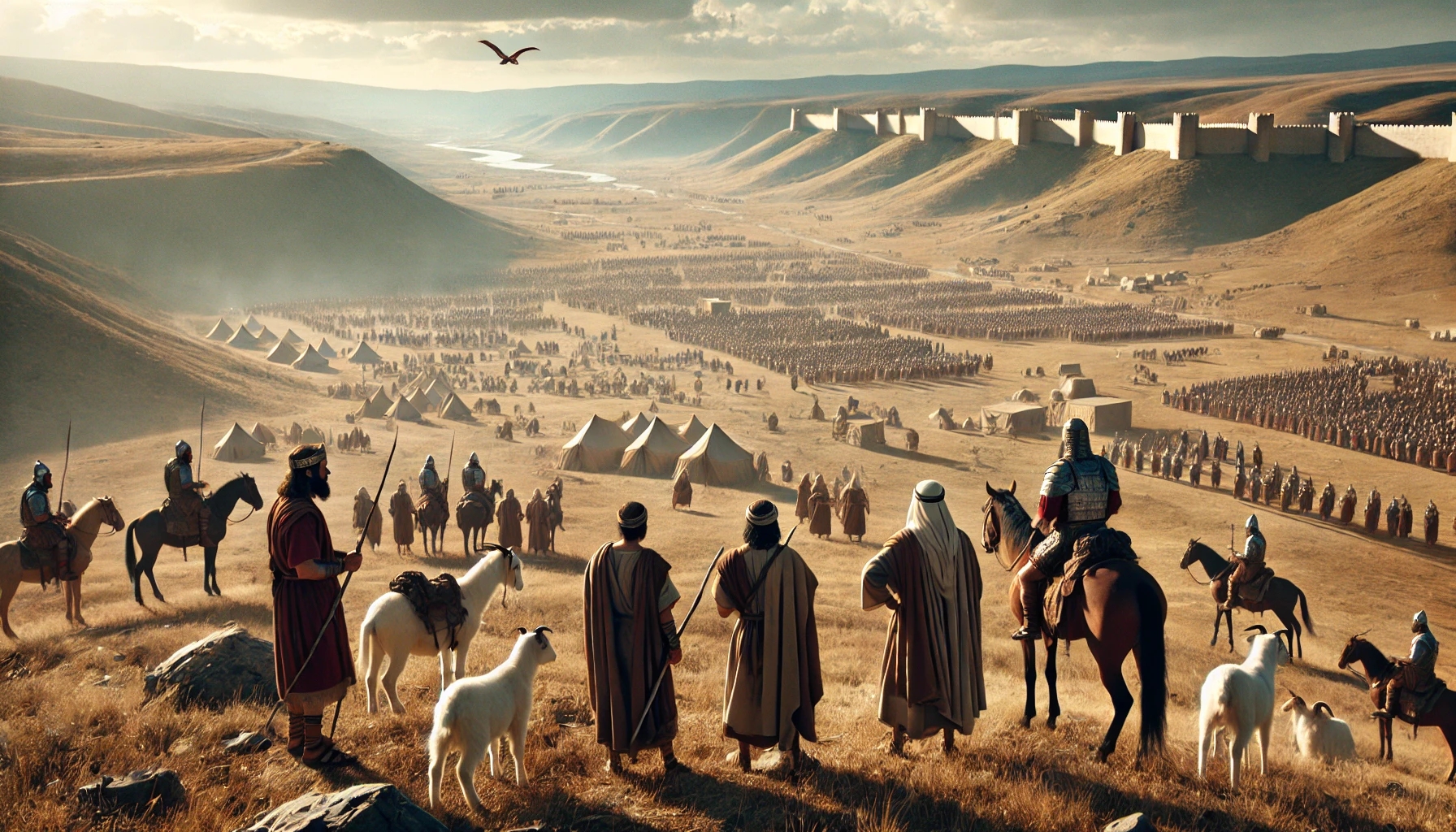
Again Israel stands hopelessly outnumbered—“like two small flocks of goats” facing an army that fills the land. Yet God grants an overwhelming victory: 100,000 soldiers fall in one day. Another 27,000 die when a wall collapses.
Ben-Hadad flees. Now comes the decisive moment.
His servants know that Israel’s kings are considered merciful. Wearing sackcloth and ropes, they plead for mercy. Ahab calls Ben-Hadad “my brother.” Instead of executing God’s judgment, he makes a covenant with him and lets him go.
Here Ahab’s tragic mistake becomes clear: he confuses divine mercy with self-willed leniency. He spares the man whom God had devoted to destruction.
A prophet then stages a symbolic action. Through a parable, he confronts Ahab with his failure. Ahab pronounces the judgment himself—only to realize too late that it applies to him.
God’s word is clear: because Ahab has released the “man under the ban,” his own life will be required in exchange.
The chapter ends darkly: Ahab returns to Samaria sullen and angry. No gratitude, no humility—only resentment over the divine verdict.
⋯⋯⋯⋯⋯⋯⋯⋯⋯⋯◆⋯⋯⋯⋯⋯⋯⋯⋯⋯⋯
🧺 Summary
-
God grants Israel two supernatural victories despite Ahab’s unfaithfulness.
-
The Syrians underestimate God and limit Him to human categories.
-
Ahab experiences God’s power but fails in obedience.
-
False mercy becomes the cause of future judgment.
-
God’s grace does not cancel human responsibility.
⋯⋯⋯⋯⋯⋯⋯⋯⋯⋯◆⋯⋯⋯⋯⋯⋯⋯⋯⋯⋯
🔦 Message for us today
-
God often acts despite our imperfection.
-
Victories are not proof of spiritual maturity.
-
God cannot be limited by human concepts.
-
Grace obligates obedience.
-
False compromises can have long-term consequences.
We can experience God’s help and still fail at a decisive point. Spiritual experiences never replace consistent obedience.
⋯⋯⋯⋯⋯⋯⋯⋯⋯⋯◆⋯⋯⋯⋯⋯⋯⋯⋯⋯⋯
📝 Reflection
Where have I experienced God’s help—
but then acted in my own wisdom afterward?
Are there areas where I am letting “Ben-Hadad” go,
even though God has already made His will clear?
God’s victory is a gift.
But how we handle that gift reveals our heart.
════════ ✶ ✶ ════════
📆 18 – 21 February 2026
📚 BELIEVE HIS PROPHETS
📖 Weekly Reading from the Spirit of Prophecy
📘 Ellen White | Patriarchs and Prophets
🔥 Chapter 63 : David and Goliath
✨ Faith That Brings Down Giants – Courage Born from Trust in God
🌐 Read online here
📘 Blog 4: 👑 From Shepherd to Bearer of Hope
How one victory changed a nation
📍 Introduction
The fall of Goliath was more than a personal triumph. It was a turning point for Israel.
⋯⋯⋯⋯⋯⋯⋯⋯⋯⋯◆⋯⋯⋯⋯⋯⋯⋯⋯⋯⋯
🧵 Commentary
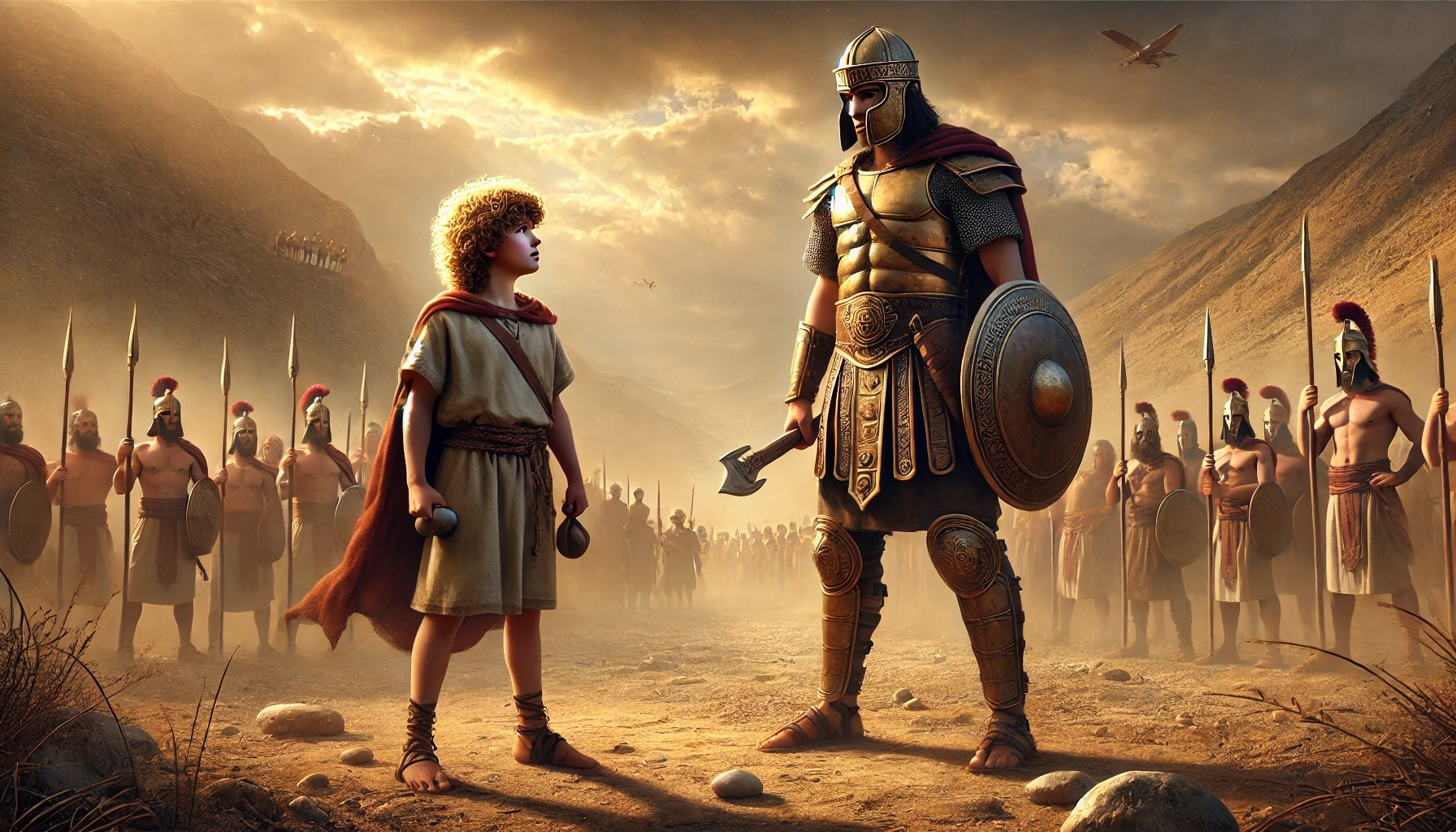
When the giant fell, there was a moment of silence. Then jubilation broke out. Israel regained courage. The Philistines fled.
David had not only defeated an opponent—he had restored the people’s faith.
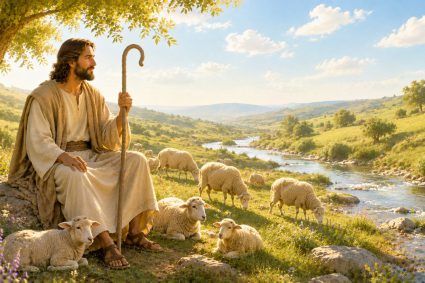
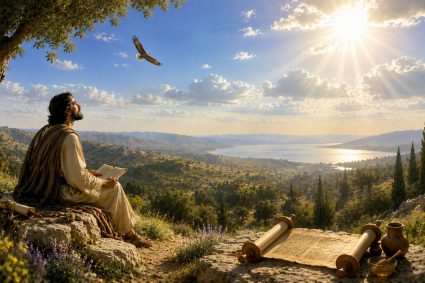
But the victory did not begin in the valley. It began on lonely hills, among sheep, in the hidden places. There David learned trust. There he learned responsibility. There he learned to know God.
The visible triumph was only the fruit of a long, quiet preparation.
⋯⋯⋯⋯⋯⋯⋯⋯⋯⋯◆⋯⋯⋯⋯⋯⋯⋯⋯⋯⋯
🧺 Summary
Great victories grow out of small acts of faithfulness.
God uses prepared hearts.
⋯⋯⋯⋯⋯⋯⋯⋯⋯⋯◆⋯⋯⋯⋯⋯⋯⋯⋯⋯⋯
🔦 Message for us today
Perhaps you are still standing in the “shepherd’s field.” Unnoticed. Overlooked. But God sees you—and is preparing you.
⋯⋯⋯⋯⋯⋯⋯⋯⋯⋯◆⋯⋯⋯⋯⋯⋯⋯⋯⋯⋯
📝 Reflection
Are you willing to be faithful in the small things so that God can use you in greater ones?