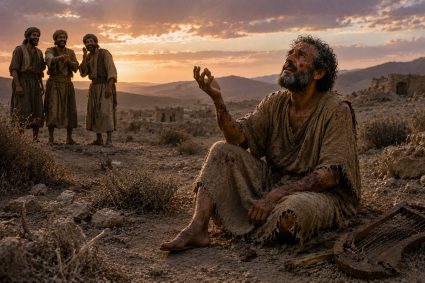
1 Kings 18 takes us into one of the most dramatic scenes in the Old Testament. Three years of drought have gripped the land. Hunger, fear, and spiritual confusion shape Israel. King Ahab rules, Jezebel persecutes the prophets of the Lord, and the people waver between the living God and the worship of Baal.
Right in the middle of this crisis, Elijah appears again. What follows is not only a power struggle between prophets—it is a decisive battle for the hearts of the people.
⋯⋯⋯⋯⋯⋯⋯⋯⋯⋯◆⋯⋯⋯⋯⋯⋯⋯⋯⋯⋯
🧵 Commentary
The drought had drained the land. Springs dried up, fields withered, and even the king desperately searched for grass to keep his animals alive. While Ahab looked for political solutions, God was working spiritually behind the scenes. Obadiah, Ahab’s palace administrator, was a man who greatly feared the Lord. Secretly, he had hidden and provided for one hundred prophets. In the middle of a godless system, he lived his faith quietly—but courageously.
When Elijah suddenly stands before Obadiah, the danger becomes clear. Ahab has been searching for Elijah in every nation. Obadiah fears for his life. But Elijah remains calm: “As surely as the LORD Almighty lives … I will surely present myself to him today.” This is not human boldness, but the certainty of a divine calling.
The meeting between Ahab and Elijah exposes the real issue. Ahab calls Elijah “the troubler of Israel.” Elijah rejects the accusation: it is not the prophet who troubles Israel, but disobedience to God. Truth is often experienced as disturbance when it exposes a false peace.
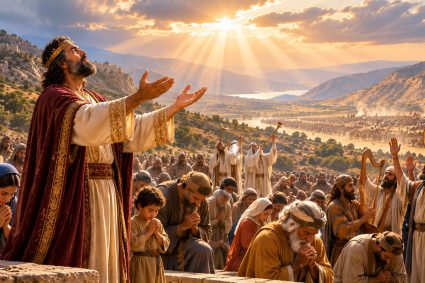
On Mount Carmel the people gather. Four hundred and fifty prophets of Baal stand against one man of God. Yet the real question is not aimed at the prophets, but at the people:
“How long will you waver between two opinions?”
It pictures a person divided within, limping between two loyalties.
God’s verdict is simple: two offerings, no fire. The God who answers with fire is the true God.
The prophets of Baal begin. For hours they call, dance, shout, and cut themselves. Silence remains. No voice. No answer. No sign. The man-made god stays silent.
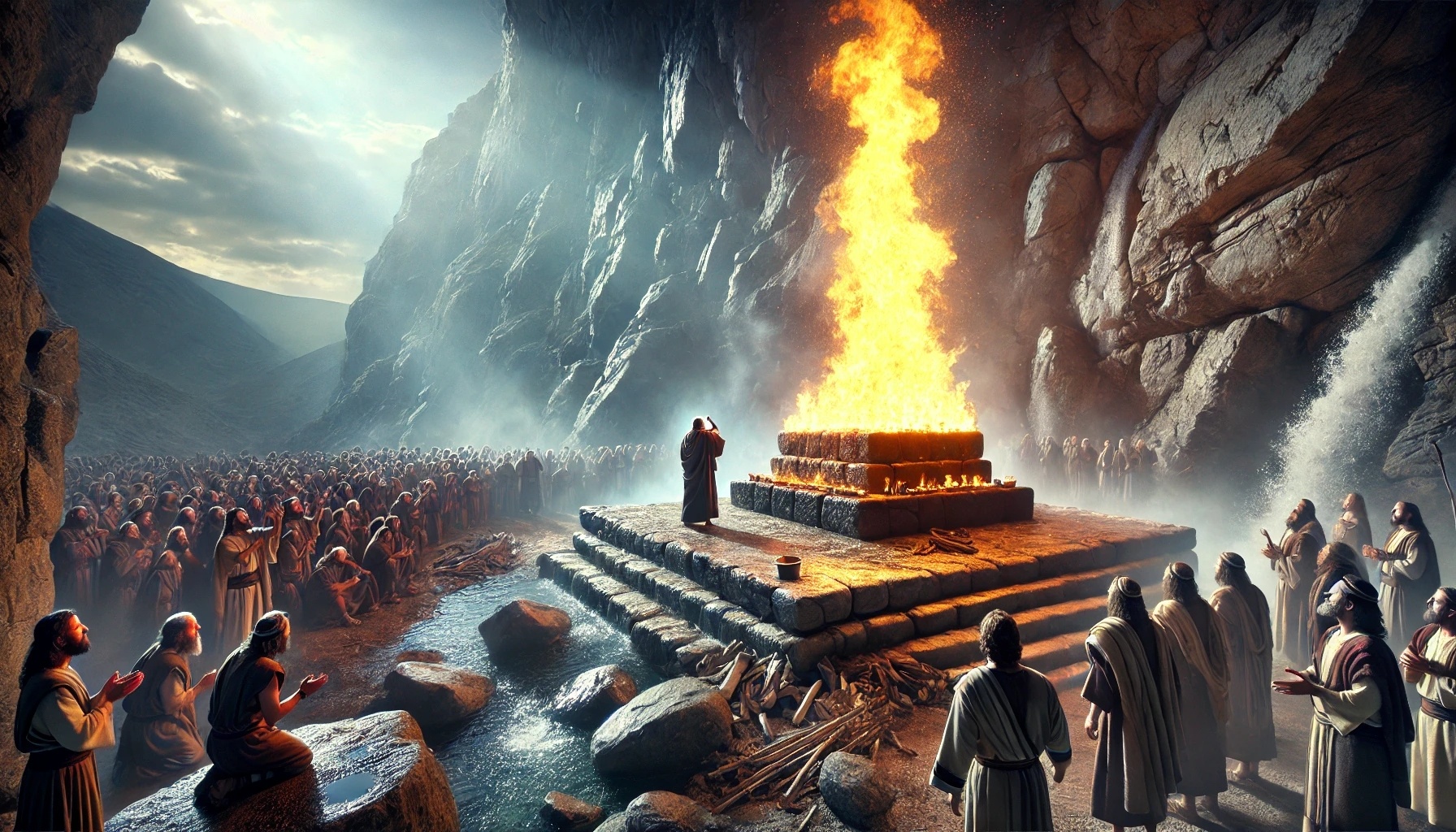
Elijah, however, first rebuilds the LORD’s broken altar. Twelve stones— a sign of Israel’s unity under God’s covenant. Before fire falls, the altar is restored. Before God answers, the foundation is put back in place.
Then something surprising happens: Elijah has water poured over the offering—not once, but three times. Everything is soaked. Any doubt of manipulation is removed. If fire comes now, it can only be from God.
His prayer is simple. No ecstasy. No drama. Just the request that God would reveal Himself and turn hearts back.
And then the fire falls. It consumes not only the sacrifice, but also the wood, the stones, the soil—and it licks up the water in the trench. It is total, undeniable intervention.
The people fall facedown and cry: “The LORD—He is God!”
At last, the decision becomes visible.
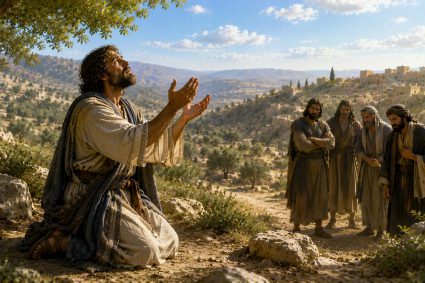
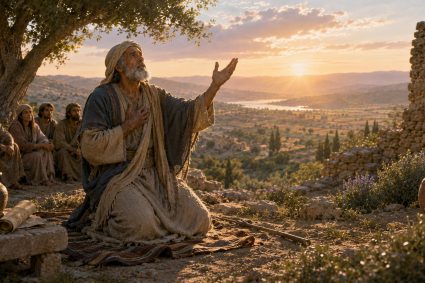
After spiritual cleansing comes rain. Elijah prays on Carmel’s summit. Seven times his servant looks toward the sea. At first, only a small cloud—like a man’s hand—appears. But that small cloud carries the breakthrough. Soon the sky darkens, and the long-awaited rain pours down.
In the end, strengthened by the hand of the Lord, Elijah runs ahead of Ahab’s chariot all the way to Jezreel. The prophet who was hunted now runs before the king—carried by God’s power.
⋯⋯⋯⋯⋯⋯⋯⋯⋯⋯◆⋯⋯⋯⋯⋯⋯⋯⋯⋯⋯
🧺 Summary
-
Israel suffers drought—outwardly and spiritually.
-
Obadiah shows that faithfulness is possible even in secret.
-
Elijah calls for a clear decision between God and Baal.
-
Baal is silent; God answers with fire.
-
After repentance comes rain—new life begins.
⋯⋯⋯⋯⋯⋯⋯⋯⋯⋯◆⋯⋯⋯⋯⋯⋯⋯⋯⋯⋯
🔦 Message for us today
We also live in a time when many people “waver between two sides.” We want God—but also the security, approval, or ideologies of this world. 1 Kings 18 shows: half-heartedness leads to spiritual drought.
God does not force—but He calls us to decide.
The broken altar must be rebuilt first. That means: relationship before action. Surrender before miracles. When the heart is realigned with God, His fire can fall—not always visibly, but truly.
And sometimes breakthrough begins like a small cloud on the horizon. God’s answers often grow quietly before they change everything.
⋯⋯⋯⋯⋯⋯⋯⋯⋯⋯◆⋯⋯⋯⋯⋯⋯⋯⋯⋯⋯
📝 Reflection
Where am I “limping” inside between two opinions?
Are there areas where I’m trying to serve God and something else at the same time?
Maybe today is the day to rebuild the altar—
and allow God to ignite my heart again with His fire. 🔥
════════ ✶ ✶ ════════
📆 18 – 21 February 2026
📚 BELIEVE HIS PROPHETS
📖 Weekly Reading from the Spirit of Prophecy
📘 Ellen White | Patriarchs and Prophets
🔥 Chapter 63 : David and Goliath
✨ Faith That Brings Down Giants – Courage Born from Trust in God
🌐 Read online here
📘 Blog 2 : 🪖 A Shepherd in the Valley of Decision
When a young man values God’s honor more than his own life
📍 Introduction
David does not arrive at the military camp as a soldier—but as a messenger. Yet God has more in mind.
⋯⋯⋯⋯⋯⋯⋯⋯⋯⋯◆⋯⋯⋯⋯⋯⋯⋯⋯⋯⋯
🧵 Commentary
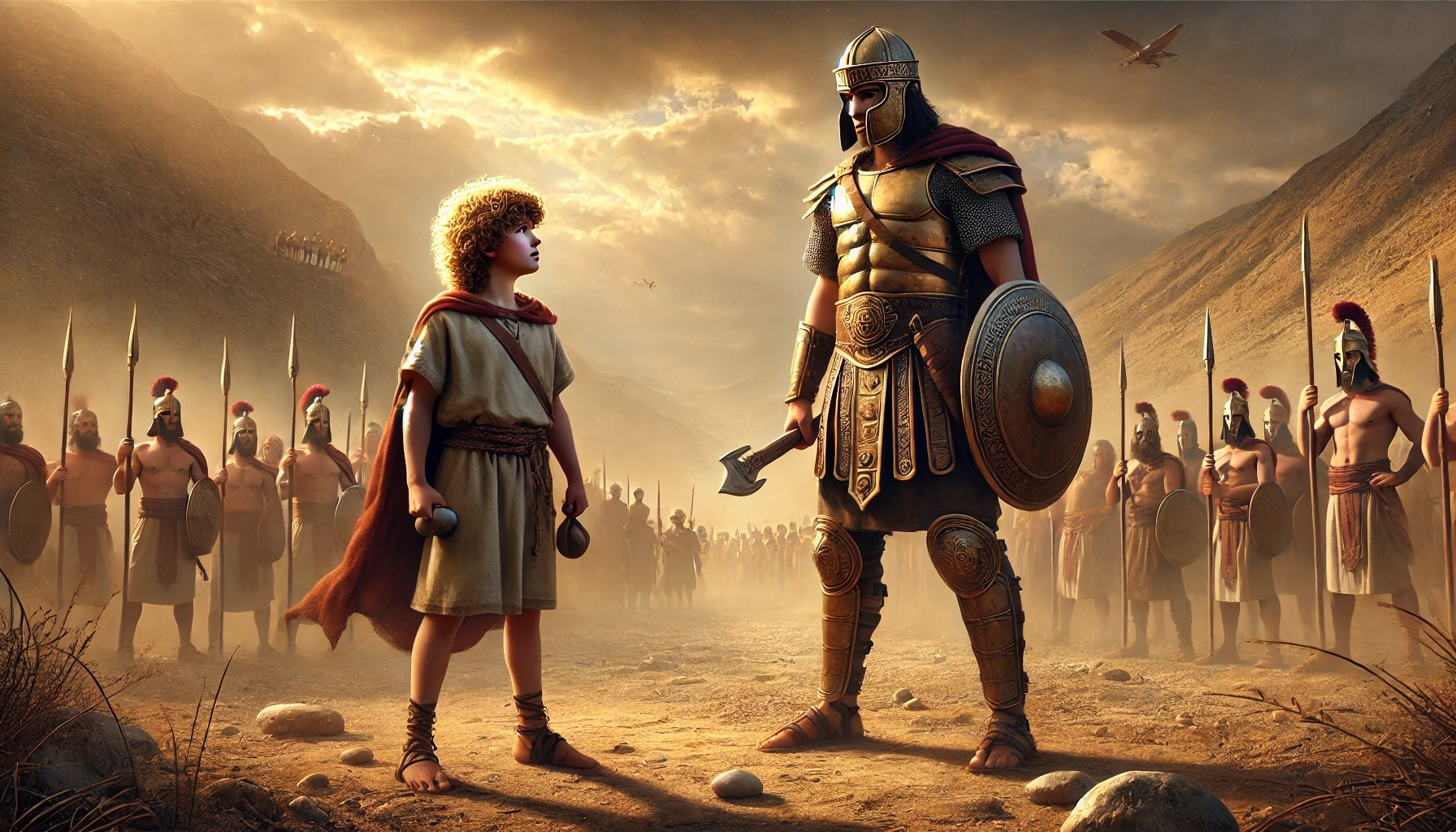
For forty days Goliath had mocked Israel. Morning and evening his voice thundered across the valley. His armor gleamed, his spear was massive. Israel’s courage melted away.
Then David came—with bread for his brothers. He heard the giant’s words, and something in him burned. Not pride. Not a thirst for adventure. But zeal for God’s honor.
His brother Eliab misunderstood him and accused him of arrogance. But David stayed calm. His question was simple: “Who is this Philistine that he should defy the armies of the living God?”
Saul sent for him. The shepherd stood before the king and offered to fight. What carried him was not self-confidence, but memory: God had rescued him from lion and bear.
Saul put his armor on David—heavy, unfamiliar, restrictive. David took it off again. He did not want to fight like someone else. He wanted to fight with what God had placed in his hands.
⋯⋯⋯⋯⋯⋯⋯⋯⋯⋯◆⋯⋯⋯⋯⋯⋯⋯⋯⋯⋯
🧺 Summary
David was not a trained warrior.
But he was an experienced truster.
His courage grew out of earlier experiences with God.
⋯⋯⋯⋯⋯⋯⋯⋯⋯⋯◆⋯⋯⋯⋯⋯⋯⋯⋯⋯⋯
🔦 Message for us today
You don’t have to wear someone else’s armor. God will use you with what He has entrusted to you.
⋯⋯⋯⋯⋯⋯⋯⋯⋯⋯◆⋯⋯⋯⋯⋯⋯⋯⋯⋯⋯
📝 Reflection
Which “armor” are you trying to wear that doesn’t actually fit you?
Do you trust that God can use you with your gifts?