


📅 15 december 2025
📚 BELIEVE HIS PROPHETS
📖 Daily Bible Reading
👑 1 Samuel 7 – Repentance, Renewal, and Victory
✨ Ebenezer – Thus far the Lord has helped us
🌐 Read online here
🔵 Introduction
After the Ark of the Covenant is brought to Kiriath-jearim, outward calm returns—yet inwardly Israel remains restless. Twenty years pass: years of waiting, dissatisfaction, and deep inner emptiness. The people sense that something is wrong. Despite religious forms, the living relationship with God is missing.
During this time, Samuel steps forward with clarity and prophetic authority. He makes it clear: deliverance does not begin with military strength, but with genuine repentance of the heart.
══════════════════════════
🟡 Commentary
The Ark of the Lord rests in the house of Abinadab on the hill, guarded by his son Eleazar. Yet although the holy symbol is back in the land, God’s blessing remains absent. Israel continues outwardly, but inwardly it is divided. Many hearts are still attached to foreign gods—Baal and Ashtoreth.
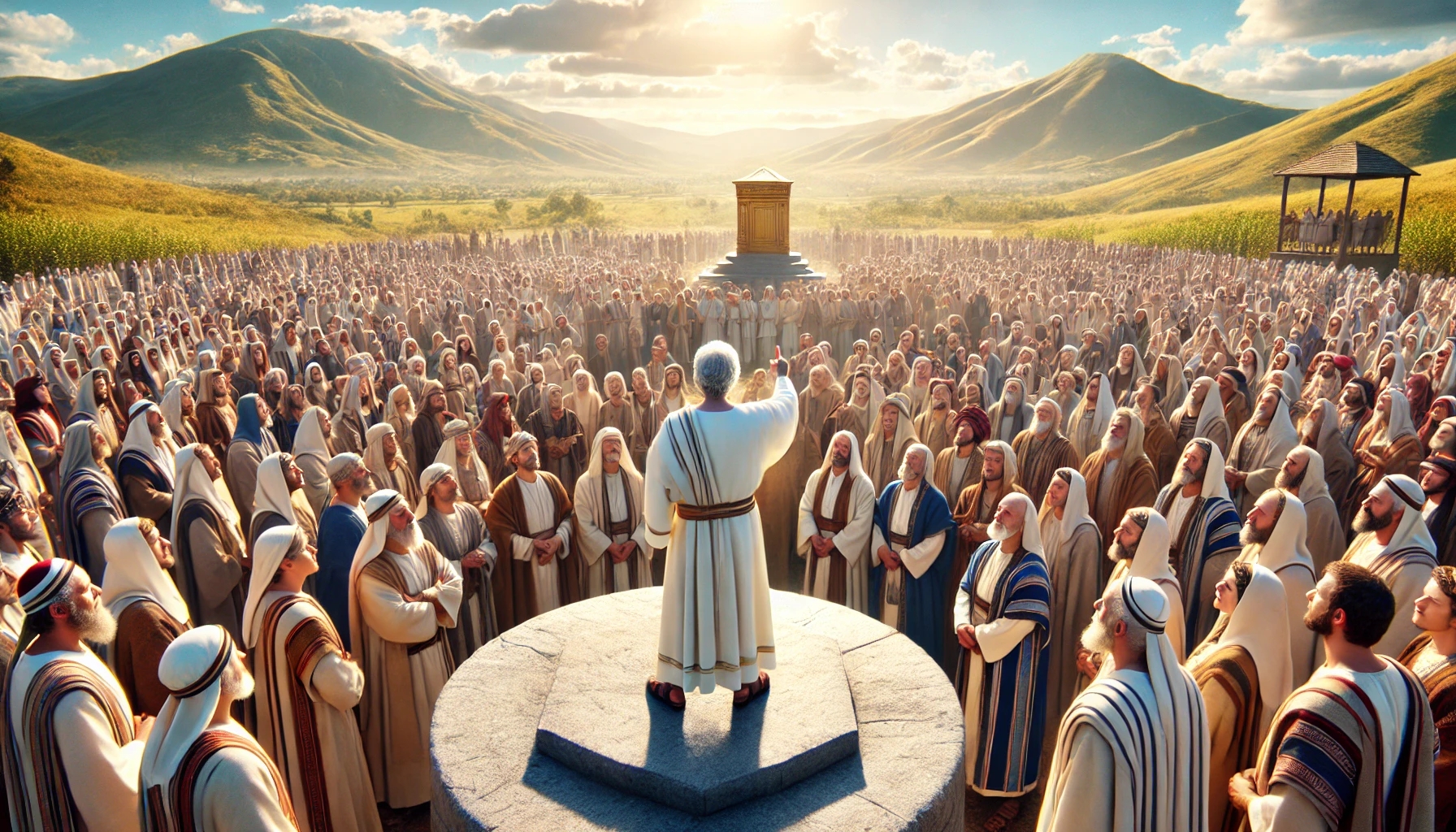
Samuel recognizes the true condition of the people. He does not first call Israel to battle, but to repentance. His words are clear and uncompromising: If you truly want to return to the Lord, then remove the foreign gods from among you and serve Him alone.
And remarkably, the people listen. They act. They separate themselves from their idols and realign their hearts toward the Lord.
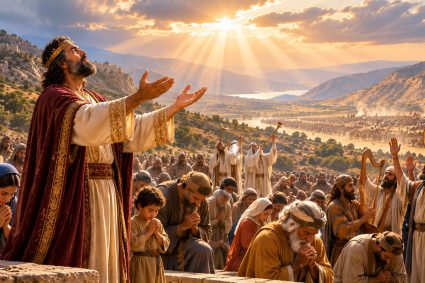
At Mizpah, all Israel gathers. Something profound happens there: they draw water and pour it out before the Lord—a sign of complete surrender and inner emptiness. They fast and openly confess what had long been hidden: We have sinned against the Lord.
Samuel stands there not as a military commander, but as an intercessor and judge.
When the Philistines hear about this gathering, they seize the opportunity. Armed and determined, they advance. Fear grips Israel. But this time, they do not take up weapons themselves. They plead with Samuel: Do not stop crying out to the Lord for us.
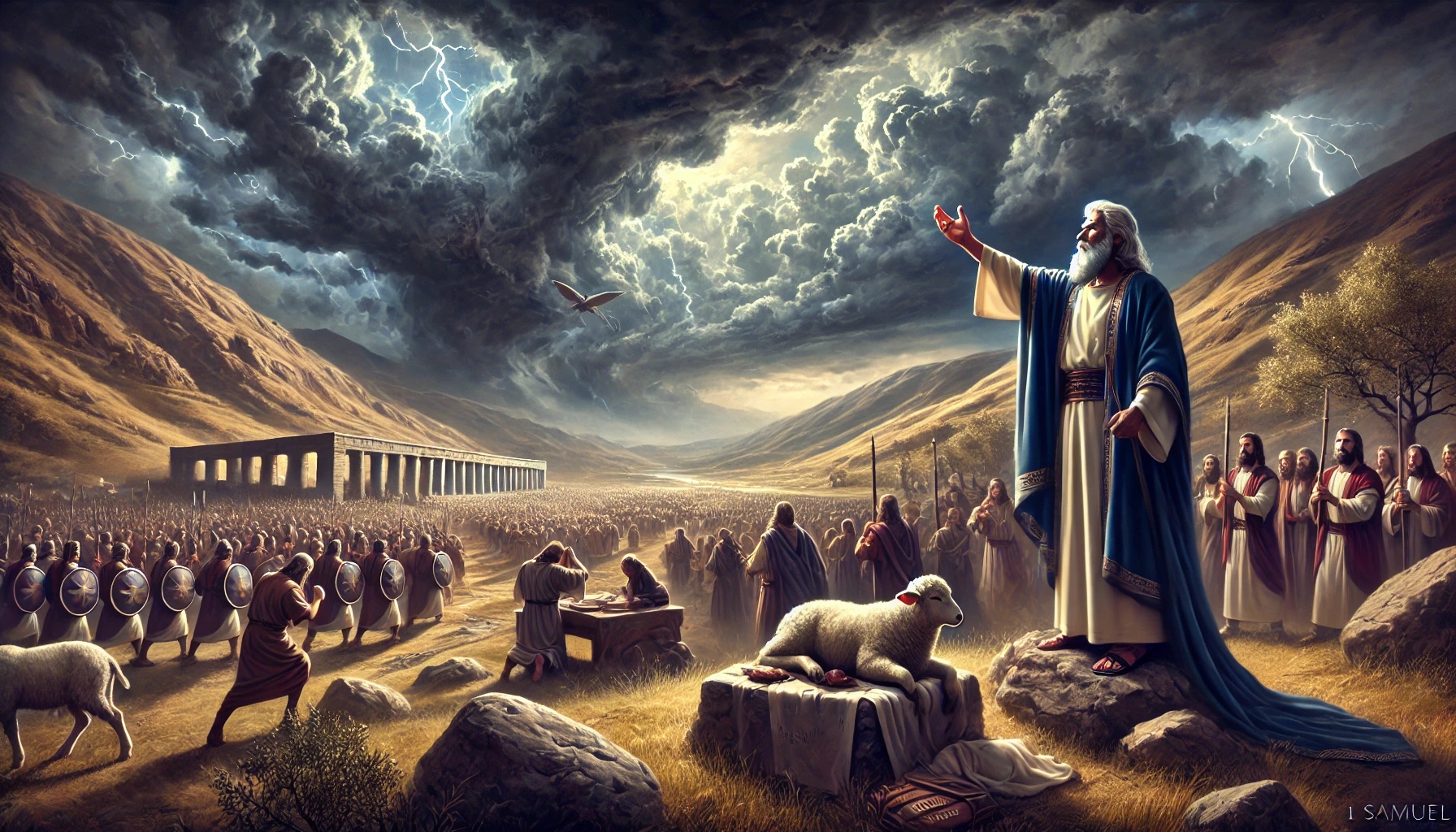
Samuel offers a suckling lamb and cries out to God—and God answers.
While the sacrifice is still burning, the Lord sends a mighty thunder against the Philistines. Panic breaks out. Their ranks collapse. Israel recognizes the moment and pursues the fleeing enemy. The victory is decisive—not through Israel’s strength, but through God’s intervention.
After the victory, Samuel sets up a stone between Mizpah and Shen. He names it Ebenezer—“Stone of Help.” His words summarize everything: Thus far the Lord has helped us.
From that day on, the Philistines lose their power over Israel. Peace returns. Samuel judges the people all his life, traveling from place to place, teaching, restoring order, and praying. His life becomes a quiet testimony of faithful devotion to God.
══════════════════════════
🟢 Summary
• Israel lives with God for a long time—but not for God.
• True renewal begins with repentance and turning away from false gods.
• Prayer and sacrifice come before victory, not after.
• God Himself fights for His people.
• Ebenezer reminds us: every victory is God’s help.
══════════════════════════
📢 Message for Us Today
We too can possess religious symbols and yet be spiritually empty. God’s presence cannot be replaced by habit. This chapter shows:
👉 Repentance brings renewal.
👉 Prayer is stronger than fear.
👉 Victories are born where God once again takes first place.
Ebenezer is more than a stone of the past—it is a call to remembrance. Those who look back and recognize God’s help learn to trust Him also for the future.
══════════════════════════
💬 Thought Impulse
🤔 Which “foreign gods” steal my trust, time, or devotion today?
🤔 Where is God calling me not to fight first, but to repent?
🪨 Where could I set a personal “Ebenezer” in my life and say: Thus far the Lord has helped me?
🙏 The God who intervened with thunder is the same God who renews hearts today—when we serve Him alone.