📜BELIEVE HIS PROPHETS | 24.02.2026 | 🏚️ 2 Kings 1 – The God Who Answers – Elijah and the Proud King
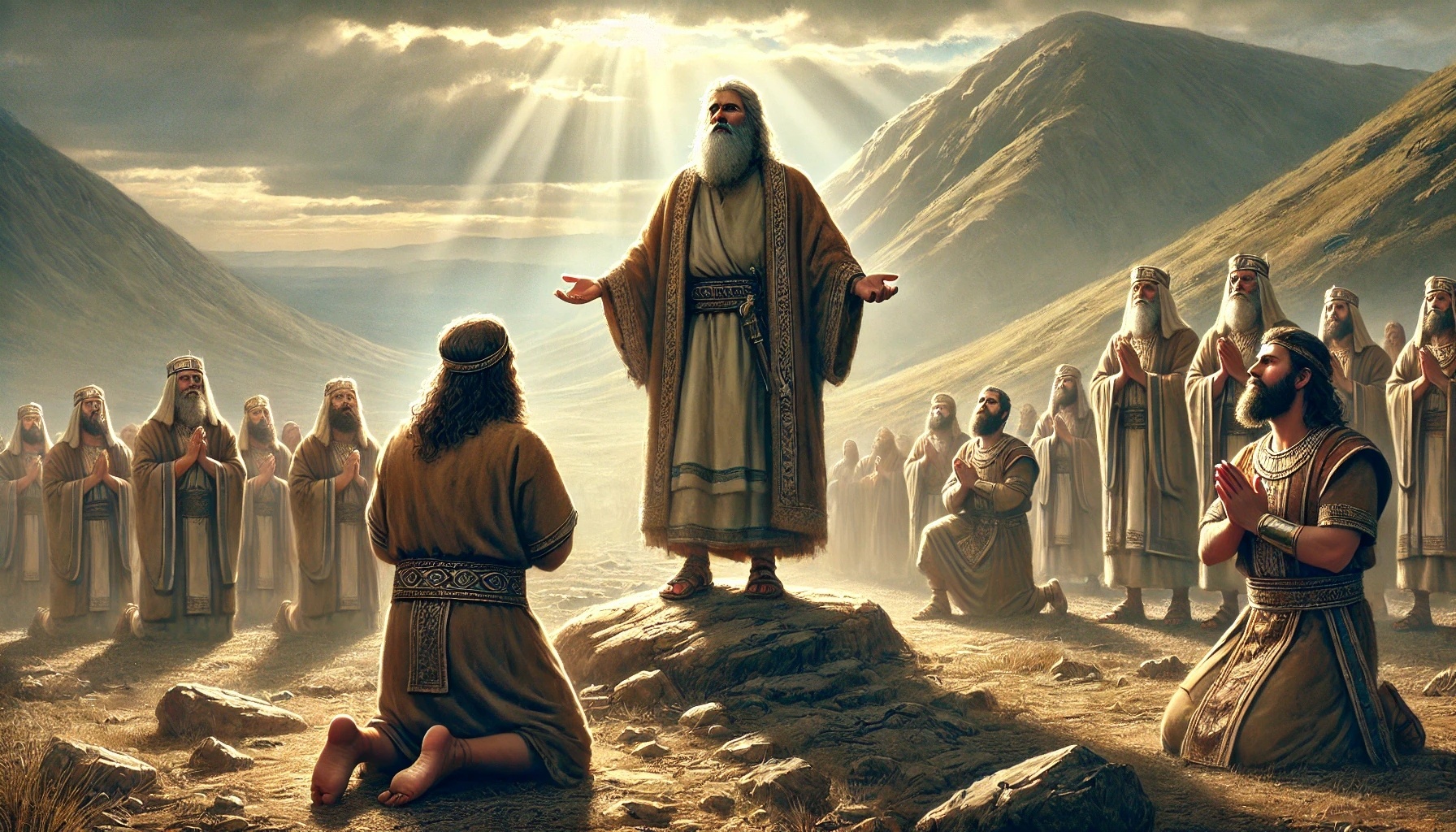
🏚️ TEASER – 2 KINGS
2 Kings – The Fall and Hope of a Nation
From a Lost Throne to Hope in Exile
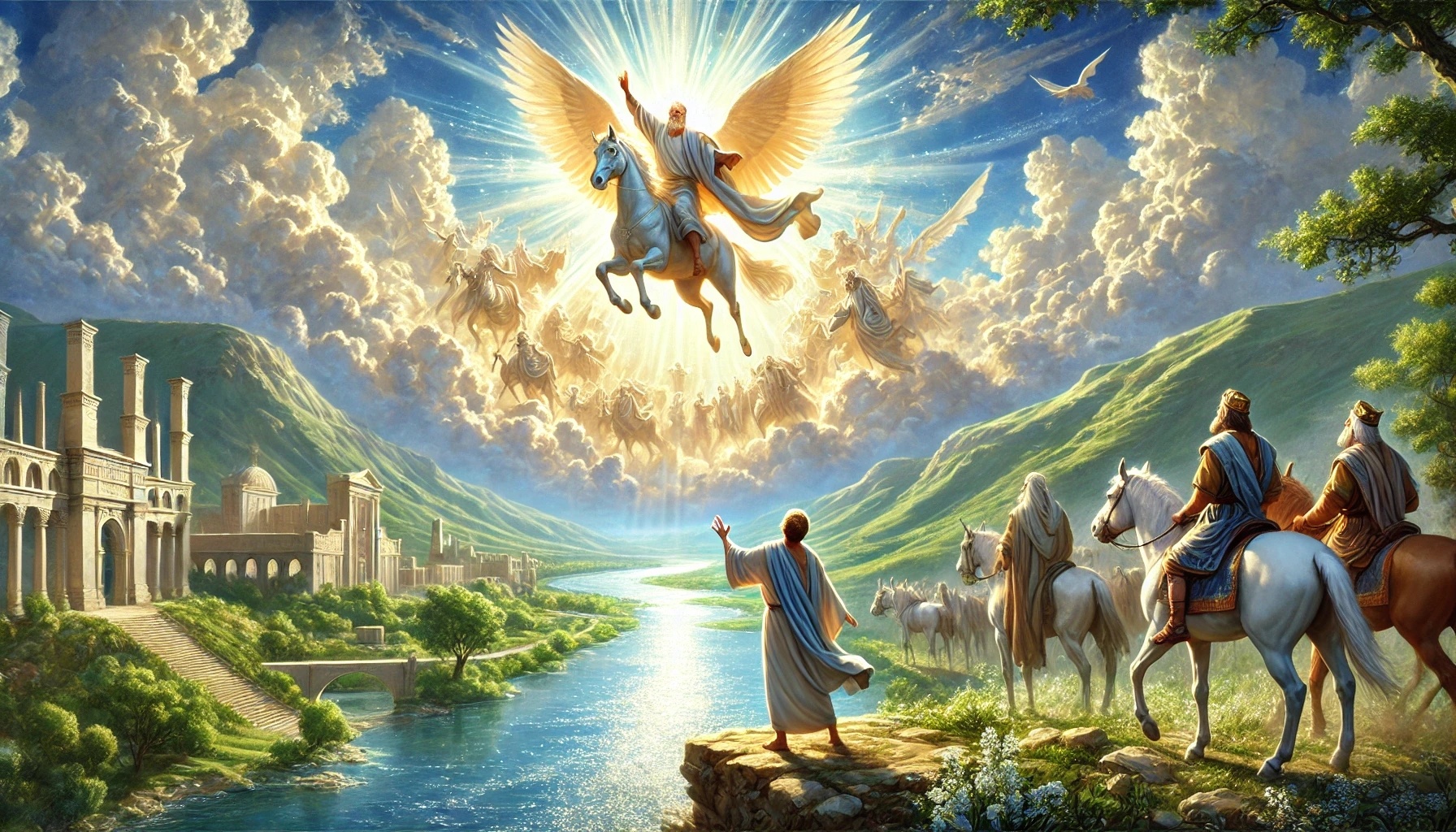
A prophet is taken to heaven in a chariot of fire.
A mantle falls to the ground.
And a kingdom slowly begins to break apart.
2 Kings continues the story where hope and crisis meet. Elisha performs miracles, kings struggle for power, and entire nations stand on the brink of destruction. God speaks — through prophets, through warnings, through deliverance and judgment.
Some kings trust. Others forget.
Reforms begin — and are abandoned again.
Patience is given — yet decisions carry consequences.
As external enemies grow stronger, the real danger appears within: hearts drift step by step away from God.
The northern kingdom of Israel falls first.
Later, Jerusalem burns.
The temple is destroyed. The people go into exile.
And yet the story does not end in the smoke of ruins.
👉 From prophetic miracles to national collapse
👉 From reforming kings to lost generations
👉 From judgment — to a quiet sign of grace
📚 2 Kings shows: God’s word remains, even when kingdoms fall. Defeat is not the end — but often the beginning of new hope.
🔥 Prophets speak.
🏚️ Cities fall.
🌅 Hope remains hidden.
👑 The question remains:
Who truly reigns — human power or God’s faithfulness?
🏚️ The Message of the Book of 2 Kings
The book of 2 Kings is a story of gradual decline — and of a hope that does not fade even in exile.
It tells of the downfall of two kingdoms, of silence after many warnings, and of God’s faithfulness in the midst of collapse.
From miracles to warnings.
From reforms to relapses.
From kings on the throne — to kings in captivity.
And in the midst of it all: God, who does not abandon His people, even when everything seems lost.
1. What is the Book of 2 Kings?
📖 2 Kings is the twelfth book of the Bible and directly continues the story of 1 Kings. It belongs to the historical books of the Old Testament.
📍 It describes the continuing decline of the kingdoms of Israel and Judah until the destruction of Jerusalem and the Babylonian exile.
📍 Main figures: Elisha, Hezekiah, Josiah, numerous kings of Israel and Judah — and the LORD, whose word is fulfilled.
📍 Time period: approx. 850–560 BC.
Central storyline:
Elijah is taken up into heaven — Elisha takes up the prophetic mission.
God performs miracles, rescues, warns, and calls to repentance.
The northern kingdom of Israel moves further and further away from God — and falls to Assyria.
In Judah, some kings bring reforms, but spiritual decline continues.
Jerusalem is finally destroyed, the temple burned, and the people taken to Babylon.
At the end, an unexpected sign of grace appears in exile.
2. Main Themes and Core Messages
🟩 God’s word is fulfilled — whether heard or ignored
Prophets warn across generations.
📖 “So it happened according to the word of the LORD.” (cf. 2 Kings)
God’s patience is great — but His words remain.
🟩 Miracles do not replace repentance
Elisha performs healings, provision, and deliverance.
Yet even visible miracles do not automatically change hearts.
Closeness to God’s power does not automatically mean faithfulness to God.
🟩 Reform without a lasting heart change remains incomplete
Kings like Hezekiah and Josiah bring genuine renewal.
Yet after them, the people often return to old ways.
Spiritual renewal must go deeper than outward change.
🟩 Small compromises lead to great losses
Idolatry begins subtly.
Political fear leads to spiritual concessions.
📖 Eventually Samaria falls — and later Jerusalem.
The collapse does not happen suddenly, but step by step.
🟩 Judgment is not the end of the story
The temple is destroyed.
The people go into exile.
And yet the book ends with grace:
A captive king is lifted up and provided for.
Hope remains.
3. The Spiritual Message for Today
🟨 1. Spiritual decline happens slowly
No kingdom falls overnight.
Decisions shape the future over time.
Faithfulness or turning away begins in the heart.
🟨 2. God’s patience is greater than human failure
For generations God sends prophets.
He warns, calls, and waits.
God gives many opportunities for repentance.
🟨 3. Outward security cannot prevent inner loss
Walls, alliances, and power do not save Judah.
True security is found not in strength, but in trust in God.
🟨 4. Hope survives even collapse
Even in exile, God’s promise remains.
What looks like an end can be God’s new beginning.
4. Key Verses
📖 2 Kings 2:11 – Elijah is taken up in a whirlwind.
📖 2 Kings 5:14 – Naaman is healed through obedience.
📖 2 Kings 17:7 – Israel forsook the LORD.
📖 2 Kings 18:5 – Hezekiah trusted in the LORD.
📖 2 Kings 22:11 – Josiah tears his clothes upon hearing the Law.
📖 2 Kings 25:30 – Provision continues in exile.
✅ Conclusion
The book of 2 Kings is not a story about God’s failure — but about the failure of human faithfulness.
It shows:
how warnings can be ignored,
how patience endures long,
how judgment comes —
and how hope still remains.
In short:
🏚️ 2 Kings teaches us:
Even when kingdoms fall, God’s faithfulness remains — and His story continues.
════════ ✶ ✶ ════════
📅 24 February 2026
📚 BELIEVE HIS PROPHETS
📖 Daily Bible Reading
🏚️ 2 Kings 1 – The God Who Answers – Elijah and the Proud King
✨ How power, fear, and God’s authority become visible in the life of King Ahaziah.
🌐 Read online here
📍 Introduction
The first chapter of the second book of Kings begins with a conflict between human pride and divine truth. After Ahab’s death, his son Ahaziah reigns over Israel. Yet instead of turning to the God of Israel, he seeks help from foreign gods. The story powerfully shows how decisions made from insecurity and arrogance can lead to confrontation — and how God nevertheless speaks and acts clearly.
⋯⋯⋯⋯⋯⋯⋯⋯⋯⋯◆⋯⋯⋯⋯⋯⋯⋯⋯⋯⋯
🧵 Commentary
The story begins in a time of political instability. After Ahab’s death, Moab rebels against Israel, a sign that the kingdom is no longer as stable as before. King Ahaziah himself soon suffers a serious accident: he falls through the lattice of his upper room in Samaria and is badly injured. In his distress he sends messengers — but not to God. Instead, he sends them to Baal-Zebub, the god of Ekron, to ask whether he will recover.
This decision does not go unnoticed. The prophet Elijah, who had already played a central role under Ahab, receives God’s command to meet the messengers. His message is sharp and direct: Is there no God in Israel that the king must consult a foreign god? The consequence is clearly announced — Ahaziah will not rise from his sickbed.
When the messengers return surprisingly quickly, the king becomes suspicious. They describe a man wearing a hairy garment and a leather belt — immediately Ahaziah knows it must have been Elijah. The king does not respond with repentance but with displays of power: he sends a captain with fifty soldiers to arrest Elijah.
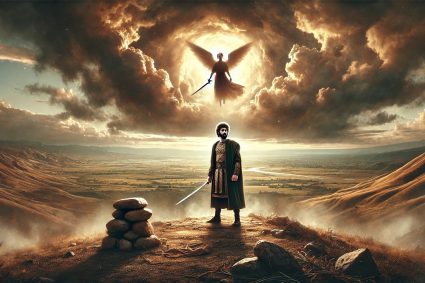
The scene on the hill unfolds like a dramatic play. The captain speaks confidently: “Man of God, the king says, ‘Come down!’” But Elijah answers calmly yet firmly. If he is truly a man of God, let fire fall from heaven. And it happens — fire consumes the soldiers. A second group meets the same fate.
Only the third captain approaches differently. He falls on his knees, asks for mercy, and acknowledges God’s authority. Here the tone of the story changes. The angel of the Lord tells Elijah to go with him without fear. Elijah goes before the king and repeats God’s word unchanged: because Ahaziah consulted a foreign god, he will die. Shortly afterward, the prophecy is fulfilled.
The narrative not only shows dramatic divine intervention, but also the attitudes of people: pride leads to confrontation, humility opens a path to life. The third captain becomes a quiet example that respect and reverence truly make a difference.
⋯⋯⋯⋯⋯⋯⋯⋯⋯⋯◆⋯⋯⋯⋯⋯⋯⋯⋯⋯⋯
🧺 Summary
2 Kings 1 reports how King Ahaziah, after an accident, consults a foreign god instead of the LORD. The prophet Elijah then announces God’s judgment. Two military detachments are consumed by fire from heaven, while a humble captain is spared. Ahaziah refuses to heed God’s word and dies as foretold.
⋯⋯⋯⋯⋯⋯⋯⋯⋯⋯◆⋯⋯⋯⋯⋯⋯⋯⋯⋯⋯
🔦 Message for us today
This chapter reminds us where we turn in times of crisis. People often first seek control, expert opinions, or substitute securities — just as Ahaziah sought a foreign god. The story invites us to place our trust not in outward power or merely human solutions, but in God.
At the same time, it shows that the attitude of the heart is decisive. Pride hardens; humility opens paths. The third captain proves that respectful action, even in dangerous situations, can bring change.
⋯⋯⋯⋯⋯⋯⋯⋯⋯⋯◆⋯⋯⋯⋯⋯⋯⋯⋯⋯⋯
📝 Reflection
Where do I first seek help when I am uncertain or hurt — in my own securities or in God?
And where might greater humility change my relationships and decisions?
════════ ✶ ✶ ════════
📆 22 – 28 February 2026
📚 BELIEVE HIS PROPHETS
📖 Weekly Reading from the Spirit of Prophecy
📘 Ellen White | Patriarchs and Prophets
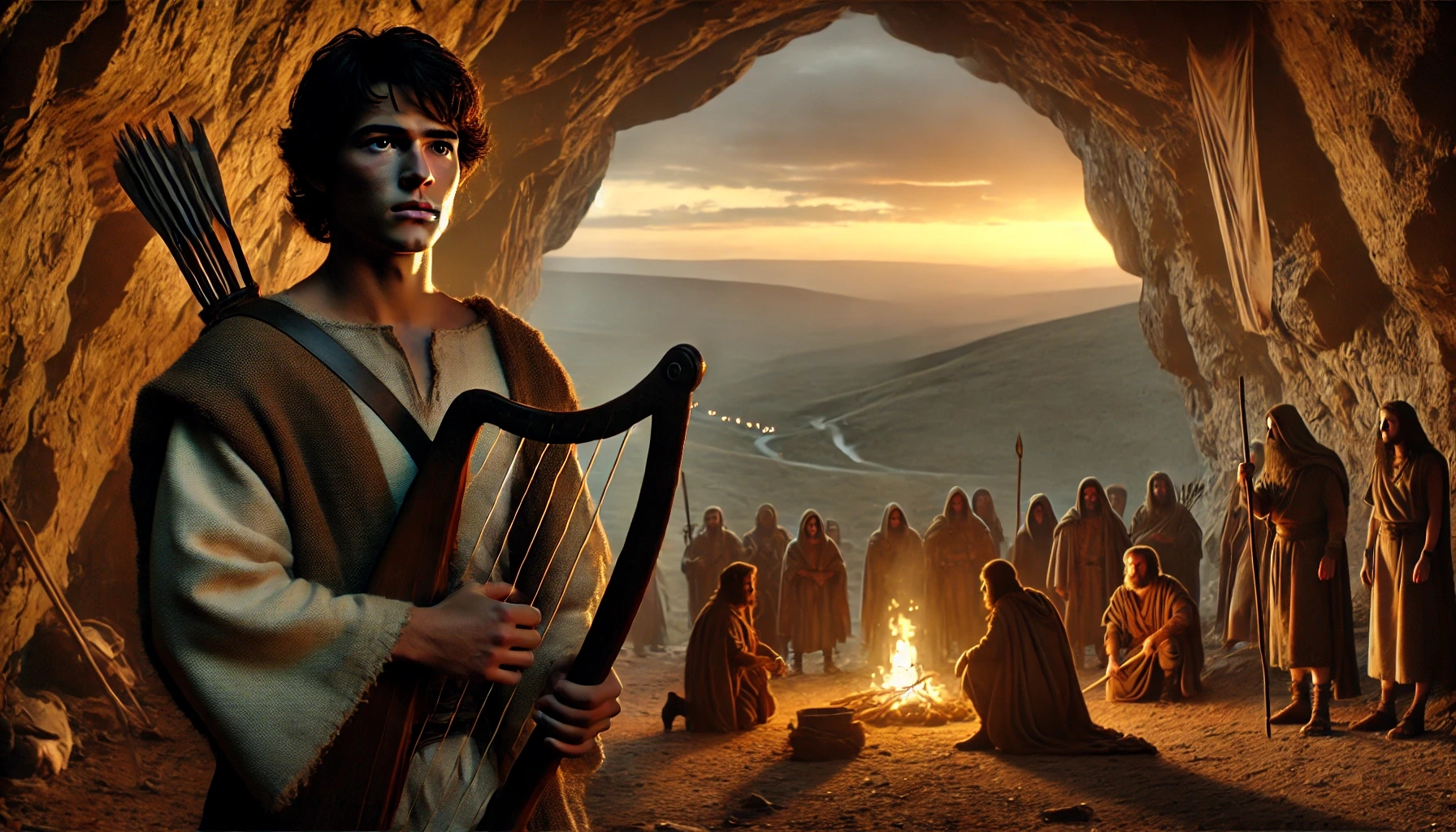
🔥 Chapter 64 : David a Fugitive
✨ Hunted by the king, sustained by God
🌐 Read online here
📘 Blog 3 : 🏃♂️ Between Spear and Harp
Trust under mortal danger
📍 Introduction
David plays the harp, sings God’s praise — and is threatened with a spear. Faith does not mean the absence of danger.
⋯⋯⋯⋯⋯⋯⋯⋯⋯⋯◆⋯⋯⋯⋯⋯⋯⋯⋯⋯⋯
🧵 Commentary
How often had David’s music driven the evil spirit away from Saul! Gentle sounds filled the palace. Words of praise rose up.
But suddenly — rage. Fury. The spear flies.
David had no shield. Only God. And once again heaven intervened. Invisibly. Protectively.
Yet David had to flee. God did not save him from every danger, but through the danger. Michal helped him, Jonathan warned him, Samuel received him.
God uses people to protect His children.
But in David’s heart doubts battled. Why this persecution? Why this injustice? The anointed of the LORD — a fugitive!
⋯⋯⋯⋯⋯⋯⋯⋯⋯⋯◆⋯⋯⋯⋯⋯⋯⋯⋯⋯⋯
🧺 Summary
David experiences God’s protection — but not without fear, flight, and inner struggles.
⋯⋯⋯⋯⋯⋯⋯⋯⋯⋯◆⋯⋯⋯⋯⋯⋯⋯⋯⋯⋯
🔦 Message for us today
God’s faithfulness does not mean a life without problems — but preservation in the midst of storms.
⋯⋯⋯⋯⋯⋯⋯⋯⋯⋯◆⋯⋯⋯⋯⋯⋯⋯⋯⋯⋯
📝 Reflection
Do I trust God even when the spears are flying?

More Stories