📅 7 January 2026
📚 BELIEVE HIS PROPHETS
📖 Daily Bible Reading
🕊️ 1 Samuel 30 – From the deepest pain to complete restoration
✨ When everything seems lost—and God gives new strength
🌐 Read online here
📍 Introduction
1 Samuel 30 brings us to a turning point in the life of David. Hardly released from danger among the Philistines, he returns to Ziklag—and finds only ashes, ruins, and loss. This chapter shows David’s deepest emotional collapse and, at the same time, one of his strongest spiritual moments. It is about grief, responsibility, spiritual renewal, divine guidance, and astonishing justice.
⋯⋯⋯⋯⋯⋯⋯⋯⋯⋯◆⋯⋯⋯⋯⋯⋯⋯⋯⋯⋯
🧵 Commentary
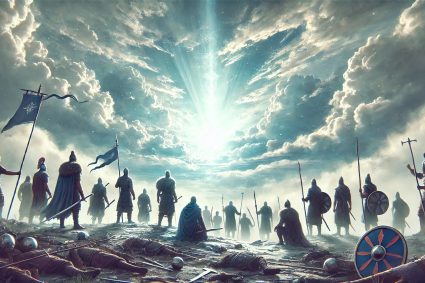
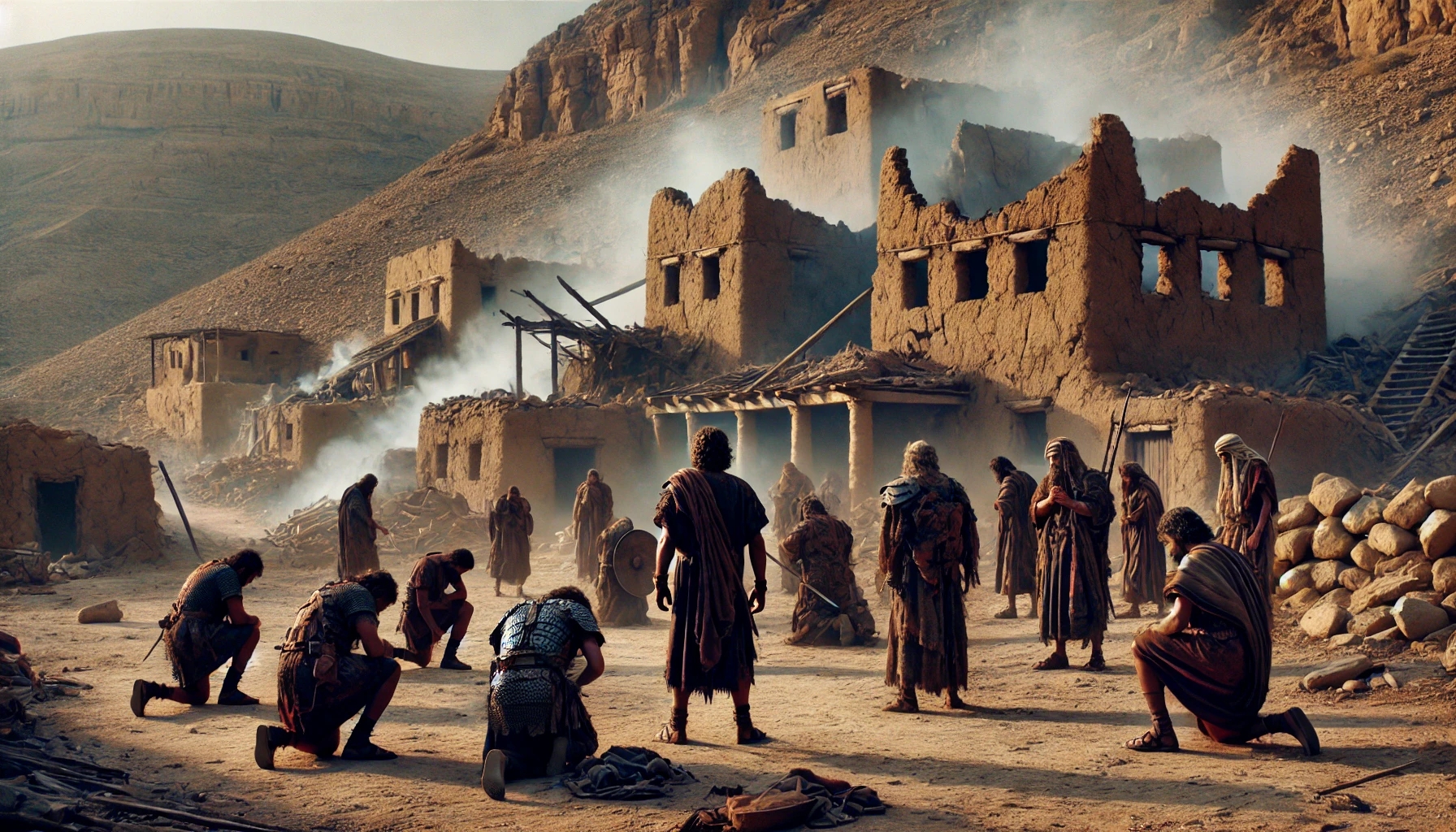
David returns to Ziklag with his men. They have been on the road for three days—exhausted, tense, full of uncertainty. But what they see takes their breath away: the city is burned. No life. No voices. No children. No women. Only smoke, ashes, and silence.
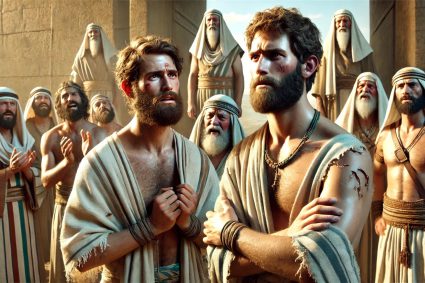
The Amalekites had been there. They plundered, destroyed, and carried everyone away alive. No one is dead—but everything is lost. David and his men collapse. They weep until they have no strength left. Warriors cry like children. Fathers scream in pain.
Then the pain turns against David. The people look for someone to blame—and find him. They speak of stoning him. David suddenly stands alone: without a city, without family, without support. And precisely here something decisive happens:
“But David strengthened himself in the Lord his God.”
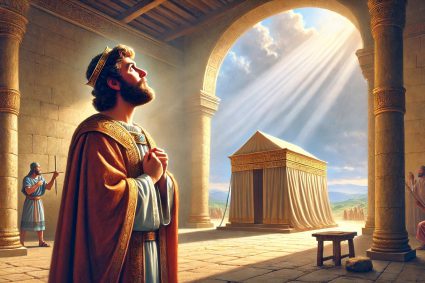
No accusations. No escape. No anger. David goes to God. He calls for the priest Abiathar and asks for the ephod. He does not act impulsively—he inquires of the Lord. And God answers clearly:
“Pursue them, for you shall surely overtake them and surely rescue all.”
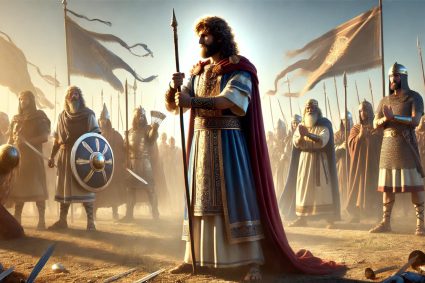
David sets out immediately. Six hundred men go with him. But at the Brook Besor, two hundred have to stay behind—they are too exhausted. David lets them remain without shaming them. Four hundred continue.
Along the way they find a half-starved Egyptian slave—abandoned sick by his Amalekite master. David does not kill him. He gives him bread. Water. Food. Dignity. And this man becomes the key to deliverance. He leads David to the Amalekite camp.
There they are celebrating—secure, careless, convinced of victory. Then David strikes. From morning until the next evening. Almost none escape. And then the incredible happens:
Everything is restored.
Not one woman missing. Not one child. No plunder lost. No loss remains. Even additional wealth is gained.
When David returns to the two hundred who stayed behind, a dispute breaks out. Some want to withhold the spoil. But David firmly objects and grounds it spiritually:
“The Lord has preserved us.”
He establishes a principle: The one who guards the supplies shares equally with the one who fights.
This order becomes law in Israel.
Finally, David sends gifts to the elders of Judah—to places that had shown him protection. From a fugitive he becomes a unifying leader. From ashes, trust grows.
⋯⋯⋯⋯⋯⋯⋯⋯⋯⋯◆⋯⋯⋯⋯⋯⋯⋯⋯⋯⋯
🧺 Summary
Ziklag is destroyed by the Amalekites, and all families are taken captive. David and his men grieve deeply, and David is threatened. But he seeks God, receives clear guidance, and pursues the enemy. With God’s help, everything is recovered. David acts justly, shares the spoil fairly, and strengthens relationships with Judah.
⋯⋯⋯⋯⋯⋯⋯⋯⋯⋯◆⋯⋯⋯⋯⋯⋯⋯⋯⋯⋯
🔦 Message for Us Today
This chapter shows that spiritual strength does not mean having no tears—but going to God despite the tears. David weeps. David despairs. But David does not remain there.
When people abandon or accuse you, God remains the same. When you have nothing left, God can restore everything. Sometimes God brings deliverance through unexpected people—through compassion rather than harshness.
And this chapter teaches: God’s victory belongs to everyone, not only to the strong. Faithfulness in the background is just as valuable as courage on the front lines.
⋯⋯⋯⋯⋯⋯⋯⋯⋯⋯◆⋯⋯⋯⋯⋯⋯⋯⋯⋯⋯
📝 Reflection
-
Where are you currently facing “burned ground” in your life?
-
Whom do you blame inwardly—and is God inviting you instead to come to Him?
-
Do you try to strengthen yourself—or do you let yourself be strengthened in the Lord?
-
How do you treat the weak, the exhausted, and those who stayed behind?
══════════ ✶ ✶ ══════════
📆 4–7 January 2026
📚 BELIEVE HIS PROPHETS
📖 Weekly Reading from the Spirit of Prophecy
📘 Ellen White | Patriarchs and Prophets
🔥 Chapter 54: Samson
✨ Called to deliverance—fallen through disobedience
🌐 Read online here
🔵 Blog 4
🕊️ The Final Victory
When the fallen one found God again
📍 Introduction
Samson’s final day was also his greatest day—not because he killed many, but because he returned to God. In weakness and repentance he rediscovered his calling and died as an instrument of God.
⋯⋯⋯⋯⋯⋯⋯⋯⋯⋯◆⋯⋯⋯⋯⋯⋯⋯⋯⋯⋯
🧵 Commentary
In prison his hair grew—not as a magical source, but as a sign: God’s grace grows with our repentance. Samson, once a hero, was now a man full of guilt, blind, despised—but not forgotten.
In the midst of the temple of the idol Dagon, surrounded by mockery and scorn, he prayed a humble prayer:
“Lord, remember me!”
No longer: “I am strong.”
No longer: “I can do it.”
Only: “Please, just this once.”
He died under the ruins—but he died in faith. Samson’s death was his testimony. God had not rejected him. And from the ashes of his life rose a quiet call: It is never too late to return.
⋯⋯⋯⋯⋯⋯⋯⋯⋯⋯◆⋯⋯⋯⋯⋯⋯⋯⋯⋯⋯
🧺 Summary
God used Samson one last time—not despite his failure, but after his repentance. Death became victory. And the lost one became part of God’s plan again.
⋯⋯⋯⋯⋯⋯⋯⋯⋯⋯◆⋯⋯⋯⋯⋯⋯⋯⋯⋯⋯
🔦 Message for Us Today
Even when everything seems lost, God’s grace is not far away. He can turn broken pieces into a testimony. Faith born at the very last moment can still triumph.
⋯⋯⋯⋯⋯⋯⋯⋯⋯⋯◆⋯⋯⋯⋯⋯⋯⋯⋯⋯⋯
📝 Reflection
🔹 Do I believe that God can still make something out of my failure?
🔸 Am I willing to hand God my “last chance”—in humility and trust?