

📅 3 January 2026
📚 BELIEVE HIS PROPHETS
📖 Daily Bible Reading
🕊️ 1 Samuel 26 – The Spear and the Water Jug
✨ When honor is greater than revenge
🌐 Read online here
📍 Introduction
A chapter that recalls an earlier scene—and yet goes deeper. Once again, David has Saul in his hands. Once again, he refrains from violence. But this time, he goes straight into the heart of the enemy camp. 1 Samuel 26 is not merely a repetition, but a deepening: it reveals the greatness of a heart guided by reverence for God and justice. It is a story of dignity, injustice, grace—and God’s signature in the unseen.
⋯⋯⋯⋯⋯⋯⋯⋯⋯⋯◆⋯⋯⋯⋯⋯⋯⋯⋯⋯⋯
🧵 Commentary
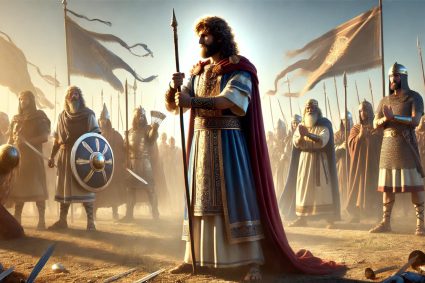
The people of Ziph betray David once again. Saul, though he had previously promised mercy, is once more stirred to action. With three thousand chosen men, he sets out to capture David in the Wilderness of Ziph. He camps on the hill of Hachilah—right in hostile territory, surrounded by his army.
David watches from a distance. He is no longer a driven fugitive, but a man who acts with discernment. He sends out scouts and confirms Saul’s presence. Then he makes a bold decision. Together with Abishai, the brother of Joab, he slips into the king’s camp by night.
What they find is astonishing: everyone is asleep. Even Abner, Saul’s powerful commander, lies unaware. Saul himself is sleeping, his spear—the symbol of power and violence—stuck in the ground beside his head. His water jug stands nearby. Yet no eye sees, no ear hears, for a “deep sleep from the Lord” has fallen upon them.
Abishai is ready to strike. “One thrust—and it’s over.” But David restrains him. Once again, he shows what sets him apart from an ordinary warrior. He does not think tactically, but spiritually: “Who can lay a hand on the Lord’s anointed and be guiltless?”
He does not take Saul’s life—only the symbols of power: the spear and the water jug. And he leaves.
From a safe distance, David calls out across the camp. Not triumphantly, but accusatory—toward Abner: “How could you let your king be so unprotected?” Then he speaks to Saul—again with respect, again with pain: “Why are you pursuing me? Am I a flea, a partridge hunted in the mountains?”
And Saul? He recognizes David’s voice—and breaks down. Again. He calls him “my son,” confesses his guilt, and urges David to return. But David does not. He only sends back the spear—the symbol of power he refuses to claim for himself.
David concludes with these words: “The Lord will repay everyone according to their righteousness and faithfulness.” He does not place his hope in Saul’s insight, but in God’s judgment.
Two men, two paths: Saul, the king with the spear—full of fear, driven by the loss of power. David, the persecuted man with a clear conscience—guided by reverence for God, led by grace.
⋯⋯⋯⋯⋯⋯⋯⋯⋯⋯◆⋯⋯⋯⋯⋯⋯⋯⋯⋯⋯
🧺 Summary
The Ziphites betray David again. Saul sets out with 3,000 men. David observes the camp, sneaks in at night with Abishai, and finds Saul asleep. Instead of killing him, he takes only Saul’s spear and water jug. From a safe distance, David calls Saul and Abner to account. Saul acknowledges his guilt and praises David’s righteousness. David then leaves—without violence, but with a clear testimony.
⋯⋯⋯⋯⋯⋯⋯⋯⋯⋯◆⋯⋯⋯⋯⋯⋯⋯⋯⋯⋯
🔦 Message for Us Today
This chapter teaches what true strength is: not striking back, even when you could. David shows that spiritual authority does not arise from force, but from faithfulness, self-control, and reverence for God.
David does not trust the opportunity, but God’s timing. He understands that even seemingly perfect circumstances do not automatically mean God is calling us to act. Justice is more than victory—it is faithfulness in secret.
We live in a world that urges self-defense, decisive action, and “taking what is ours.” David teaches us that spiritual victory often lies in restraint.
⋯⋯⋯⋯⋯⋯⋯⋯⋯⋯◆⋯⋯⋯⋯⋯⋯⋯⋯⋯⋯
📝 Reflection
• When were you in a position to “take the spear”—and chose not to?
• What does it mean for you today to “take the water jug” without humiliating someone?
• Do you trust that God will bring you justice—even when you do not strike back?
• Where are you tempted to take matters into your own hands, even though God is calling you to wait?
══════════ ✶ ✶ ══════════
📆 28 December 2025 – 3 January 2026
📚 BELIEVE HIS PROPHETS
📖 Weekly Reading from the Spirit of Prophecy
📘 Ellen White | Patriarchs and Prophets
🔥 Ch. 53: The Later Judges
✨ Festivals of remembrance and hope — how God strengthened His people through seasons of worship
🌐 Read online here
⚫ Blog 7
🔁 When Gratitude Fades
The tragic conclusion of the period of the Judges
📍 Introduction
Israel’s ingratitude led to moral and spiritual decline—even to violence within its own people.
⋯⋯⋯⋯⋯⋯⋯⋯⋯⋯◆⋯⋯⋯⋯⋯⋯⋯⋯⋯⋯
🧵 Commentary
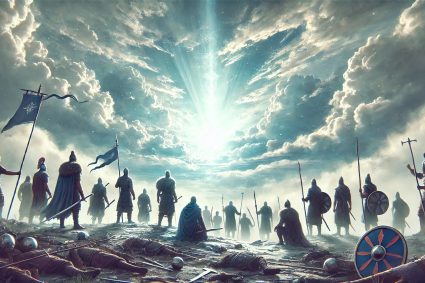
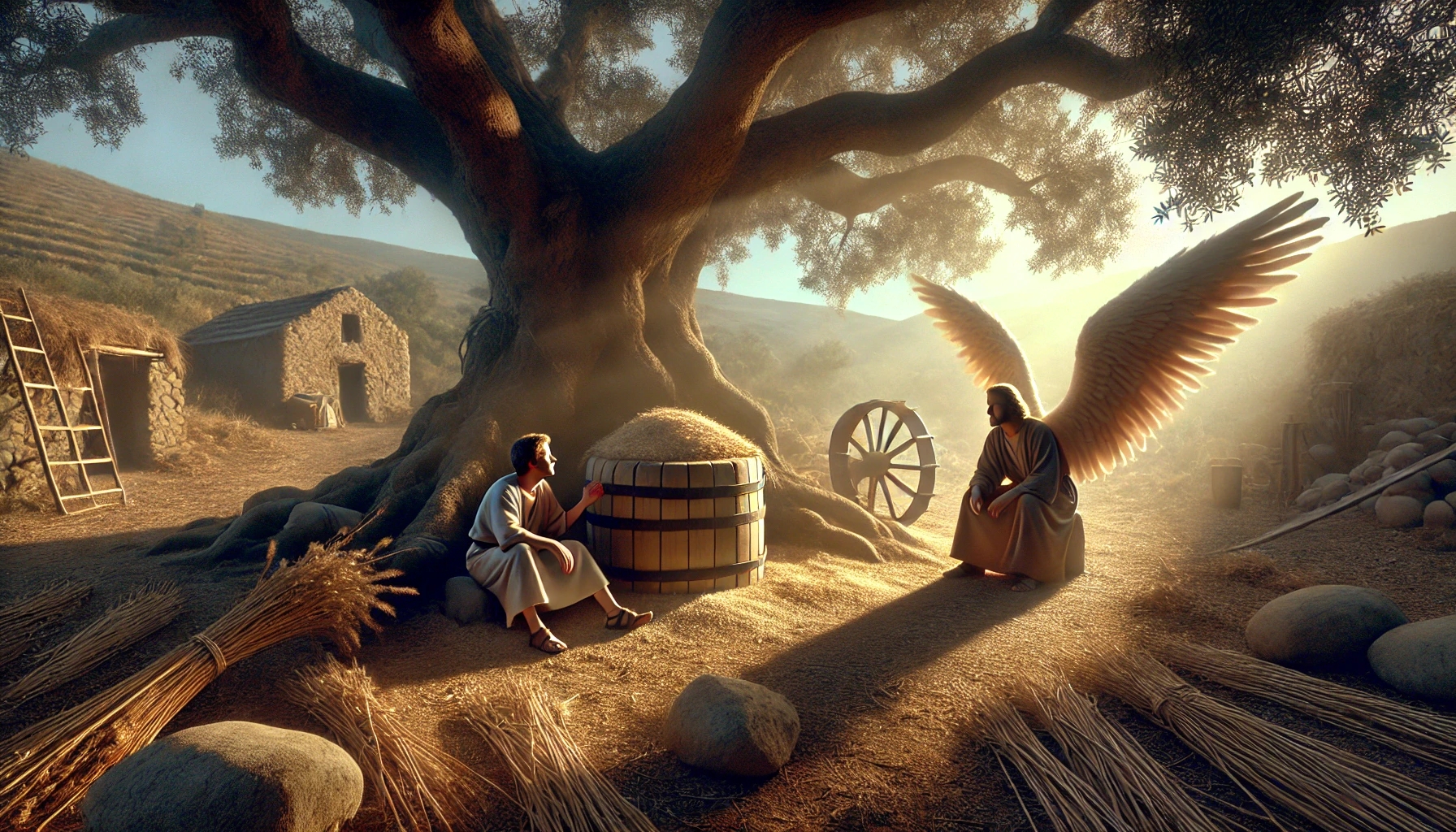
The dust of war had settled. The enemy was driven away. Israel breathed again. The threat was gone, the harvest secured, peace restored. Gideon, God’s hero, had grown old—respected, honored, still a moral authority in the land. But his time also came. The deliverer died. And with him died the memory of the one who had freed the people—and of the God who had worked through him.
The Bible sums it up soberly:
“Then the Israelites no longer remembered the Lord their God, who had delivered them from the hands of all their enemies around them. They also failed to show kindness to the family of Jerubbaal—that is, Gideon—for all the good things he had done for Israel.”
(Judges 8:34–35)
Forgetting. Ingratitude.
Two quiet, creeping enemies—often more dangerous than entire Midianite armies. No sword. No alarm. Just indifference. Just taking things for granted.
How could this happen?
The people who once gathered around Gideon by night and followed the cry, “The sword of the Lord and of Gideon!” had grown sluggish. Faith had become comfortable. Gratitude had cooled. God was no longer necessary—and therefore no longer important.
How often had they relied on God’s help! How often had He driven away their enemies! How often had He, in His mercy, rescued the people despite their disobedience! And yet, as soon as the pressure disappeared, Israel slipped back into old patterns—and more than that: into apostasy.
Instead of remembering, they left the past behind. Instead of gratitude, they sought new leaders—and worse: new gods. Instead of honoring God’s grace, they made Abimelech, Gideon’s illegitimate son, king. And he took brutal revenge. He had seventy sons of Gideon—his own half-brothers—murdered on a single stone. Cold. Systematic. Only one escaped. It was a massacre that wrote Israel’s history in blood—a sign of the moral collapse of an entire generation.
What had happened?
It was not a sudden fall. It was a slow, creeping forgetting.
It began with ingratitude.
With the feeling that good things are self-evident.
With the thought: “We did this ourselves. It was Gideon. It was our army. It was our plan.”
But the truth was different: It was God. Always.
Ingratitude led to alienation. Alienation to indifference. Indifference to idolatry. And when Abimelech came to power, it was no surprise that blood was shed. Whoever forgets God also forgets people. Where gratitude dies, justice dies as well.
And God?
He allowed the people to reap the consequences of their choices—not because He hated them, but because they themselves abandoned the protection of the Most High. Yet even in this dark time, there was a small remnant—people who held fast to God, who did not follow the crowd, who remembered.
For God’s story with His people never completely ends. Even in the greatest apostasy, even in the deepest ingratitude, His grace remains open to repentance. Always.
⋯⋯⋯⋯⋯⋯⋯⋯⋯⋯◆⋯⋯⋯⋯⋯⋯⋯⋯⋯⋯
🧺 Summary
Ingratitude leads to forgetting God—but God’s mercy remains greater.
⋯⋯⋯⋯⋯⋯⋯⋯⋯⋯◆⋯⋯⋯⋯⋯⋯⋯⋯⋯⋯
🔦 Message for Us Today
Those who forget God’s grace lose spiritual direction.
⋯⋯⋯⋯⋯⋯⋯⋯⋯⋯◆⋯⋯⋯⋯⋯⋯⋯⋯⋯⋯
📝 Reflection
How do you cultivate gratitude—so that your faith remains alive?
⋯⋯⋯⋯⋯⋯⋯⋯⋯⋯◆⋯⋯⋯⋯⋯⋯⋯⋯⋯⋯
