
📅 2 January 2026
📚 BELIEVE HIS PROPHETS
📖 Daily Bible Reading
🕊️ 1 Samuel 25 – Abigail’s Wisdom Between Anger and Grace
✨ When power is possible — but mercy wins
🌐 Read online here
📍 Introduction
Amid political tensions, personal loss, and growing uncertainty, we encounter in this chapter an extraordinary woman: Abigail. At a moment when emotions are boiling over and justice seems ready to be enforced by the sword, she brings wisdom, courage, and peace. This story is not only about being rescued from violence, but also about self-control, divine providence, and the power of wise words spoken at the right time.
⋯⋯⋯⋯⋯⋯⋯⋯⋯⋯◆⋯⋯⋯⋯⋯⋯⋯⋯⋯⋯
🧵 Commentary
The sun hangs low over the Judean wilderness as heavy news spreads through the land: Samuel, the faithful prophet, is dead. Israel mourns. Yet while the people grieve, David withdraws even further—out into the wilderness of Paran, a place of silence but also of inner testing.
Not far away lives a wealthy man named Nabal. He owns great possessions—sheep, goats, servants. But his wealth is not matched by wisdom. He is harsh, stubborn, and blind to what is happening beyond his own world. Very different is his wife Abigail: beautiful, intelligent, and endowed with sound judgment.
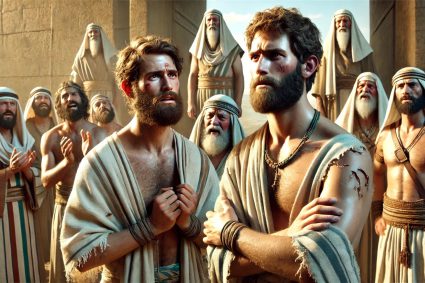
David and his men had previously protected Nabal’s shepherds from raiders—without asking anything in return. Now, as Nabal shears his sheep and celebrates a feast, David sends a polite request, asking for a small token of gratitude. But Nabal mocks him. “Who is David?” he scoffs. To him, the Lord’s anointed is nothing but a fugitive, a nobody.
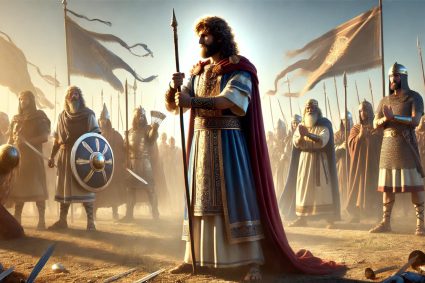
The message strikes David like a blow. His anger flares. He who sought justice now reaches for the sword. He arms four hundred men for battle—not against an army, but against a single household. David, who once spared Saul, now stands on the brink of bloodguilt.
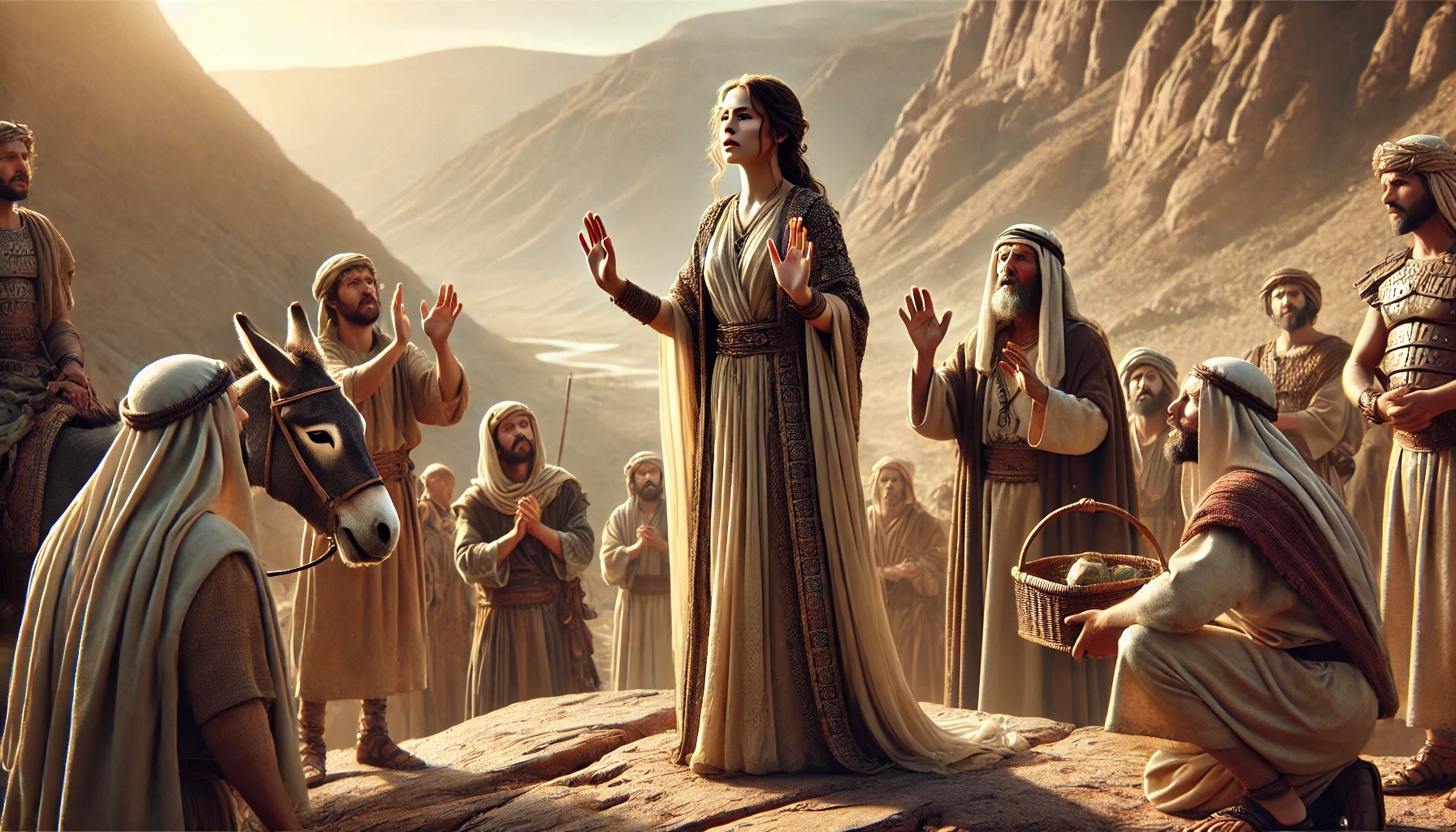
Then Abigail steps into the story. Without her husband’s knowledge, she gathers provisions, mounts her donkey, and rides straight toward the anger. She knows that only swift action can save lives. When she meets David, she falls at his feet. Her words are filled with wisdom, humility, and prophetic clarity. She reminds David of who he is—a servant of the Lord, a future ruler, one who fights God’s battles, not personal vendettas.
David stops. In her words, he recognizes God’s voice. “Blessed be the Lord, who sent you to meet me today,” he says. Abigail’s wisdom not only saves many lives—it saves David from himself.
When Abigail returns home, Nabal is feasting like a king—drunk and unaware. Only the next morning does he learn how close he came to death. The shock strikes him to the core. Ten days later, he dies.
David sees the hand of God in this. And he does not forget Abigail. Soon she becomes his wife—a woman not only beautiful, but capable of saving an entire household and a future king from ruin.
⋯⋯⋯⋯⋯⋯⋯⋯⋯⋯◆⋯⋯⋯⋯⋯⋯⋯⋯⋯⋯
🧺 Summary
David is insulted by Nabal, a rich but foolish man. In his anger, David plans bloody revenge. But Abigail, Nabal’s wise wife, rushes out to meet him, pleads for mercy, and reminds him of his calling. She keeps him from shedding innocent blood. God works behind the scenes: Nabal dies shortly afterward, and Abigail becomes David’s wife. This chapter reveals how dangerous uncontrolled anger can be—and how healing wisdom and gentleness are.
⋯⋯⋯⋯⋯⋯⋯⋯⋯⋯◆⋯⋯⋯⋯⋯⋯⋯⋯⋯⋯
🔦 Message for Us Today
Abigail shows us how powerful wise, calm, and God-fearing words can be—even in the face of imminent violence.
David reminds us how quickly even spiritually strong people can be driven to grave injustice by personal offense.
And Nabal lives (and dies) as a warning to all who are arrogant, selfish, and deaf to God’s working.
Our response to conflict often decides between life and death—spiritually and relationally. Those who know God’s voice will bring peace where others ignite anger.
And God? He is never absent. He sees, hears, and guides—sometimes through a woman on a donkey in the middle of the wilderness.
⋯⋯⋯⋯⋯⋯⋯⋯⋯⋯◆⋯⋯⋯⋯⋯⋯⋯⋯⋯⋯
📝 Reflection
🕊️ In conflicts, am I more like David in anger, Nabal in pride—or Abigail in the spirit of peace?
🎯 What can I do today to build bridges instead of walls?
“A wise woman builds her house, but folly tears it down with her own hands.”
– Proverbs 14:1
══════════ ✶ ✶ ══════════
📆 28 December 2025 – 3 January 2026
📚 BELIEVE HIS PROPHETS
📖 Weekly Reading from the Spirit of Prophecy
📘 Ellen White | Patriarchs and Prophets
🔥 Ch. 53: The Later Judges
✨ Festivals of remembrance and hope — how God strengthened His people through seasons of worship
🌐 Read online here
🟣 Blog 6
👑 From Savior to Snare
When spiritual success becomes temptation
📍 Introduction
Gideon refused kingship—yet later made a fateful mistake.
⋯⋯⋯⋯⋯⋯⋯⋯⋯⋯◆⋯⋯⋯⋯⋯⋯⋯⋯⋯⋯
🧵 Commentary
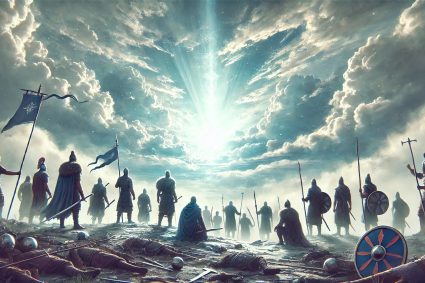
The battle is over. The enemy lies defeated. Joy fills Israel’s camp. With only 300 men, Gideon routed a vast army of Midianites. Not a single hero fell, not a sword was lost—the victory was God’s work, and everyone knew it. Gideon’s name spread throughout the land. His courage, determination, and humility were unquestioned. Israel had a deliverer. Yet here—at the moment of greatest success—begins the most dangerous part of his story.
Gideon had accomplished the impossible, not by force, but by trusting God’s voice. His men did not raise swords; they broke jars and blew trumpets. The enemy fled in panic—confused by God Himself. A miracle. A triumph. A turning point. Israel was free.
The people gathered around Gideon. They saw in him not just a leader, but the man God had raised up. Their hearts, filled with gratitude—and with a desire for human security—cried out: “Rule over us! You, your son, and your grandson!”
What a temptation! Who could resist such an offer? Who would not accept the throne, the glory, the power? Yet Gideon did something remarkable: he refused. He reminded the people that God was their king—not him. Not humans. Israel was not like other nations; it lived under divine rule.
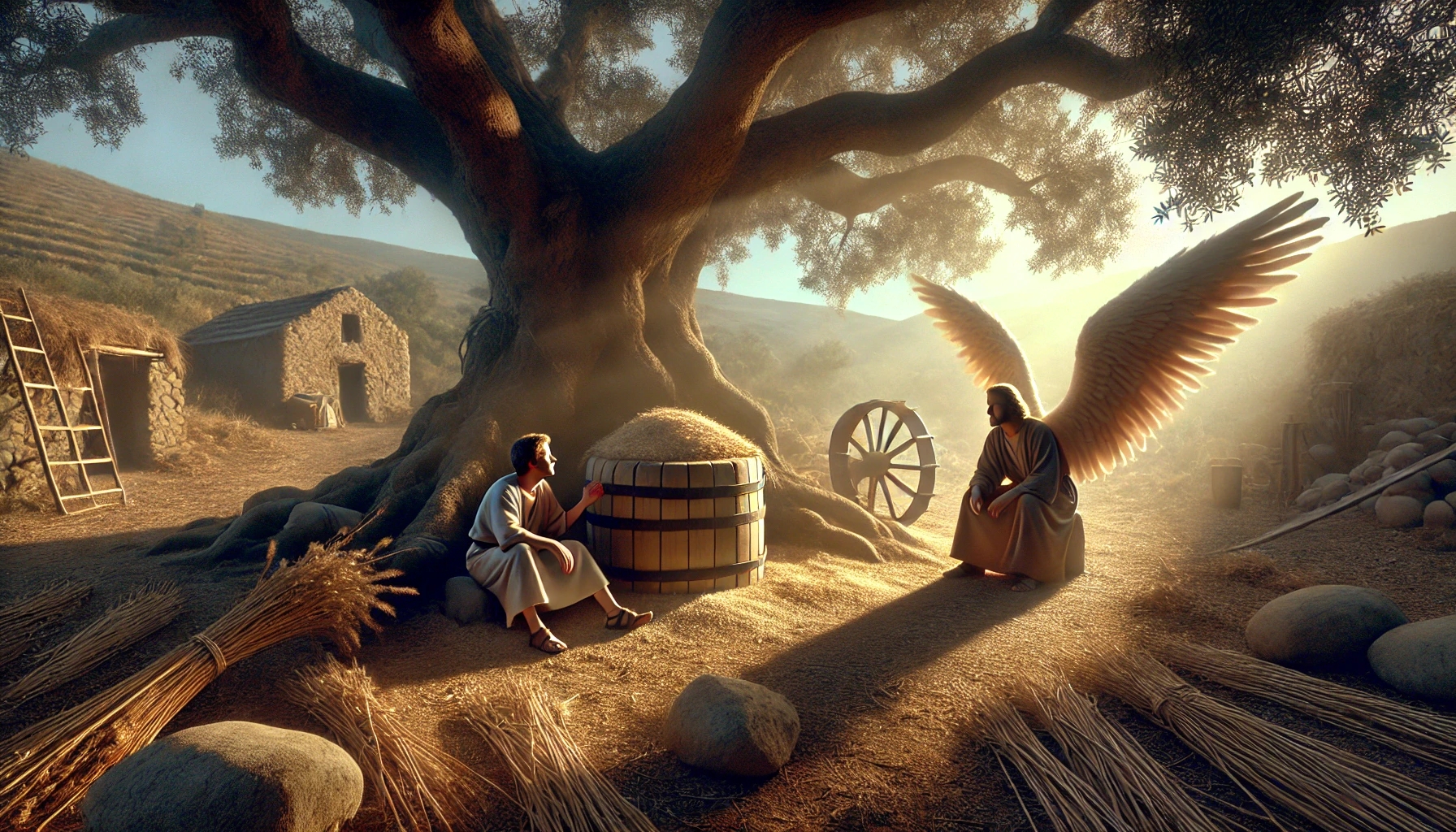
A powerful moment. A courageous man. But then something strange happened. Gideon did something that sounded harmless at first: he asked for the earrings of the defeated Midianites. Gold. Jewelry. Symbols of victory. The people gave willingly. And from the gold he made an ephod, a priestly garment, a sacred symbol. Perhaps it was well-intended. Perhaps it was meant as a memorial. Perhaps it was pride. Whatever Gideon thought—it became a snare.
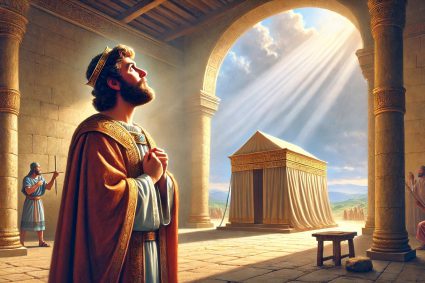
What began harmlessly turned into temptation. People no longer went to Shiloh, where God’s sanctuary was—they came to Gideon’s house. There was the “holy symbol,” there was the “face of victory.” Soon it became idolatry. Gideon had refused the throne—but the spiritual center had shifted to his home. The people no longer worshiped God, but something forged from gold.
And so we see how deceptive success can be. How easily a good beginning can slip into pride through one small, unchecked step. Gideon had done great things. But the greatest work—remaining in the background—he did not complete to the end.
After his death, order quickly collapsed. The people forgot God, forgot Gideon, and plunged back into idolatry. His son by a concubine, Abimelech, seized power by violence, killing his brothers—a massacre that cast the former glorious victory into darkness.
Thus the story ends not with a royal throne, but with a warning:
The greatest victory can be shattered by a small seed of pride.
The most dangerous moment is not the battle—but what comes after the applause.
⋯⋯⋯⋯⋯⋯⋯⋯⋯⋯◆⋯⋯⋯⋯⋯⋯⋯⋯⋯⋯
🧺 Summary
Not every good beginning ends well—without lasting dependence on God.
⋯⋯⋯⋯⋯⋯⋯⋯⋯⋯◆⋯⋯⋯⋯⋯⋯⋯⋯⋯⋯
🔦 Message for Us Today
After spiritual victories, vigilance is more important than ever.
⋯⋯⋯⋯⋯⋯⋯⋯⋯⋯◆⋯⋯⋯⋯⋯⋯⋯⋯⋯⋯
📝 Reflection
Where could your greatest success become your greatest danger?
⋯⋯⋯⋯⋯⋯⋯⋯⋯⋯◆⋯⋯⋯⋯⋯⋯⋯⋯⋯⋯
