🌱 GROWING IN A RELATIONSHIP WITH GOD
🌟 Lesson 8: Having Faith
📘 8.6 Summary
Faith means trusting God — from creation to the second coming
📖 1. Faith Is More Than a Feeling
The king in the story possessed wealth and power, yet he was still unhappy. In the same way, true faith does not arise from outward things or human strength. The Bible shows that genuine faith is not based on what we possess or feel, but on trust in God. Hebrews 11 makes it clear that faith means relying on God’s reality, even when much remains unseen. Therefore, faith is a relationship of trust and not merely an emotional experience.
🌍 2. Hebrews 11 Describes the Core of Faith
Hebrews 11:1 is the central definition of faith:
👉 “Now faith is the assurance of things hoped for.”
Faith is directed toward two great divine realities:
- the creation of the world
- the second coming of Christ
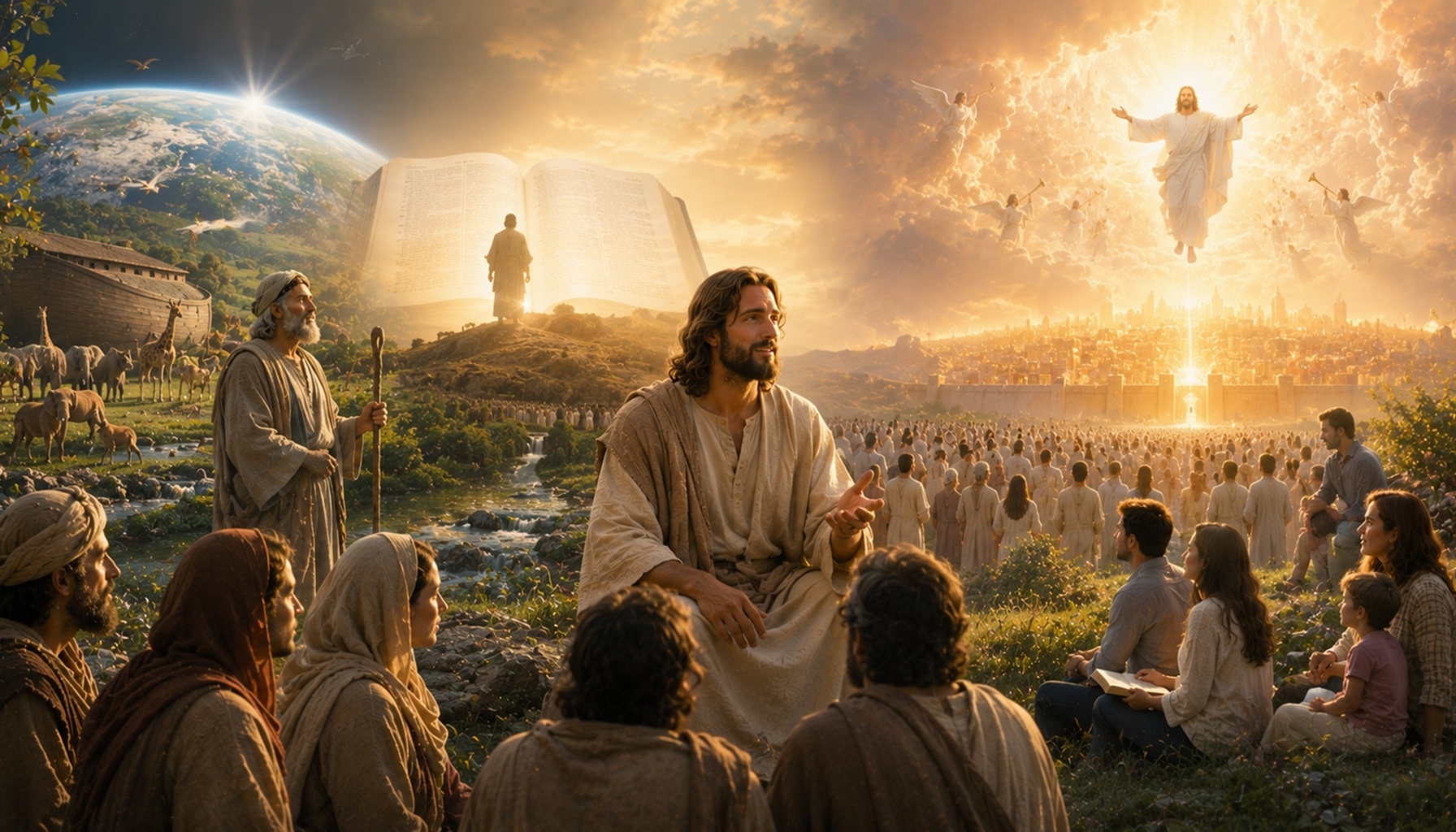
Both lie beyond human control and cannot be completely proven. Yet God invites us to trust Him. Faith connects the past, present, and future together.
✨ 3. The Bible Begins and Ends with Hope
The entire Bible follows a great arc of faith:
- It begins with creation in Genesis
- and ends with the return of Jesus in Revelation 22.
Many other biblical books follow this same pattern. This makes it clear:
👉 Christian faith always lives between origin and fulfillment.
We believe:
- that God created the world
- and that one day He will completely renew it.
This hope gives faith direction and meaning.
⭐ 4. Abraham Shows What True Faith Means
- Genesis 15:6 describes Abraham:
👉 “Abram believed the LORD, and it was credited to him as righteousness.”
Abraham’s faith was not merely a thought or feeling. He personally trusted God and relied on God’s promises. His righteousness did not come through his own achievements, but through trusting in God’s actions. This is exactly the foundation of justification by faith:
👉 Human works do not save, but God’s grace.
✝️ 5. The Faith of Jesus Unites Law and Gospel
Revelation 14:12 describes God’s end-time people:
👉 “Here is the perseverance of the saints who keep the commandments of God and the faith of Jesus.”
This message unites:
- God’s commandments
- and the faith of Jesus.
The law reveals God’s will,
the gospel reveals God’s grace.
Ellen White emphasized:
👉 Law and gospel belong inseparably together.
The “faith of Jesus” means:
- trusting Jesus completely
- allowing His faith to work in our lives
- and living through His power.
As a result, obedience does not become a burden, but the fruit of a living relationship with Christ.
🔥 6. Faith Grows Through Trusting God’s Work
The heroes of faith in Hebrews 11 were not perfect people. Many struggled with:
- fear
- uncertainty
- suffering
- long periods of waiting.
And yet they held firmly to God.
Their faith did not come from their own strength, but from trusting in God’s faithfulness. The same is true today:
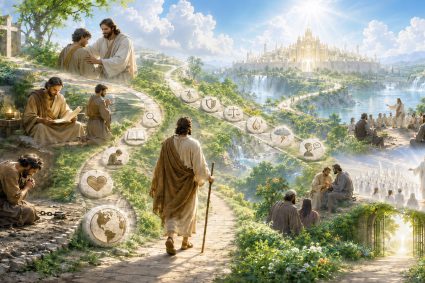
👉 True faith grows where people take God’s Word seriously and follow Him step by step.
🕊️ 7. End-Time Faith Fixes Its Eyes on Jesus
Revelation describes a people
who remain faithful during difficult times.
Why?
Because Jesus is their center.
End-time faith is not merely religious knowledge, but a living relationship with Christ. God’s people hold firmly to:
- God’s Word
- His truth
- and the hope of Jesus’ return.
Looking to Jesus gives strength to persevere.
❓ 8. Reflection Question
Do I trust more in my own abilities and feelings — or truly in God’s promises and Jesus’ faithfulness?
🌟 9. Final Thought
Faith does not mean
having all the answers.
Faith means
trusting the God
who holds the beginning and the end of history in His hands.
Because:
👉 True faith looks back to God’s creation, lives today through His grace, and waits with hope for the second coming of Jesus Christ.